
Wall Street Thinks the Worst Is Over—Can the S&P 500 Soar 15%?

Shearing sheep
March 18, 2025
GoGPT Summarizes Articles
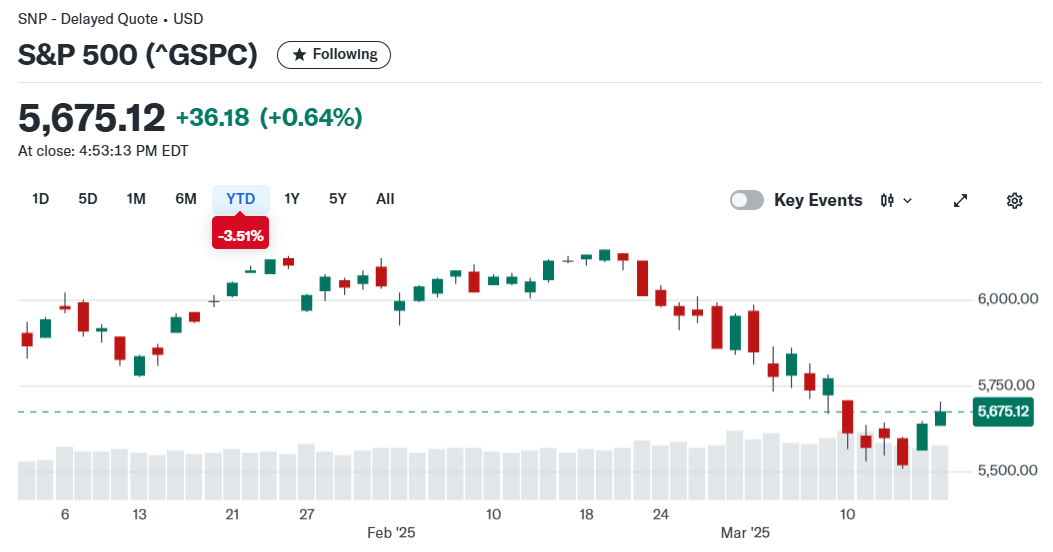
The S&P 500 has been on a downward trajectory since February, falling for four consecutive weeks. Last Thursday, the index officially entered correction territory, dropping more than 10% from its all-time high on February 19. And last week marked the worst weekly performance for U.S. stocks in two years.
The combination of Trump's "Tariff 2.0" fears, trade war anxieties, and concerns about a potential U.S. economic recession have weighed heavily on investor sentiment. But here's the good news: some of Wall Street's top analysts believe the worst may be behind us.
Both Morgan Stanley and Citi are now signaling that the market may have bottomed out, and they're predicting a significant rebound. In fact, they've set a year-end target of 6,500 for the S&P 500, which implies a 15% upside from current levels.
Why the Bottom Might Be In
According to Morgan Stanley, there are five key reasons why the market could be poised for a rebound:
-
Oversold Conditions: Last week, major indices entered oversold territory. The S&P 500 was trading around 5,500, which is at the lower end of Morgan Stanley's projected trading range for the first half of 2025. Historically, oversold conditions often precede a bounce.
-
Improving Sentiment and Positioning: Sentiment and positioning indicators have started to "loosen up significantly," which is typically a precursor to upward momentum. In other words, the extreme pessimism we've seen lately might be overdone.
-
Seasonal Tailwinds: As we move into the second half of the month, seasonal trends tend to improve. This could provide a technical boost to the market.
-
Weaker Dollar: The recent weakening of the U.S. dollar could be a positive catalyst for corporate earnings, especially for companies with significant overseas revenue. A weaker dollar makes exports more competitive and can lead to upward revisions in earnings estimates.
-
Lower Interest Rates: With rates staying lower for longer, the U.S. economic surprise index could improve, which would likely support equity prices. Lower rates also make stocks more attractive relative to bonds.
Morgan Stanley's Chief Investment Officer, Mike Wilson, doubled down on this view, stating that the 5,500 level should act as a floor for the market, particularly for cyclical and growth stocks that have been hit the hardest. Friday's price action seems to support this thesis, with the S&P 500 bouncing off this key level.
Citi's Take: Valuations Are Looking Healthier
Citi's analysts are echoing a similar sentiment. They argue that the recent sell-off has brought S&P 500 valuations back to more reasonable levels. Even the so-called "Magnificent Seven" tech stocks—which have driven a significant portion of the market's returns—are now trading at more rational valuations compared to their lofty peaks last year.
Citi also highlighted that the S&P 500's risk-reward profile is now skewed to the upside. They've drawn a line in the sand at 5,500, suggesting that this level represents a favorable entry point for investors. Beyond the short-term bounce, Citi remains constructive on U.S. equities over the long term, citing factors like productivity gains, the AI boom, operational leverage, and shareholder-friendly policies.
My Two Cents
While I'm cautiously optimistic about the market's near-term prospects, I think it's important to keep a few things in mind:
-
Trade War Risks Aren't Gone: Trump's "Tariff 2.0" rhetoric is still a wildcard. If trade tensions escalate further, it could easily derail this rally.
-
Earnings Season Will Be Key: The upcoming earnings season will be a major test for the market. Companies will need to show that they can deliver strong results despite the macro headwinds.
-
Don't Forget the Fed: While lower rates are supportive, any hawkish surprises from the Fed could spook investors. Keep an eye on inflation data and Fed commentary.
That said, if Morgan Stanley and Citi are right, we could be looking at a solid rebound into year-end. For those who've been sitting on the sidelines, this might be a good time to start dipping your toes back into the market—especially in sectors that have been oversold, like tech and cyclicals.
Bottom Line
The "darkest hour" for U.S. stocks may indeed be over. On Monday, markets extended last Friday's rally, signaling potential momentum ahead. With improving sentiment, healthier valuations, and supportive macro factors, the S&P 500 could be on track for a 15% rally by year-end. Of course, nothing is guaranteed in the markets, but the setup looks promising. As always, stay diversified, keep an eye on the macro landscape, and don't let short-term volatility shake you out of your long-term strategy. #stockmarket
#stockmarket