
Reports Decoded – Policy Uncertainty: A Growing Risk to U.S. Growth and Markets

Kevin Insights
March 19, 2025
GoGPT Summarizes Articles
On March 17, 2025, BlackRock released its latest Weekly Commentary, and there's a lot to unpack—particularly regarding how policy uncertainty is emerging as a key risk for U.S. growth and markets. Despite strong economic fundamentals, markets are growing increasingly cautious about the future, with a sharp focus on the risks stemming from unclear fiscal policies and potential shifts in trade.
Markets Are Jittery, But the Data Doesn't Show a Recession
Right now, we're seeing a notable pullback:
-
S&P 500 is down 8% from its February peak.
-
Nasdaq has dropped 11%, marking its sharpest decline since the 2022 selloff.
A big part of this selloff comes from fears of a potential U.S. recession and uncertainty over future policy changes.
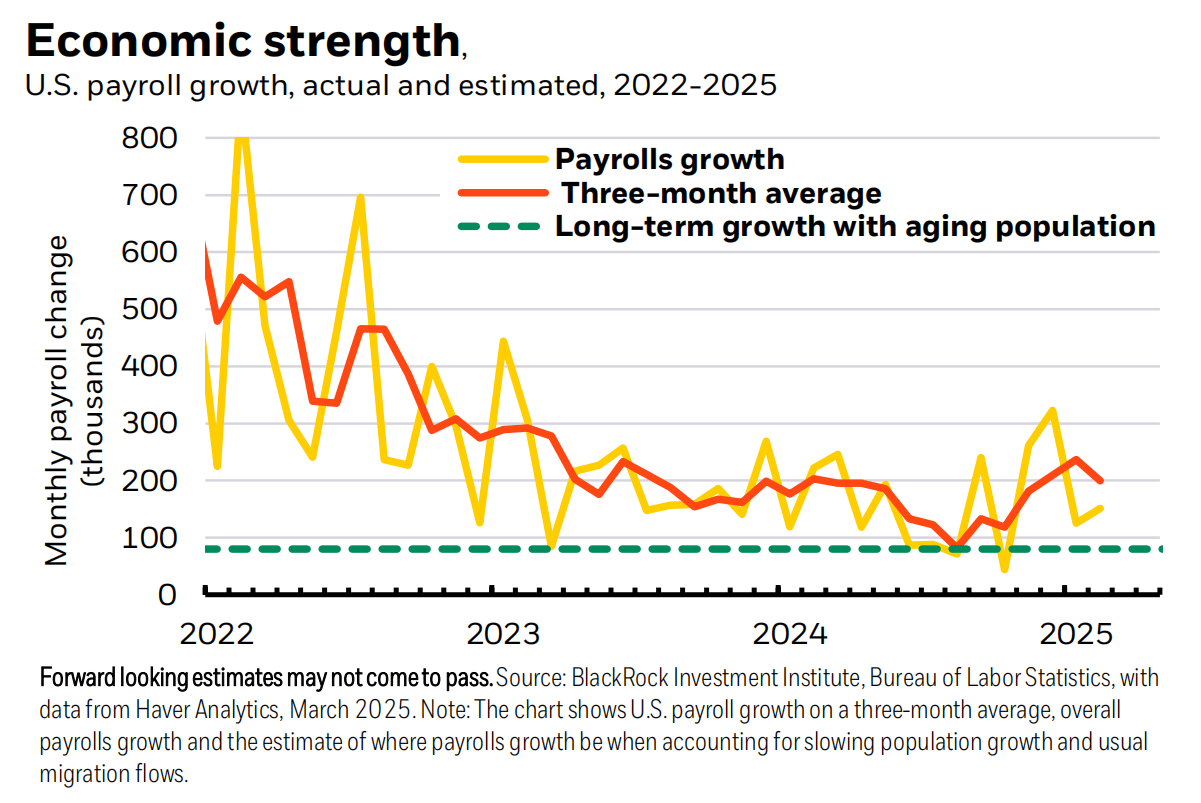
But interestingly, the hard economic data doesn't suggest a downturn:
-
Payroll growth is slowing but still above long-term trends.
-
Corporate earnings forecasts remain strong — no signs of a collapse there.
-
Consumer spending (based on high-frequency credit card data) still looks healthy.
So why are markets struggling?
The key reason is policy uncertainty—particularly around fiscal policies, trade tariffs, and long-term economic strategy. When businesses and investors don't know what to expect from Washington, they start holding back on spending and investment. BlackRock believes this uncertainty should ease within the next 6-12 months, but for now, it's a drag on sentiment.
Tech Stocks: Still Strong, But Expect More Volatility
The tech sector has been leading the market, but it's also been one of the most volatile. We're seeing:
-
Nasdaq's 11% decline since February, the steepest drop since 2022.
-
A sharp unwinding of momentum-driven trades, where crowded positions in big tech names are getting shaken out.
That said, BlackRock remains bullish on tech in the long run and sees several reasons for optimism:
-
Earnings growth is still solid, and tech companies continue to show resilience.
-
Free cash flow as a percentage of total sales is at 30% — the highest level since 1990.
-
AI and cloud computing remain strong growth drivers through 2025.
However, the short term could remain choppy. Tech stocks have been the most popular trades in recent years, and when everyone is positioned the same way, any negative news can lead to sharp selloffs. The recent pullback shows how sensitive the sector is to policy risks, including potential regulatory actions and tariff changes.
BlackRock suggests that once policy details (like the White House's tariff plans) become clearer, the market should stabilize, but in the meantime, brace for more swings.
Bonds: No Longer the Safety Net They Used to Be?
Traditionally, investors turned to long-term U.S. Treasuries as a hedge against stock market volatility. But according to BlackRock, that strategy may not work as well anymore.
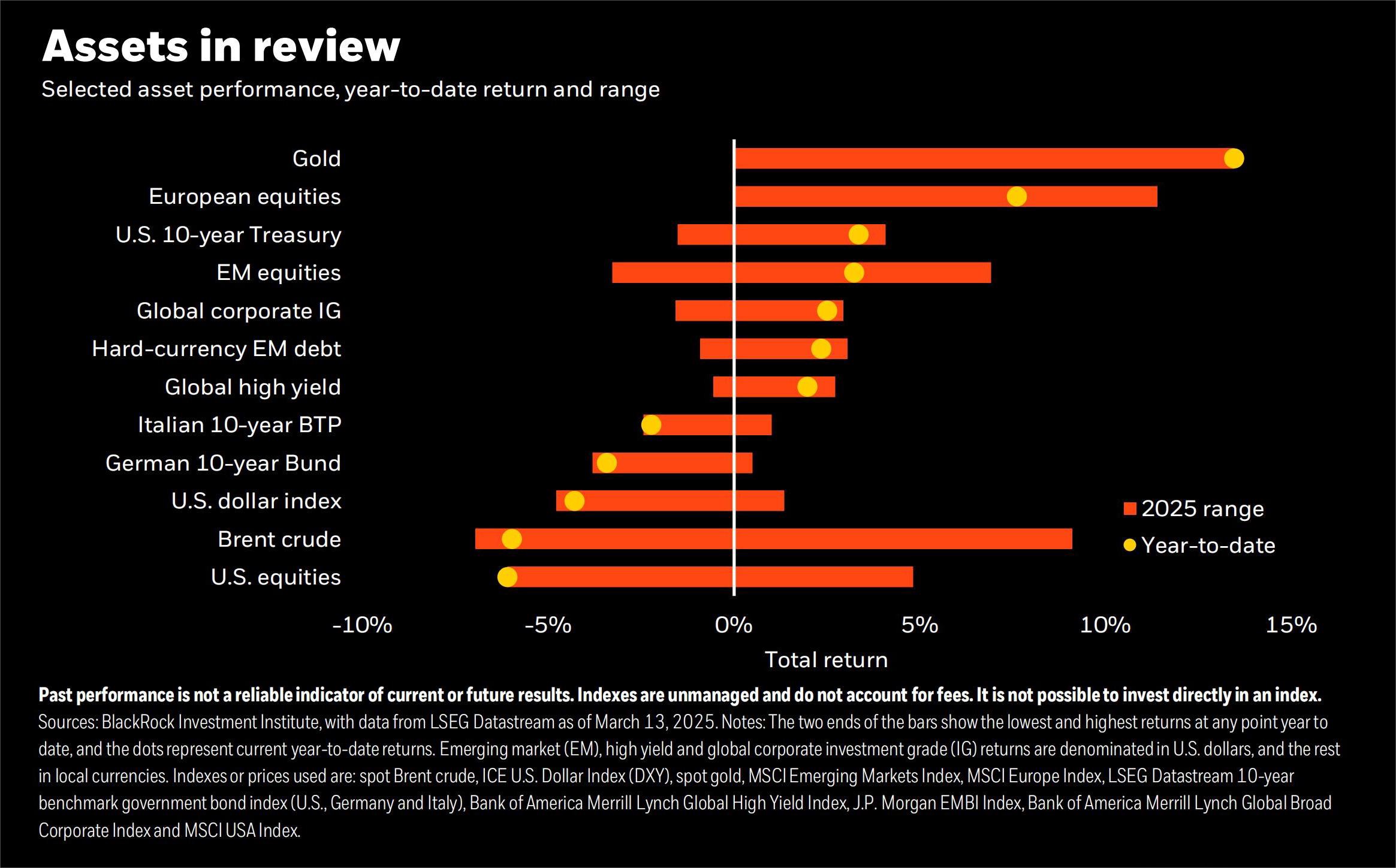
Why? A combination of factors:
-
Sticky inflation is keeping interest rates higher for longer.
-
Persistent U.S. deficits are driving up bond supply, pressuring yields.
-
Geopolitical fragmentation is adding uncertainty, making global capital flows less predictable.
All this means bond yields could continue to rise, making long-term Treasuries a less attractive hedge. Instead, BlackRock is:
-
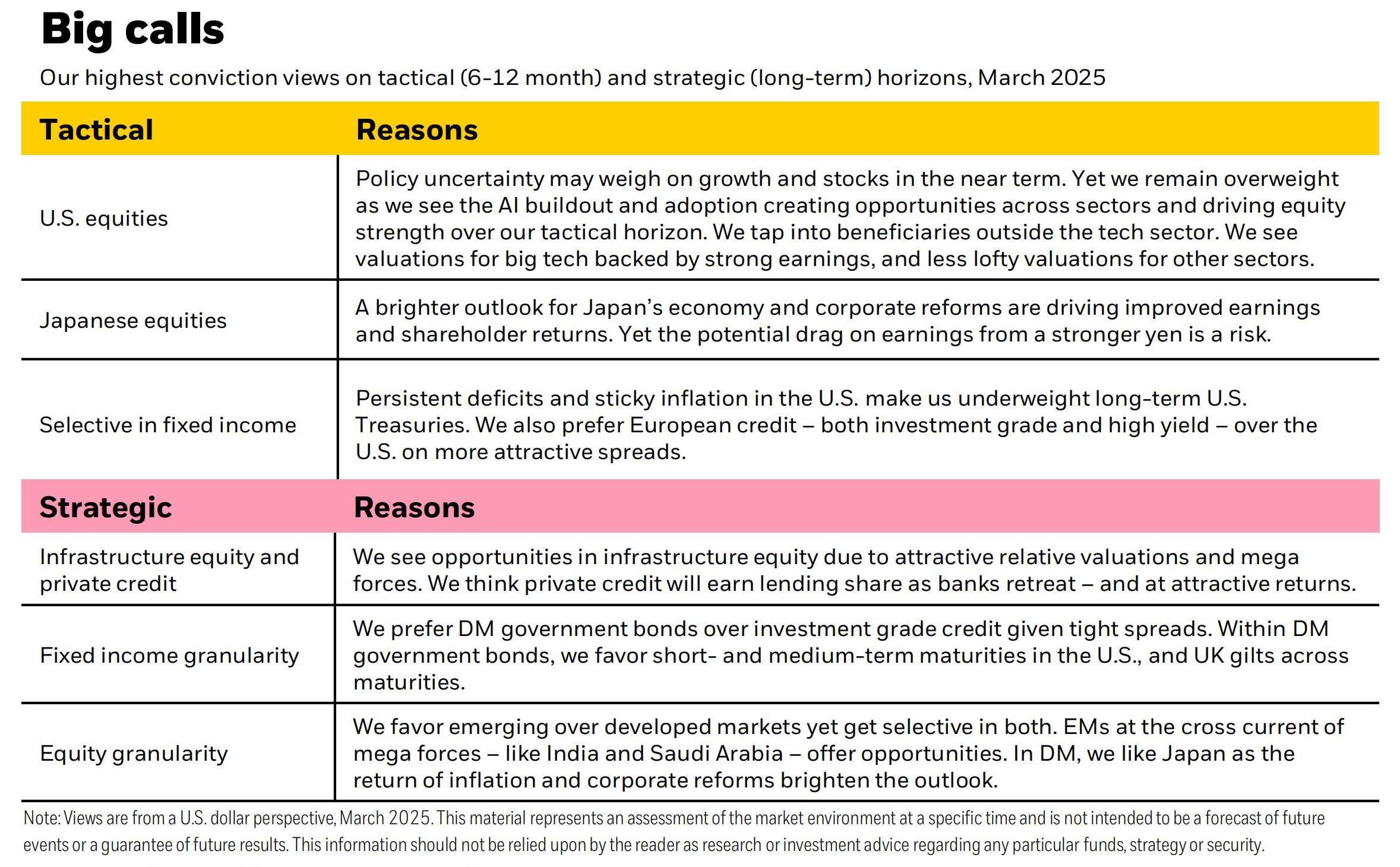
Underweight long-term Treasuries
-
Suggesting that gold might be a better portfolio diversifier
If you're someone who has traditionally relied on bonds to offset equity risks, this is a shift worth paying attention to.
My Take: How to Navigate This Uncertainty
BlackRock's analysis is solid, but how should we position ourselves in this environment? Here's what I'd consider:
1. Stay Overweight U.S. Stocks, But Be Selective
-
Tech still has strong long-term fundamentals, but short-term volatility is real.
-
Look beyond just AI and big tech—consider industrials, healthcare, and energy, which have more reasonable valuations.
-
If policy uncertainty drags on, diversification across sectors is key.
2. Watch Policy Developments Closely
-
The biggest risk right now isn't economic fundamentals—it's how Washington handles trade, tariffs, and fiscal spending.
-
Upcoming policy announcements could be major market movers, so stay alert.
3. Reassess Your Bond Allocation
If you're heavily invested in long-term Treasuries, consider shifting to:
- Shorter-duration bonds (less sensitive to rate moves)
- Alternative diversifiers like gold (which BlackRock favors)
4. Be Prepared for More Volatility
-
Markets hate uncertainty, and until we get clarity on policy, expect more swings.
-
If you're an active investor, this environment might present good trading opportunities in beaten-down sectors.
Bottom Line
The economy itself looks resilient, but policy uncertainty is the real elephant in the room. Markets don't like uncertainty, and until we get more clarity from Washington, we're likely to see choppiness continue.
BlackRock believes this uncertainty will fade over the next 6-12 months, but until then, it's critical to stay flexible, focus on quality investments, and avoid overexposure to crowded trades.
Disclaimer: This post is for informational purposes only and does not constitute financial advice. Always do your own research before making investment decisions.
#Private Market: Unlocking Potential#privatemarket