
Reports Decoded – Asia Equity Strategy: Navigating the Bull Market in 2Q 2025

Kevin Insights
March 20, 2025
GoGPT Summarizes Articles
Société Générale’s "Asia Equity Strategy: 2Q Outlook – The Three Stages of the Bull Market (Part 2)" report, released on March 12, 2025, provides a comprehensive analysis of the current state of Asian equities, with a particular focus on China, Japan, and India. The report delves into the key factors shaping the region’s markets, including geopolitical shifts, diverging monetary policies, and evolving macroeconomic trends. It also offers actionable investment strategies backed by data and insights. Below is a breakdown of the report’s key themes and implications for investors.
From Trade Wars to a New World Order
The report kicks off by discussing how geopolitical tensions are changing the investment landscape. Things like tariffs, rising military spending, and energy policies are front and center, and they’re having a big impact on Asian economies. Here’s what you need to know:
Tariffs and Trade Wars:
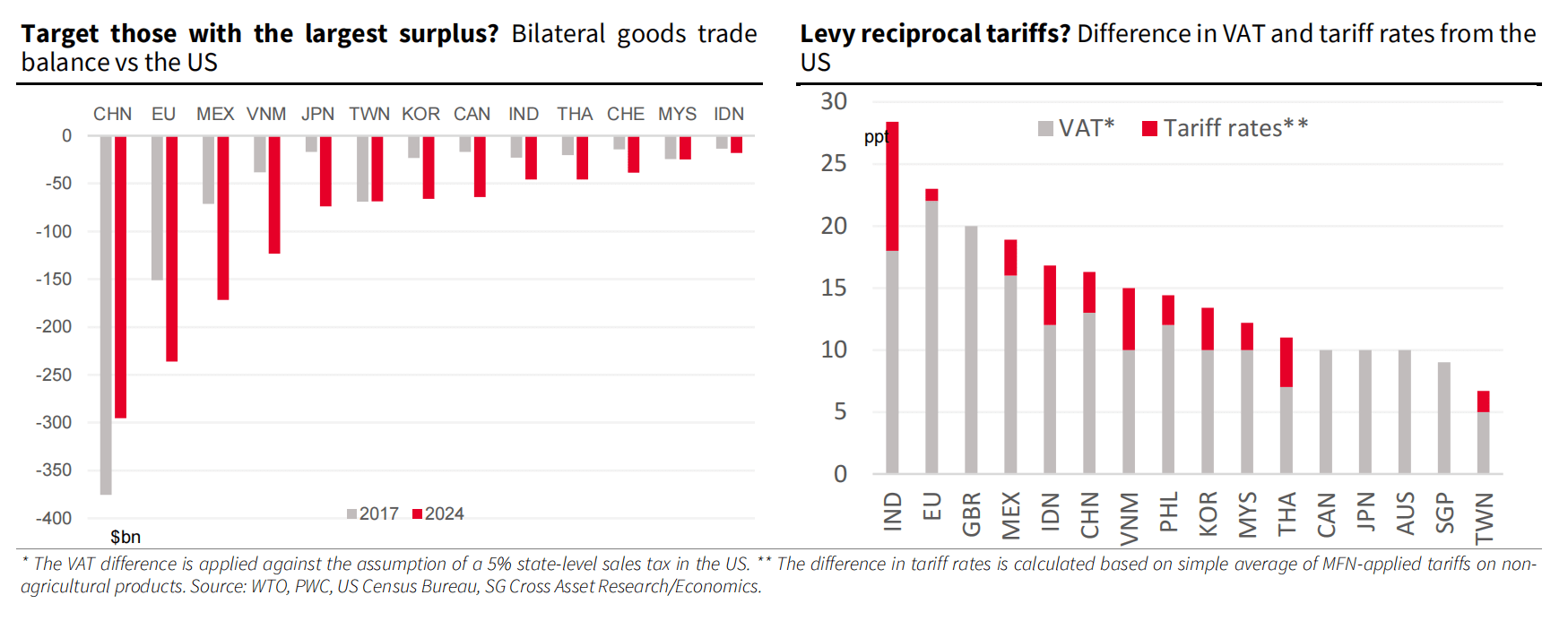
The US is using tariffs as a way to fix trade imbalances, bring manufacturing back onshore, and decouple from China. This is hitting countries in Asia, especially those with large trade surpluses like China and Vietnam. Countries like India are more affected by sector-specific tariffs, and places like Japan, Korea, and Taiwan are feeling the pinch due to their reliance on industries like semiconductors and automobiles.
-
China and Vietnam have the highest trade surpluses with the US.
-
India, Taiwan, Korea, and Japan are more exposed to sector-specific tariffs, particularly in tech and autos.
Military Spending:
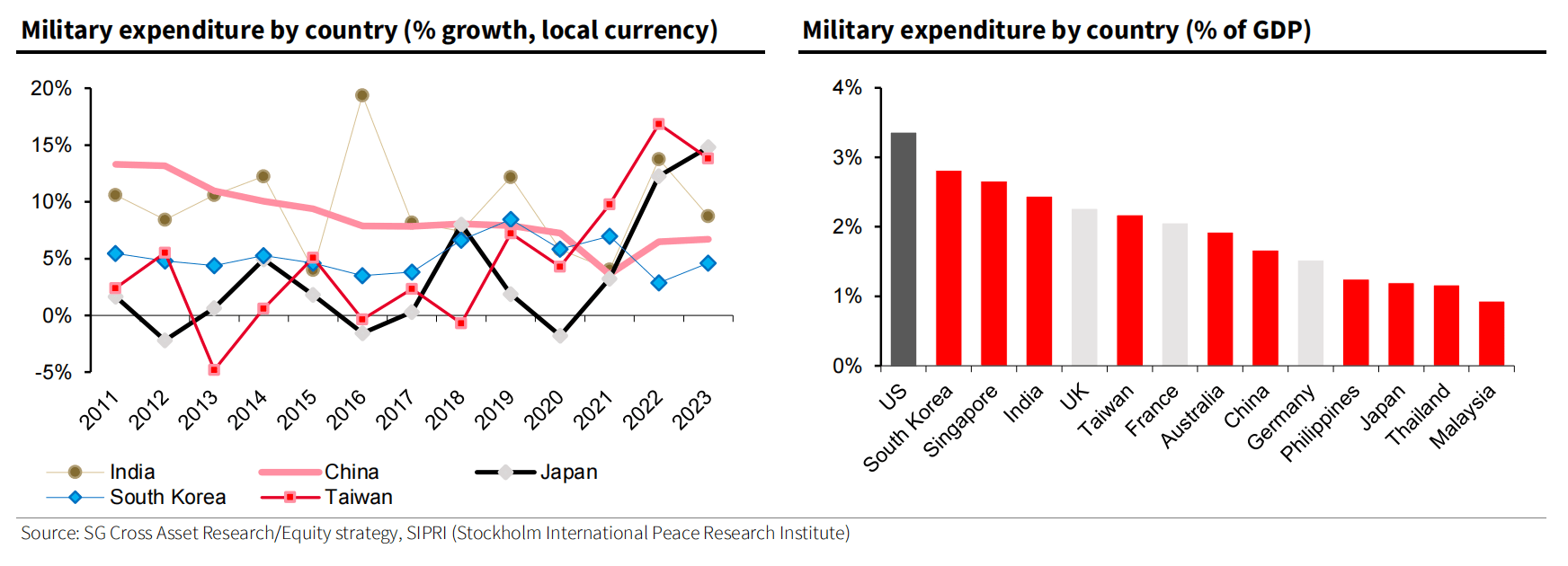
Military spending is up everywhere, and Asia’s no exception. Japan, for instance, has pledged to double its defense spending to 2% of GDP as part of continuing Abenomics. This has created a bullish outlook on defense stocks, and Société Générale is keeping a long position on the SG Asia Defence Basket (SGASDEFE), which includes stocks from Japan, India, Korea, and Singapore.
-
Military spending in Asia grew by more than 5% from 2021 to 2023, compared to just 1% in the previous decade.
-
The US accounts for 35% of global military spending, and that number is still growing.
Energy Policy:
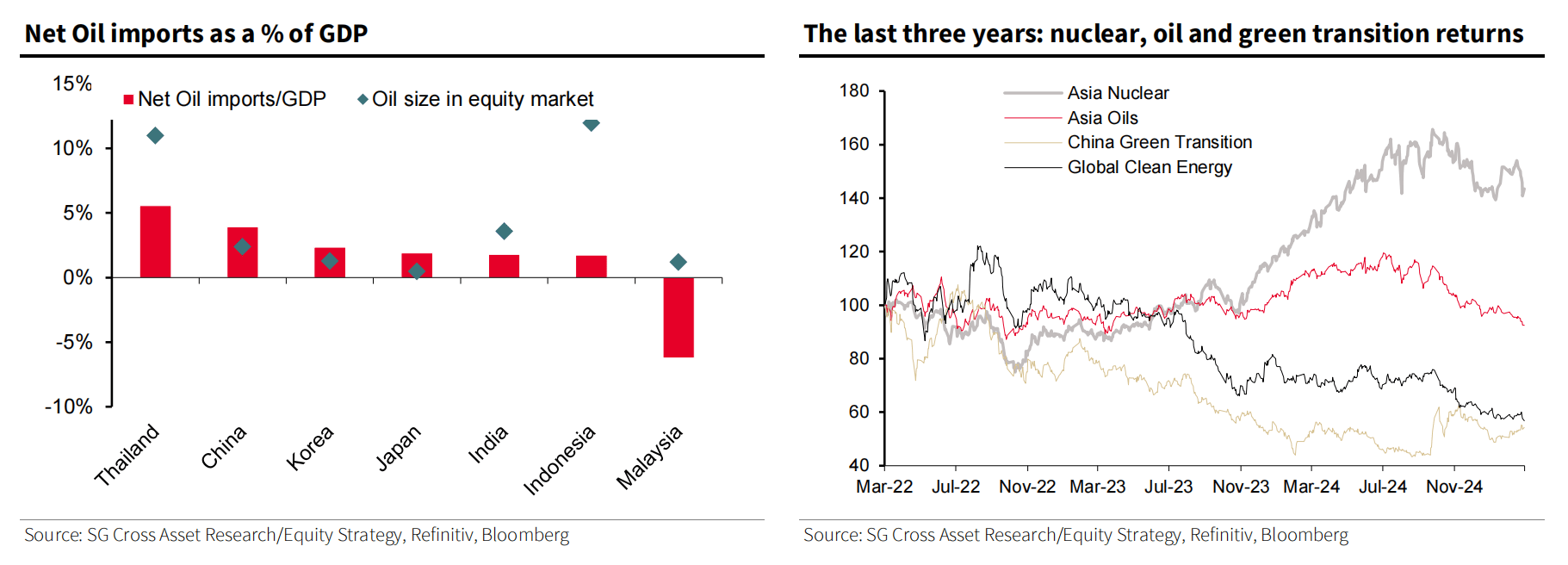
Trump’s energy policy is bearish for oil, which is actually positive for most Asian economies since they’re net oil importers. But for markets like Thailand and Indonesia, which rely on the oil sector, it’s not so great. On the flip side, nuclear energy is looking more attractive due to energy security concerns, with new technologies like Small Modular Reactors gaining ground. The SG Asia Nuclear Basket (SGASNU) has outperformed the broader APAC market by 42 percentage points since it started in May 2022.
Cracks in US Exceptionalism: What It Means for Asia
The report also touches on how the influence of US exceptionalism is starting to fade globally. Here’s what’s happening:
Valuations and Earnings:
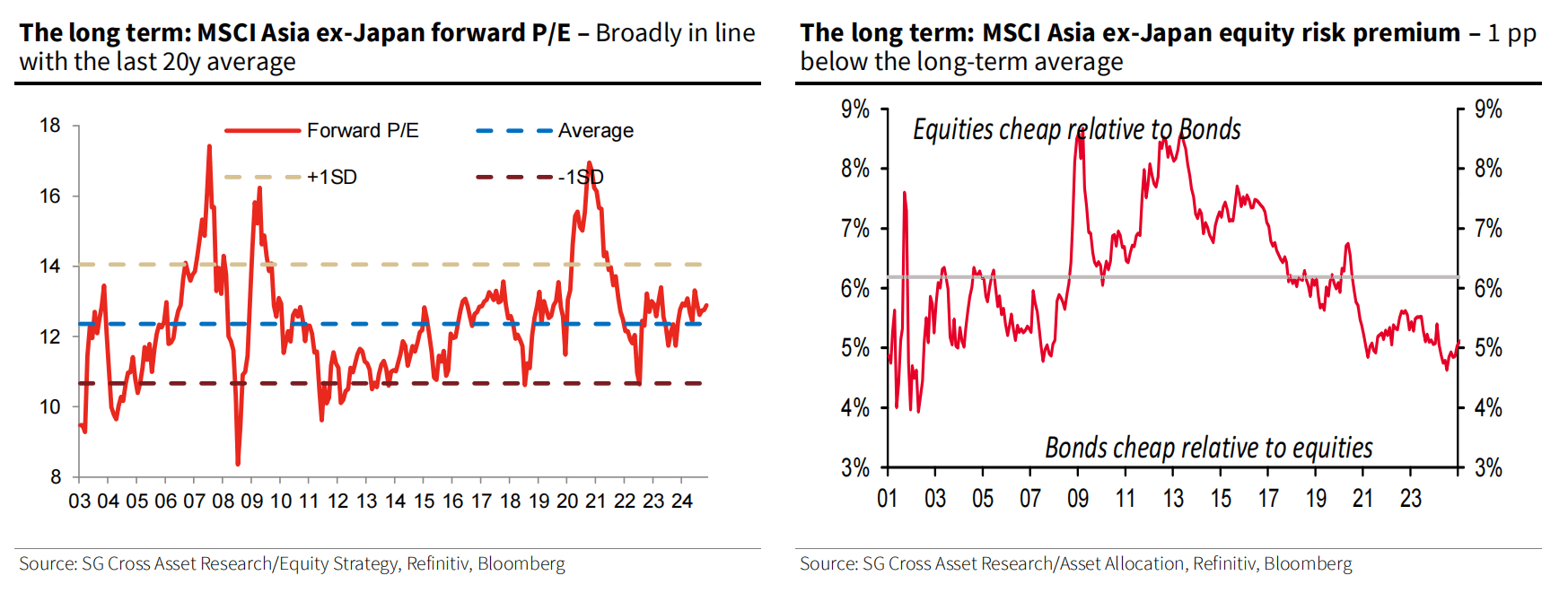
Asian equities are trading roughly in line with historical averages. The forward P/E for MSCI Asia ex-Japan is 12.9x, slightly above the 10-year average of 12.4x. But, the tech sector in Korea and Taiwan is expected to underperform because their earnings are lagging behind the Nasdaq.
-
Taiwan is trading at a 10-15% premium because of strong earnings, but that might not last.
-
MSCI China is at 11.2x forward earnings, which is in line with its 2021-2024 average, but with improving sentiment, it might surpass its historical average of 11.5x.
Portfolio Flows:
US financial conditions are driving portfolio flows, with a shift from equities to bonds. Over the past six months, emerging market (EM) bond inflows have hit $40 billion, while equity outflows were $86 billion. This trend is especially noticeable in Asia ex-China, where foreign investors have sold $62 billion worth of equities since September. India, Korea, and Taiwan are seeing the most outflows.
Diverging Policies: Japan’s Struggles vs. China’s Tailwinds
The report highlights the difference in monetary policies between Japan and China:
Japan’s Headwinds:
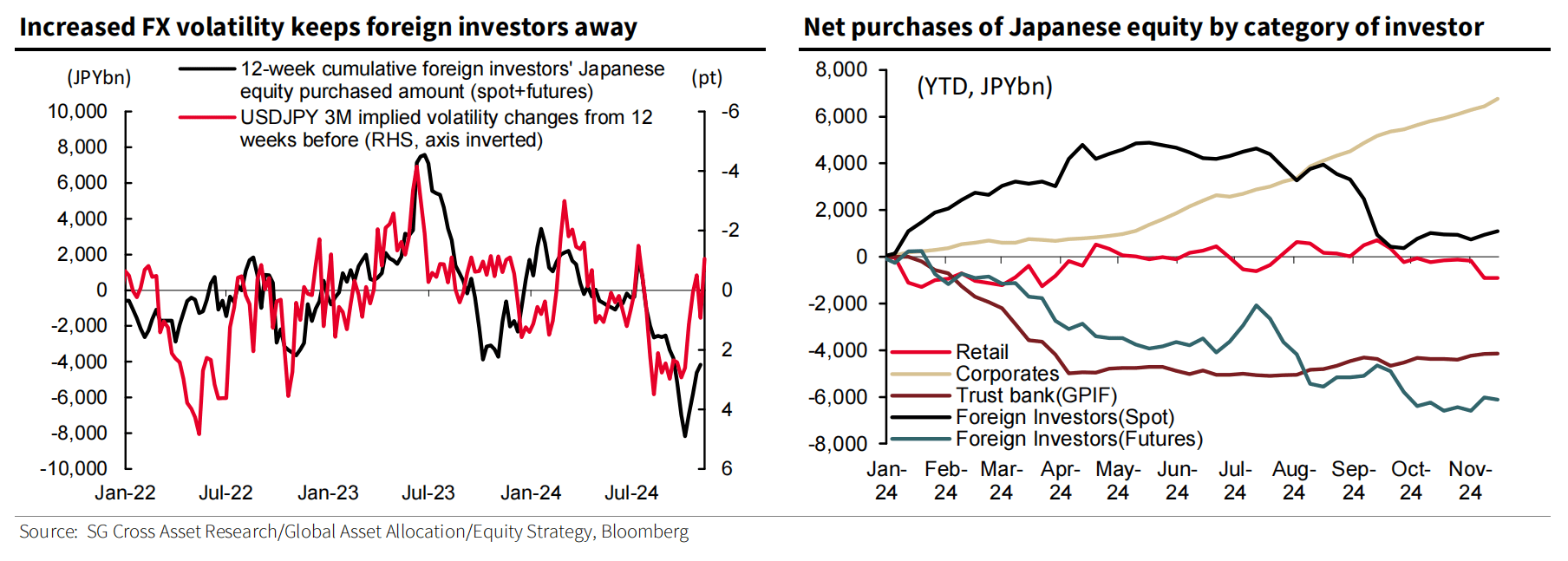
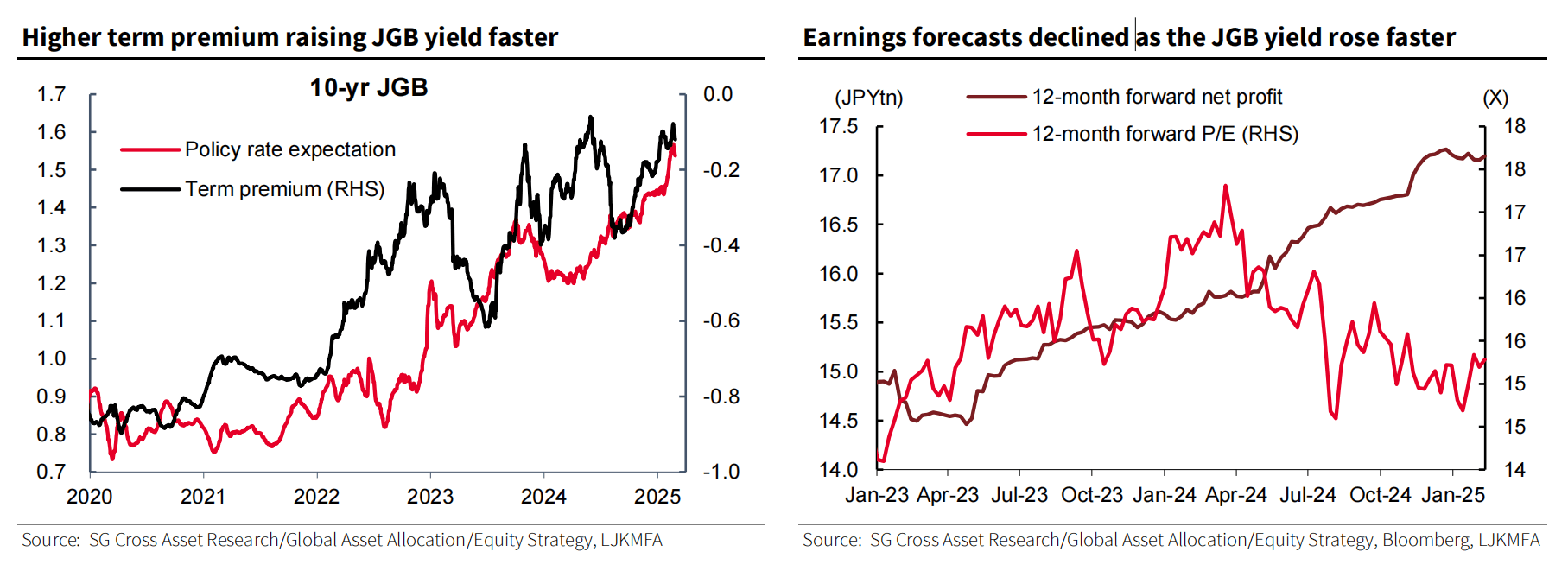
The Bank of Japan (BoJ) is normalizing its monetary policy, which is causing more yen volatility and pushing up Japanese Government Bond (JGB) yields. This has led to foreign investors pulling back from Japanese equities, especially exporters. Still, Japan’s fundamentals remain strong, with the economy in a reflation phase and corporate governance reforms underway.
-
Yen volatility has increased since last summer, leading to foreign investors pulling out $60 billion from Japanese equities.
-
JGB yields have hit a 4-year high, which is putting pressure on stock valuations.
China’s Tailwinds:
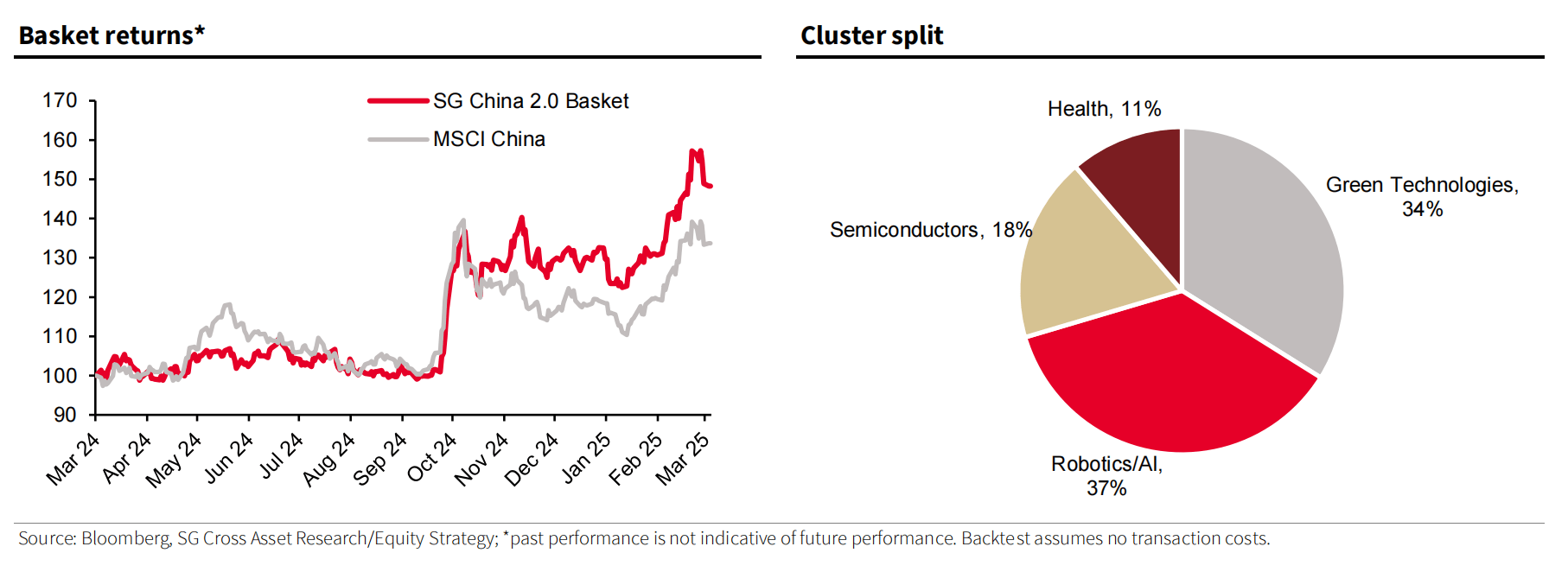
China’s policy shift, starting in September 2024, has triggered a market rebound. The People’s Bank of China (PBoC) has been easing its measures, and more bond issuance is expected. Despite deflationary pressures and trade tensions, the report remains bullish on Chinese equities, especially in sectors like industrials and consumption.
-
The SG China 2.0 Basket (SGCHM20) and SG Seven Titans Basket (SGCHTTAN) are recommended for exposure to China’s industrial and consumer sectors.
India: No V-Shaped Recovery, But Banks Look Attractive
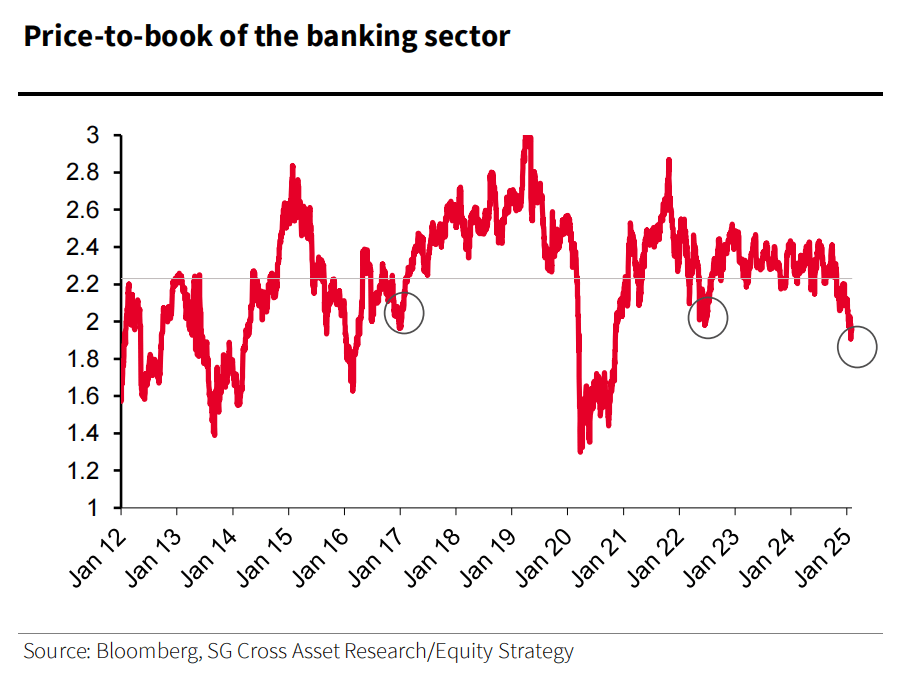
After a major correction, India’s valuations have returned to long-term averages, but earnings recovery is slower than expected. Public capex has leveled off, foreign investors are selling, and even domestic investors are showing signs of fatigue. Société Générale is shifting focus away from exporters like IT services and recommending Indian banks, which are now trading at COVID-era valuation levels.
Key Takeaways for Investors
-
Go Long on Defense and Nuclear: With rising geopolitical tensions and military spending, defense stocks are a solid bet. The SG Asia Defence Basket (SGASDEFE) and SG Asia Nuclear Basket (SGASNU) are well-positioned to benefit.
-
Be Selective in Tech: While tech markets in Korea and Taiwan may underperform due to lagging earnings, China’s tech sector is showing signs of recovery, particularly in AI and semiconductors.
-
Focus on Value in Banks: Banks in China, Japan, and India offer value opportunities as monetary policies diverge and inflation trends stabilize.
-
Watch the Dollar: A weaker dollar could boost Asian equities, especially in emerging markets where central banks have room to ease.
Final Thoughts
While geopolitical risks and policy differences create some challenges, they also open up opportunities for savvy investors. The key is to stay flexible and focus on sectors and regions that are best positioned to navigate these shifts.
As always, do your own research and consider your risk tolerance before making any investment decisions. But if you’re after a well-researched perspective on Asian equities, this report is definitely worth checking out.
#Private Market: Unlocking Potential#privatemarket