
NVIDIA Launches Quantum Research Lab in Boston and Huang’s Remarks Lead to a Quantum Stock Sell-Off

Shearing sheep
March 21, 2025
GoGPT Summarizes Articles
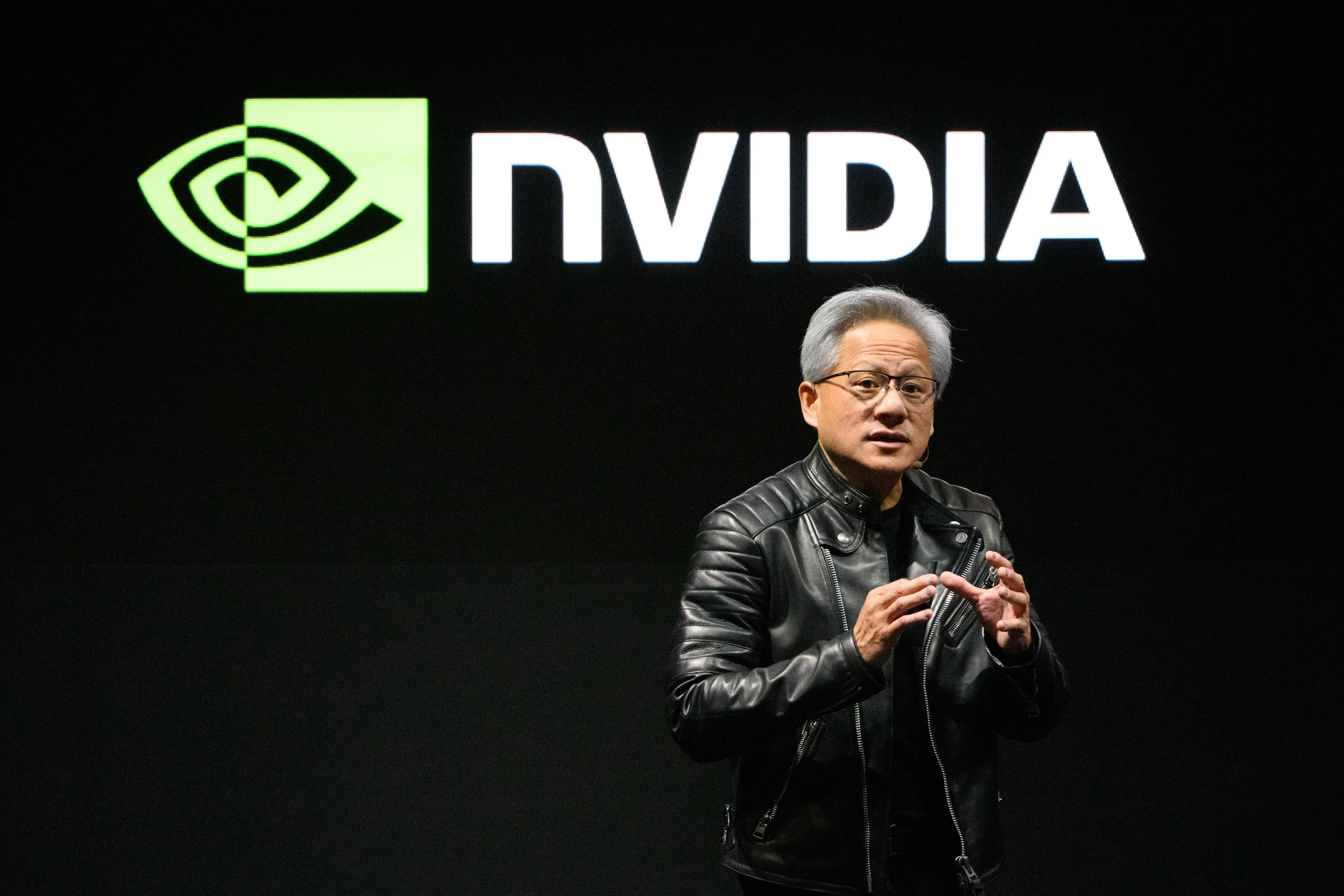
On Thursday, at NVIDIA's annual software developer conference in San Jose, the company announced the creation of a new quantum computing research lab in Boston. Dubbed the Nvidia Accelerated Quantum Research Center (NVAQC), this facility will open later this year and collaborate with prestigious institutions like Harvard and MIT, as well as quantum computing companies such as Quantinuum, Quantum Machines, and QuEra Computing.
That same day, NVIDIA hosted a series of events focused on quantum computing, but what really stole the show were Jensen Huang's comments that sent shockwaves through the quantum computing sector once again.
Earlier this year, in January, Huang made waves by stating that practical quantum computers were still 20 years away, causing a dramatic sell-off in quantum stocks, with some falling by 40% or more.
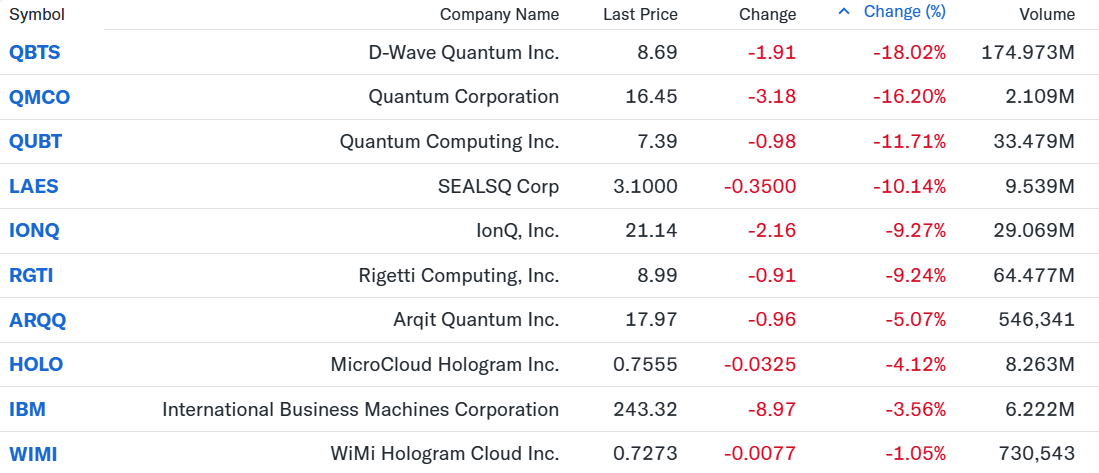
At the quantum-themed event on Thursday, Huang reflected on his earlier remarks: “My first reaction was, 'I didn't know they were public! How could a quantum computer company be public?'” His surprise over the existence of publicly traded quantum companies sparked another round of heavy losses for quantum stocks. By the close of Thursday, shares of D-Wave Quantum ($QBTS) were down over 18%, Quantum ($QMCO) dropped more than 16%, Quantum Computing ($QUBT) fell over 11%, and SEALSQ Corp ($LAES) dropped over 10%.
Is Quantum Computing Ready for Prime Time?
Huang’s comments have reignited a broader debate within the tech industry: Is quantum computing truly ready for prime time, or is it still in its experimental infancy?
Quantum computing promises to revolutionize industries by harnessing the strange properties of subatomic particles to perform calculations far beyond the reach of traditional semiconductors. But while the potential is immense, the technology is incredibly difficult to develop, and practical, everyday applications are still elusive.
Huang’s skepticism isn't without merit. Building a functional quantum computer that can outperform traditional systems is a monumental task, and the timeline for achieving this is still uncertain. Yet, his remarks have sparked a backlash from companies that are already making progress in the field.
For example, IonQ and D-Wave are actively developing quantum systems, and companies like Infleqtion are commercializing quantum technologies—like advanced quantum clocks designed to synchronize traditional computing chips. Plus, giants like Google and Microsoft are heavily invested in quantum research, so this is far from just a few startups chasing a pipe dream.
Expectations vs Reality
But here's the real crux: expectations. As quantum computing is touted as the "next-gen computing revolution," the assumption that it will eventually replace traditional computing has taken root.
Huang made a key point about the industry’s misstep in treating quantum computers as traditional computers. He suggested that quantum tech should instead be viewed as scientific instruments—tools that work alongside traditional computing to drive breakthroughs in fields like biology, chemistry, and materials science. The focus, he argues, should be on collaboration, not replacement.
Not everyone in the quantum field is on board with Huang’s perspective. For example, D-Wave Quantum CEO Alan Baratz pointed out that while there are indeed applications quantum computers shouldn't handle, he struggles to view them purely as instruments when they’re already being used for things like materials discovery and blockchain.
Huang’s comments may have rattled the market, but they also highlight an important truth: quantum computing is still in its early stages, and investors should proceed with caution. The technology holds immense promise, but it’s still unclear when—or even if—it will fully deliver.
Rebranding or Not, the Question is Timing
Whether quantum tech is called a "quantum computer" or "quantum processor" may not matter much at this point. What matters is the timeline for its maturation. However, I can see Huang’s point: calling it a "quantum processor" might help temper expectations, which could ultimately benefit the industry in the long run.
For now, quantum computing is a high-risk, high-reward investment, with plenty of volatility ahead. But with NVIDIA’s deep expertise in accelerated computing and its strong academic and industrial partnerships, the race for the first practical quantum system is only getting more intense.
#Nvidia's GTC 2025: Can It Reverse the Market's Decline?#nvidia#$Nvidia Corp(NVDA)#$D-Wave Quantum Inc.(QBTS)#$Quantum Corporation(QMCO)#$Quantum Computing Inc. Common(QUBT)#$SEALSQ Corp Ordinary Shares(LAES)