
Riding the Wave: Investor Strategies Amid Tariff Uncertainty and Inflation Surges

As global markets brace for a pivotal week, investors are navigating a complex landscape shaped by looming U.S. tariffs, stubborn inflation, and critical economic data releases. Here’s what you need to know to stay ahead.
Tariffs Take Center Stage: A Calculated Move?
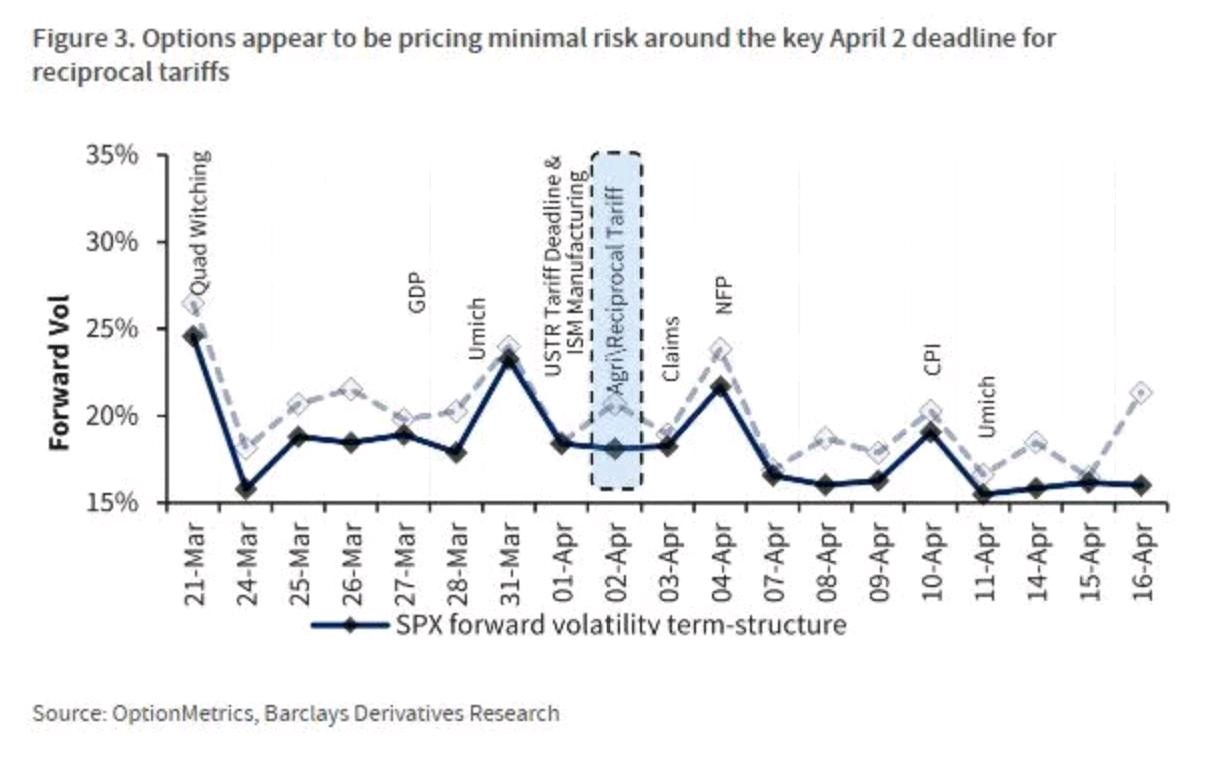
All eyes are on April 2, when President Donald Trump is expected to announce a targeted tariff plan affecting roughly 15% of U.S. trading partners—a significant departure from earlier fears of sweeping global tariffs. This narrower approach, coupled with signals that sector-specific tariffs (e.g., automotive, semiconductors) may be delayed, has injected cautious optimism into equities.
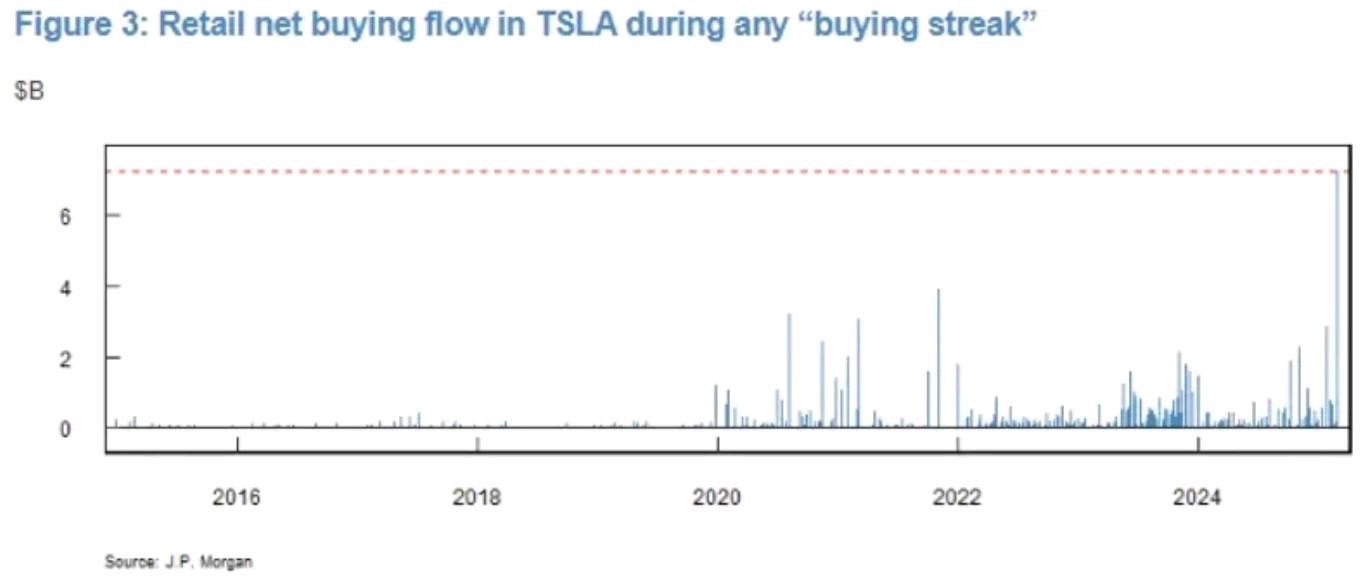
Last Friday’s rally saw $SPX and $NDAQ snap a four-week losing streak, fueled by record-high trading volumes exceeding 21 billion shares. Retail investors poured over 12 billion into U.S. stocks in the week ending March 19, with $TSLA alone attracting 12 billion into U.S. stocks in the week ending March 19, with $TSLA alone attracting 8 billion in retail inflows over 13 consecutive trading days—the largest such surge since 2015.
Yet, risks linger. Analysts warn that markets may be underestimating the fallout of a full-blown trade war. “Investors are ignoring the tail risks,” cautioned Bank of America’s Michael Hartnett, pointing to excessive inflows into equities. Academy Securities’ Peter Tchir adds that post-April 2, the focus could shift to tariffs’ downstream impacts, potentially triggering fresh sell-offs.
Bond Markets Bet on Steeper Curves as Inflation Looms
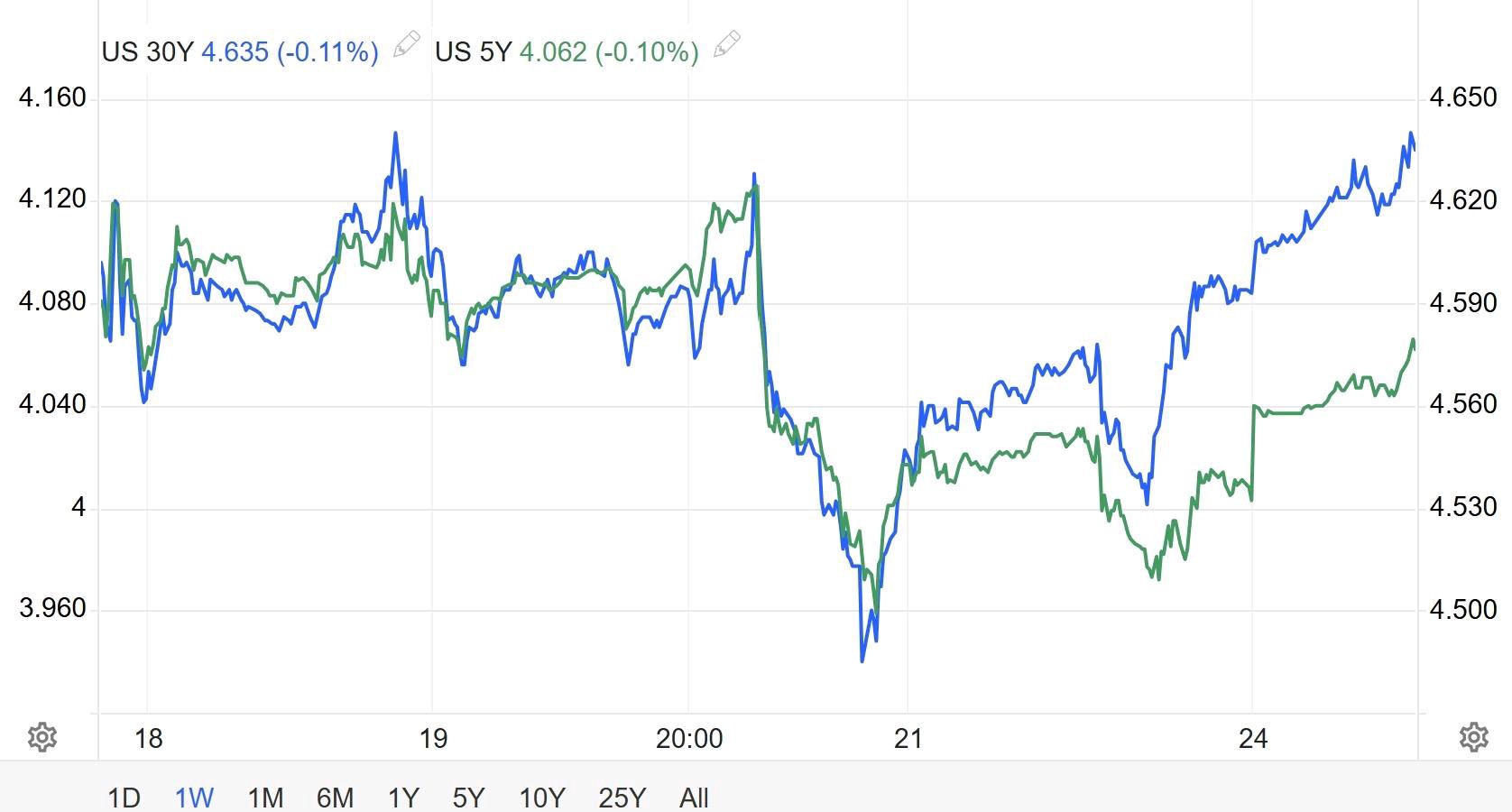
While tariffs dominate headlines, bond traders are fixated on inflation. The yield curve is steepening, with long-term Treasury yields rising sharply amid expectations that Trump’s tariffs and resilient consumer spending will reignite price pressures.
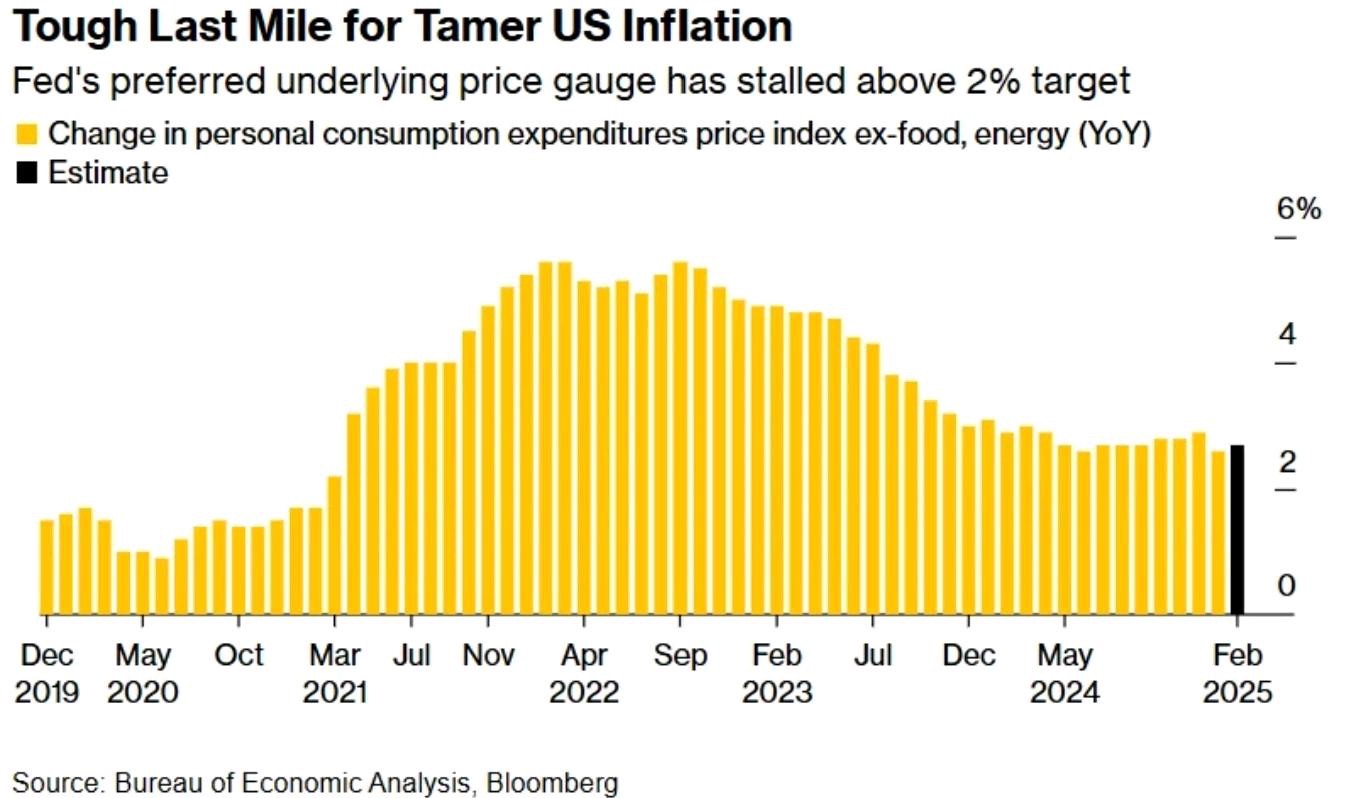
The 30-year Treasury yield recently climbed to a 60-basis-point premium over the 5-year yield—the widest gap since September 2023. This reflects bets that inflation, already sticky, could accelerate further. February’s core PCE inflation data, due Friday, is forecast to edge up to 2.7% year-over-year, far above the Fed’s 2% target.
For equities, steepening yields spell trouble. Elevated long-term rates—often used as the “risk-free rate” in valuation models—threaten high-flying tech stocks and speculative assets. The “Magnificent Seven” tech giants, already under pressure, face renewed headwinds if borrowing costs climb.
Beyond April 2: Volatility Triggers Lurk in Data
Options markets reveal that traders are bracing for turbulence around two key dates: March 31 (the first trading day after core PCE data) and April 4 (nonfarm payrolls release). These events could reshape narratives around inflation, labor markets, and the Fed’s policy path.
Recent consumer sentiment surveys add to the unease. Preliminary March data showed one-year inflation expectations jumping to 4.9%—the highest since November 2022—while long-term expectations hit 3.9%, a three-decade peak. Such figures, combined with weak consumer spending and income growth, signal stagflation risks.
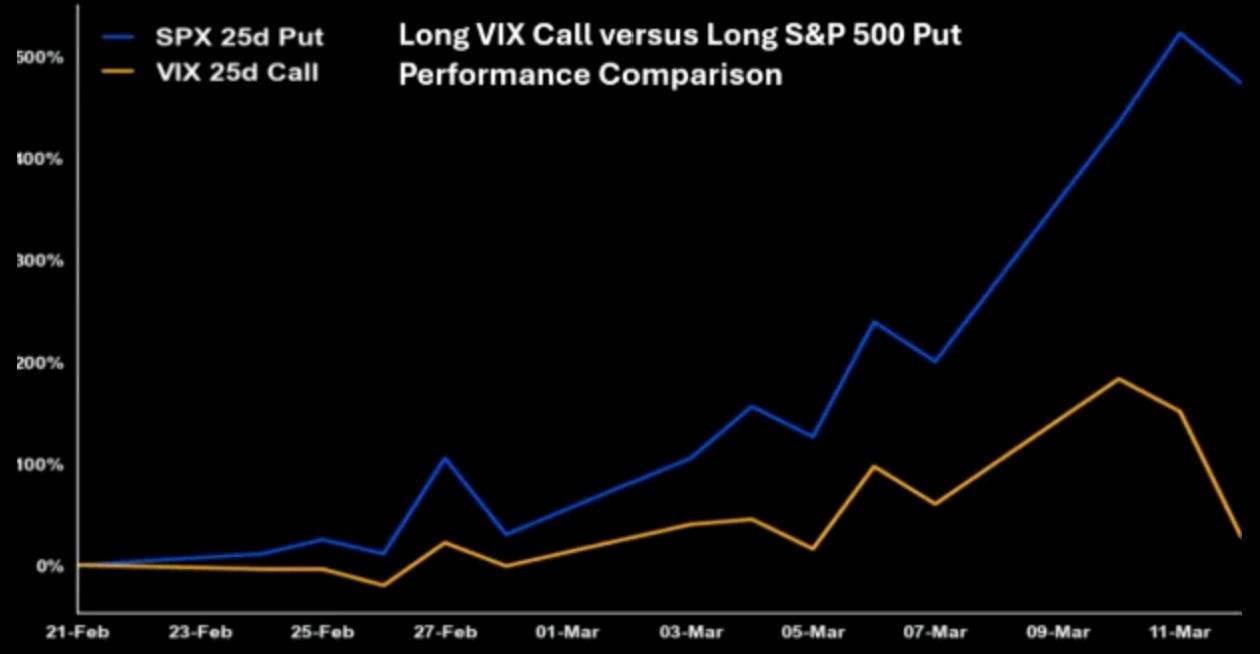
Meanwhile, the VIX “fear gauge” remains oddly subdued despite recent equity declines. Analysts attribute this to reduced hedging demand as investors trim exposure or shift capital overseas. UBS’s Max Grinacoff notes that volatility spikes around events like April 2 may mirror the muted reaction to last week’s Fed meeting.
The Fed’s Tightrope Walk
The central bank’s hands are tied. With inflation entrenched and tariffs threatening new price shocks, policymakers held rates steady in March and signaled just two cuts this year. Fed Chair Jerome Powell emphasized a wait-and-see stance, acknowledging the need to assess tariff impacts.
Friday’s PCE report will test this patience. A hotter-than-expected print could cement bets on prolonged higher rates, while a softer reading might revive hopes for easing—though neither scenario eliminates recession fears.
Bottom Line: Positioning for the Storm
Investors face a trifecta of risks:
• Tariff Surprises: April 2 could mark either a relief rally or a volatility spike, depending on policy details.
• Inflation Persistence: Steepening yields and sticky PCE data may force portfolio rebalancing away from rate-sensitive sectors.
• Data-Driven Volatility: Nonfarm payrolls and consumer sentiment could amplify market swings.
For now, the window for tactical equity gains remains open, especially ahead of Q1 earnings season starting April 10. But as Veda Partners’ Henrietta Treyz warns, “Certainty post-April 1 may breed complacency.” In this environment, agility—not overconfidence—will be key.
Stay nimble, stay informed, and keep one eye on Washington and the other on the Fed. The storm is far from over.