
Reports Decoded – US Infrastructure & Non-Residential Construction: Key Trends and Takeaways

Kevin Insights
March 25, 2025
GoGPT Summarizes Articles
Goldman Sachs recently dropped their latest US Infrastructure Toolkit, “Non-residential construction tracker: Highway steady, manufacturing mixed,” and there’s a lot to unpack for investors tracking non-residential construction. Here are the highlights and what they could mean for the market.
Highway Construction
Highway contract awards are up 3% YoY (trailing 12 months), holding steady from last month. This is a positive sign, especially given concerns around potential pauses in infrastructure spending. Notably, Senator Lummis has proposed repurposing IRA funds for infrastructure—something to watch closely, as it could inject more stability (or volatility) into the sector.
Manufacturing
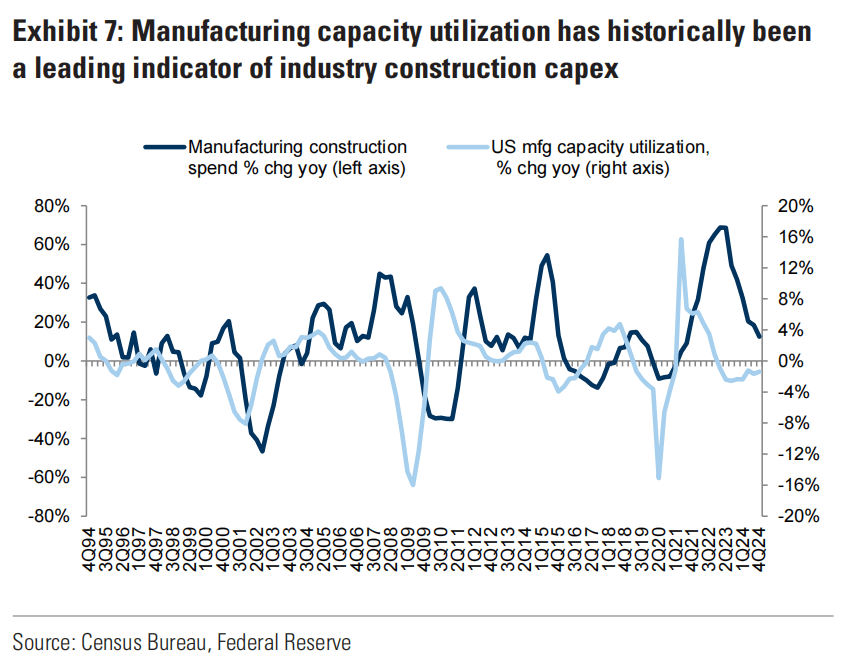
Manufacturing remains the largest segment of private non-residential construction (31% of capex), but the data is diverging:
-
Core manufacturing improved slightly, with capacity utilization flat YoY QTD (vs. -1.4% in Q4 2024).
-
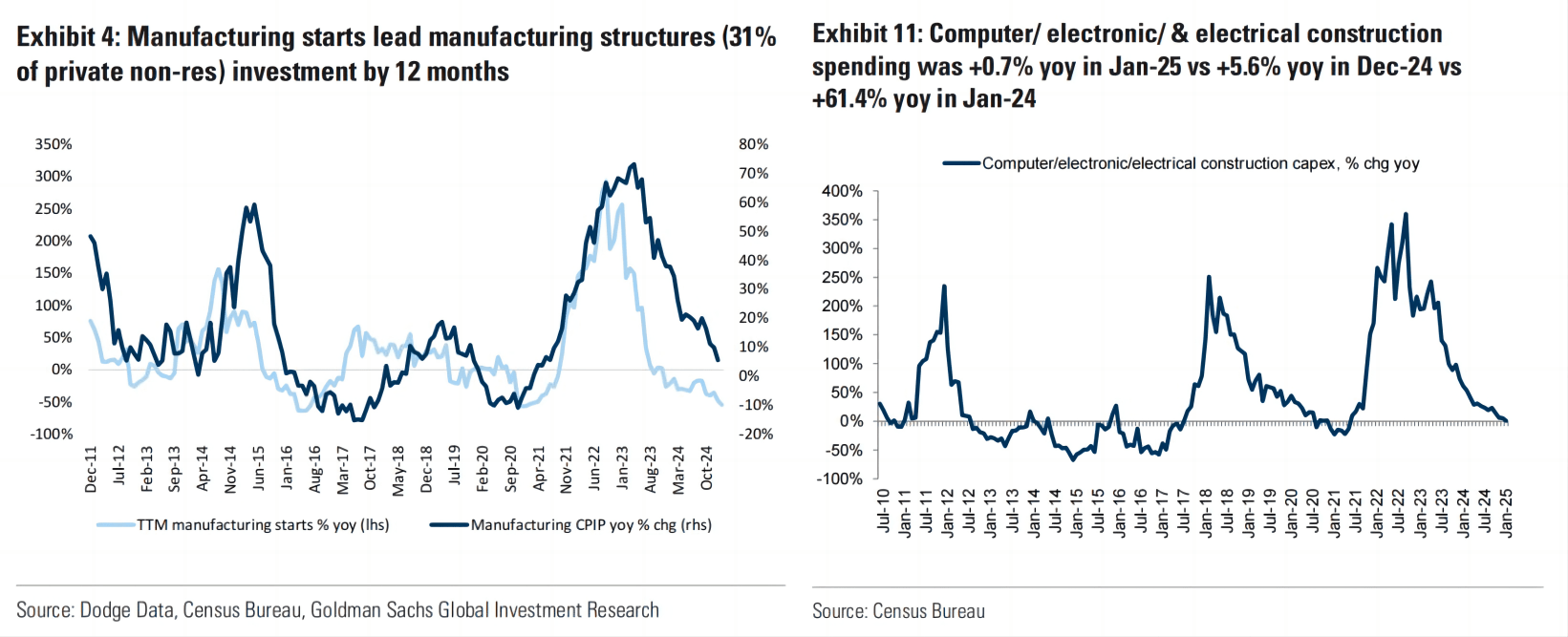
Manufacturing starts are down -54% YoY (LTM), driven by weaker Computer/Electronic/Electrical spending. This segment exploded from $8B in 2018 to $128B in Q2 2024, but is now cooling.
-
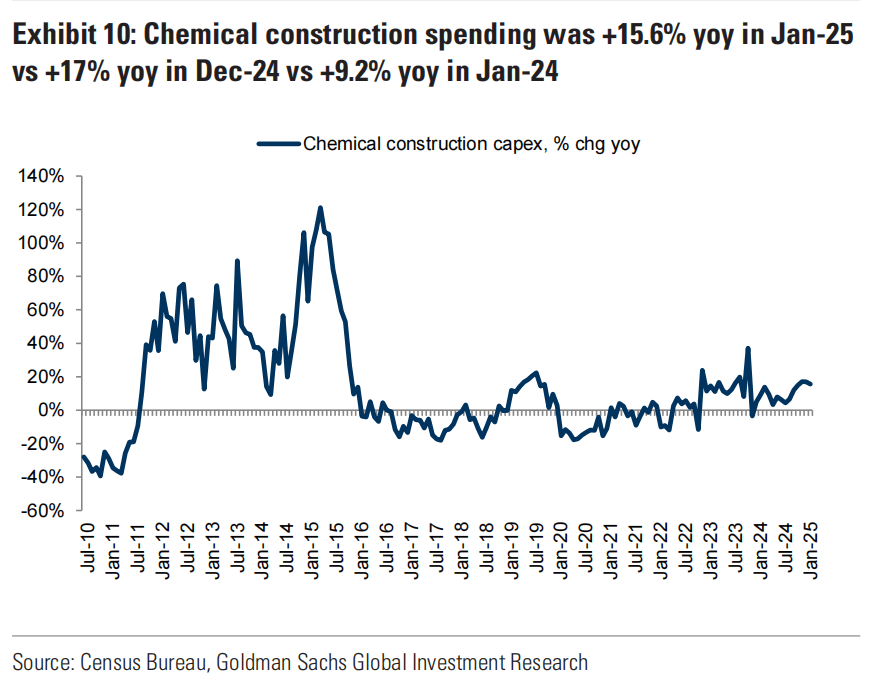
Chemicals (+15.6% YoY in Jan 2025) and ex-Chemical/Computer manufacturing (+9.8% YoY) are still growing, albeit slower than last year.
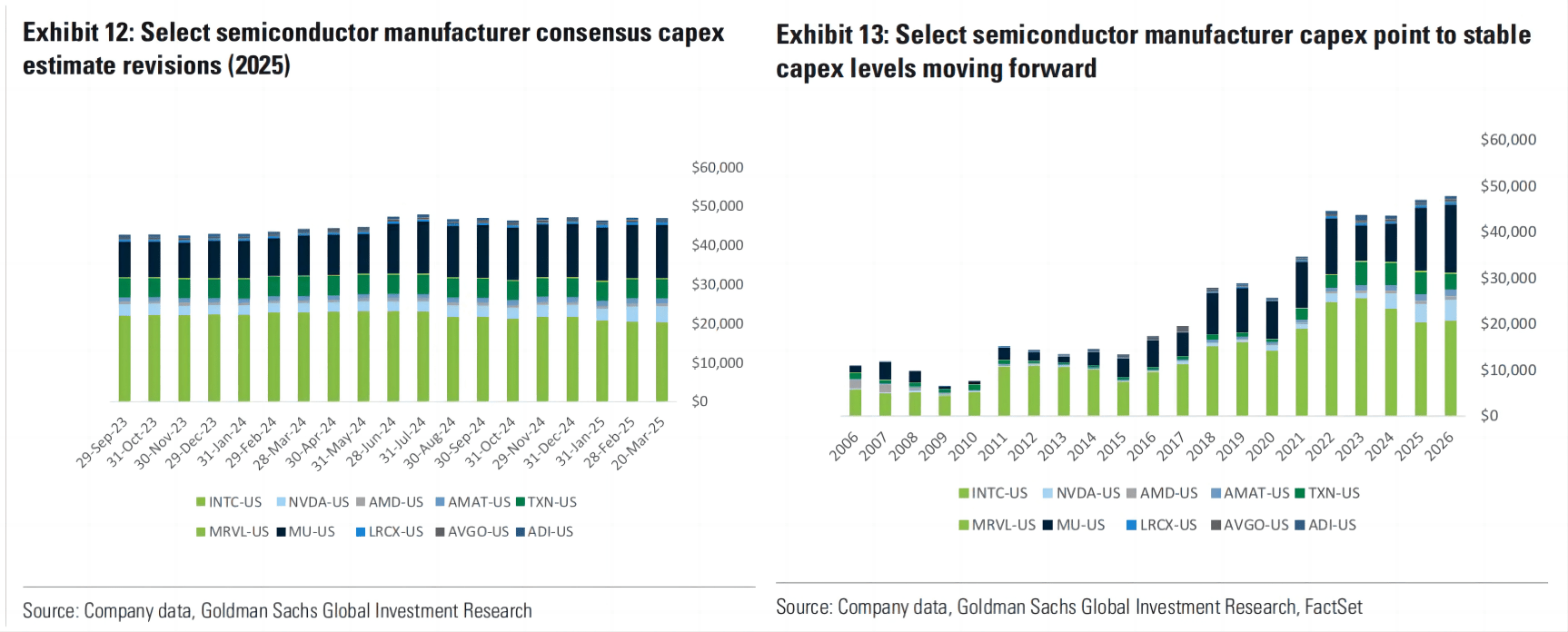
Semiconductor capex is expected to stay elevated, but the slowdown in starts suggests weaker momentum ahead.
Commercial Real Estate
-
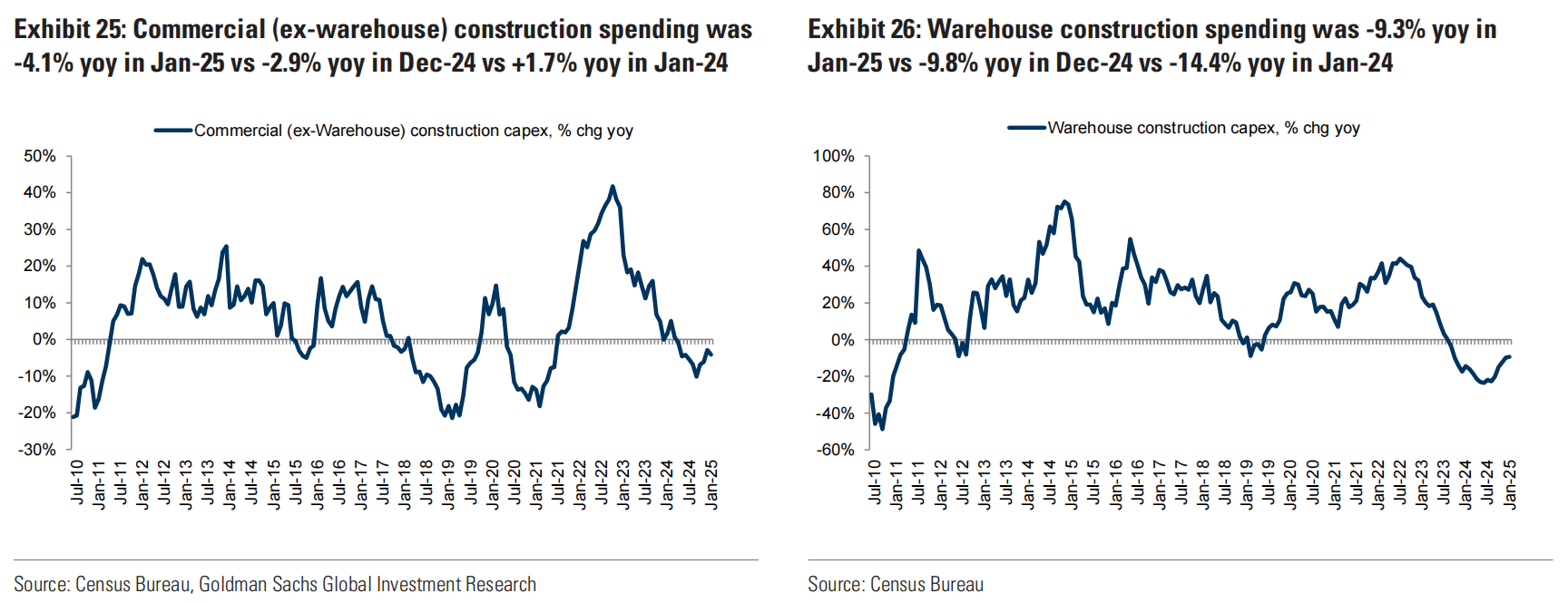
Retail vacancy rates flattened in Q4 2024, but construction spending is still down -6.9% YoY.
-
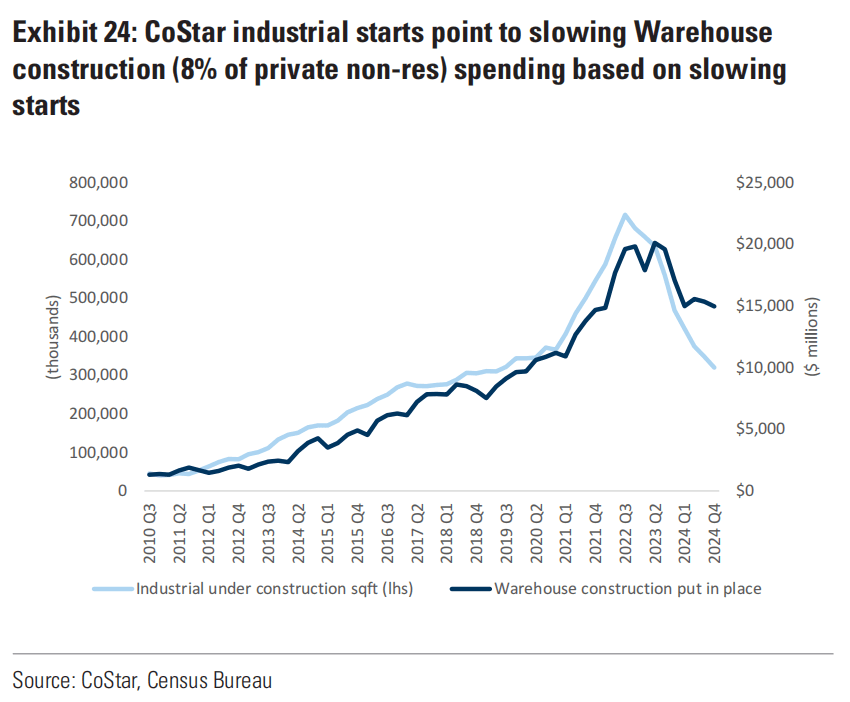
Warehouse construction (-9.3% YoY) is decelerating sharply after the pandemic boom. CoStar data shows slowing industrial starts, signaling further declines.
-
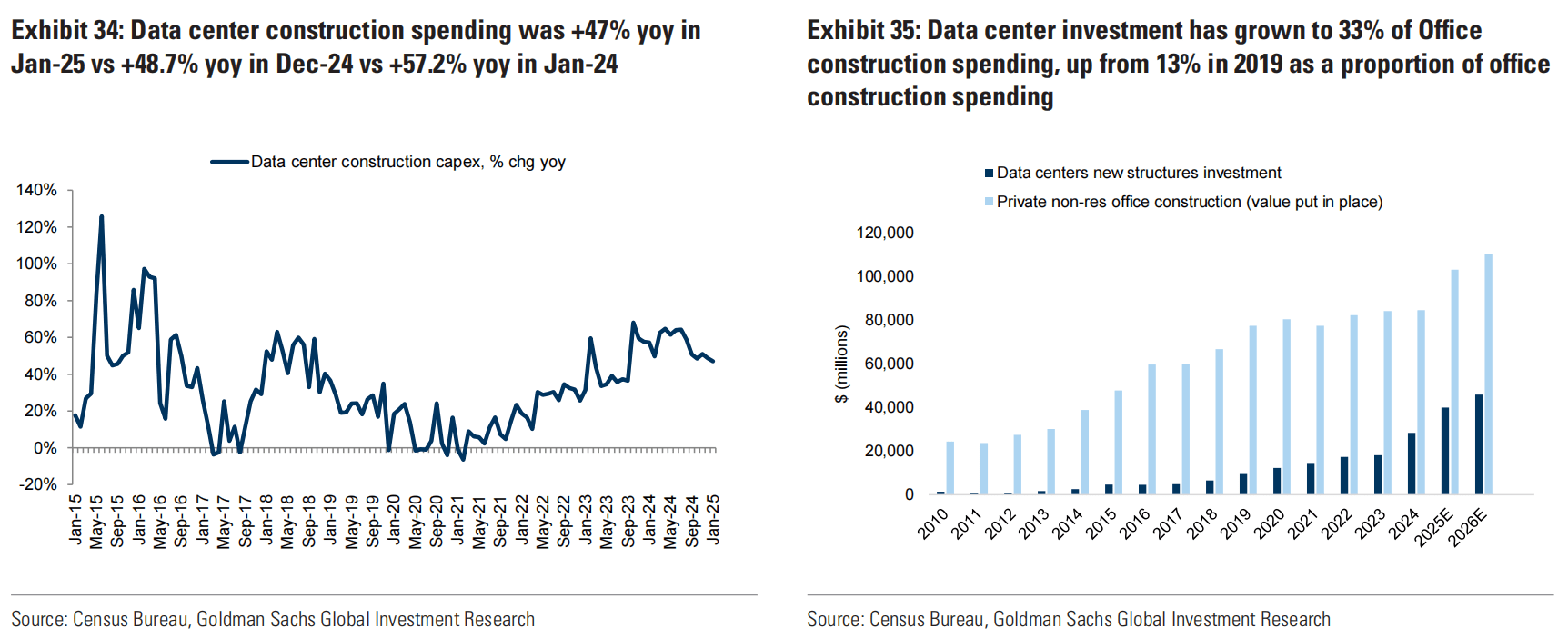
Data centers are the bright spot, now making up 33% of office construction spending (up from 13% in 2019) and growing +47% YoY.
Lodging
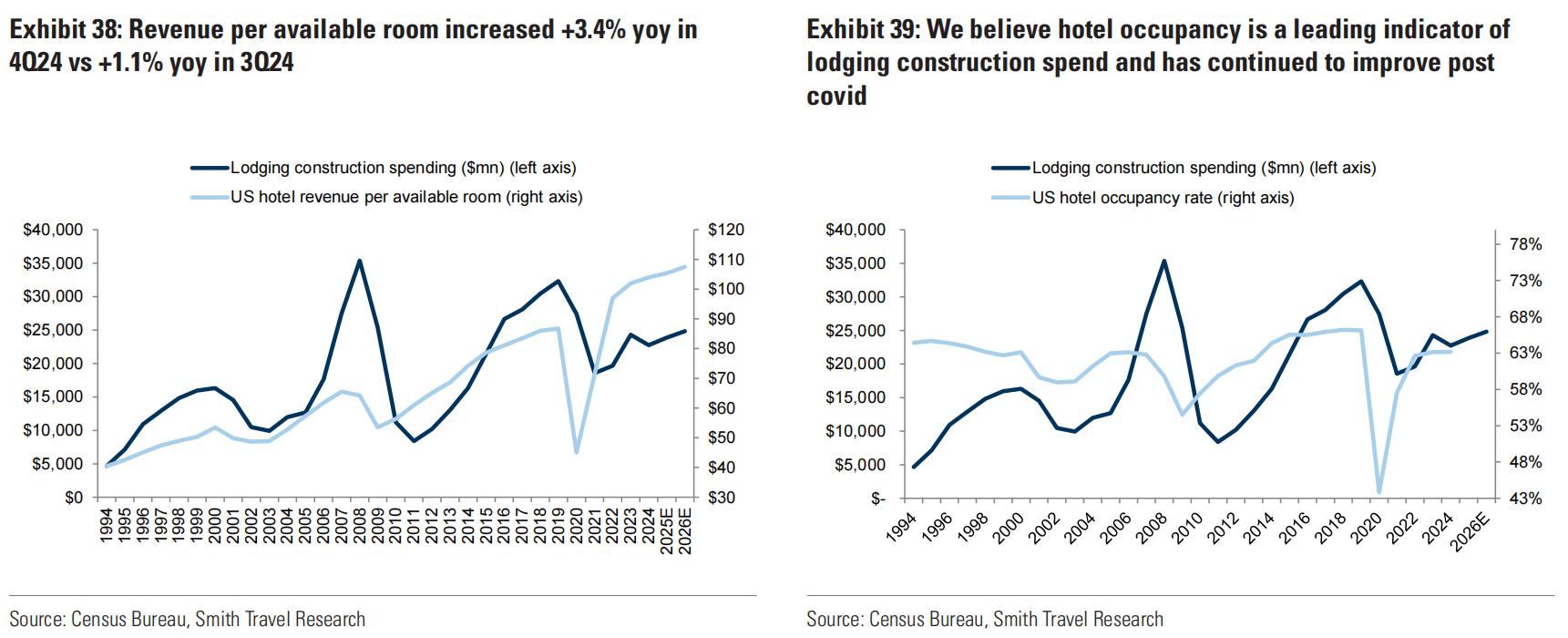
RevPAR grew 2.2% QTD, and hotel starts are up +12% YoY (LTM). Occupancy rates are improving post-COVID, but the pace is moderating.
Public Construction
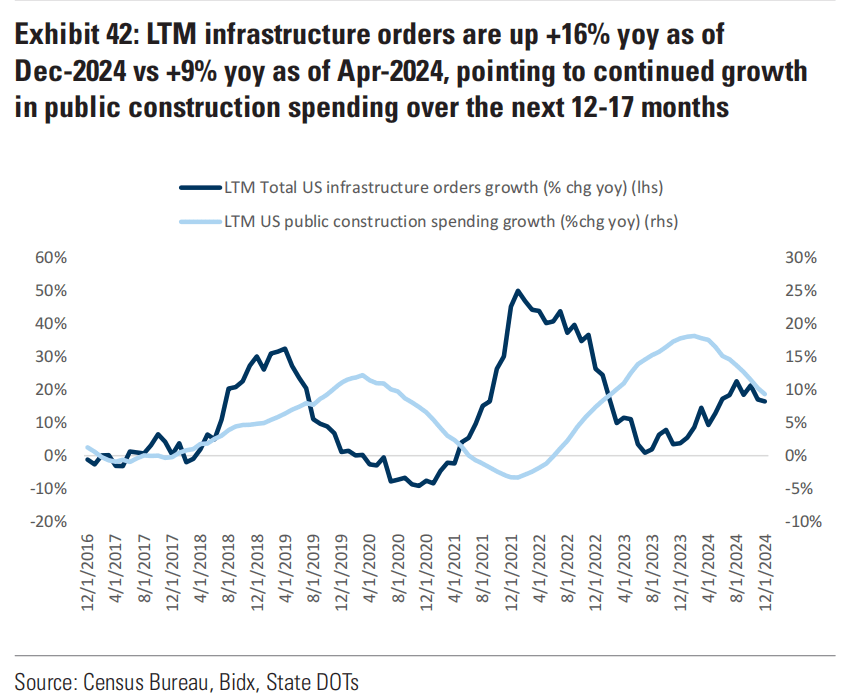
LTM infrastructure orders are up +16% YoY (vs. +9% in April 2024), suggesting public construction spending will remain strong over the next 12-17 months.
Conclusion
-
Highways and public infrastructure look resilient, but policy shifts could impact funding.
-
Manufacturing is bifurcated—semiconductors and chemicals are holding up, but broader starts are weak.
-
Data centers are eating traditional office/retail’s lunch, while warehouses face a hangover.
For investors
-
Overweight infrastructure-exposed materials (steel, aggregates) and data center REITs
-
Avoid warehouse developers until starts stabilize
-
Watch for potential IRA policy shifts, which could serve as catalysts for stocks linked to highway construction (e.g., Vulcan Materials).
Disclaimer: This post is for informational purposes only and does not constitute financial advice. Always do your own research before making investment decisions.
#Private Market: Unlocking Potential#privatemarket