
Reports Decoded – Gold at All-Time Highs: "Will Gold Hold?"

Kevin Insights
March 26, 2025
GoGPT Summarizes Articles
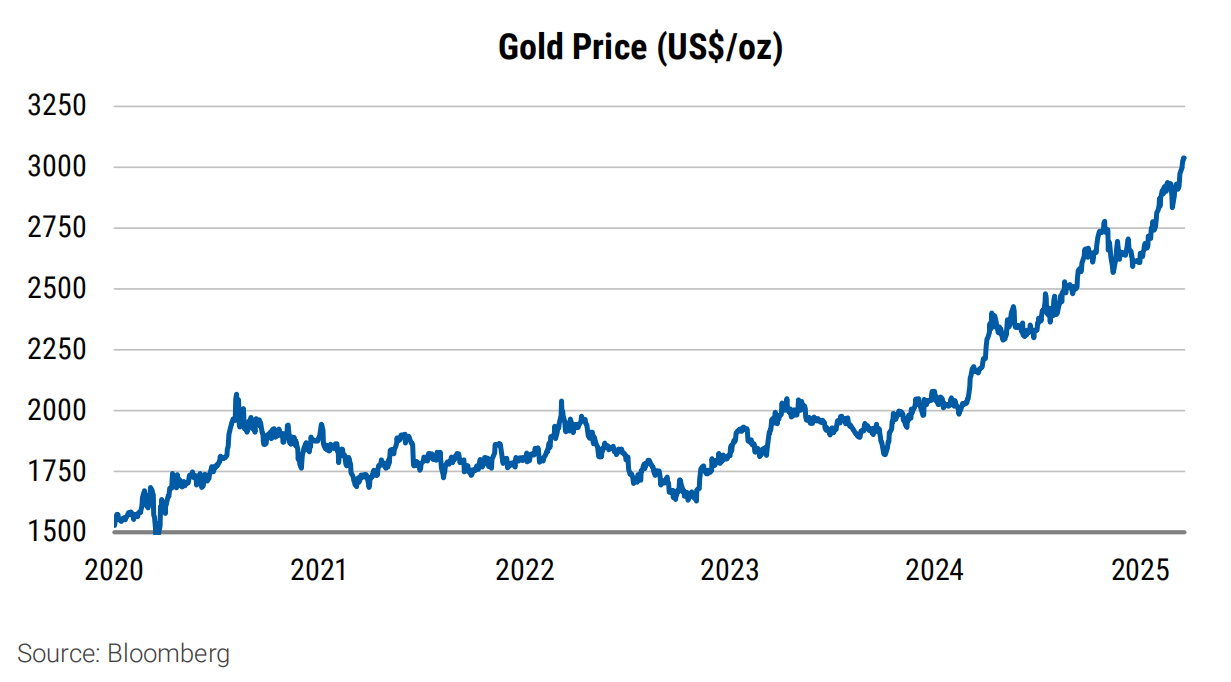
Gold has been on an unprecedented rally, reaching all-time highs and showing no signs of slowing down just yet. Gold prices are hovering just above $3,000/oz, a staggering 15% increase year-to-date (YTD) after a remarkable 27% surge in 2024. Morgan Stanley’s latest report "Will Gold Hold?" breaks down the key drivers and risks and suggests the bullish case for gold is intact but warns that the next leg up might not be as fast. Let’s dive in.
Key Drivers
-
Central Banks Keep Buying
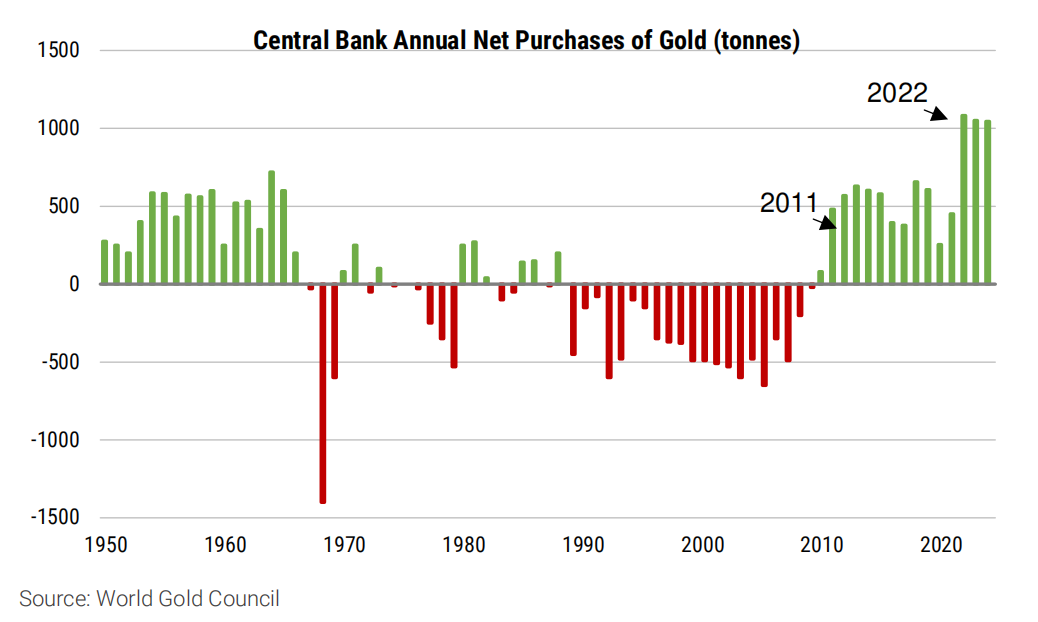
Global central banks have been stacking gold for three years straight, adding over 1,000 tonnes in 2024 alone.
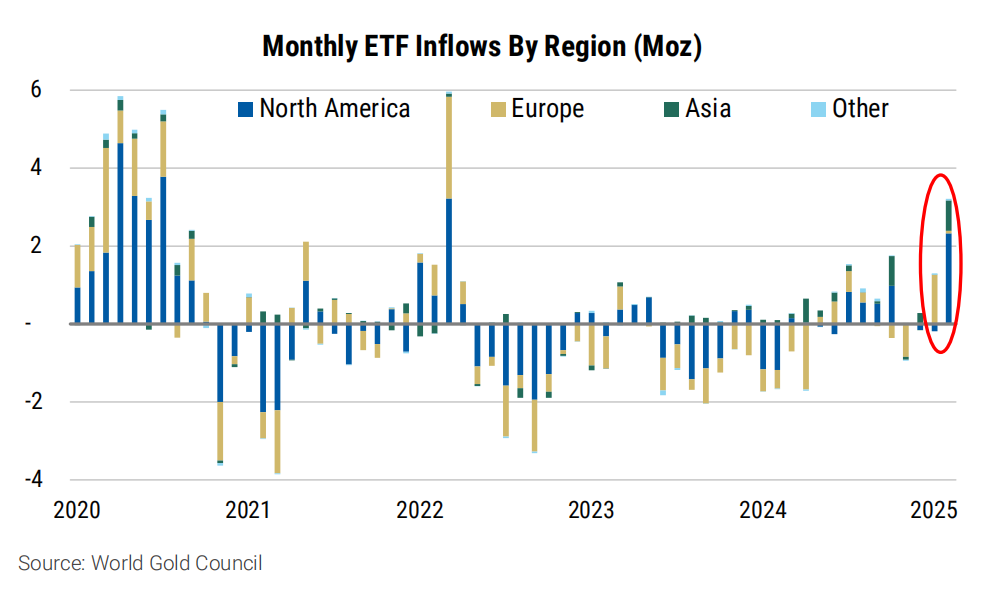
Meanwhile, global gold ETFs have seen their largest two-month increase in inflows since Q2 2022, with record volumes flowing into Chinese ETFs in February alone. This sustained buying spree has provided a robust floor for gold prices.
-
Safe Haven Appeal
The ongoing tariff uncertainties, particularly between the US and other major economies, have further bolstered gold's appeal as a safe-haven asset.
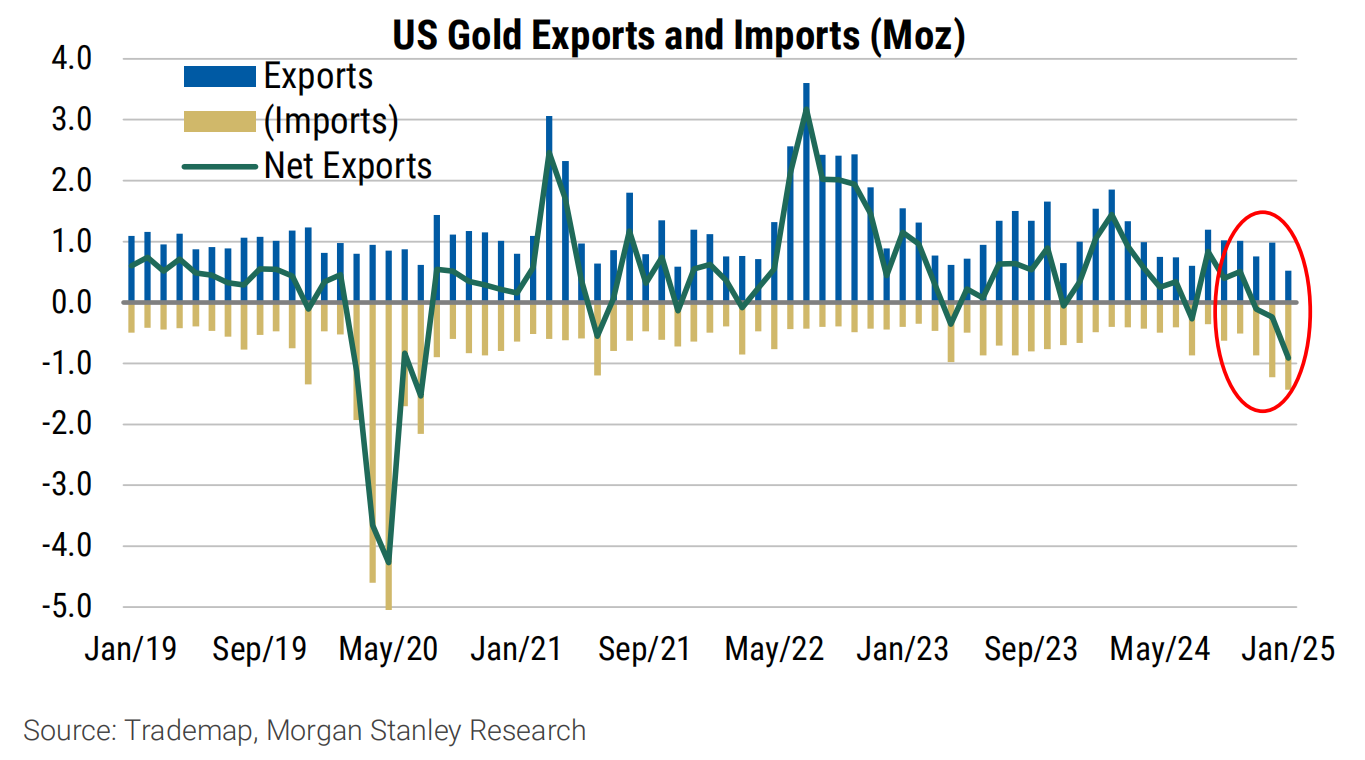
Fears of US tariffs have driven up COMEX gold prices relative to LBMA, leading to increased demand for physical metal in the US. This dynamic is likely to persist as geopolitical tensions and trade disputes continue to simmer in the background.
-
Macro Tailwinds
Falling rates + weaker USD = classic gold-friendly environment.
The dollar is weakening, and rate cuts are expected, both of which are historically supportive for gold prices.
Key Risks
-
Jewelry Demand Slowdown
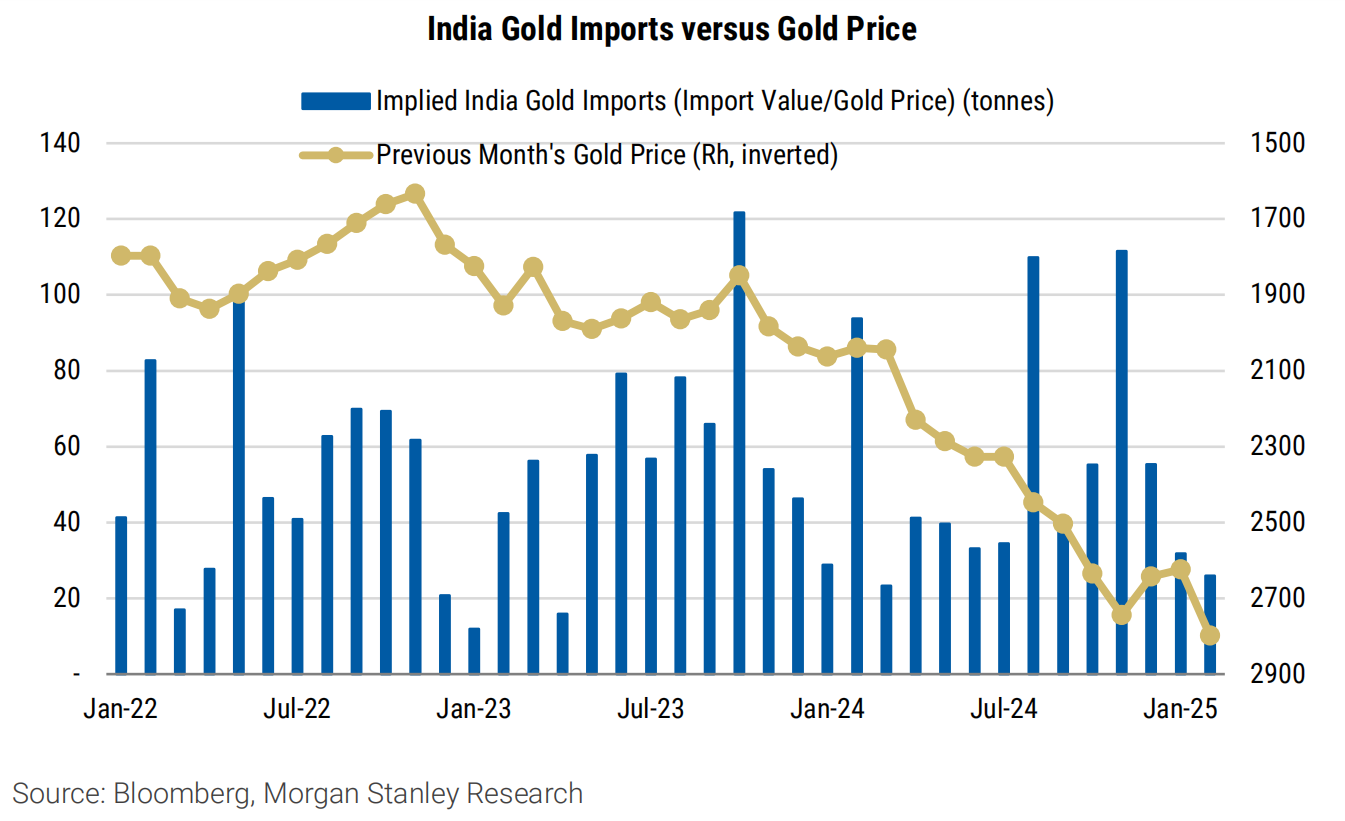
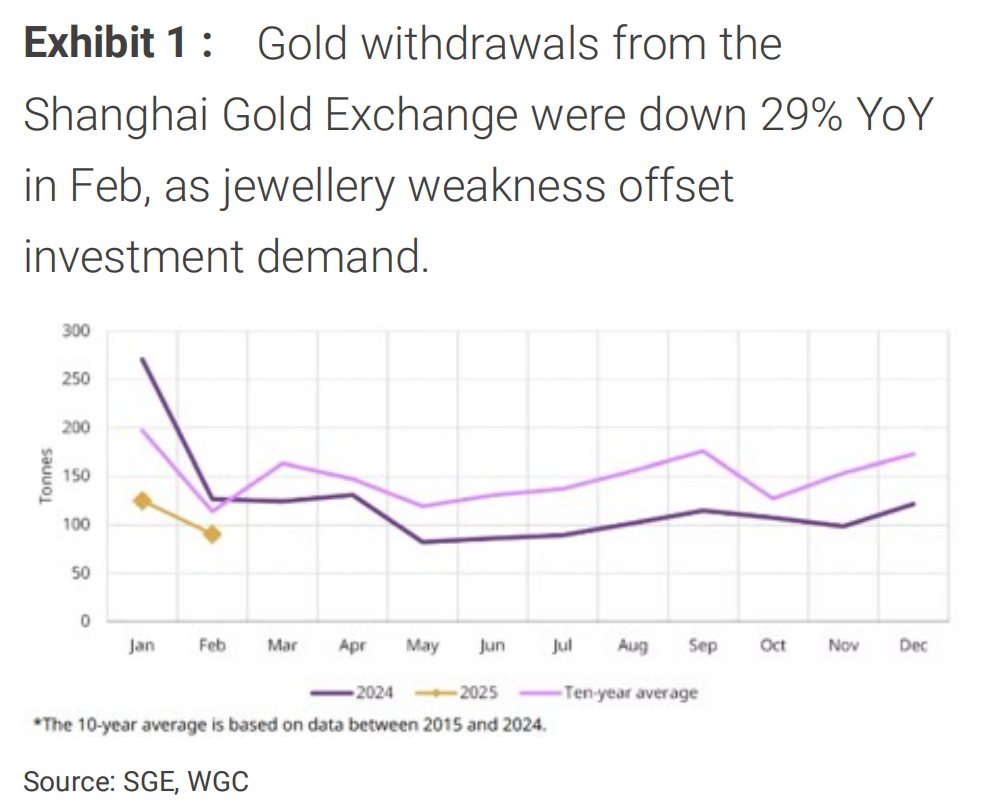
Jewelry demand, a key component of gold consumption, is showing signs of slowing down, particularly in China and India.
-
India’s gold imports have dropped by more than half from Q4 2024 levels, despite the wedding season. High prices are dampening demand for jewelry.
-
China’s gold withdrawals from the Shanghai Gold Exchange (SGE) fell 29% YoY in February, as weaker jewelry sales offset strong investment demand.
-
ETF Flows Still Below Peak
While improving, global holdings are still 750 tonnes below their 2020 peak.
-
Speculative Positioning Softening
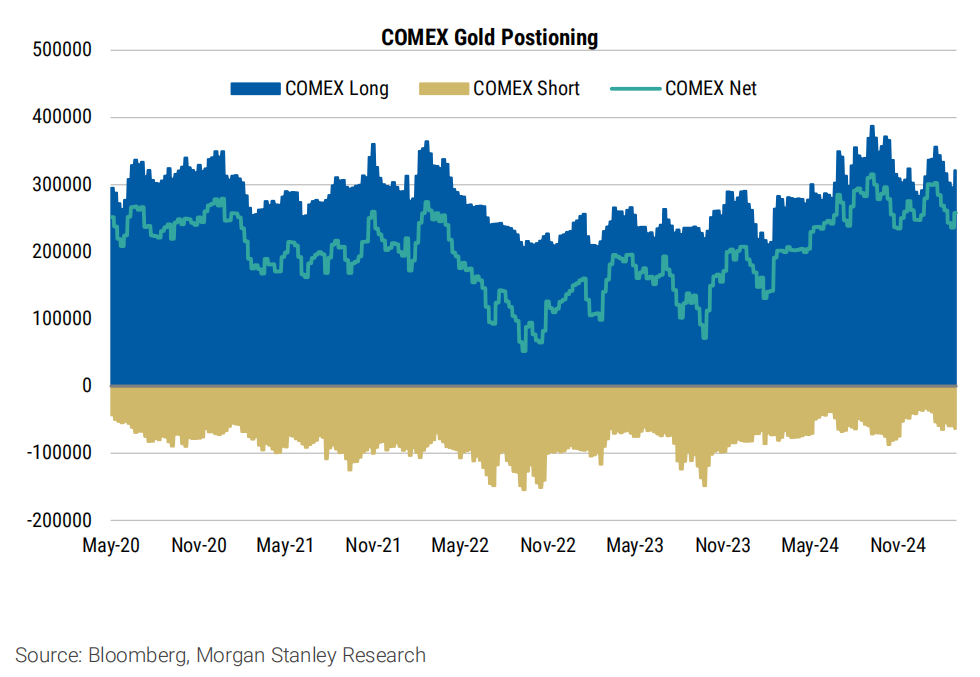
COMEX gold long positions have slipped from 300k lots in mid-February to 257k, suggesting traders may be taking profits. This change in sentiment could put some downward pressure on prices in the short term (Exhibit 6).
Morgan Stanley’s Take
The report reiterates that:
-
Gold hasn’t peaked yet, but the next leg up may be slower.
-
The move from $2,500 to $3,000/oz was the fastest major milestone rally on record—so some consolidation wouldn’t be surprising.
-
Physical demand (central banks, investment bars/coins) remains robust, but jewelry and Indian imports need price stability to recover.
Conclusion
Gold’s fundamentals remain strong, but demand destruction is emerging as a key risk. If central banks and ETFs continue their buying spree, gold could push even higher—but don’t expect another parabolic move like we saw from $2,500 to $3,000. The next leg up, if it comes, is likely to be slower and more volatile.
For Investors
-
For Long-Term Holders: Central bank buying and macroeconomic tailwinds suggest gold remains a solid hedge against uncertainty.
-
For Short-Term Traders: Watch for potential pullbacks as jewelry demand softens and speculative positioning unwinds.
-
For ETF Investors: The recent resurgence in inflows could indicate a fresh wave of investor interest, providing a buying opportunity if momentum continues.
#Private Market: Unlocking Potential#privatemarket#gold