
Reports Decoded – Why Private Assets Could Outperform in Today's Market

Kevin Insights
March 27, 2025
GoGPT Summarizes Articles
Investors have long relied on the traditional 60/40 portfolio allocation as a cornerstone of their investment strategies. However, in today's market environment, characterized by elevated public stock and bond valuations, persistent inflation, and the prospect of higher interest rates for an extended period, this traditional approach may be facing unprecedented challenges.
A recent report by Apollo Global Management, titled "Beyond 60/40: Private Assets In an Era of High Public Valuations," offers compelling insights into why private markets could be a more attractive alternative for investors looking to navigate these choppy waters.
The Current Market Landscape
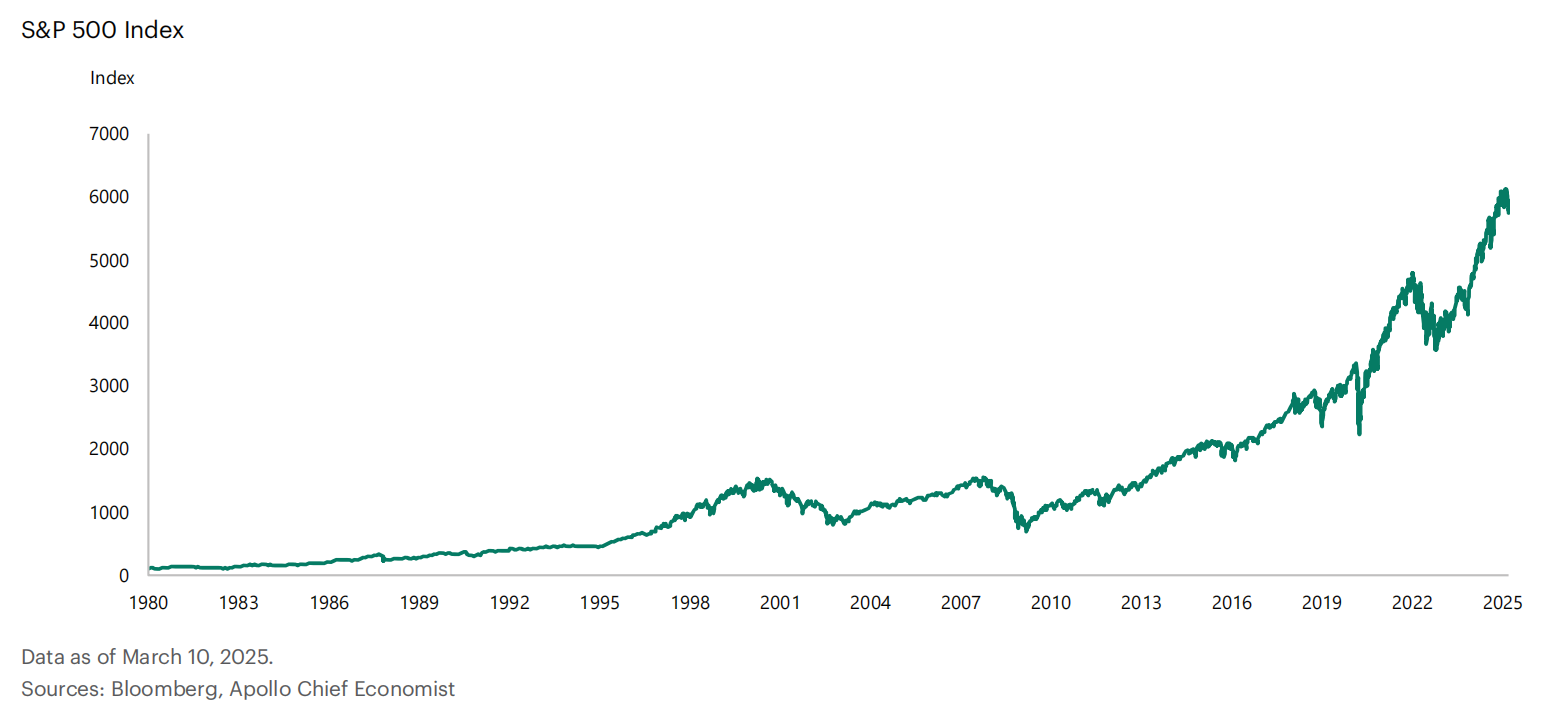
The S&P 500 has experienced an extraordinary run since the end of the pandemic, with the index rising more than 20% in both 2023 and 2024. This surge has pushed equity valuations to near-historic highs.
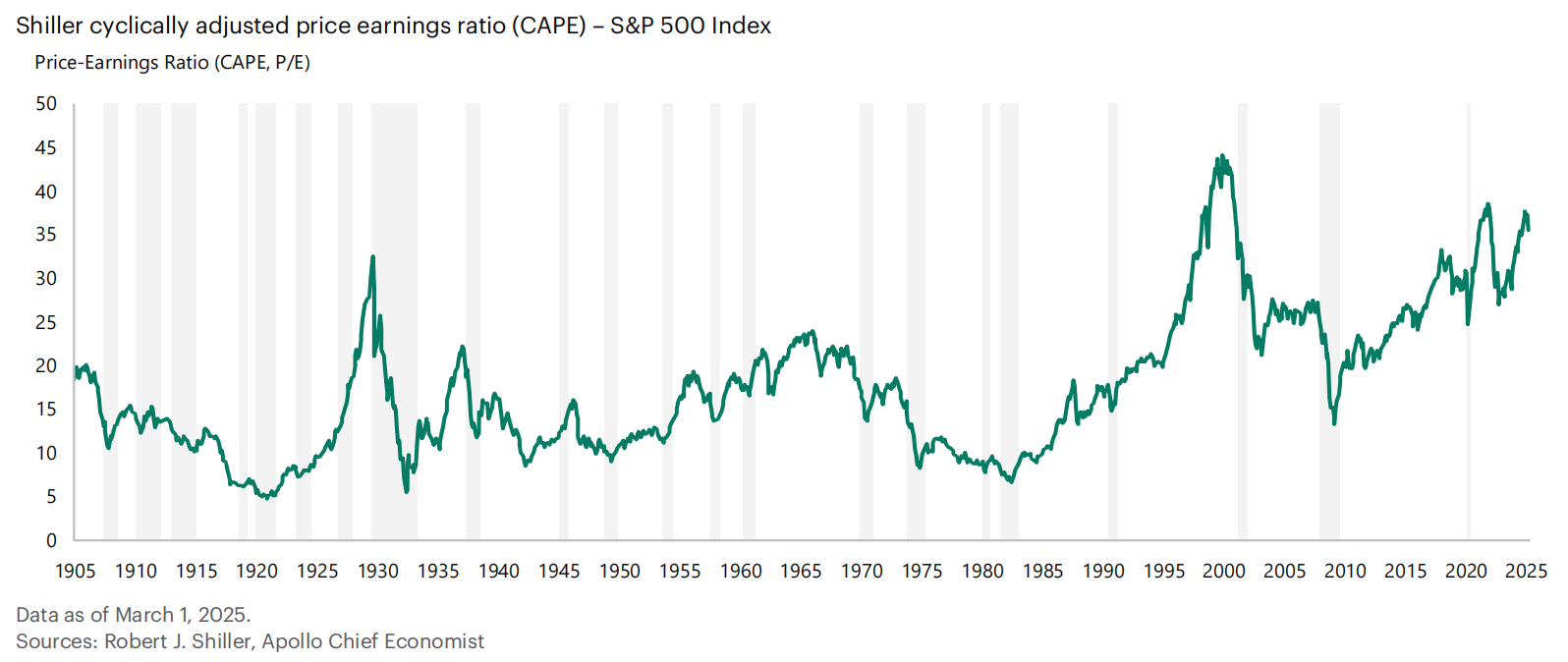
As of March 2025, the CAPE Ratio (Cyclically Adjusted Price-to-Earnings Ratio) for the S&P 500 stood at 35.6, significantly above its long-term average of 17. This level of valuation is reminiscent of the periods just before the dot-com crash in 2000 and the COVID market collapse in 2020.
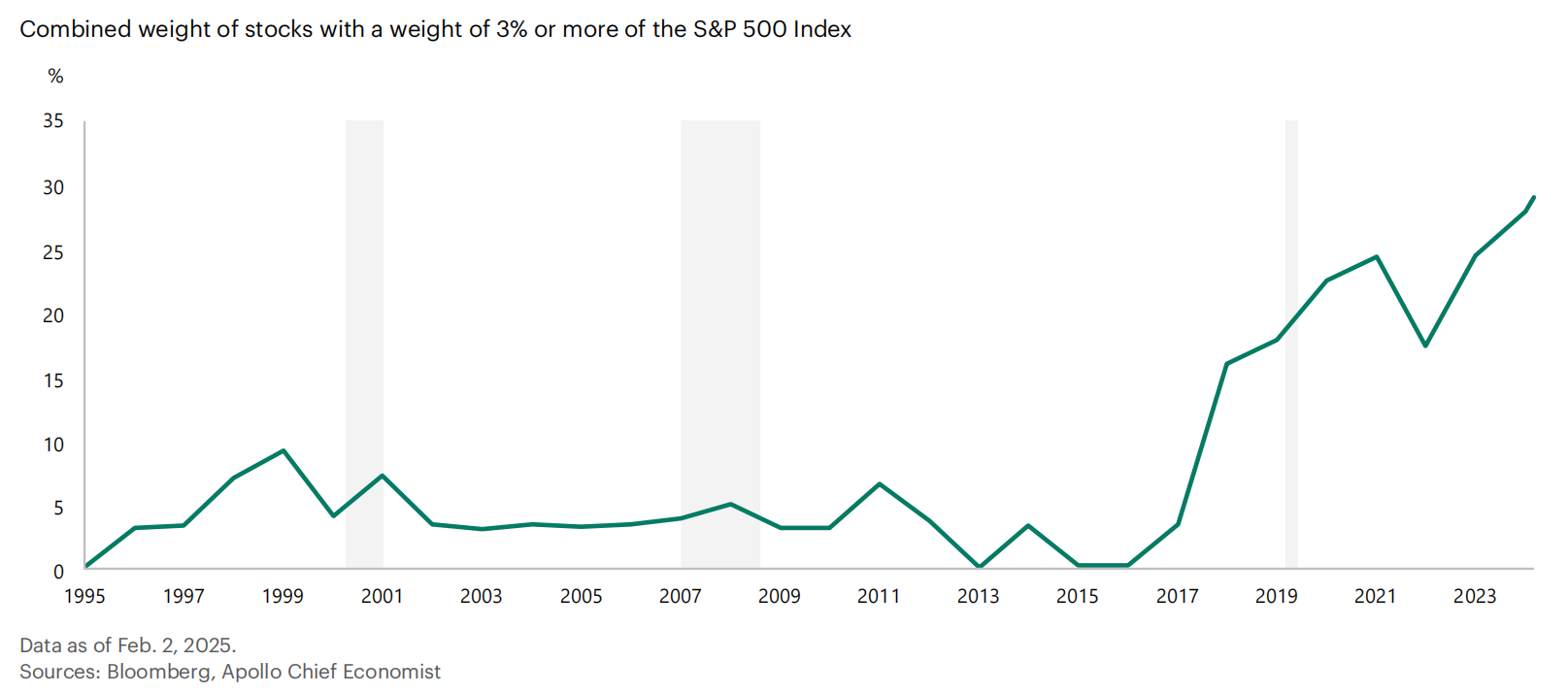
Moreover, the concentration of the S&P 500 has reached its highest level since at least 1995.
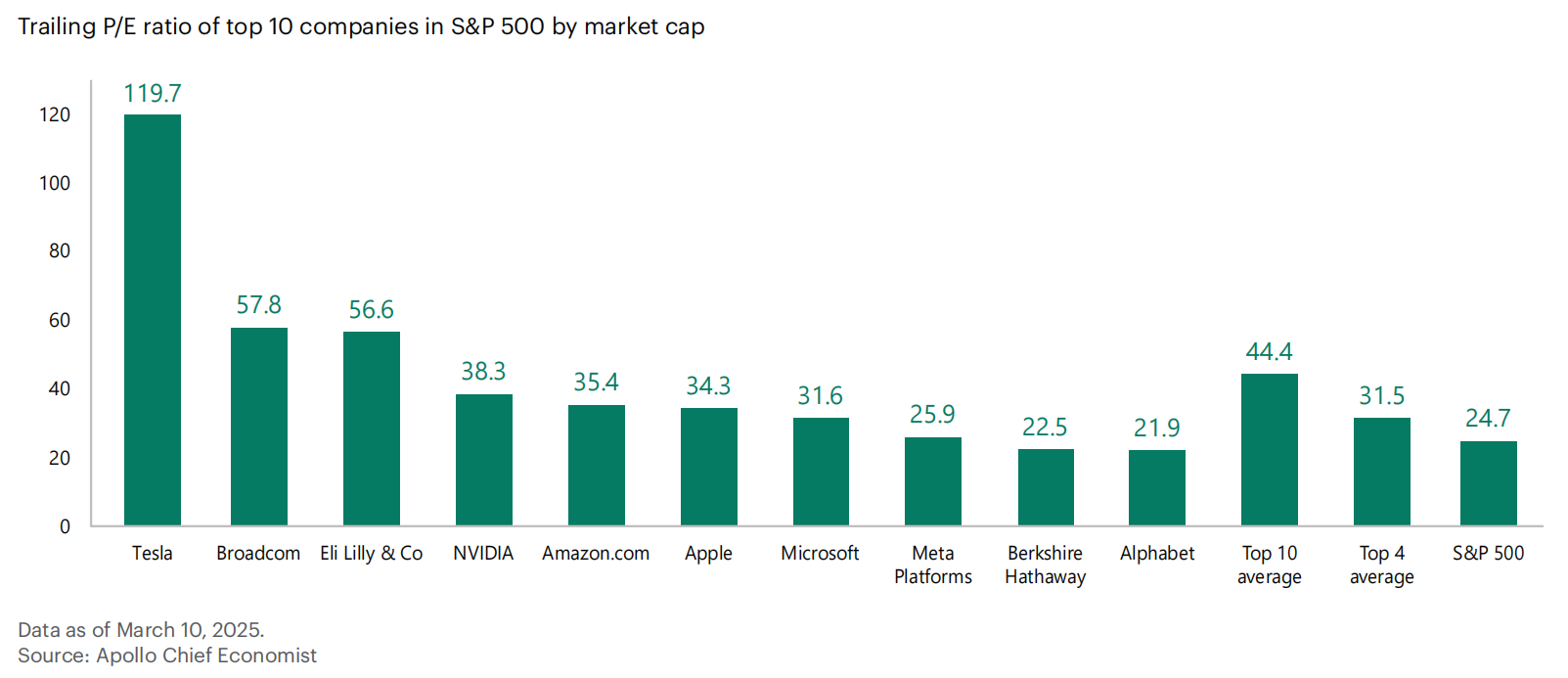
A handful of tech giants now dominate the index, with NVIDIA's market cap alone surpassing the GDP of countries like Italy and Canada. This concentration not only limits diversification but also exposes investors to the risks associated with the performance of just a few companies.
In addition to high valuations and concentration, the current economic environment presents further challenges.
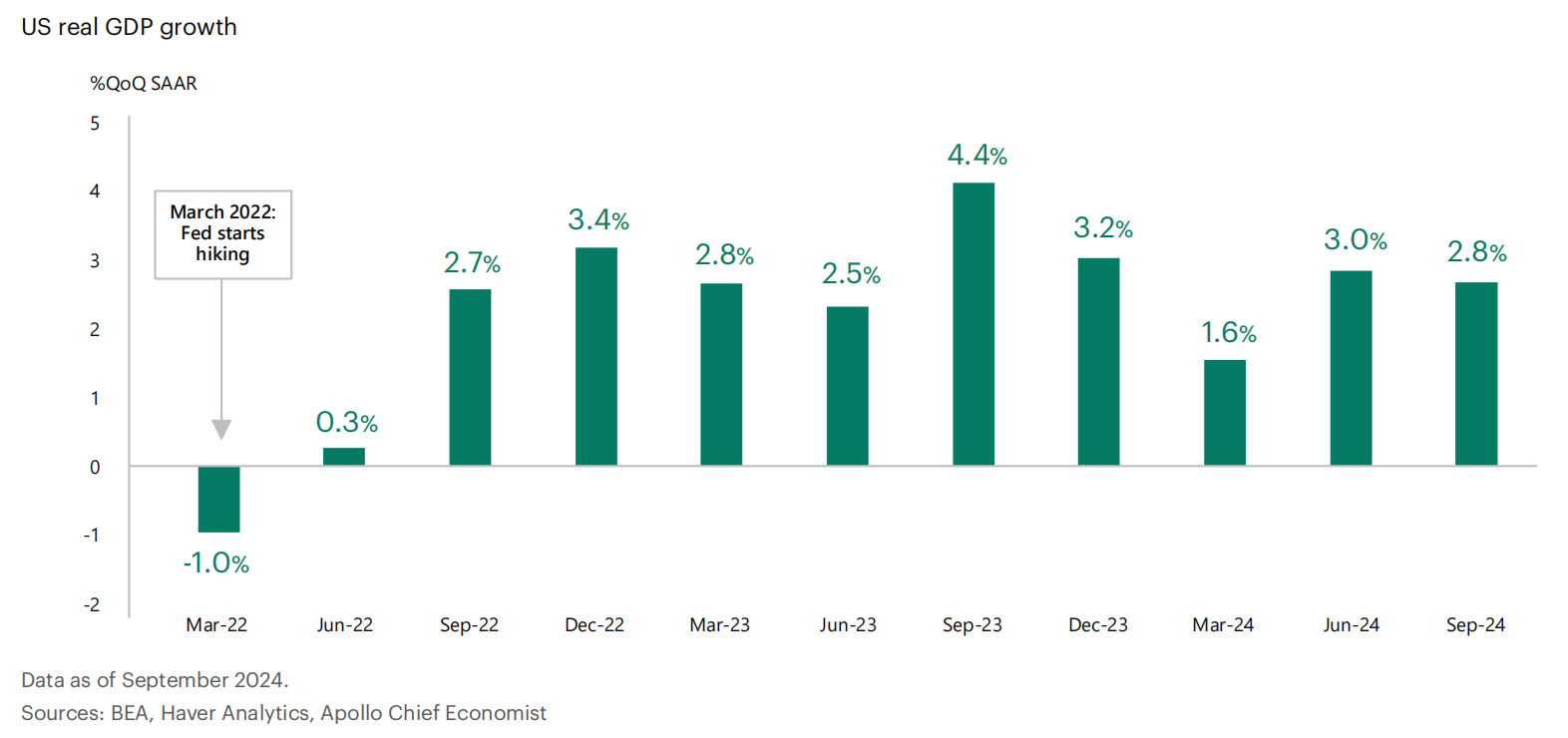
The Federal Reserve is maintaining its policy stance due to stubbornly high inflation, with the CPI (Consumer Price Index) at an annualized rate of 3.0% in January 2025, above the Fed's 2% target.
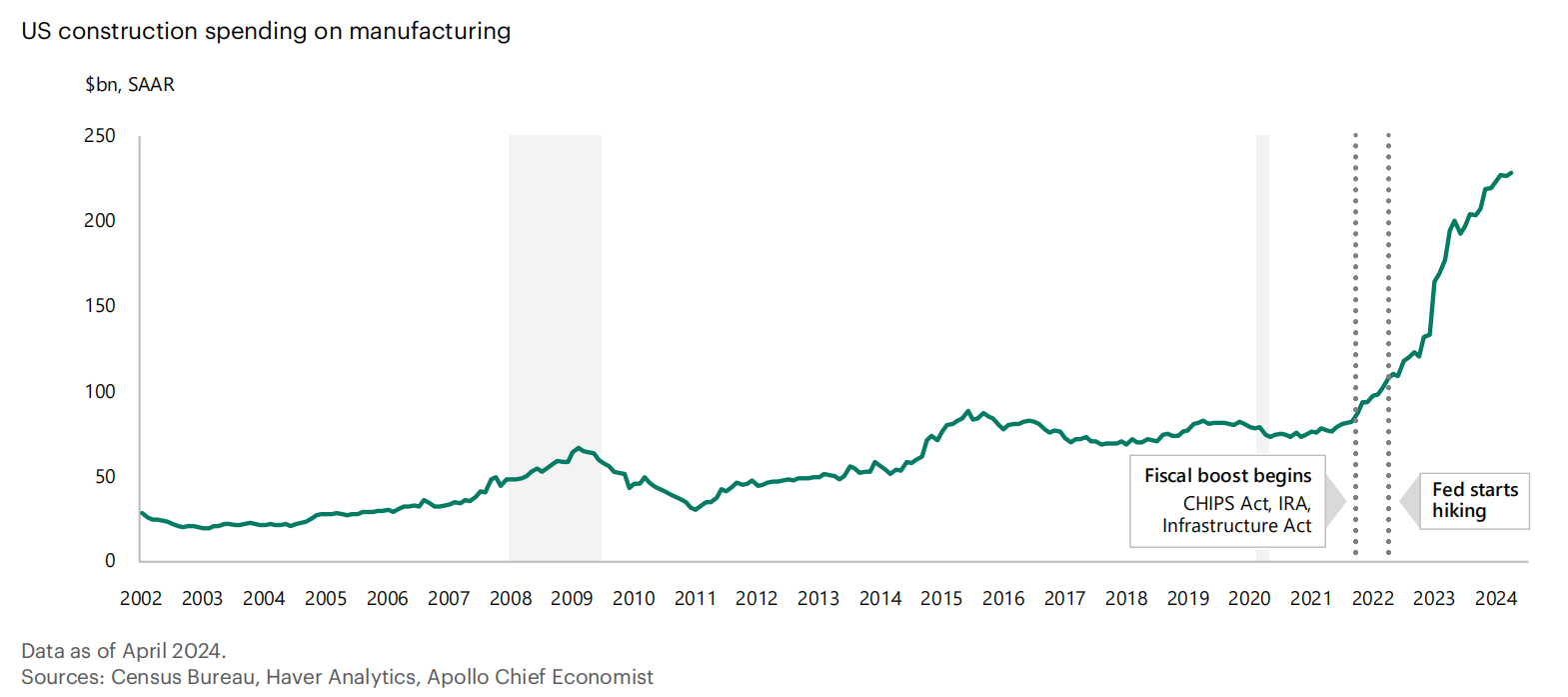
The combination of strong economic growth, fiscal stimulus, and the potential for higher tariffs and lower immigration could keep inflationary pressures elevated. As a result, interest rates are expected to remain higher for longer, which could lead to a market environment similar to 2022, when both equities and bonds posted double-digit declines.
60/40 Portfolios vs. Private Assets
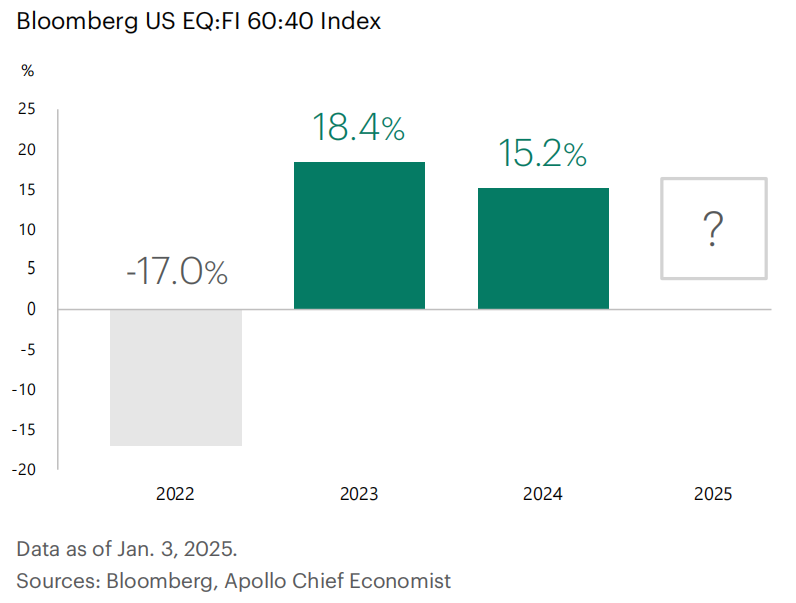
Despite the strong performance of 60/40 portfolios in recent years, the risks are increasing.
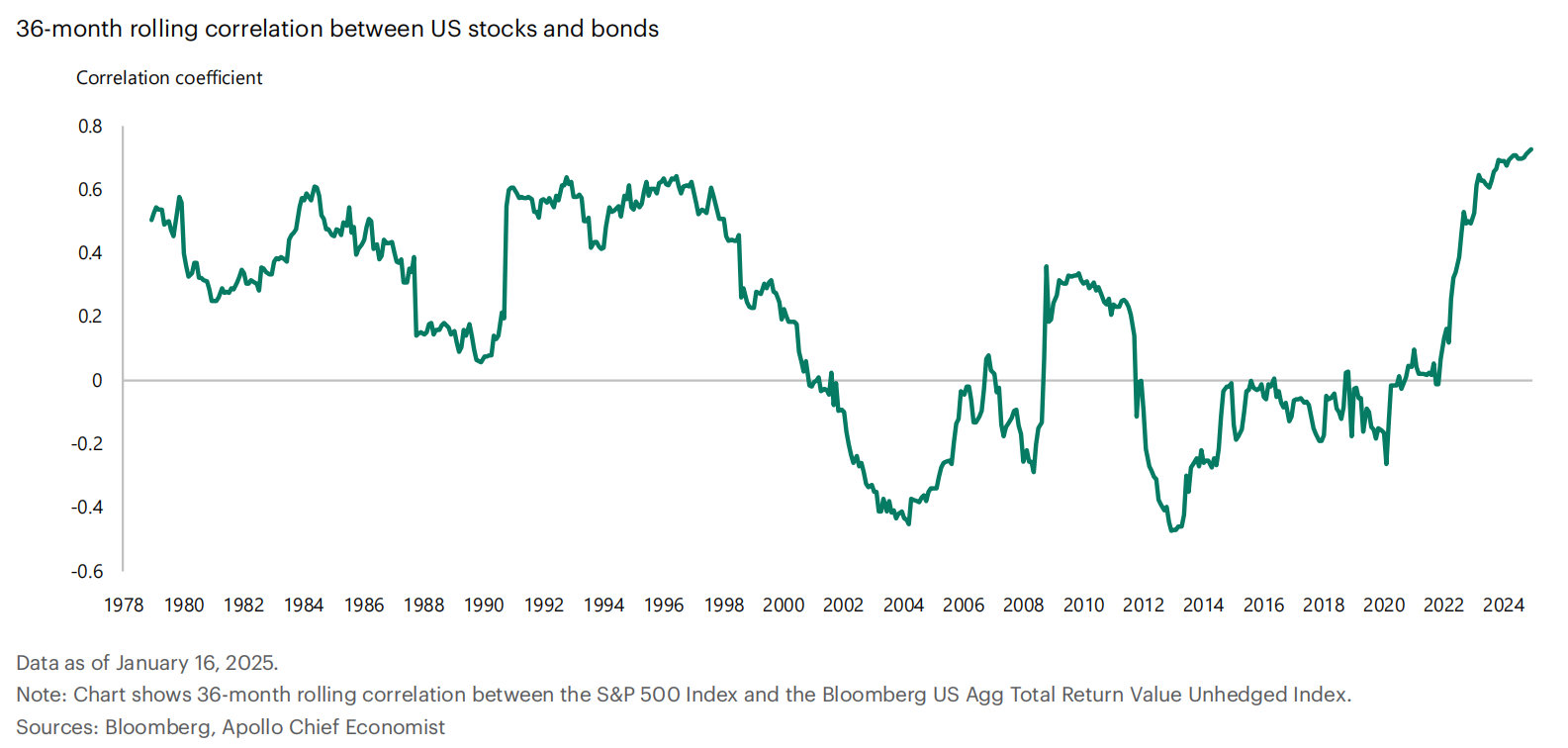
The correlation between stocks and bonds has reached some of the highest levels in decades, meaning that the traditional diversification benefits of this allocation are diminishing.
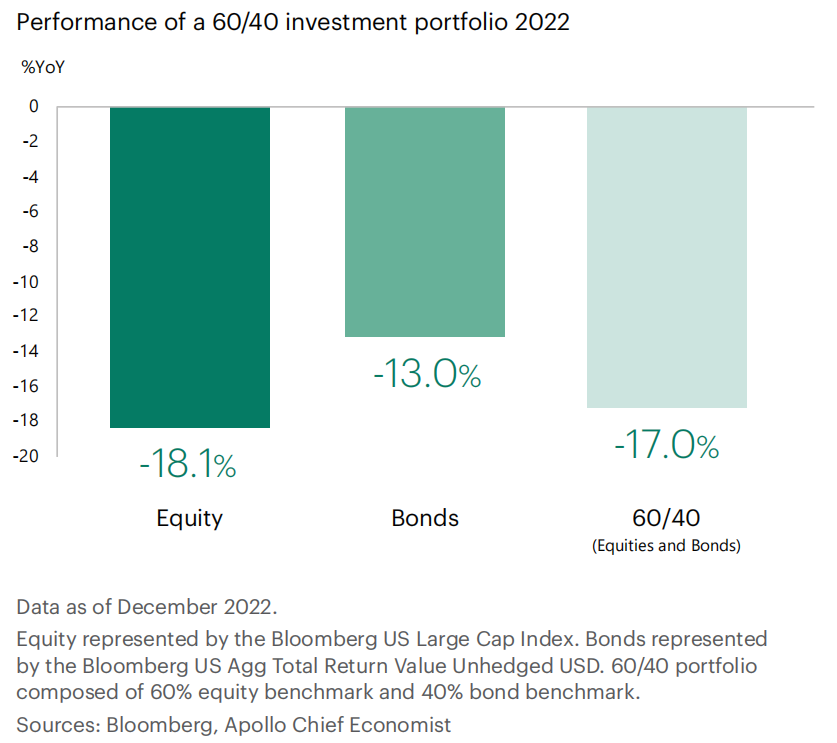
In 2022, the 60/40 portfolio fell 17%, marking one of the worst annual performances in decades.
In contrast, private markets have historically outperformed public equities following periods of elevated valuations and high interest rates.
A balanced portfolio of private assets, comprising 50% private equity, 25% private credit, and 25% real assets (including infrastructure, real estate, and natural resources), has demonstrated the ability to deliver returns on par with or in excess of public equities while generating those returns at lower levels of volatility.
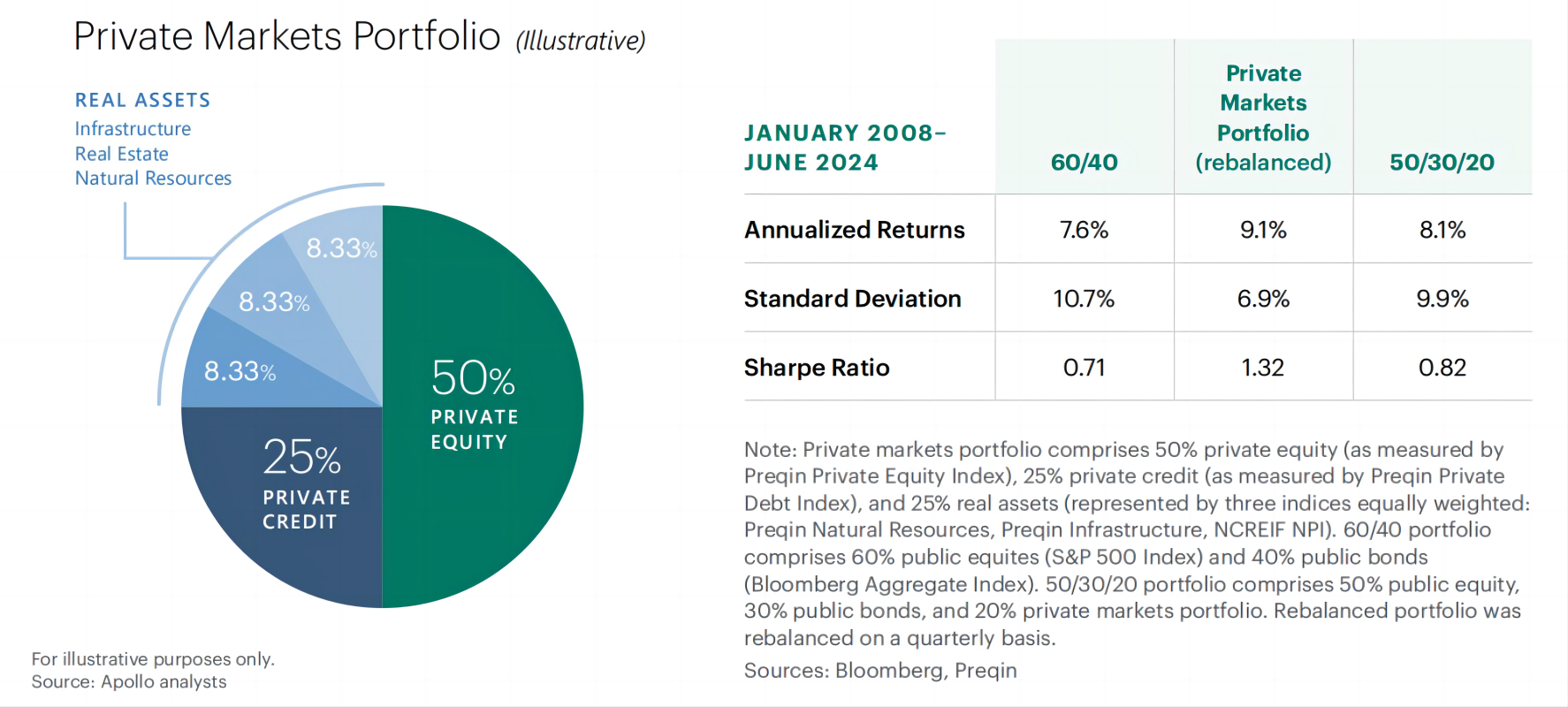
Replacing a portion of public market exposure in a 60/40 portfolio with a balanced private markets allocation has been shown to enhance risk-adjusted returns over the long term.For example, from January 2008 to June 2024, a 50/30/20 portfolio (50% public equity, 30% public bonds, and 20% private markets portfolio) outperformed the traditional 60/40 portfolio in terms of annualized returns while achieving significantly lower levels of volatility.
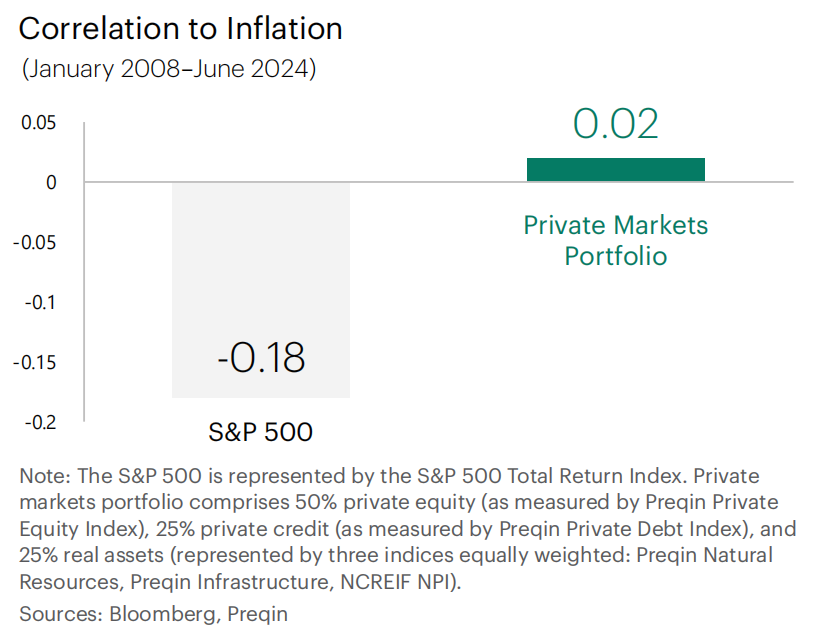
This portfolio has also shown a positive correlation to inflation, providing enhanced protection against rising prices.
Furthermore, the private markets portfolio has historically outperformed public equities when starting valuations are high.
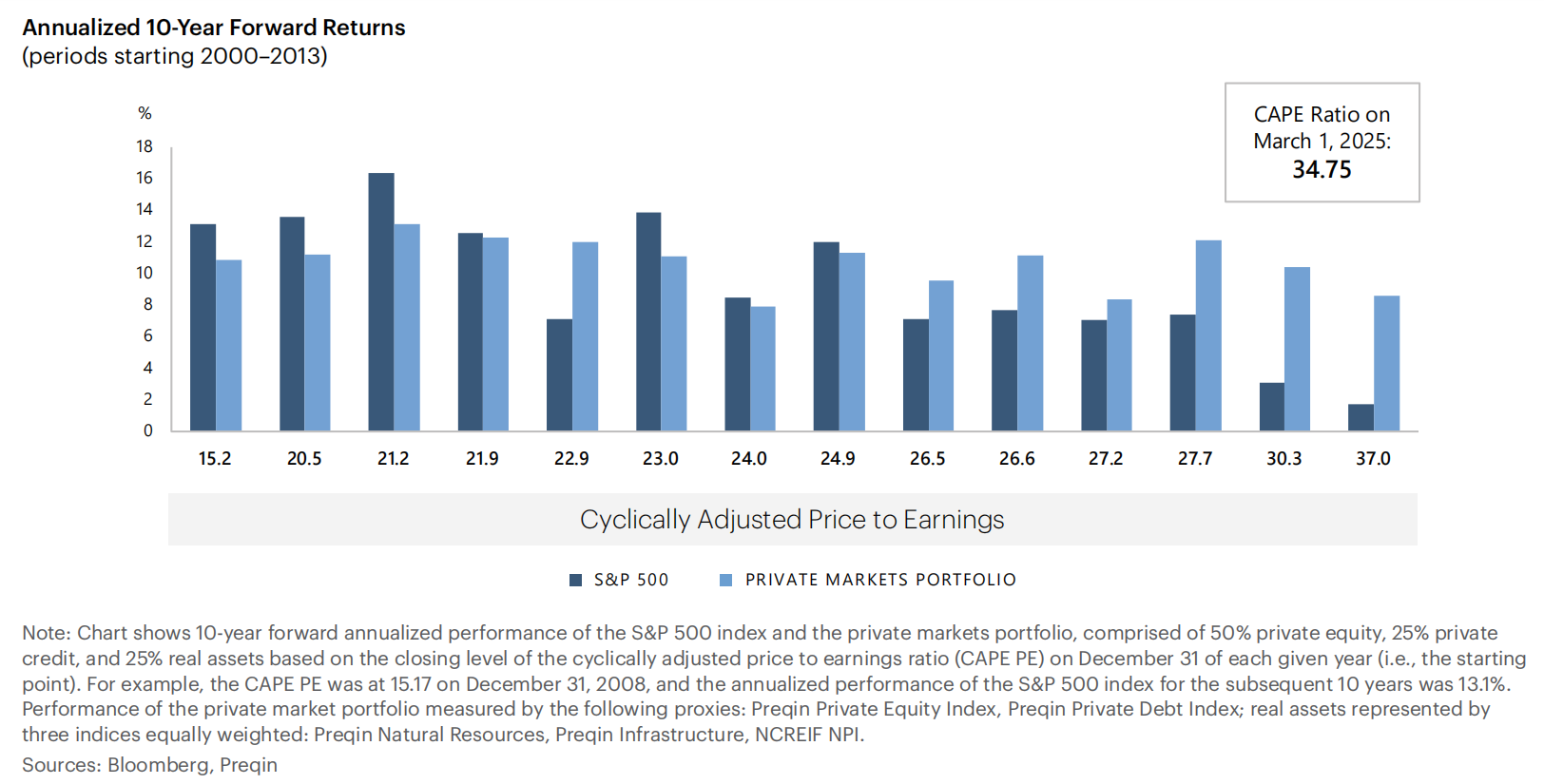
For instance, when the CAPE Ratio reaches 26 or higher, the private markets portfolio has consistently outperformed the S&P 500 over the subsequent 10-year period. Given that the current CAPE Ratio is above 38, this historical trend suggests that private assets could be particularly attractive at this juncture.
Conclusion
The current market environment, marked by elevated public market valuations, persistent inflation, and higher interest rates, presents significant challenges for traditional 60/40 portfolios. Historical data indicates that these conditions are unlikely to support continued strong performance for public equities and bonds.
In contrast, private markets have historically demonstrated resilience and outperformance in such environments. By incorporating a balanced allocation of private assets into their portfolios, investors may be better positioned to navigate the uncertainties of today's market and achieve enhanced risk-adjusted returns over the long term.
As we look ahead, the potential benefits of private assets in an era of high public valuations are too compelling to ignore.
#Private Market: Unlocking Potential#privatemarket