
Nvidia’s AI Dominance Faces Unprecedented Challenges as Rivals Reshape the Game
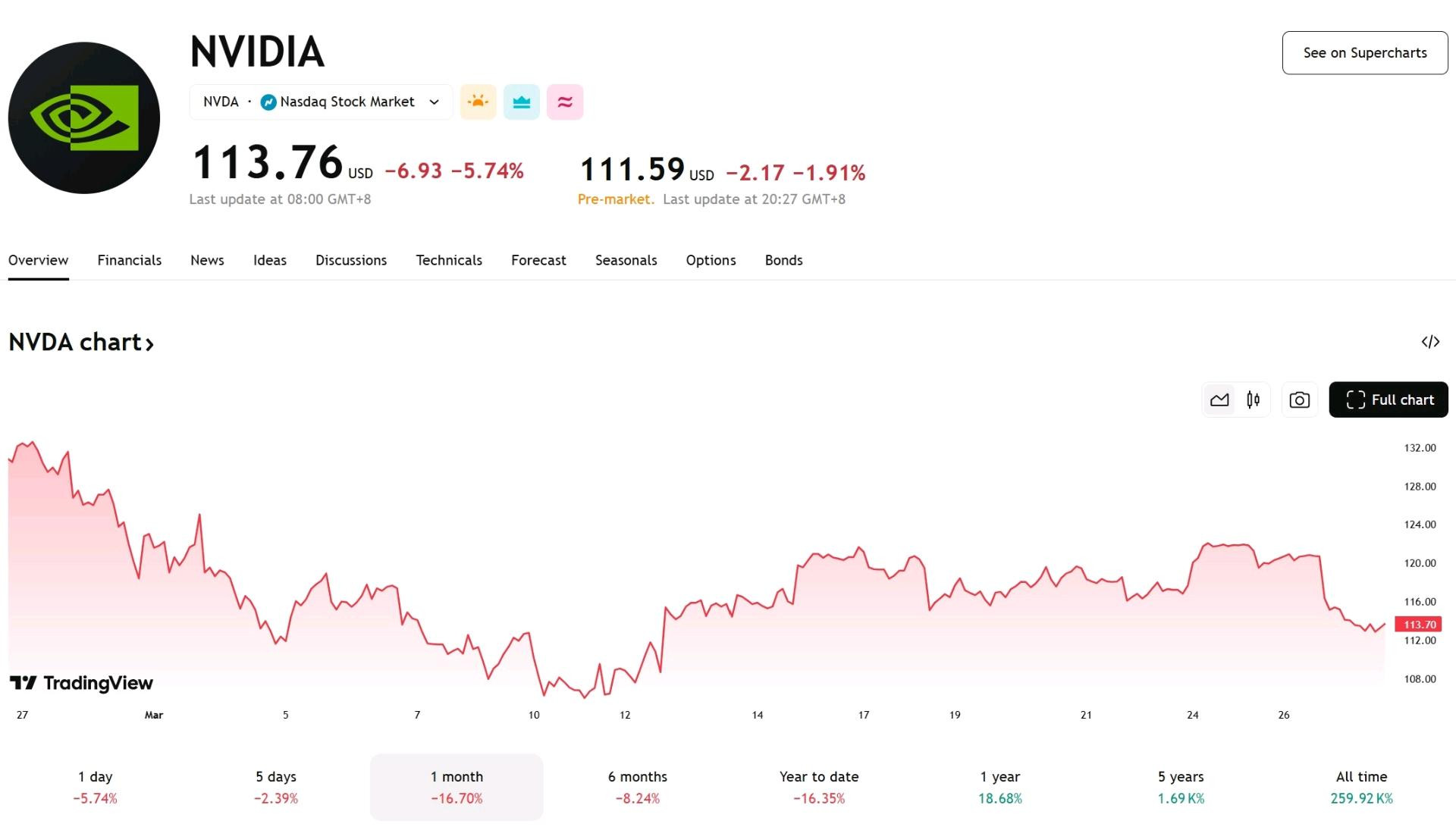
The once-unstoppable rally behind $NVDA ’s AI empire is showing cracks. From plunging stock prices to seismic shifts in the AI compute landscape, the $2.78 trillion chip giant confronts a perfect storm of disruptive forces—cost-efficient alternatives, surging ASIC adoption, and a buyer’s market in GPU rentals—that threaten its decade-long supremacy.
The Rise of Cost-Effective AI: A Threat to Nvidia’s Golden Era
$NVDA ’s stock tumbled nearly 6% on Wednesday, erasing $170 billion in market value, as Wall Street grapples with mounting evidence that the AI industry is pivoting away from brute-force compute spending. The catalyst? A wave of breakthroughs in low-cost AI training and inference led by players like China’s DeepSeek and Ant Group.
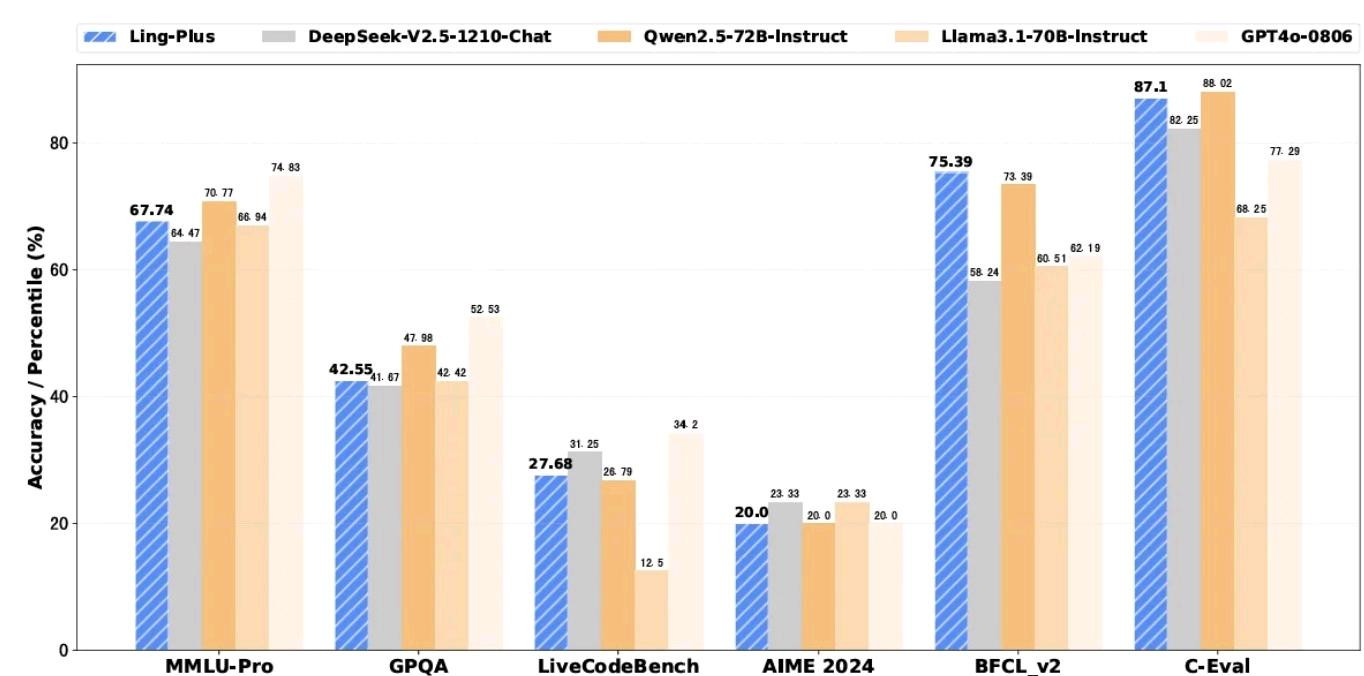
DeepSeek’s open-source R1 model, developed for just $6 million using 2,048 H800 GPUs (far less powerful than Nvidia’s flagship H100), delivers performance rivaling OpenAI’s GPT-4 at a fraction of the cost. Meanwhile, Ant Group’s Ling-Plus model—trained on domestically developed ASIC chips—cuts expenses by 20% while outperforming $META ’s Llama. These innovations rely on architectural optimizations like Mixture-of-Experts (MoE), which activates only a fraction of parameters during inference, and advanced techniques like reinforcement learning and FP8 precision training.
“The era of ‘bigger is better’ is ending,” says Brooke Thackray of Global X. “Efficiency-driven models are rewriting the rules, reducing both compute demands and energy footprints.” Goldman Sachs now slashes its 2025 AI server shipment forecast by 39%, predicting a slowdown in $NVDA ’s data center growth to 30% by 2027 as ASICs gain traction.
ASIC’s Silent Takeover: Undermining the GPU Monopoly
$NVDA ’s most existential threat lies in the quiet rise of custom AI chips. Cloud giants like $AMZN , $GOOG , and $MSFT —alongside China’s Ant Group—are pouring resources into ASICs tailored for specific workloads. $AVGO CEO Hock Tan recently revealed that four new “hyperscale” clients are joining its ASIC pipeline, with two nearing production. Morgan Stanley sees ASIC-related stocks outperforming GPU peers, assigning Broadcom a $250 price target (70% upside).
The math is brutal: ASICs offer superior performance-per-dollar for repetitive inference tasks. Ant’s Ling models, for instance, dynamically distribute workloads across heterogeneous chips, bypassing dependency on high-end GPUs. As AI architectures mature toward standardized frameworks like Transformer and MoE, ASICs’ inflexibility becomes less of a liability. “Why rent a Lamborghini when a Toyota suffices?” asks Hunter Wolf Research, which downgraded Nvidia to “Sell” with a $112 target.
Nvidia’s Counterplay: Betting Big on the “GPU Landlord” Model
Amid collapsing server demand forecasts, $NVDA is pivoting to control the entire AI stack—including compute leasing. Its rumored $100M+ acquisition of Lepton AI, a GPU “sub-lessor” that rents cloud capacity to AI startups, signals ambitions to compete directly with AWS and Google Cloud.
Lepton’s asset-light model—reselling third-party GPUs while optimizing clusters for AI workloads—aligns with $NVDA ’s vertical integration strategy. By owning the leasing channel, $NVDA could stabilize pricing amid a buyer’s market. SemiAnalysis notes that Blackwell GPUs will soon render older Hopper chips obsolete, forcing H100 rental prices down 65% to stay competitive. Owning Lepton lets $NVDA monetize aging inventory while pushing clients toward premium Blackwell offerings.
But risks abound. The GPU rental market, now flooded with 100+ providers, faces oversupply. $MSFT recently canceled 2GW of data center projects in the US and Europe, while $META and $GOOG absorbed abandoned capacity. TD Cowen warns of an “AI compute bubble,” with hyperscalers slowing investments as efficiency gains reduce demand.
Options Traders Bet on Volatility—But Skepticism Grows
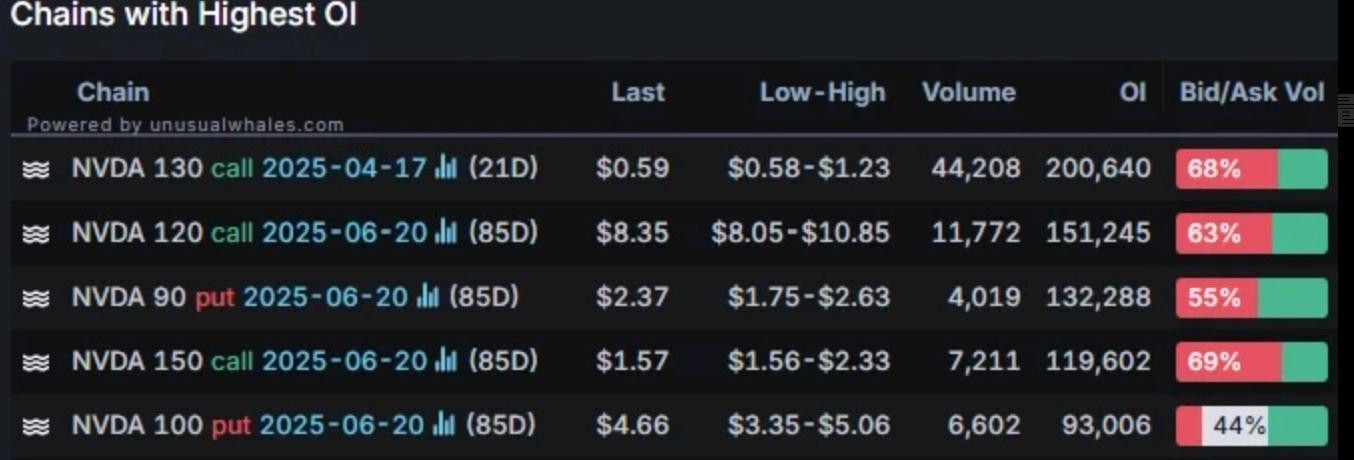
Wednesday’s selloff triggered a frenzy in $NVDA ’s options market. Call volume surged to 410,300 contracts (58% bullish), with the most active bets targeting a rebound to 120 by Friday. However,the 130 call for April 17—with 200,000 open contracts—hints at longer-term caution.
Notably, a $112 put expiring Friday skyrocketed 10x, reflecting hedges against further declines. Implied volatility spiked to 18.83, suggesting traders expect wild swings as $NVDA ’s Q1 earnings approach.
The Bottom Line: Adapt or Perish
$NVDA ’s response to these threats will define its future. While its CUDA ecosystem and Blackwell GPUs retain an edge in cutting-edge research, the economics of mass-market AI now favor frugality over firepower. The company’s move into leasing and software (a potential $150B revenue stream) shows awareness—but execution risks remain high.
For investors, the key question is whether $NVDA can transition from a hardware vendor to an AI infrastructure titan before rivals dismantle its moat. As DeepSeek’s CEO aptly put it: “Efficiency isn’t just an engineering goal—it’s the new battleground.” In this war, even giants bleed.