
Reports Decoded – Why Municipal Bonds Are a Smart Play in Today’s Uncertain Market

Kevin Insights
March 28, 2025
GoGPT Summarizes Articles
Recent market conditions have been marked by considerable volatility, driven by factors such as Federal Reserve policy uncertainty, inflation concerns, and geopolitical tensions. In this context, municipal bonds have emerged as a compelling investment option, particularly for high-net-worth individuals seeking stable, tax-efficient cash flow. Raymond James' latest Municipal Bond Investor Weekly report, highlights several key reasons why investors should pay close attention to municipal bonds in the current market.
Rising Yields Present Attractive Opportunities
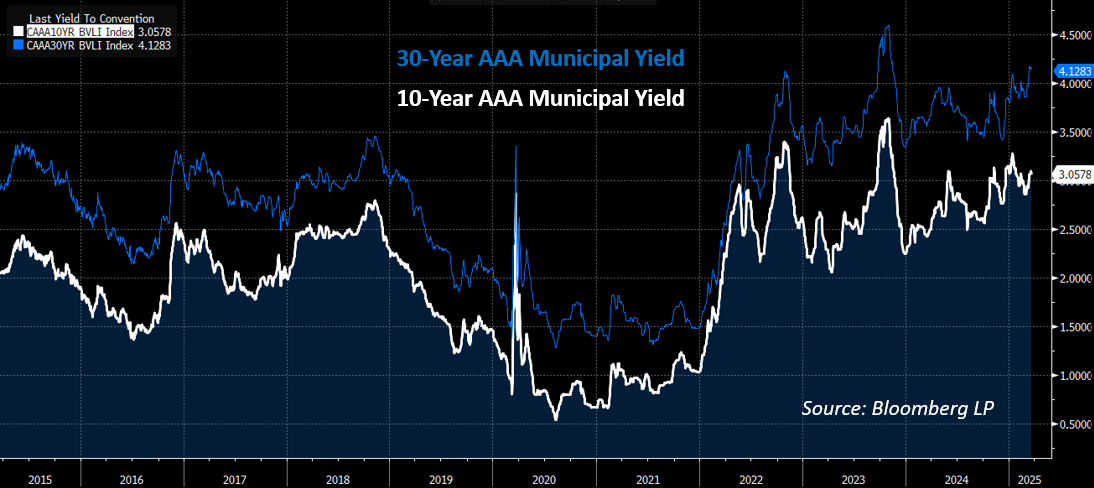
While Treasury yields dipped last week—falling by 3 to 9 basis points—long-term municipal bond yields have been climbing steadily since the start of the year.
-
The AAA-rated 10-year municipal bond yields are now around 3.06%, significantly higher than the decade-long average of 2.00%.
-
Similarly, the 30-year AAA-rated municipal bond yield stands at approximately 4.13%, marking a sharp increase from the 2.77% average since 2015.
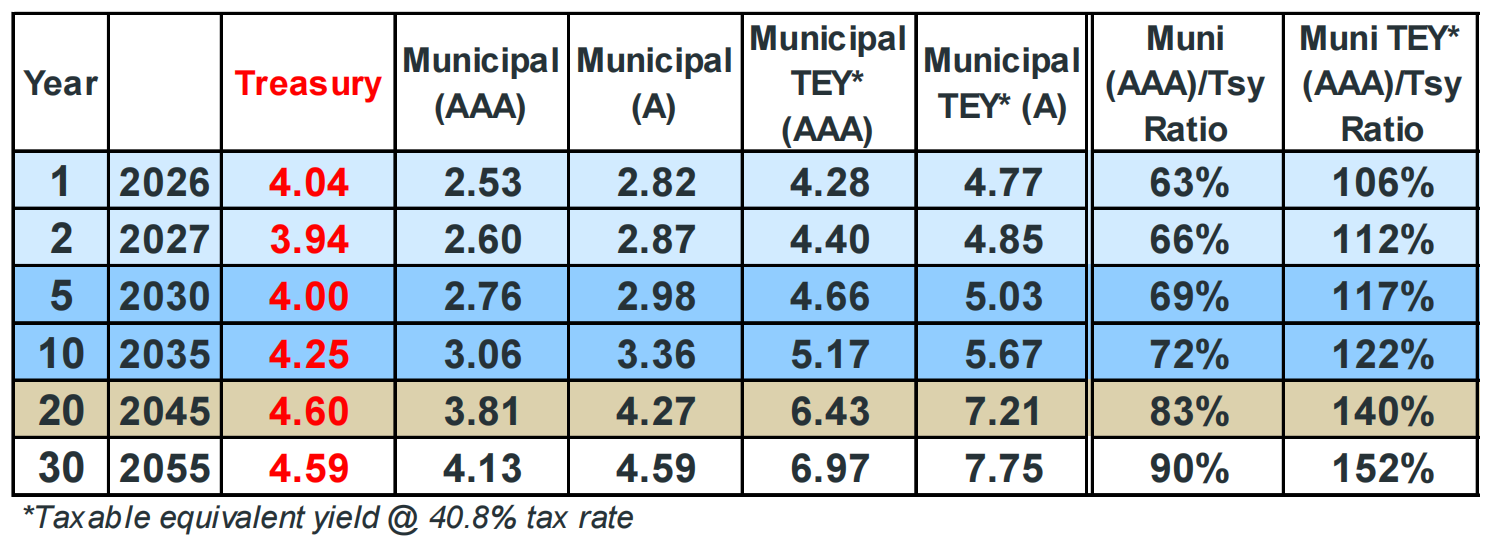
For high-net-worth investors in the top tax brackets, 3% to 4%+ tax-free yields translate into taxable equivalent yields (TEY) ranging from 5.00% to 6.75%, or even higher in states with income taxes.
Sources: Raymond James
This rise in yields is particularly noteworthy given the current economic backdrop, which remains uncertain. While the Federal Reserve has indicated potential interest rate cuts later in the year, concerns over inflation and tariffs persist. However, in the municipal bond market, yields have risen more significantly compared to Treasury yields, offering a tactical advantage for investors looking for stable and reliable cash flows.
A Seasonal Imbalance Creates Short-Term Opportunities
The municipal bond market is currently experiencing a seasonal supply and demand imbalance, with a higher-than-usual supply of new issues and fewer redemptions from maturing bonds. This imbalance is expected to last for another 4 to 6 weeks, particularly as the tax season approaches. This surge in new issuance, projected at approximately $7.9 billion this week, has outpaced investor demand, pushing long-term municipal yields higher while Treasury yields have fallen—creating a rare divergence between the two.
For investors with available capital, this presents a limited-time opportunity to lock in favorable yields before the seasonal shift. The imbalance could ease as the tax filing deadline approaches, making now an optimal time to take advantage of these elevated yields.
The Safety and Certainty of Individual Municipal Bonds
One of the key advantages of municipal bonds is the certainty they offer. Unlike equities or other investments with fluctuating returns, municipal bonds provide known maturity dates and fixed interest payments. This means that investors can rely on steady income and the return of principal on a specified date. For long-term "buy-and-hold" investors, the market's short-term volatility—such as fluctuations in interest rates—becomes less of a concern.
The low default risk associated with investment-grade municipal bonds—less than 0.1% over a 10-year period, based on historical data—further enhances their appeal. The predictability of annual coupon payments and the absence of significant price fluctuations when holding to maturity make municipal bonds an attractive choice for risk-averse investors.
Tax-Advantaged Income with Competitive Yields
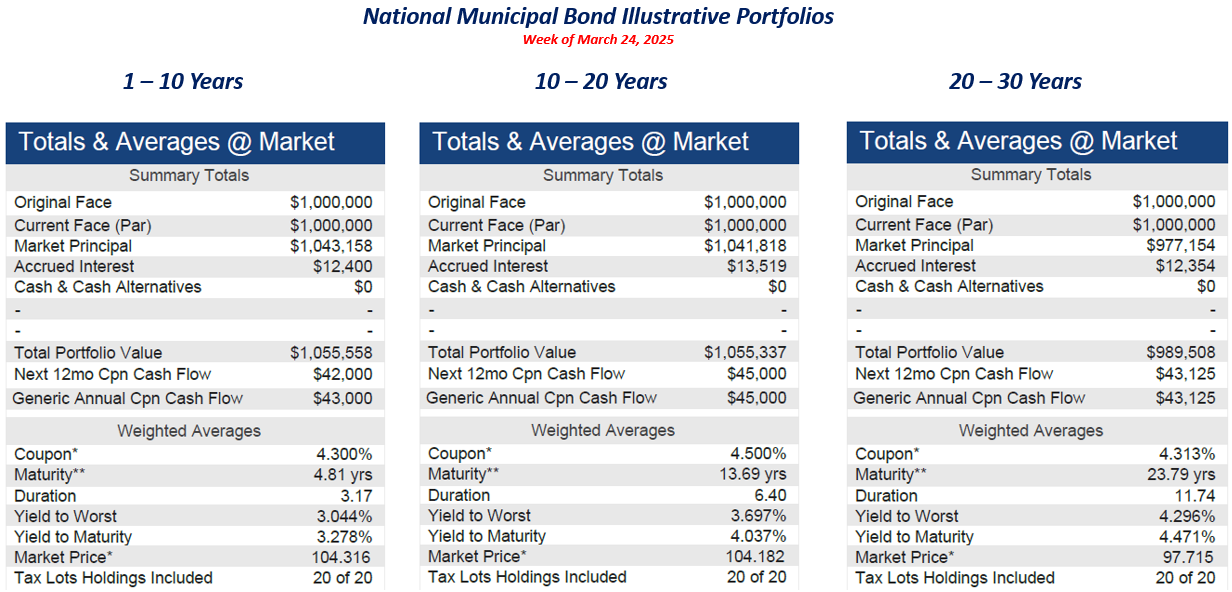
The current market conditions provide an opportunity to lock in tax-efficient income. Raymond James’ illustrative portfolios suggest several promising options along the yield curve.
Sources: Raymond James
Notably, the 20–30-year municipal bonds offer an additional 60 basis points over the 10–20-year bonds, making them particularly appealing for investors aiming to maximize yield. For a portfolio rated A or higher, the tax-free yield to worst is around 4.30%, translating into a taxable equivalent yield of approximately 7.25% for investors in the top federal tax bracket. If callable bonds are not called, the yield to maturity increases to 4.50%, equating to a taxable equivalent yield of 7.60%.
Conclusion
With yields climbing and an ongoing seasonal supply-demand imbalance, the municipal bond market presents a strong opportunity for investors looking to lock in attractive yields. The current market conditions offer a window for investors to secure tax-efficient income before the imbalance normalizes. Additionally, the safety and predictability of individual municipal bonds continue to make them an attractive investment option in today’s uncertain market environment.
As always, it is crucial for investors to consult with financial advisors to ensure that their municipal bond investments align with their overall financial goals and tax situation. With uncertainty lingering in the broader economy, municipal bonds have proven themselves to be a reliable asset class for those seeking both stability and opportunity in fixed income investments.
#Private Market: Unlocking Potential#privatemarket#bondmarket