
Warren Buffett: 10 Mistakes Every Investor Makes, Don’t Repeat Them

Daniel Value Investing
March 31, 2025
GoGPT Summarizes Articles
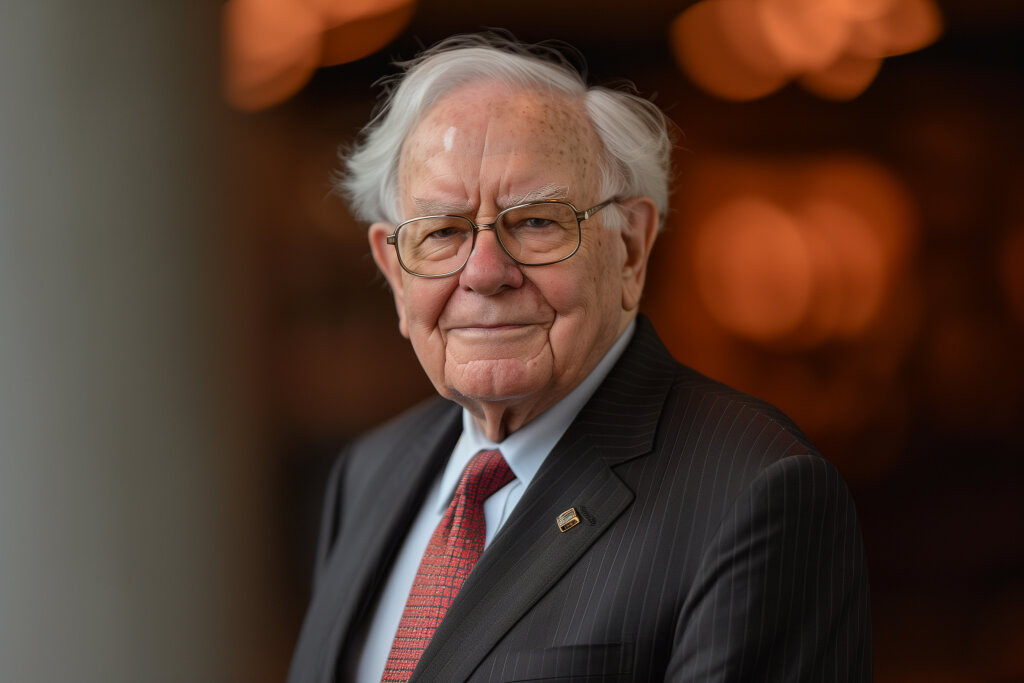
When it comes to investing, few names command as much respect as Warren Buffett. Known as the "Oracle of Omaha," Buffett has built his fortune through decades of disciplined investing. His strategies may not be flashy, but they have consistently outperformed the market. And if there’s one thing he’s learned, it’s that even the smartest investors make mistakes.
After studying a vast amount of Buffett interviews, I've distilled his wisdom into these 10 critical lessons. The key? Learn from them and don’t repeat them.
Holding Cash for the Sake of It
Many people hold too much cash "just to feel safe," but this is like letting your money slowly melt away. With inflation at 3%, your $100,000 loses $3,000 in purchasing power every year. Buffett doesn’t believe in holding cash just to meet arbitrary allocation targets. Cash should be a temporary holding until a great investment opportunity arises. As he puts it, “We want all our money working in decent businesses.” Hoarding cash excessively is a missed opportunity.
Predicting Market Conditions
Investors often try to time the market, believing they can predict short-term movements. However, Buffett and his partner Charlie Munger never waste time predicting market fluctuations. Instead, they focus on understanding individual businesses. If a business is undervalued, they act—regardless of market noise. “It’s foolish to give up something you know for something you don’t.”
Over-Diversification
Many investors believe that the more stocks they hold, the less risk they face. But the average mutual fund holds over 160 stocks, yet 80% underperform the S&P 500 over 10 years. While diversification can protect against ignorance, Buffett argues it’s unnecessary for those who truly understand their investments. “Diversification is a protection against ignorance.” Instead, focus on a few outstanding businesses that you deeply understand.
Volatility Equals Risk
Investors often panic when stocks experience fluctuations. But take Amazon, for example—its stock dropped more than 30% six times since 1997. Each drop was a buying opportunity for those who understood the business. According to Buffett, beta and volatility are poor measures of risk. Real risk comes from not understanding the business you're investing in. A volatile stock isn’t inherently risky if the underlying business is solid.
High IQ Guarantees Success
Many people believe investing requires a genius-level intellect, but Buffett has shown that this is a misconception. Research from CXO Advisory reveals that even Nobel laureates’ hedge funds have underperformed the market by 4% annually. Investing isn’t about intellectual brilliance; it’s about temperament. “You need a stable personality,” Buffett says. Emotional discipline and independent thinking matter far more than raw intelligence.
The Best Investment Is in Yourself
Buffett firmly believes that the best investment you can make is in yourself. “By far the best investment you can make is in yourself.” Whether it’s learning a new skill or focusing on your health, investing in personal growth pays lifelong dividends. For example, improving your communication skills can significantly increase your value. Investing in yourself is something that no one can take away.
Rigid Asset Allocation Rules
Buffett believes that having a fixed percentage of your portfolio in stocks and bonds, and then adjusting it based on some rigid strategy, is nonsense. Flexibility is key—stay in short-term instruments until you find intelligent investments. Having a flexible mindset is more important than sticking to predefined rules.
Day Trading Is Investing
According to FINRA data, 80% of day traders quit within two years, with average losses of $20,000. Buffett sees day trading as being very close to gambling. People often engage in day trading to satisfy their urge for excitement, but it’s not a smart way to invest. It’s based on short-term price movements rather than understanding the underlying business. Buffett’s warning: “If you've been playing poker for half an hour and still don't know who the patsy is—you're the patsy.”
Growth vs. Value Stocks
Buffett argues that growth and value are not two separate categories. Growth is simply a part of the value equation. What truly matters is whether the growth will lead to more cash flow in the future. If it does, it’s valuable; if it doesn’t, it’s not. Focus on the business’s fundamentals rather than getting caught up in labels.
Waiting for the Perfect Moment
Let’s say you invested $10,000 in the S&P 500 at its 2007 peak. Despite the Financial Crisis, COVID, and several recessions, that investment would still be worth $45,000 today. Buffett believes that if you find a great company, you should invest in it rather than waiting for the perfect market moment. Great companies are rare, and waiting for a market correction could mean missing out on a great opportunity. Time in the market beats timing the market. Buffett’s mantra: “It's far better to buy a wonderful company at a fair price than a fair company at a wonderful price.”
Final Thought
Buffett’s wisdom boils down to common sense: invest in what you understand, ignore short-term noise, and think long-term. As he says, “Risk comes from not knowing what you’re doing.” Master that, and you’re already ahead of the crowd.
#Private Market: Unlocking Potential#privatemarket#valueinvesting