
Global Markets Brace for Trump's Tariff Tsunami: Recession Fears Mount as Fed Eyes Rate Cuts

The clock is ticking toward April 2—a date branded as "Liberation Day" by President Donald Trump—as global investors scramble to assess the fallout from an impending U.S. tariff offensive that threatens to upend decades of trade norms. With Trump poised to announce sweeping 15-20% tariffs on nearly all imports, markets are flashing warning signs of stagflation, recession, and a potential reshaping of supply chains. Here’s what investors need to know.
The Tariff Time Bomb
Trump’s latest salvo aims to impose "reciprocal tariffs" on all trading partners, far exceeding prior measures targeting steel, aluminum, and automobiles. The plan, described by advisors as "big and simple," would dismantle existing trade agreements and replace them with flat-rate penalties designed to mirror other nations' import fees. While specifics remain fluid—even within the White House—the scale is staggering: over $1 trillion in trade could face new barriers.
Key concerns include:
• Blanket tariffs: A 15-25% levy on autos, electronics, and consumer goods, with minimal exemptions.
• Global retaliation: Canada, Mexico, China, and the EU are likely to retaliate, escalating trade wars.
• Supply chain chaos: Industries like semiconductors and automotive manufacturing face immediate disruption.
White House insiders report panic as Trump disregards advisors urging phased implementation. "No one knows what’s actually coming," admitted a Trump ally, reflecting the policy chaos.
Economic Dominoes: Recession Risks Soar
Goldman Sachs now assigns a 35% probability to a U.S. recession within 12 months—up from 20%—citing tariff-induced inflation, weakened consumer sentiment, and policy uncertainty.
Key projections:
• Inflation surge: Core PCE inflation could hit 3.5% by late 2025, far above the Fed’s 2% target.
• Growth stall: GDP growth may slow to 1%, with unemployment rising to 4.5%.
• Fed pivot: Three rate cuts are expected in 2025 (July, September, November), slashing rates to 3.50-3.75%.
"Tariffs could tip major economies into recession," warned Barclays’ Ajay Rajadhyaksha. Morgan Stanley echoed concerns, noting markets now price a 40% chance of contraction.
Market Meltdown and the Flight to Safety
Global equities have already priced in panic:
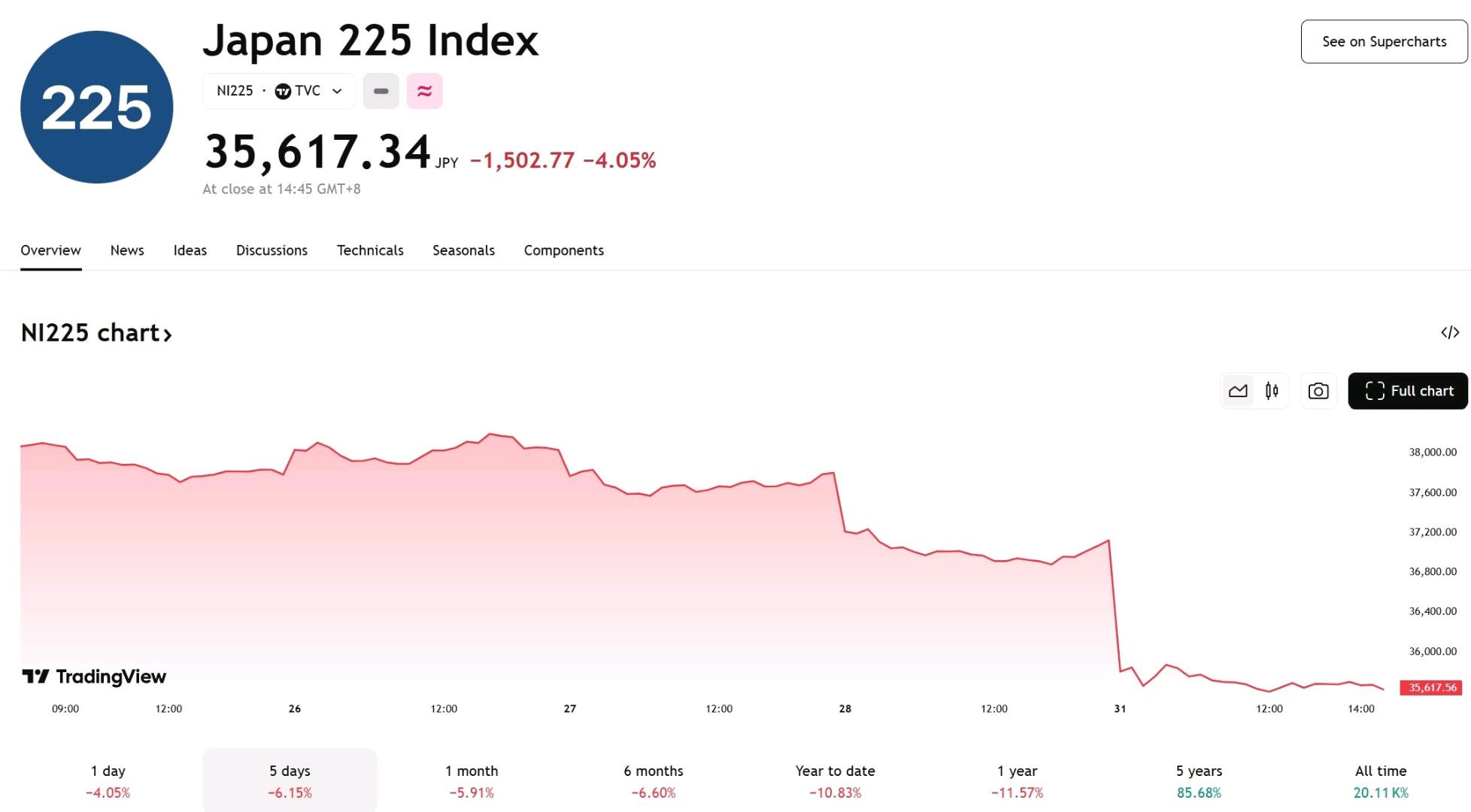
• Japan’s Nikkei 225 plunged 4% this week, entering correction territory.
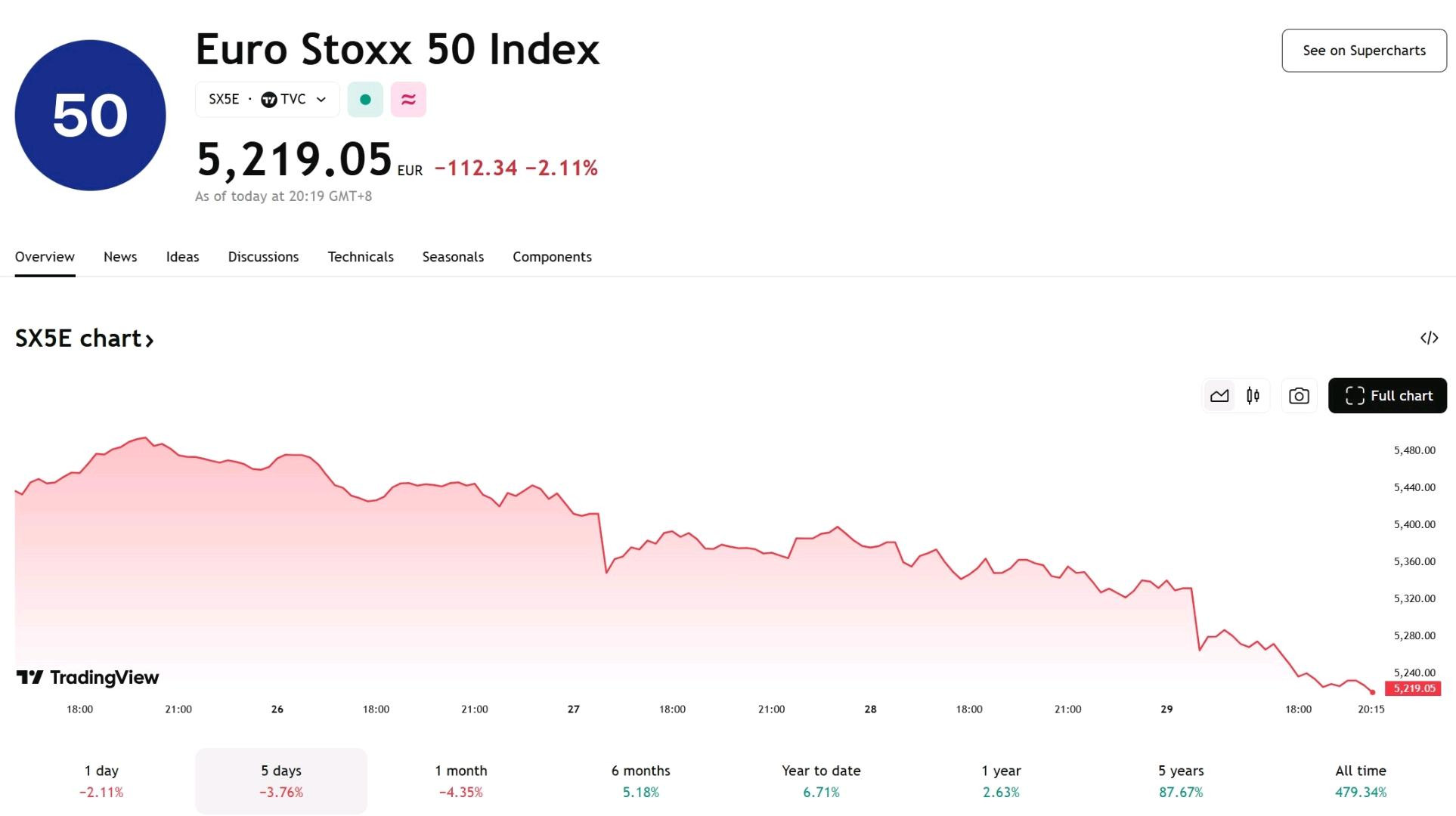
• Euro Stoxx 50 futures fell 1.1%.
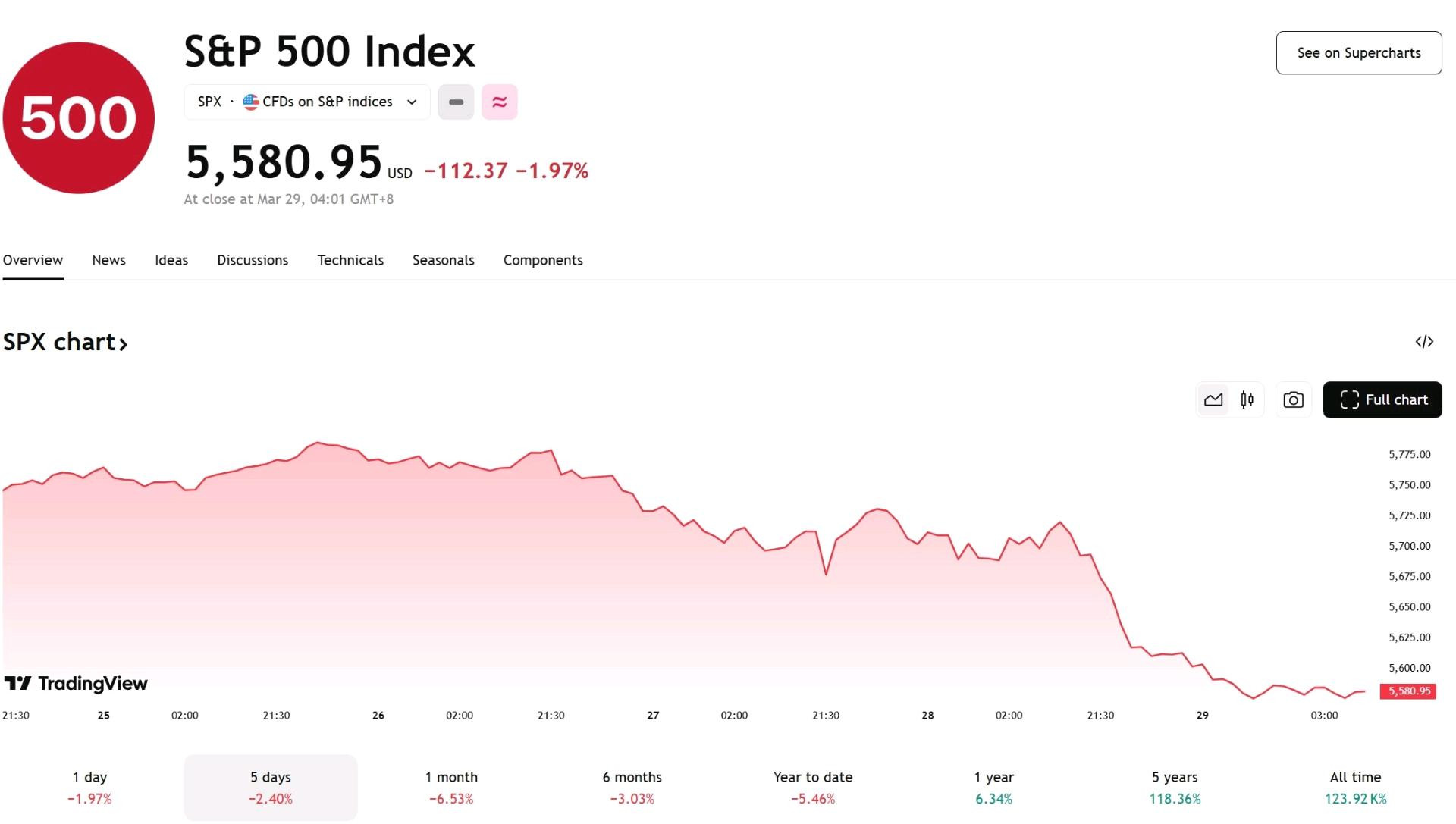
• $SPX is on track for its worst month since September 2022.
Investors are fleeing to havens:
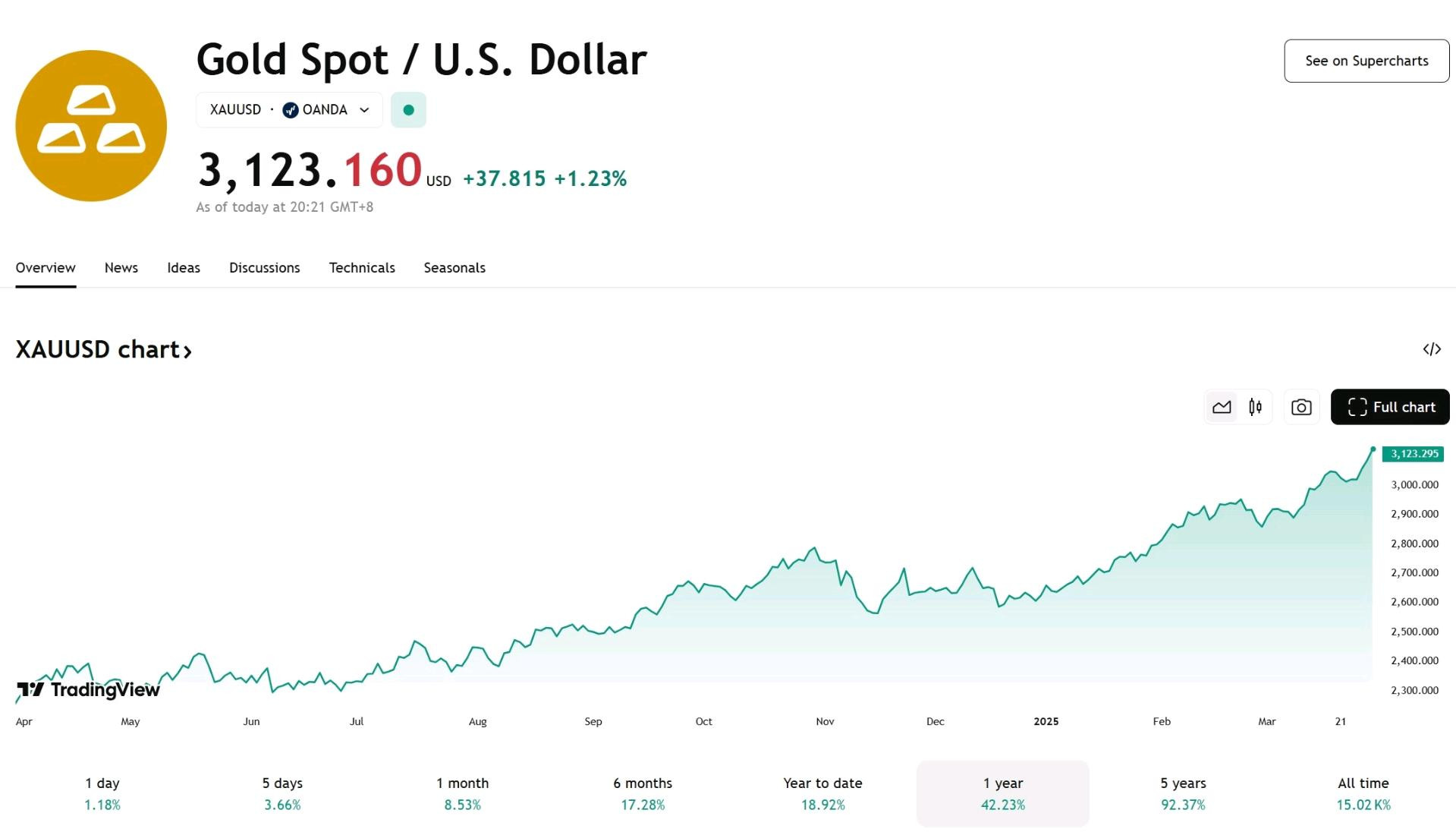
• Gold and 10-year Treasuries rally as defensive plays.
• Leveraged ETFs gain traction for short-term bets amid volatility.
• Tech giants like $NVDA and $TSLA face dual pressures of supply chain risks and valuation resets.
"Growth is becoming the new defense," argued Citi, upgrading tech and healthcare stocks while downgrading energy and consumer staples.
Winners and Losers in the Trade Crossfire
Auto sector shakeup:
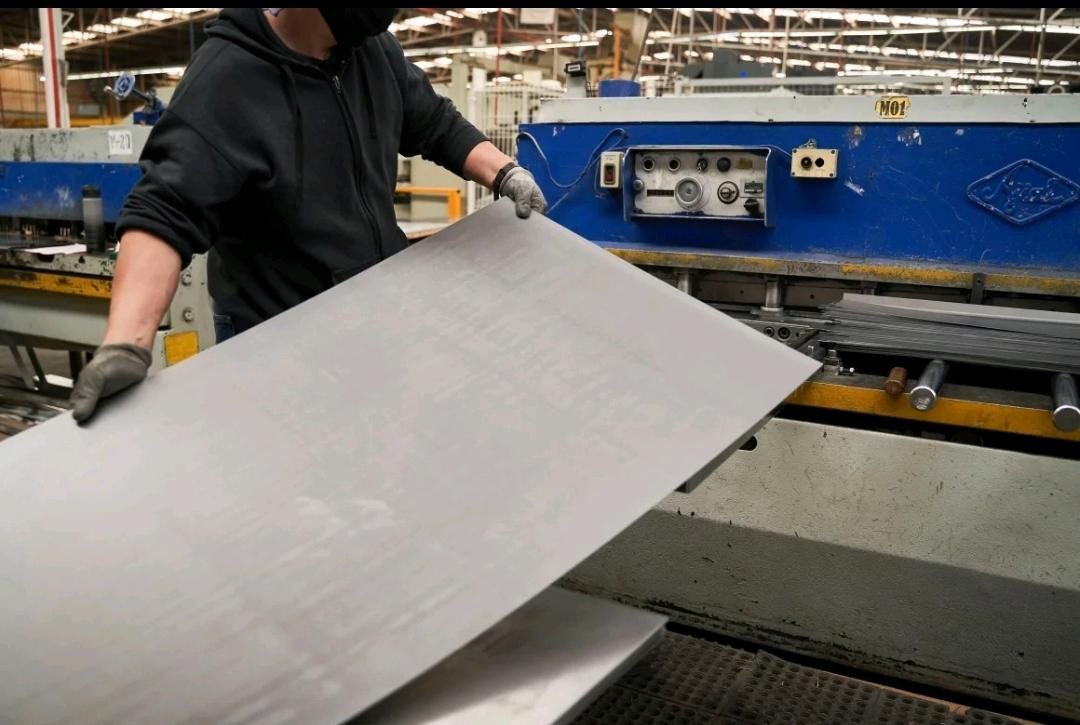
• The United Auto Workers (UAW) backs Trump’s 25% auto tariffs, claiming they’ll revive U.S. manufacturing. "Companies are already talking about relocating production here," said UAW President Shawn Fain.
• However, automakers warn of price hikes and delayed investments. Tesla and foreign brands could suffer immediate sales erosion.
AI’s reckoning:
• While artificial intelligence remains a long-term thematic play, Citi warns semiconductor and software firms face near-term turbulence. $NVDA ’s supply chain vulnerabilities and tariff-driven cost increases could pressure margins.
Political wildcards:
• Trump’s team bets that short-term economic pain will force trading partners to capitulate. "If the economy crashes, let it crash. It’ll bounce back," said one advisor.
• Critics counter that inflation-driven stagflation—not a quick rebound—is the real risk.
Investor Playbook: Navigating the Storm
1. Rotate to defensive growth: Favor tech (software, semiconductors), healthcare, and sectors with pricing power.
2. Short-cycle trades: Use leveraged/inverse ETFs for tactical moves as tariffs unfold.
3. Monitor safe havens: Gold and Treasuries may extend rallies if volatility persists.
4. Prepare for earnings revisions: Q1 reports will reveal tariff impacts on corporate guidance.
"Markets hate uncertainty, and we’re drowning in it," noted a Morgan Stanley strategist. "Until April 2 passes, every headline will move needles."
Looking Ahead: A Period of Adjustment
As the countdown to April 2 continues, market participants will be keeping a close eye on every detail—from the specific tariff rates announced to the pace at which global trade dynamics adjust. The coming weeks are likely to be a test of the market’s ability to absorb shocks and adapt to a radically altered trade environment. On one hand, there is the promise of potential growth opportunities in sectors that can pivot quickly; on the other hand, the specter of a broader economic downturn looms large.
The challenge for investors is to remain agile. While the rhetoric of “liberation” from unfair trade practices is compelling, the practical outcomes of these tariffs may lead to significant short-term pain. Diversification, strategic asset allocation, and a keen eye on market fundamentals will be crucial in weathering this storm.
In sum, Trump’s tariff blitz is not just about numbers—it’s about reshaping global trade, reconfiguring supply chains, and redefining economic relationships in an era of uncertainty. Investors need to stay informed, be proactive in adjusting their strategies, and brace for a period where volatility may be the new norm. The road ahead is unpredictable, but with careful planning and a clear focus on long-term fundamentals, opportunities may still arise amidst the turbulence.