Introduction to Hedge Funds

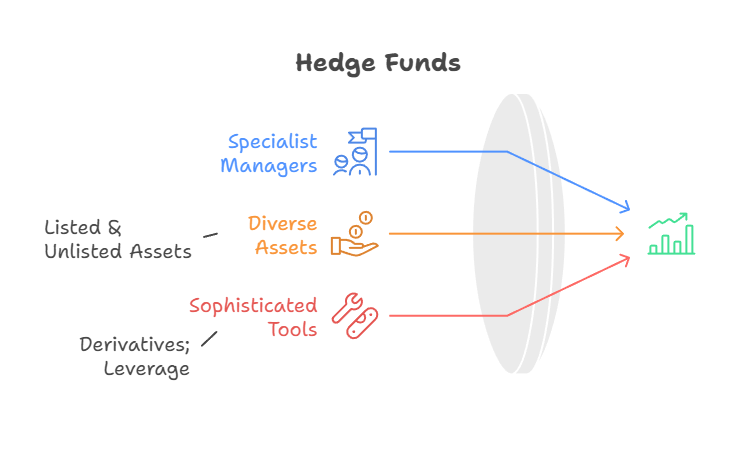
Hedge funds are specialized private investment vehicles that leverage sophisticated trading strategies and risk management techniques to seek higher returns for investors. Managed by professional investment managers with proven track records in their areas of expertise, hedge funds stand apart from traditional mutual funds due to their greater operational flexibility. They can employ strategies and tools unavailable to conventional fund managers, investing across a broad spectrum of assets—both listed and unlisted—while utilizing complex instruments such as leverage (borrowing to amplify returns), derivatives (like options and futures, whose value depends on underlying assets such as stocks, bonds, or currencies), and short-selling (profiting from anticipated declines in asset prices).
The primary objective of hedge funds is to generate returns across diverse market conditions through these adaptable strategies. Derivatives can serve dual purposes: reducing risk through hedging or speculating on the future direction of asset prices. Leverage, meanwhile, magnifies investment scale and potential profits—but it also amplifies losses if the market moves unfavorably.
Advantages of Hedge Funds
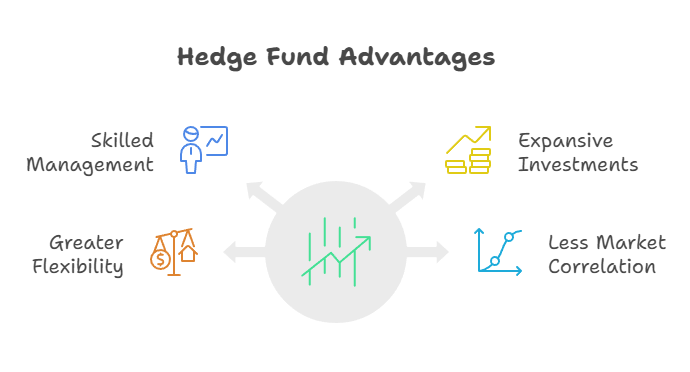
- Top-Tier Management Talent - The best hedge funds are led by seasoned managers with a history of outperforming market benchmarks. Their expertise, combined with access to a wider array of assets and trading techniques, enhances the potential for superior returns.
- Broader Investment Scope - Hedge fund managers can invest in various asset classes (e.g., stocks, bonds, commodities, currencies) and employ techniques like short-selling and leverage. For instance, short-selling allows them to borrow and sell stocks they expect to decline, repurchasing them at a lower price for profit—a tactic unavailable to traditional mutual funds.
- Strong Flexibility - Unlike tightly regulated mutual funds, hedge fund managers enjoy the freedom to pursue opportunities across different asset classes and geographic markets. This flexibility supports the pursuit of high returns, though it can also heighten risk, making the selection of a manager with a solid track record critical.
- Low Correlation with Market Volatility - Certain hedge funds aim to deliver returns that are less tied to public market fluctuations (e.g., stock markets) by using hedging strategies to neutralize market risk or focusing on opportunities independent of broader market trends. This makes them a valuable addition to a diversified investment portfolio.
Disadvantages of Hedge Funds
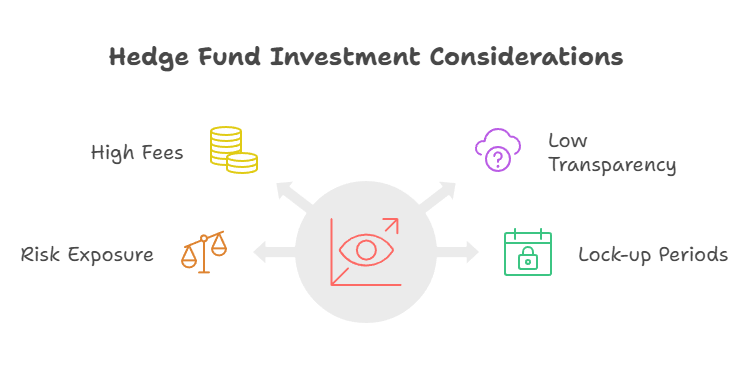
- High Fees - Hedge funds typically charge higher fees than mutual funds, often following a “2 and 20” structure—2% annual management fee plus 20% of profits as a performance fee. Investors should thoroughly understand these costs and weigh them against potential returns before committing.
- Low Transparency - To safeguard their competitive edge, many hedge fund managers disclose minimal details about their strategies. This opacity means investors may have limited insight into how their money is managed, relying heavily on the manager’s skill and reputation.
- Elevated Risk - While hedge funds have advanced tools to manage risk, strategies like leverage and concentrated investments can magnify losses. For example, if market movements contradict expectations, leverage can lead to significantly larger-than-anticipated declines.
- Lock-Up Restrictions - Hedge funds often impose lock-up periods, preventing investors from withdrawing funds for months or even years. This can pose challenges for those needing liquidity. However, emerging platforms now offer exchange functionalities, enabling trading of some portion of hedge funds without lock-up constraints.
Types of Hedge Funds
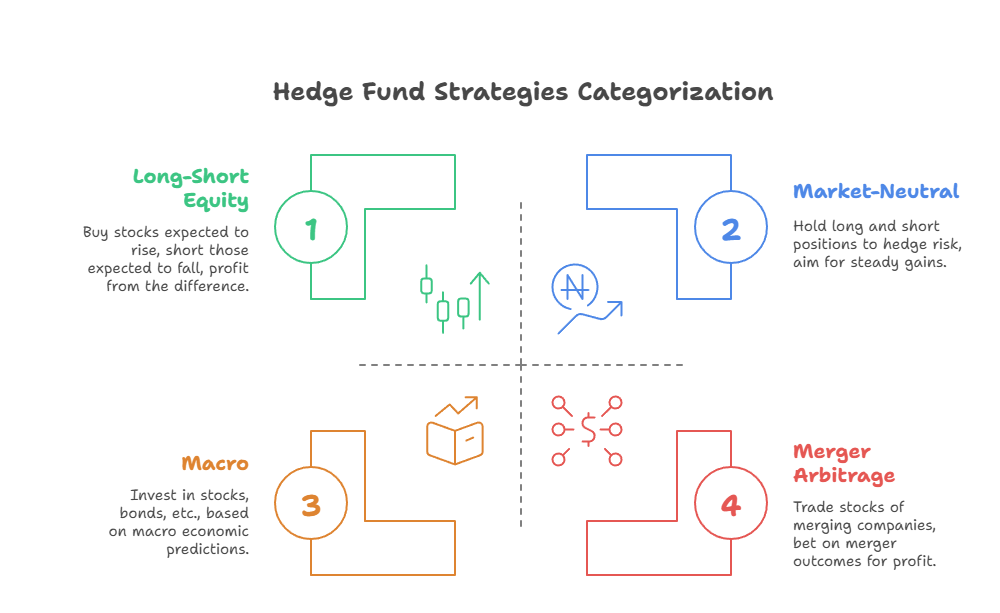
- Long-Short Equity Funds - These funds take long positions (buying) in stocks expected to rise and short positions (selling or using put options) in stocks anticipated to fall, profiting from the price differential.
- Market-Neutral Funds - By simultaneously going long and short, these funds aim for consistent returns regardless of overall market direction, minimizing exposure to market risk.
- Merger Arbitrage Funds - These funds capitalize on announced mergers by buying undervalued stocks of the target company and selling overvalued stocks of the acquirer, profiting from price adjustments if the deal succeeds.
- Macro Strategy Funds - These funds invest in assets like stocks, bonds, commodities, and currencies based on predictions of major macroeconomic events, such as political shifts or economic changes.