
Intel CEO Lip-Bu Tan Addresses Public Concerns in First Speech

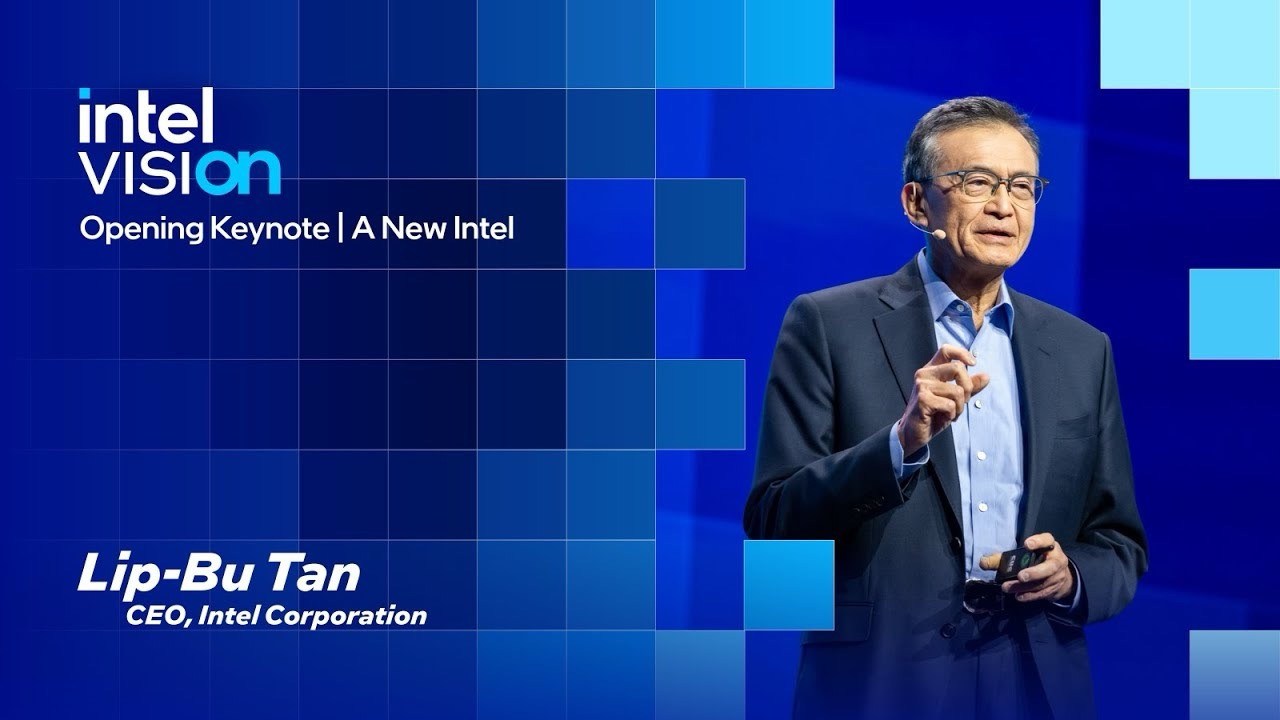
On April 1st, Intel CEO Lip-Bu Tan spoke at the Intel Vision Conference in Las Vegas, announcing plans to divest non-core assets and accelerate the company's transition towards AI-specific chips and customized semiconductors to better meet customer needs. This marks Tan's first public speech since becoming Intel's CEO.
On March 18th, Intel's board of directors appointed Lip-Bu Tan as the new CEO, replacing interim co-CEOs David Zinsner and Michelle (MJ) Johnston Holthaus, while also rejoining the Intel board.
In his speech, Tan acknowledged that Intel has fallen behind competitors in innovation and adapting to market changes. "We have failed to meet customer expectations in some areas," he stated, adding that the company needs to replenish lost engineering talent, streamline business processes, and divest non-core assets to more flexibly meet customer demands for high-performance computing.
Although specific departments for divestment were not mentioned, industry experts widely believe this decision may involve optimizing non-core business lines and focusing resources on strategic areas such as AI chips, custom semiconductors, and foundry services.
Tan identified products and foundry services as Intel's two "urgent priorities," with the goal of "creating the best products and becoming the best foundry in the coming years."
Regarding technological deployment, Tan emphasized that Intel's 18A advanced process technology is progressing as planned, with mass production expected in the second half of the year through the client computing processor codenamed "Panther Lake." This chip will feature a new architecture targeting AI and high-performance computing scenarios. Additionally, Intel is planning the next-generation processor codenamed "Nova Lake," set for release in 2026, to further solidify its technological competitiveness in the CPU market.
Tan noted that in the past, Intel designed hardware first and then considered how to develop software to run on it. However, he stressed that the world has changed, and this process needs to be reversed. He also emphasized building a strong team to correct past mistakes and transform Intel into an engineering-centric company. One priority is retaining top engineering talent, as he believes Intel has lost valuable talent in recent years.
In his annual report to shareholders, Tan reiterated several commitments, including advancing a $10 billion cost-saving plan to improve operational efficiency, which includes a 15% workforce reduction to optimize personnel structure.
During his speech, Tan also addressed why he took on the role of Intel CEO at this stage: "I love this company, and it pains me to see it struggle. I couldn't stand by knowing I could help turn things around."
Last September, Tan's announcement of his resignation from Intel's board of directors as a veteran in the semiconductor industry caused the company's stock to plummet. His resignation was not only due to disagreements with the CEO and board on multiple issues but also stemmed from deep dissatisfaction with the company's internal bureaucracy and risk-averse culture.
Since Pat Gelsinger took over as CEO in 2021, Intel launched a major initiative called IDM 2.0, attempting to regain its leading position in the global semiconductor market through transformation. The implementation of this plan has been fraught with challenges. The company announced a large-scale layoff plan, aiming to save $10 billion in costs by 2025, but failed to reverse the overall decline in company performance. In December 2024, Pat Gelsinger retired from Intel and stepped down from the board of directors.