
Semiconductor Shake-Up: Merger Talks, Intel's Pivot, and CHIPS Act Uncertainty

Shearing sheep
April 1, 2025
GoGPT Summarizes Articles
The semiconductor industry is buzzing with big moves this week—from potential mega-mergers to strategic pivots and policy shifts. Here’s what’s happening and why it matters.
GlobalFoundries Merger with UMC?
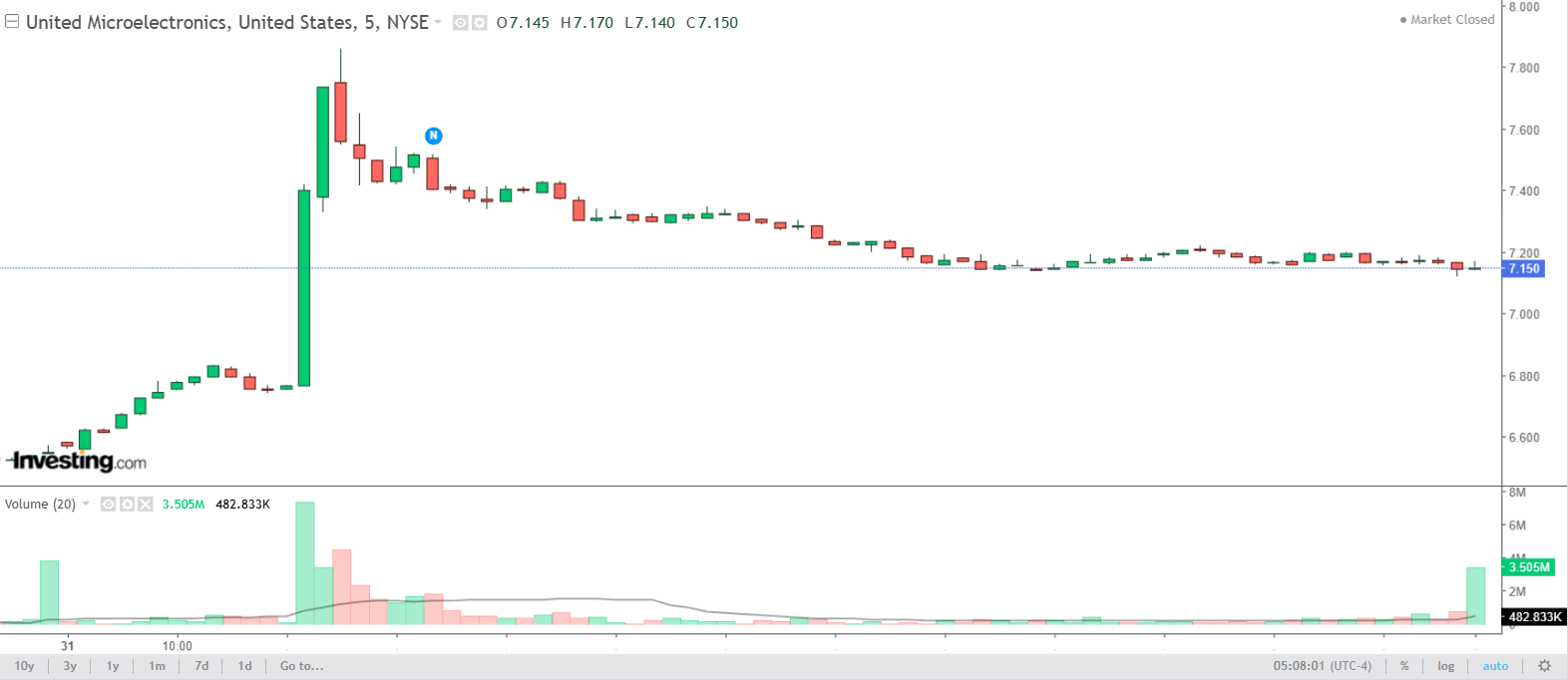
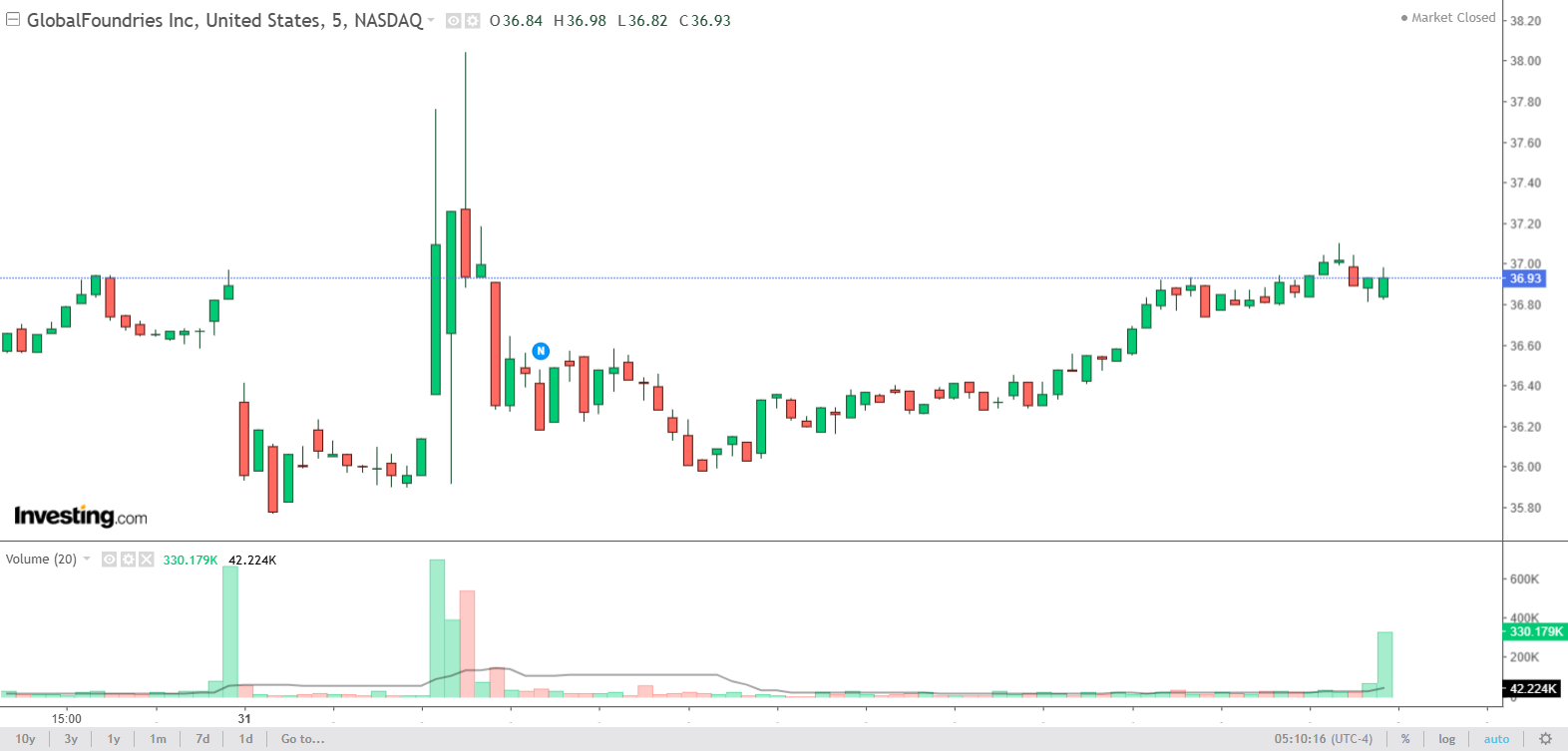
Recent reports suggest that GlobalFoundries ($GFS) is considering a merger with United Microelectronics Corporation ($UMC). If this deal materializes, it would create a formidable entity with production capabilities spanning the Americas, Asia, and Europe, and headquartered in the United States. Analysts predict this new company could become the world’s second-largest pure-play foundry, just behind TSMC.
The strategic advantages of such a merger are clear. With a combined market share of around 10%, the merged entity would have enhanced capabilities to compete for mature process orders. Mature processes, including those at 28nm and above, are crucial for applications in automotive, industrial control, communication infrastructure, and military equipment, accounting for over 70% of global chip demand. In a time of geopolitical tensions, having a resilient supply chain with a wide geographical spread could be a game-changer.
However, there are uncertainties. The U.S. has been increasingly focused on securing its semiconductor supply chain, especially in light of China’s growing capabilities in mature-node semiconductor manufacturing. The U.S. has even launched trade investigations into China’s mature-process chips, underscoring the strategic importance of this segment. A GF-UMC merger could be seen as a move to strengthen the U.S.’s position, but it would also need to navigate complex regulatory and geopolitical landscapes.
UMC’s stock surged by over 20% on the merger rumors, though the gains were later trimmed, closing up 9.16%. GlobalFoundries saw a modest uptick of around 0.05% by market close.
Intel’s Reshaping
On Monday, Intel’s new CEO, Liwu Chen, made his first public speech since taking the helm. A veteran in the semiconductor industry, Chen announced plans to divest Intel’s non-core businesses and focus on its chip manufacturing operations.
Liwu Chen, who previously served as the CEO of chip software company Cadence, was appointed as Intel’s CEO in mid-March. In his inaugural speech, he laid out ambitious plans to transform Intel into a leading foundry player. This includes recruiting top talent and fostering a more innovative culture to boost Intel’s standing in AI and data center chips. Chen wants Intel to act like a startup—less bureaucracy, more innovation.
Chen also mentioned that the U.S. federal government, seeking to maintain the U.S.’s leadership in the semiconductor field, is ready to support Intel. With backing from the U.S. government, Intel aims to regain its footing and become a major player in the foundry market. This could have far-reaching implications, especially if Intel manages to attract key clients like Nvidia and Apple for its advanced processes. Intel’s resurgence could reshape the competitive dynamics in the semiconductor industry, adding another strong contender to the mix.
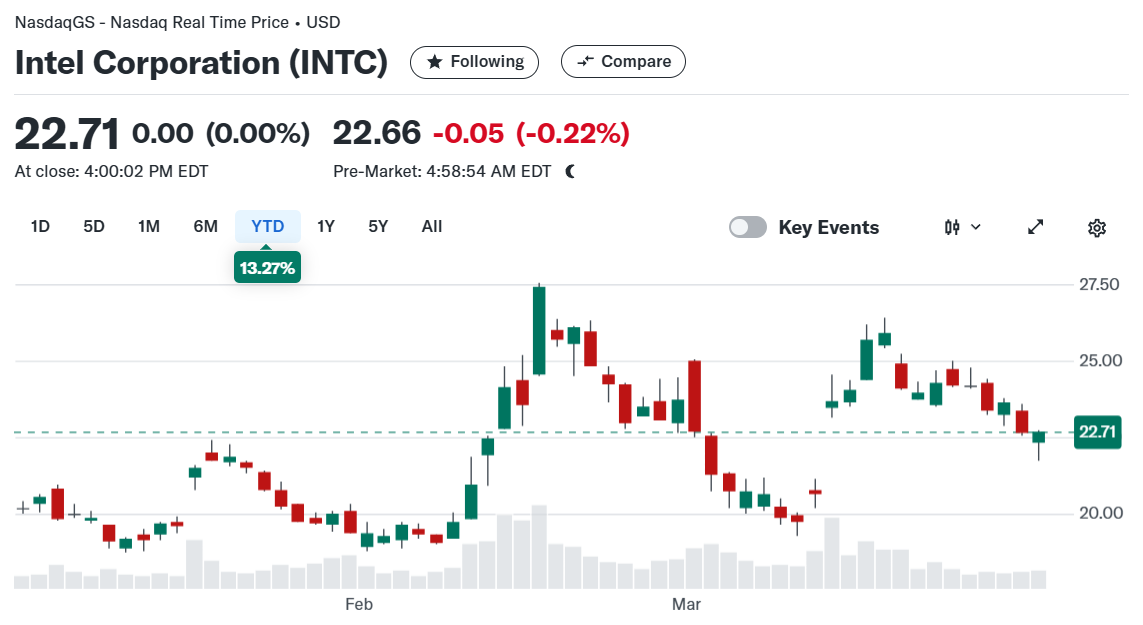
Last year, Intel’s former CEO, Pat Gelsinger, stepped down, dealing a significant blow to market confidence and causing the stock price to plummet by over 20%. However, since Liwu Chen took over, the company's stock has gradually stabilized, currently hovering around $22, with a more than 13% increase year-to-date. $INTC
U.S. CHIPS Act
Meanwhile, reports suggest that U.S. Commerce Secretary Lutnick is considering halting the distribution of CHIPS Act subsidies to pressure companies into expanding their investments in the U.S. This move could have mixed effects. On one hand, it might encourage more domestic production, aligning with the U.S.’s goal of reducing reliance on foreign semiconductor sources. On the other hand, it could create uncertainty for companies that have already planned their investments based on the availability of these subsidies.
How About TSMC?
TSMC ($TSM), the current leader in the semiconductor foundry market, is also facing its own set of challenges and opportunities. TSMC’s stock has seen a dip of 24% since its peak in January 2025. Morgan Stanley’s recent report highlights several key concerns for TSMC investors, including the impact of AI growth, tariffs, and increased U.S. investments.
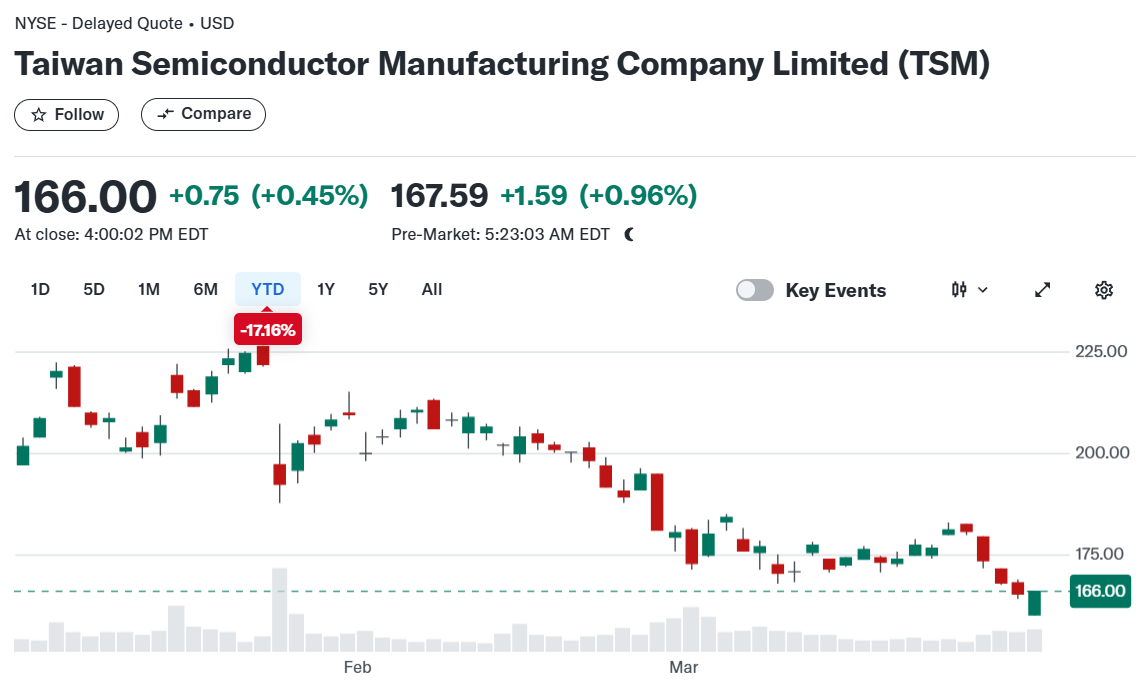
Despite these concerns, TSMC’s advanced process nodes, particularly N3, N4, and N5, are in high demand, driven by AI acceleration projects. The company’s ability to maintain high utilization rates and strategically increase prices to offset rising costs is a testament to its market strength. Morgan Stanley maintains a “Buy” rating for TSMC, seeing current levels as an attractive entry point.
The potential for Intel to outsource more of its manufacturing to TSMC also presents an opportunity. If Intel continues to rely on TSMC for a significant portion of its wafer production, it could provide a substantial boost to TSMC’s revenue and capacity utilization. Additionally, TSMC’s investments in advanced packaging technologies like CoWoS are crucial for meeting the growing demand from AI and high-performance computing clients. However, the expansion of U.S. fabs and potential changes in the geopolitical landscape could introduce new complexities.
Conclusion
The semiconductor industry is in a state of flux, with potential mergers, strategic pivots, and geopolitical tensions all shaping its future. The proposed GF-UMC merger could create a powerful new player, while Intel’s restructuring under new leadership aims to re-establish its dominance. Meanwhile, TSMC must navigate the challenges of expanding its U.S. presence and maintaining its market leadership amidst geopolitical uncertainties.
As an investor, it’s crucial to keep an eye on these developments. The semiconductor industry is a cornerstone of modern technology, and its evolution will have far-reaching impacts on everything from consumer electronics to national security. Whether you're bullish on TSMC’s continued leadership, intrigued by the potential of a GF-UMC merger, or optimistic about Intel’s turnaround, one thing is clear: the next few years will be pivotal for this industry. #semiconductor #stockmarket #intel #tsmc
#$Taiwan Semiconductor Manufacturing Company Ltd.(TSM)#semiconductor#stockmarket#intel#tsmc#$GlobalFoundries Inc. Ordinary Shares(GFS)#$United Microelectronic Corp.(UMC)#$Intel Corp(INTC)