
OpenAI Secures Record-Breaking $40 Billion in Private Funding Round

OpenAI announced on March 31 that it has completed its largest-ever private funding round, raising $40 billion. The company stated that it plans to use the funds to further advance artificial intelligence research and expand its computational infrastructure.
The funding round was led by Japan's SoftBank Group with a $30 billion investment, with other core investors including Microsoft, Coatue, Altimeter, and Thrive.
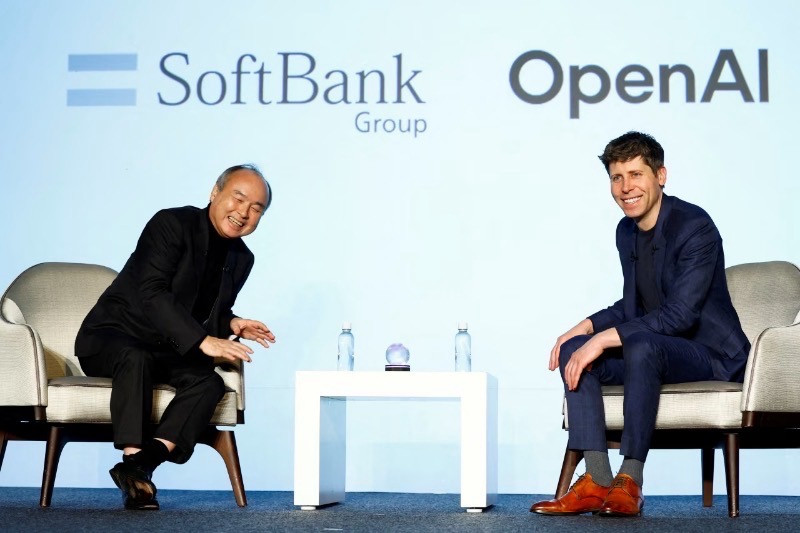
This new round of funding has propelled OpenAI's valuation to $300 billion. According to data from CB Insights, this valuation places OpenAI second only to SpaceX's $350 billion, ranking it among the world's highest-valued private companies alongside ByteDance.
In a blog post, OpenAI wrote that the company plans to use the new funds to "further push the frontiers of AI research" and expand its computational infrastructure.
According to an insider, approximately $18 billion of the funds is expected to be allocated to OpenAI's commitment to the "Stargate" project. In January this year, U.S. President Donald Trump announced that SoftBank, OpenAI, and Oracle would jointly invest $500 billion to establish a joint AI infrastructure project called Stargate.
The insider also revealed to the media that OpenAI will receive an initial $10 billion, with the remaining $30 billion to be in place by the end of 2025.
Notably, in the latest information disclosed by SoftBank on Monday, it was mentioned that if OpenAI cannot restructure into a for-profit entity by December 31 this year, SoftBank's total investment might be reduced to $20 billion. This clause increases the pressure on OpenAI to transition to a for-profit model.
OpenAI was initially established as a non-profit research institution, but with investors' massive bets in the AI field in recent years, OpenAI has found it difficult to resist the pressure to generate profits.
Elon Musk, one of OpenAI's co-founders, has repeatedly expressed his dissatisfaction with OpenAI's commercialization after leaving the company, believing it deviates from its original non-profit mission. Musk has also questioned the company's attempt to transition to a for-profit institution and has initiated legal action against it.
Currently, OpenAI's organizational structure is unusual as it includes both the for-profit OpenAI LP and the non-profit parent company OpenAI Inc. If the company chooses to restructure at this time, OpenAI's non-profit portion would be separated as an independent entity.
Although there is still uncertainty regarding OpenAI's for-profit transition, SoftBank and other investors remain optimistic that ChatGPT's explosive growth will continue.
Data released by OpenAI on Monday shows that ChatGPT currently has 500 million weekly users, up from 400 million last month. OpenAI also predicts that its revenue will double to $12.7 billion by the end of this year.
The company's CEO, Sam Altman, posted on X on Monday that when ChatGPT was first launched over two years ago, it experienced a crazy "viral spread," gaining 1 million users in five days. Now, "we've added 1 million users in just the past hour."
OpenAI also announced some significant changes in its executive team last week. CEO Sam Altman will shift his focus from daily operations to research and products, while COO Brad Lightcap's responsibilities will expand to overseeing business and daily operations.