
The Era of AI: Chinese Descent Executives' Historical Struggle Against Indians in Silicon Valley Comes to an End - Part 3

Part 3 — Chinese Executives Break Through: GPU War Reshapes the Power Landscape
The tides of time always change industry landscapes unexpectedly. Just as the mobile internet era shaped Indian CEOs, the arrival of the AI era has reshaped the chip industry map, gradually propelling Chinese CEOs to the power center of Silicon Valley.
In fact, in 2014, when Nadella became Microsoft's third CEO, Lisa Su also became AMD's first Chinese CEO. However, Su was taking the helm of a sinking ship - the company founded in 1969 was on the brink of bankruptcy: five consecutive years of losses, stock price below $2, and over $2 billion in debt.
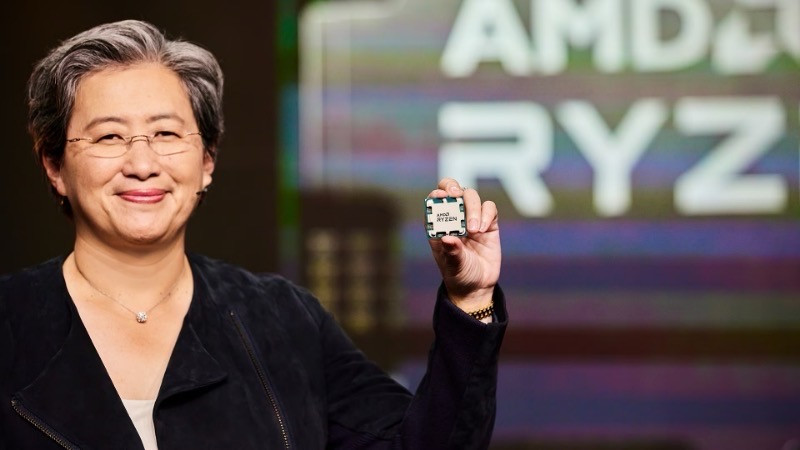
For this reason, Su's name wasn't prominent in Silicon Valley at the time. Before AMD, Su had worked at IBM for 12 years, rising from a researcher to Vice President of R&D, becoming a top expert in the semiconductor field - the highest position a Chinese person had reached at IBM.
It was this IBM experience that led Su, despite the smartphone-centric market environment, to bet AMD's future on Zen, a new architecture for personal computer CPUs, believing that "the impact of semiconductor decisions only becomes clear after three to five years."
2014 was also a pivotal year for Jensen Huang. In 1993, at 30, Huang co-founded NVIDIA with two friends, focusing on graphics processor development. At the time, Huang was known as a "gaming graphics card vendor," consistently losing out to Qualcomm, MediaTek, and Intel in competition.
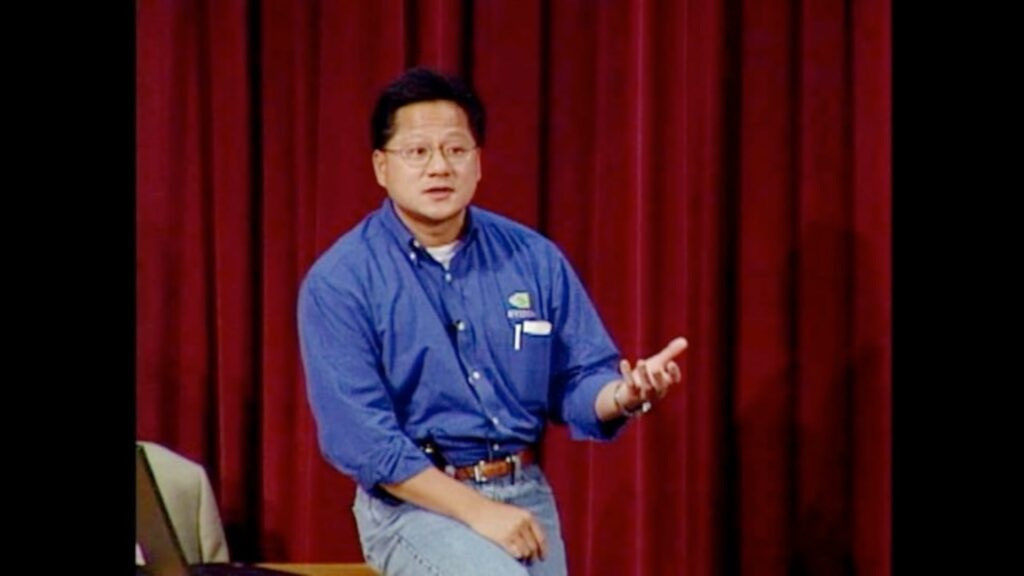
Huang chose to retreat, announcing in 2014 that NVIDIA would no longer focus on the mobile market, instead pivoting towards AI, becoming the pioneer of the GPU concept.
In hindsight, both Huang and Su made the right bets.
With the advent of the AI era, NVIDIA and AMD, once relatively peripheral in the industry chain, leveraged their GPU technology advantages to become core players in the AI field. Under the historic opportunity presented by the explosion of large language models like ChatGPT, Huang and Su stepped into the spotlight.
Huang, who once sought partnerships with tech giants, has now become the object of pursuit by industry leaders.
To secure more chips, Elon Musk even persuaded Huang to invest in his xAI. Tech giants like Microsoft, Google, Meta, and Amazon are also vying to stockpile NVIDIA chips.
NVIDIA's market value has soared, even briefly surpassing Apple to become the world's most valuable company.
AMD, under Su's leadership, has also carved out a significant share in the AI server market from Intel. By 2025, AMD's market value exceeded $300 billion, with Su being dubbed "Silicon Valley's Most Dangerous Woman" by Fortune magazine.
However, Silicon Valley's tech giants don't like being dependent on others, and queuing for chips clearly doesn't fit their usual image. With their robust application ecosystems, these giants have found a solution in developing their own chips through foundries.
Beyond foundry services, the only issue left to solve was design: Broadcom could help them with this.
Unlike Huang and Su who broke through with technology, Broadcom CEO Hock Tan primarily built his chip empire through acquisitions, earning him the industry nickname "King of Semiconductor Mergers." Although not from a technical background, Tan's keen judgment of industry trends has driven Broadcom to become a disruptor in the AI computing power field.
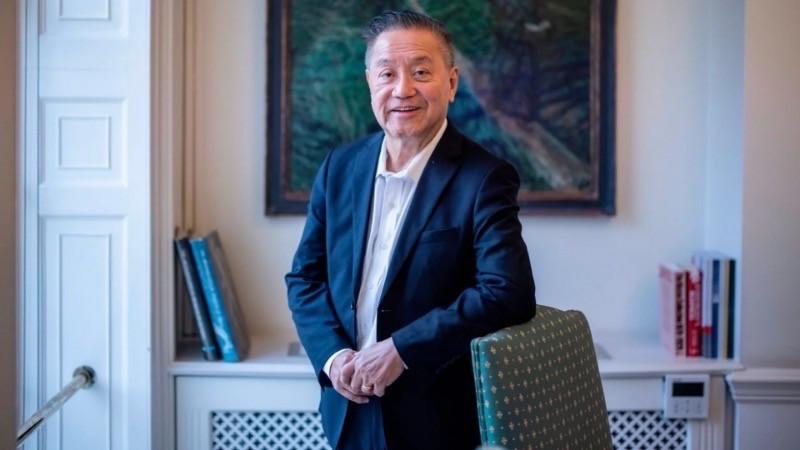
In 2006, Tan was hired as CEO of semiconductor company Avago. In 2013, he entered the data center chip customization service market by acquiring LSI. In 2015, he acquired Broadcom for $37 billion and continued rapid expansion through acquisitions, transforming Broadcom from a medium-sized semiconductor company into a trillion-dollar giant.
Today, Broadcom has joined the trillion-dollar club, becoming the second-largest AI computing power giant after NVIDIA, with Meta, Apple, and OpenAI as partners.
Meanwhile, Intel, the veteran chip industry giant, has gradually fallen behind in the AI era's tidal wave. In crisis, Intel turned to Lip-Bu Tan, the "godfather of chip venture capital," as its new CEO.
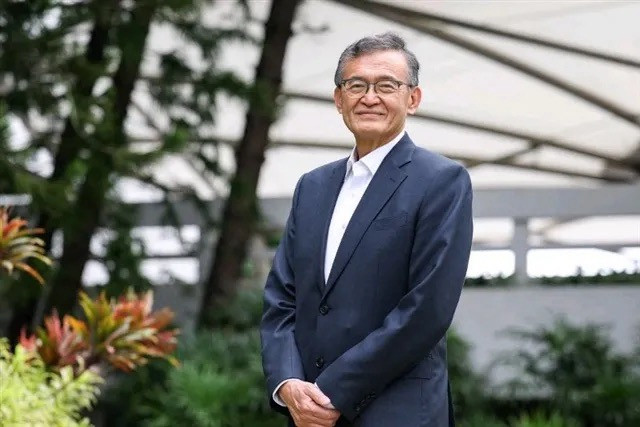
As a "veteran" in the semiconductor and chip fields, Lip-Bu Tan was a manager who drove the EDA (Electronic Design Automation) revolution at Cadence. He is not only familiar with the entire chip design process but has also been deeply involved in China's semiconductor industry development through his venture capital firm, Walden International.
Intel chose Tan for his deep technology industry background, relationships spanning product and foundry ecosystems, and track record of creating shareholder value. "These are exactly the qualities needed for Intel's next CEO," the company stated.
Driven by the trends of the era, Chinese CEOs in Silicon Valley have built a business landscape centered on chips, gradually gaining a voice in the industry.