
The Era of AI: Chinese Descent Executives' Historical Struggle Against Indians in Silicon Valley Comes to an End - Part 4
Part 4 — Looking Ahead: The Rise of New Chinese Descent Forces
Beyond the Chinese CEOs already at the pinnacle, Silicon Valley is now witnessing a surge of AI companies founded by Chinese entrepreneurs, with Chinese engineers becoming an indispensable backbone of tech companies.
Recently, rumors surfaced about Jensen Huang potentially acquiring an AI startup called Lepton AI. Although not officially confirmed, several authoritative media outlets suggest the deal could be worth hundreds of millions of dollars.
This two-year-old AI startup, though seemingly small, has garnered attention due to its founder and technological direction. Lepton AI, founded by Yangqing Jia, former Alibaba VP and known as the "Father of Caffe," primarily offers computing power rental services.
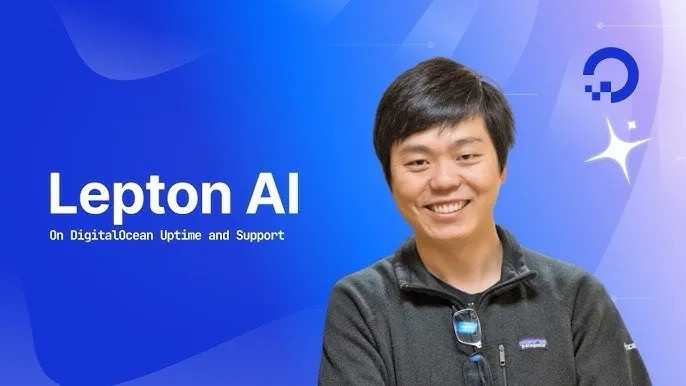
Earlier, Jia had worked at Google and Meta. After leaving Alibaba, he decided to start his business, once again setting his sights on Silicon Valley.
Yuanming Hu, a Tsinghua University Institute for Interdisciplinary Information Sciences graduate, also established Meshy.AI's headquarters in Silicon Valley. This isn't Hu's first entrepreneurial venture. During his Ph.D. at MIT, he founded "Taichi Graphics," securing millions in strategic investments from GGV and Sequoia. Inspired by generative AI in early 2024, Hu started his second venture, which quickly caught Jensen Huang's attention.
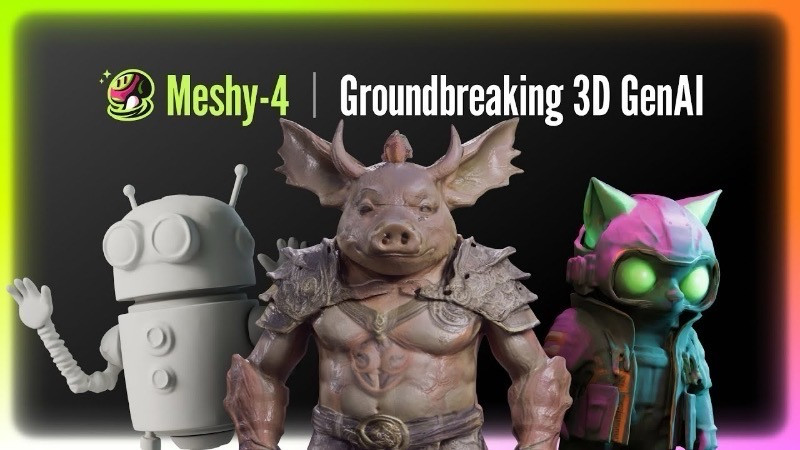
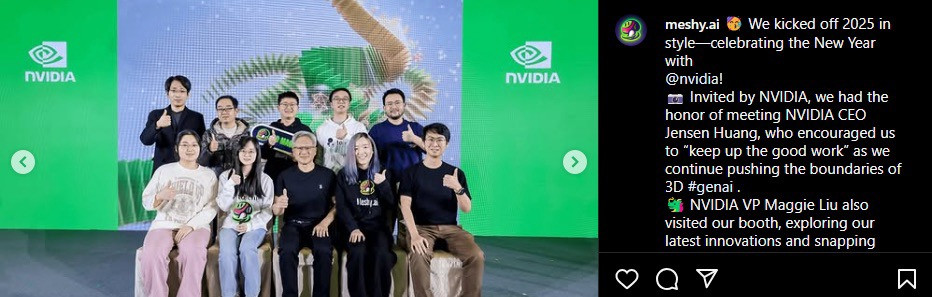
In early 2025, the Meshy.AI team was invited by NVIDIA, with CEO Jensen Huang and VP Maggie Liu personally receiving them. In a16z's 2024 AI tools survey, Meshy.AI was listed as the only 3D generation tool.
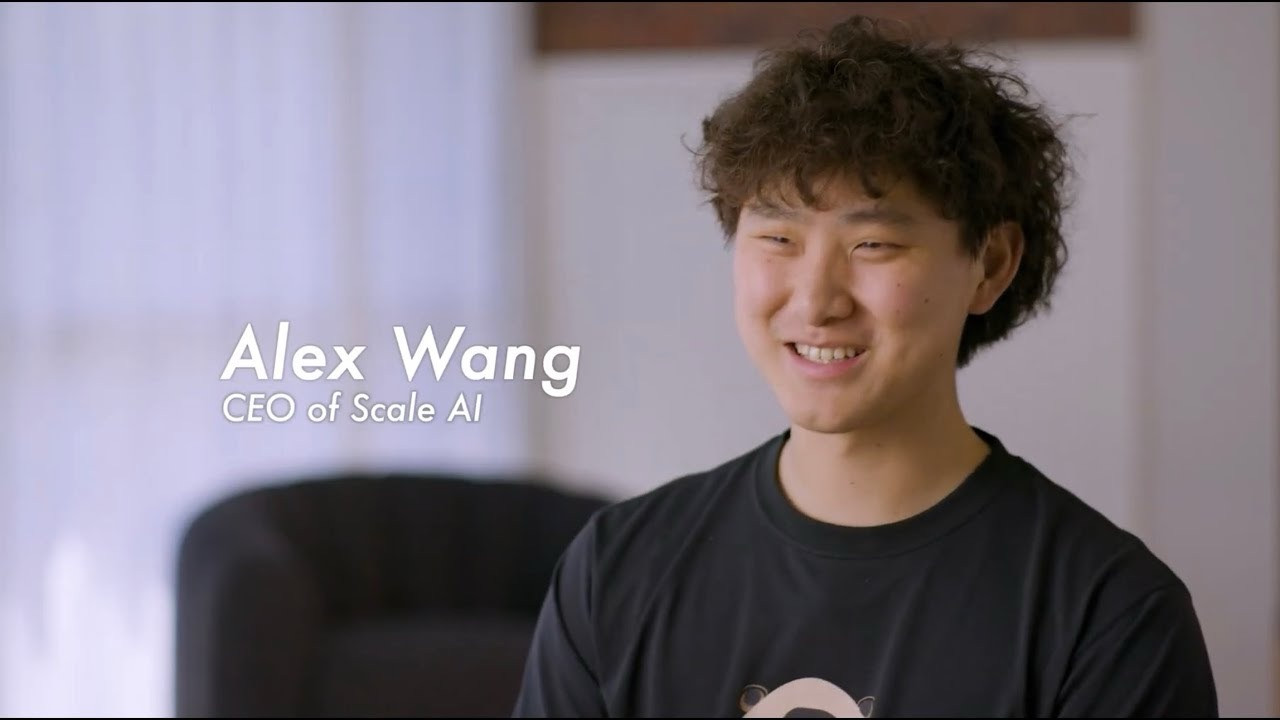
Another star AI startup from Silicon Valley, ScaleAI, was founded by Chinese-American Alexandr Wang. Focusing on data labeling for large models, ScaleAI's clients span major AI companies. It has raised $1.6 billion over nine rounds, with investors including industry giants like NVIDIA, Amazon, and Intel.
Meanwhile, Chinese engineers are increasingly visible in core technical teams of Silicon Valley tech companies.
Last month, Elon Musk unveiled his "world's smartest AI," Grok 3. However, more attention was drawn to the two Asian faces in the center stage - Wu Yuhuai and Jimmy Ba. The former is xAI's co-founder, while the latter is a direct disciple of "AI Godfather" Hinton. In comparison, Musk seemed more like a "nodding machine," jokingly called "Silicon Valley's most expensive straight man" by netizens.
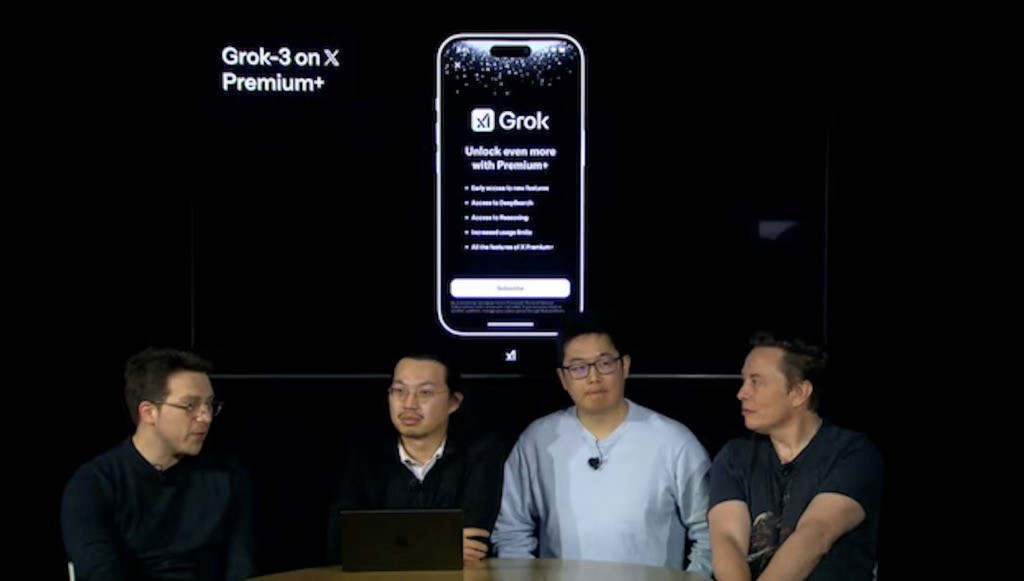
In fact, since the inception of Musk's x.AI, Chinese have been playing crucial roles. Among the initial 12 members introduced, one-third were native Chinese scientists.
Beyond Musk's team, six core members of OpenAI's GPT-4 team have undergraduate degrees from top Chinese universities.
As global AI competition intensifies, talent competition has become a key factor. According to MacroPolo's "The Global AI Talent Tracker 2.0," in 2022, 38% of the top 20% global AI talent originated from China, surpassing the 37% from the U.S.
The high demand for Chinese engineers in Silicon Valley is evident from Google's poaching of Bill Jia from OpenAI.
In late 2023, amid OpenAI's internal strife, Google seized the opportunity to restructure its Core AI department and extended an offer to Bill Jia, then Senior VP of Engineering at Meta.
After his Ph.D., Jia worked at Microsoft for four years before joining Meta in late 2009. In 2017, he was promoted to VP of AI Infrastructure and Platform, overseeing AI infrastructure development. Yangqing Jia reported to Bill Jia during his time at Meta, making Bill Jia the highest-ranking Chinese in Silicon Valley's tech giants at the time.
Reports suggest that star large model startups offered him partnership roles, internet giants proposed lucrative contracts, and OpenAI closely approached him. Eventually, Google convinced Bill Jia to join as part of its Core AI department restructuring strategy, concluding this talent war.
As the mobile internet era empowered Indian executives, the AI wave is propelling Chinese talents. As the wheel of time rolls on, only the competition among technological innovators remains endless.