
Investors Brace for "Liberation Day": Strategies to Navigate Upcoming Market Uncertainty

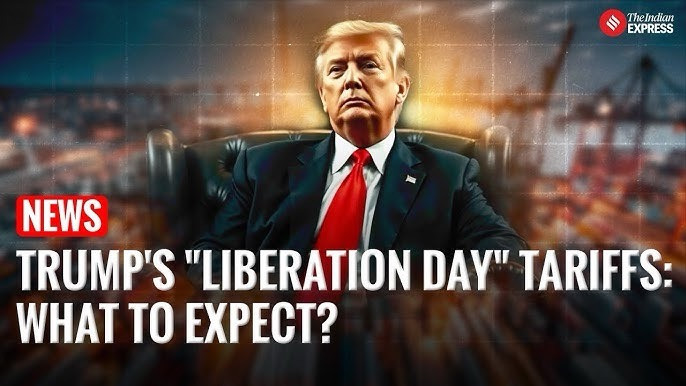
Recently, U.S. Treasury Secretary Bessent officially announced that Trump will declare corresponding tariff measures on Wednesday at 3 PM.
However, the specific details of the tariffs remain unknown. Trump stated on Sunday that he plans to impose reciprocal tariffs on "all countries," countering speculation that he might limit the initial scope of the April 2 announcement.
With the market facing the "Liberation Day," every investor seems to be asking: What will happen next? As a result, using options might help hedge portfolios to some extent.
JPMorgan believes that a good outcome that day would be: low (10% or less) uniform tariffs, VAT not considered, and Trump expressing willingness to discuss industry-specific tariffs, including 25% on aluminum/steel, 25% on automobiles, 200% on EU champagne/wine, and possibly 25% on chips and pharmaceuticals. Additionally, avoiding tariffs on ships would be a positive signal.
A bad outcome would be: higher-than-expected package tariffs including VAT effects, plus additional industry-specific tariffs. Furthermore, any sales bans or fines/tariffs on shipping vessels would be an even worse result.
The investment bank then listed the market impacts of three different tariff scenarios:
10% tariffs: Assuming a 10% across-the-board tariff, canceling/replacing previous tariffs on Canada and Mexico, the S&P 500 would surge 2%-2.5%; 10-year U.S. Treasury yields would rise about 10 basis points; EUR/USD would fall to 1.06-1.07 (currently 1.08).
25% tariffs: The S&P 500 would drop 1.25%-1.75%. 10-year U.S. Treasury yields would fall 12-14 basis points. EUR/USD would decline as the dollar would be seen as a safe haven, falling to 1.03-1.05.
35% tariffs: The S&P 500 would plummet 2%-3%. 10-year U.S. Treasury yields would plunge 20 basis points. EUR/USD would crash to 1.01-1.03.
However, just now, The Washington Post revealed that White House aides have drafted a proposal to impose about 20% tariffs on most goods imported into the U.S. If implemented, this plan could shock the stock market and global economy.
White House advisors warn that several options are on the table, and no final decision has been made. On Monday night, Trump repeatedly hinted that tariffs would be "reciprocal" - proportional to those imposed by foreign countries on U.S. exports - and indicated that many countries would not be included in the import tariffs. This could represent a less drastic action than a single universal tariff.
The Washington Post reports that insiders emphasize Trump can always change his mind in anytime, but the President has been pushing for universal tariffs in recent days, believing it to be simpler than measures targeting specific countries.
Because Trump's tariff policy is causing market unrest, the question seemingly every investor is asking is: What will happen next? As a result, options have become an important investment tool at present.
1. Buying Put Options
If investors already own a certain number of stocks or ETFs and expect a significant market decline, they can purchase an equivalent number of put options to hedge risk.
For example, if an investor owns 100 shares of XXX stock, currently priced at $100, they could buy one put option contract (1 contract = 100 shares) expiring within a month (but after the April 2 tariff announcement date) with a strike price of $95.
If XXX stock falls below $95 after the tariff announcement, the investor can use this option to sell their 100 shares of XXX stock at $95 per share.
2. Bear Put Spread Strategy
If investors hold some stocks and don't expect a significant market decline, they can use a bear put spread strategy to reduce hedging costs.
Specifically, a bear put spread strategy involves simultaneously buying a put option with a higher strike price (usually at the current price) and selling a put option with a lower strike price (usually below the current price). This creates a low-cost hedging portfolio that both reduces the premium cost of the protective put option (the bought put) and hedges against stock price declines within a certain range.
This strategy is suitable for mild bear markets or short-term volatility. Its advantage is the lower premium cost for hedging, though downside protection is limited and cannot fully hedge against risks if the price falls below the lower strike price.
Although investors remain cautious about the April 2 "Liberation Day," the options market indicates that this is far from the only important date this month.
According to a report by Barclays analysts, options market data shows that the implied volatility of S&P 500 index options rises significantly on the volatility curve for April 4, even surpassing April 2.
April 4 corresponds to the release of the March non-farm payroll report, suggesting that investors seem more concerned about employment data than Trump's tariff plan announcement scheduled for April 2.
It's worth noting that Wall Street has previously mentioned that the negative economic impact of tariff "uncertainty" could be more far-reaching than expected.