Introduction to Private Equity

Go Private Market Guide
April 2, 2025
GoGPT Summarizes Articles
Private equity (PE) is an alternative investment class that involves direct ownership stakes in private companies—businesses that are not publicly traded on stock exchanges. It provides investors with opportunities to participate in the growth and success of companies across various industries, ranging from early-stage startups to established market leaders.
Why Invest in Private Equity?
Private equity has historically delivered higher returns compared to public market investments. Over the past decade, PE investments have outperformed global public equities, with annual returns averaging above 14%, while early-stage venture capital has yielded even higher returns. The sector’s strong performance has contributed to its rapid growth, with global assets under management (AUM) increasing significantly in recent years.
Key Advantages of Private Equity Investments
-
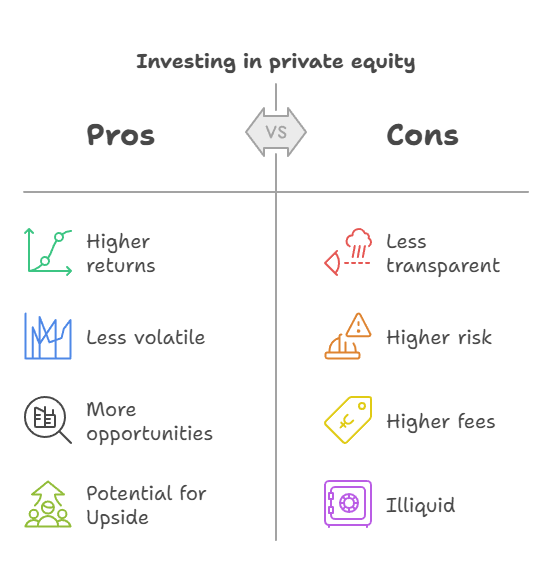
High Potential Returns – PE investments often generate superior returns compared to publicly traded stocks, making them an attractive option for investors looking for significant capital appreciation.
-
Lower Market Volatility – Unlike public stocks, which are affected by daily market fluctuations, private equity investments tend to be less volatile, providing a more stable investment environment.
-
Access to Undervalued Opportunities – Many private companies operate outside the scrutiny of public markets, making it easier for skilled investors to identify and capitalize on high-growth opportunities.
Challenges of Private Equity Investing
While private equity offers attractive benefits, it also comes with certain risks and limitations:
-
Lack of Transparency – Unlike publicly traded companies, private firms are not required to disclose financial data regularly, making due diligence more challenging.
-
Higher Investment Risks – Since private companies are often in earlier stages of development or undergoing transformations, investors face a higher probability of capital loss.
-
High Fees – Traditional private equity investments typically involve substantial management and performance fees, which can reduce net returns.
-
Illiquidity – PE investments are long-term commitments, often requiring investors to hold their stakes for several years before an exit event, such as an acquisition or initial public offering (IPO), allows them to realize their gains.
Types of Private Equity Investments
Private equity encompasses a variety of investment strategies, including:
-
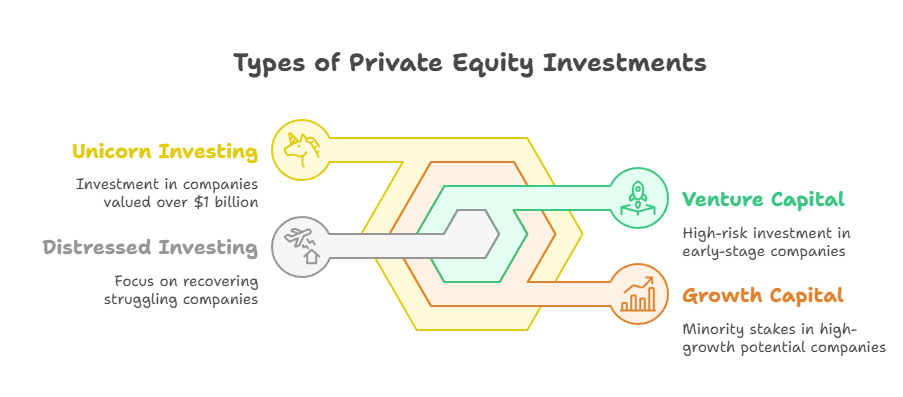
Growth Capital – Investing in private companies with strong growth potential, typically through minority stakes.
-
Unicorn Investing – Targeting high-growth startups valued at over $1 billion before they go public.
-
Venture Capital – Providing early-stage funding to startups with innovative business models and high scalability.
-
Distressed Investing – Acquiring struggling companies with the aim of restructuring and improving their performance.
What Is Venture Capital?
Venture capital (VC) is a key component of private equity that focuses on funding early-stage startups with high growth potential. These funds are managed by experienced investors, known as general partners. Often, a venture capital fund will invest in companies within one or more focus sectors, such as fintech, AI, alternative energy, or consumer tech.
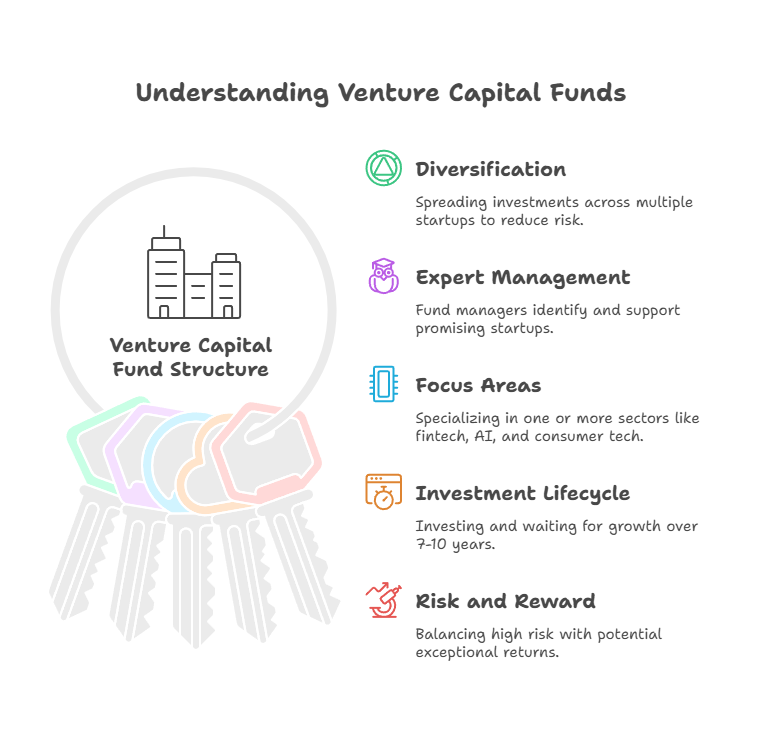
One of the biggest advantages of venture capital is its potential for outsized returns. Startups that successfully scale and achieve exits through acquisitions or initial public offerings (IPOs) can generate significant profits for investors. However, venture capital is also associated with high risks, as many startups fail before reaching profitability. To mitigate this risk, VC funds typically diversify their portfolios across multiple startups, ensuring that the success of a few can offset potential losses from others.
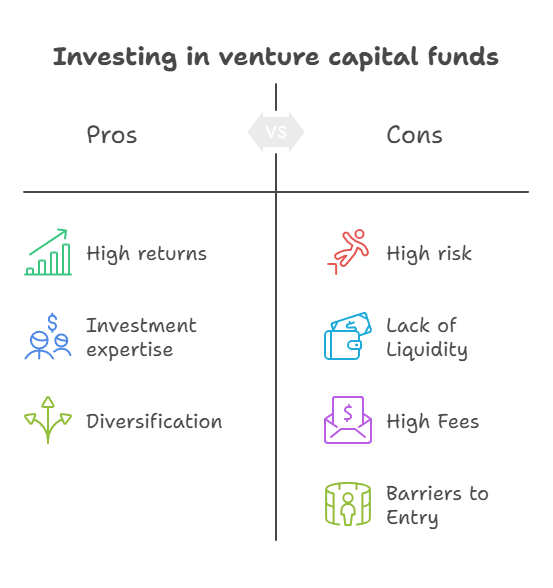
Venture capital plays a crucial role in fostering innovation, supporting groundbreaking technologies, and shaping the future of industries. For investors willing to take on higher risks, VC offers a unique opportunity to participate in the success of the next generation of industry leaders.
What Are Unicorns?
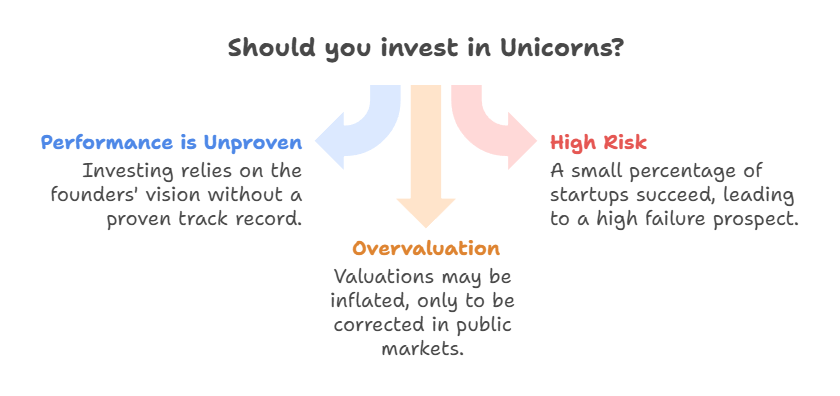
Unicorns are private companies that achieve a valuation of over $1 billion before going public. Many of today’s leading tech companies, such as Tesla, Stripe, and ByteDance, were once unicorns. The term was coined by venture capitalist Aileen Lee in 2013 to reflect the rarity of such startups at the time. However, the number of unicorns has significantly increased in recent years, particularly in sectors like fintech, consumer tech, and healthcare.
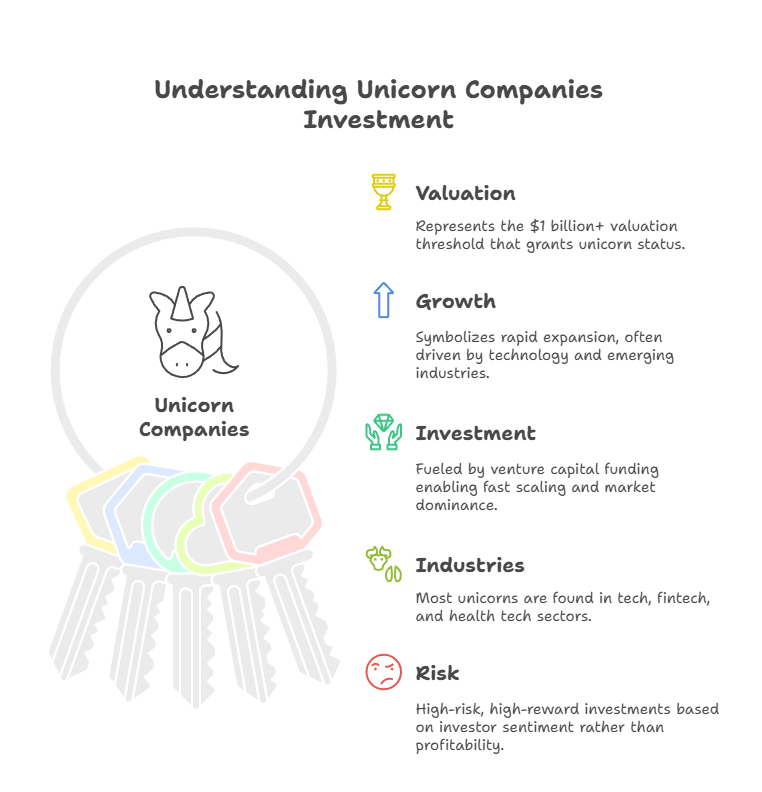
The biggest appeal of investing in unicorns is undoubtedly the potential for high returns. If you pick the next tech giant, like Google, Amazon, or Facebook, the returns can be unimaginable. Take Peter Thiel, for example, who invested $500,000 in Facebook and turned it into over $1 billion in just a few years.
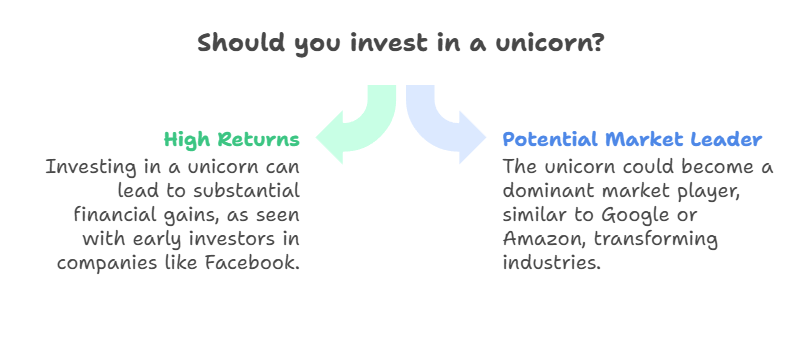
However, this kind of investment isn't without its risks. Under the hype and market buzz, many unicorns have staggering valuations, but their business models often haven’t been truly validated by the market. What investors are buying into is more about the founders' vision and a bet on the company's future, rather than actual commercial value or proven profitability. Even if the company goes public, it doesn’t guarantee it will be profitable—many companies only reveal their overvalued status once they're listed. Uber, for instance, still hasn’t turned a profit. Additionally, only a tiny fraction of startups ever become unicorns, with only about 0.7% of tech startups reaching this level.