
The Power of Consistency Over Smarts in Investing: 5 Key Lessons from Morgan Housel

Daniel Value Investing
April 2, 2025
GoGPT Summarizes Articles
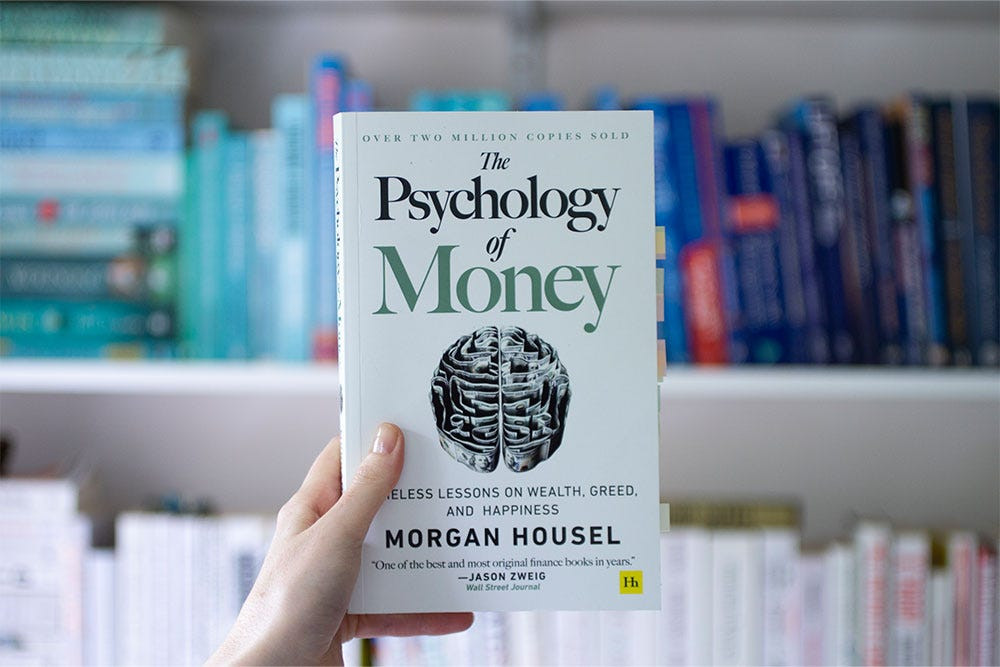
Here's a wild story that really puts the "common sense" approach to investing into perspective: A janitor named Ronald Read passed away in 2014 with $8 million in savings. Yep, you read that right. A janitor. $8 million. And no, he didn't win the lottery, nor did he inherit a fortune. The guy simply lived a life of saving and let the magic of compounding work its wonders over decades.
So, what's the takeaway here? It's not about having a Harvard degree or working on Wall Street. In fact, it's not about how much you know, it's about how you behave with money. As Morgan Housel puts it in The Psychology of Money: "Financial success is not a hard science. It's a soft skill, where how you behave is more important than what you know." Here are five key lessons from his book that can help anyone—whether you're a beginner or a seasoned investor—build wealth smarter.
1. Pay the Price of Volatility
Imagine you're shopping for a new watch that's going to impress everyone. You're deciding whether to just swipe your card or take it and run. And of course, you'll pay the price, right? Otherwise, it's essentially stealing. Buying that watch isn't free, and investing works the same way.
High returns in the stock market come with a cost—volatility. If you want the potential of massive returns, like investing in high-growth stocks or a concentrated portfolio, you've got to stomach some pretty wild swings. Think of Netflix. If you'd gone all-in on it in 2011, you'd be sitting on a goldmine today. But could you have handled the 80% drop in 2011 when everyone thought the company was doomed? Probably not.
Even "safe" investments like the S&P 500 come with gut-wrenching dips. Since 1980, the index has had 13 years where it dropped by 20% or more from its high, and it even plummeted by 50% in 8 months. The lesson? High returns demand a high tolerance for pain. Long-term investing means you have to pay that price for future rewards. It's not a free ride, and if you can't handle the bumps, it's best not to go for the big gains.
2. Never Enough
It's crazy how we humans are always comparing ourselves to others. Imagine earning $500K a year (top 1% in the U.S.). You're rich—until you meet your neighbor Stan, a CEO making $10M. Stan feels poor next to his childhood friend Michael Jordan ($2B net worth), who feels small beside Jeff Bezos ($200B).
See the pattern here? No matter how much you earn, there's always someone with more, and it's easy to get caught in the trap of comparison. Social comparison can lead us to believe we're never enough.
So, when you're investing and making money, know when enough is enough. Don't trade everything you have for more money or "status." Focus on what you have and what you need, not on what others have. It's crucial to find contentment and stick to your own goals, without trying to surpass others just for the sake of competition.
3. Crazy Depends on Perspective
Different people have different perspectives on money. Some folks might seem crazy to us—like spending $400/year on lottery tickets while struggling to cover a $400 emergency. To us, that seems irrational. But think about it from their point of view. They're living paycheck to paycheck, dreaming of a better life. That lottery ticket is their tiny hope for a big change.
This applies to investing, too. Everyone has different risk profiles and investment strategies. What works for a billionaire might not work for you. So don't just copy a billionaire's portfolio. You should understand your own goals and risk tolerance. If you're not a trader, don't jump into something like Gamestop just because everyone else is. Stick to what makes sense for you.
4. Prepare for the Unpredictable
The thing about financial markets is, nobody can predict the future. The Great Depression, World War II, financial crises, and even Covid-19—these were all events that nobody saw coming, yet they shaped the market and society in huge ways.
Morgan Housel calls these events "Black Swans." They're outliers—impossible to predict but incredibly impactful when they happen. So the key isn't to try and time them; it's to survive them.
Instead of trying to predict the next disaster, the real move is to prepare yourself mentally and financially for the unexpected. Build a portfolio that can withstand these events and is set for the long haul. The market's going to throw you curveballs, so be ready to weather the storm and keep your eye on your long-term goals.
5. Be Wary of Pessimism
It's easy for us to get caught up in the doom and gloom. Doomsayers always get more attention. When someone says, "The market will crash!" people tend to latch on to those details. But when someone says, "Things will keep improving!" you might think they're being naive.
This bias towards pessimism is built into us. Evolutionarily, our ancestors needed to pay more attention to threats (pessimism) than opportunities (optimism). That's why bad news gets more attention. But history shows that optimists are often right in the long run.
In investing, pessimism can be seductive. But just because everyone's freaking out about a crisis doesn't mean it's the end of the world. Look at the long-term trends, and you'll see that progress often happens slowly, while setbacks happen quickly. Don't let fear drive your decisions. Instead, look at the bigger picture. The world is getting better in many ways, and so can your investments if you stay calm and focused.
Final Thoughts
The key to becoming a successful investor isn't about chasing hot tips or trying to outsmart the market. It's about understanding that long-term wealth requires patience, resilience, and the ability to stay calm in the face of volatility. As you continue your investment journey, keep in mind these principles from Morgan Housel's The Psychology of Money.
It's not about how much you know. It's about how you behave.
#Private Market: Unlocking Potential#privatemarket#valueinvesting