
Trump’s ‘Liberation Day’ Tariffs: Impact on Global Economy and Markets

Shearing sheep
April 3, 2025
GoGPT Summarizes Articles
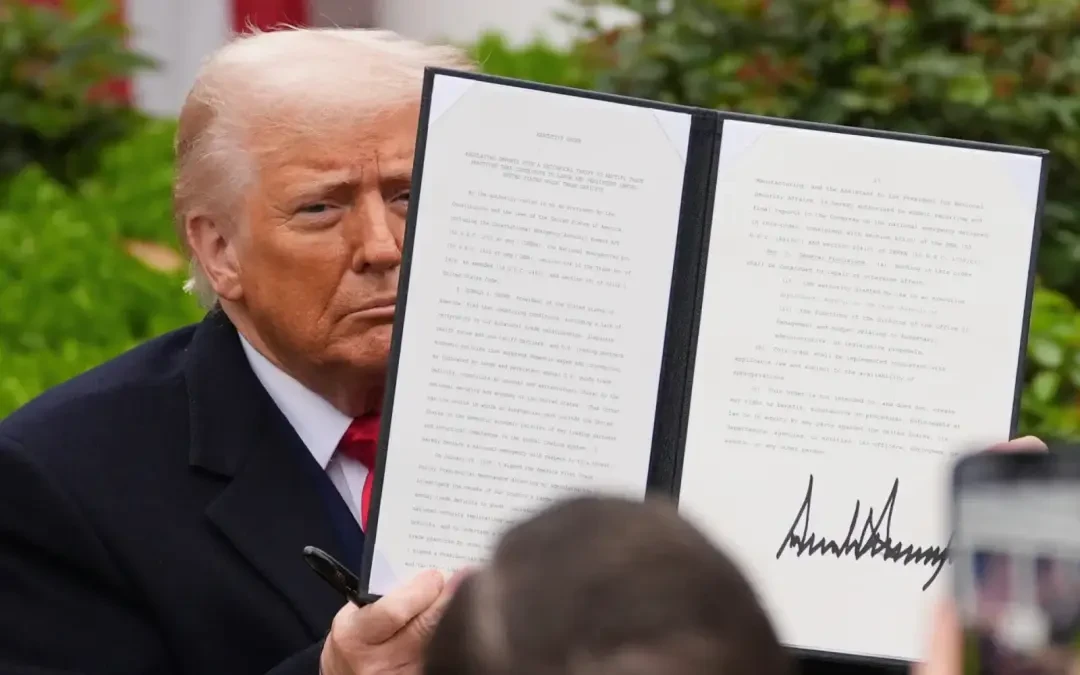
On Wednesday, President Trump unveiled his “Liberation Day” tariff package—a sweeping set of trade barriers that have sent shockwaves through global markets. The plan imposes a universal 10% tariff on all imports, with additional reciprocal tariffs on specific countries or regions deemed to have unfair trade practices.
-
China faces a 34% reciprocal tariff, plus an existing 20% additional duty, bringing its total tariff burden to 54%.
-
The European Union is hit with a 20% tariff on exports to the U.S.
-
Vietnam faces a 46% tariff, while Taiwan is subject to a 32% tariff.
These tariffs are more than just economic policy—they signal a fundamental shift toward protectionism and a direct challenge to globalized supply chains. Trump’s administration argues that these measures will bring back U.S. manufacturing jobs and reduce reliance on foreign imports. But will this strategy work, or are we heading into a new trade war?
Market Reactions
Markets initially rose slightly after the 10% blanket tariff was announced, but optimism quickly turned to panic as details about the steep reciprocal tariffs emerged.
-
E-mini S&P 500 Futures dropped 3.4%
-
E-mini NASDAQ 100 Futures fell 4.2%
-
E-mini Dow Futures lost 2.2%
The U.S. dollar initially spiked on trade war fears but later reversed course as investors priced in potential economic slowdown risks.
Wall Street analysts warn that these tariffs could stack, meaning their combined effect will be more damaging than individual tariff hikes. Chris Krueger of TD Cowen called the policy “worse than the worst-case scenario”, with concerns about supply chain disruptions, rising inflation, and declining corporate earnings.
The End of Globalization?
Beyond immediate market reactions, Trump’s tariffs signal a major shift in trade policy. The goal is to force companies to manufacture domestically under the “Made in America” push. But is this even feasible?
Many multinational corporations—including Apple, Hyundai, Johnson & Johnson, and Eli Lilly—are already exploring ways to expand U.S. operations. However, shifting production back to the U.S. isn’t simple:
-
High costs: Manufacturing in the U.S. is far more expensive than in China, Vietnam, or Mexico.
-
Supply chain issues: Many raw materials and components are still sourced internationally, making full reshoring difficult.
-
Labor shortages: The U.S. lacks the necessary skilled labor to scale up manufacturing quickly.
Ultimately, this policy shift risks creating short-term economic pain without guaranteeing long-term manufacturing success.
The Impact on Different Countries and Regions
Mainland China (Total tariff: 54%)
China is the biggest target. With total tariffs soaring to 54%, Chinese exporters will struggle to compete in the U.S. market. Some companies may relocate production to Southeast Asia, but Beijing is expected to retaliate—possibly by restricting American companies like Tesla, Apple, and Boeing.
Vietnam (Tariff: 46%)
Vietnam has been a manufacturing winner in the U.S.-China trade war, attracting firms looking to avoid tariffs on Chinese goods. This new 46% tariff threatens to erase its competitive edge, discouraging foreign investment.
Taiwan (Tariff: 32%)
While Taiwan's semiconductor industry has been largely exempted, other industries—like electronics and machinery—will face serious barriers.
European Union (Tariff: 20%)
The EU is a major trade partner of the U.S., and this tariff could disrupt automobile, machinery, and pharmaceutical exports. In response, the EU may impose its own retaliatory tariffs, further escalating trade tensions.
Canada & Mexico
While spared from new tariffs, Canada and Mexico still face existing 25% tariffs on certain exports. While USMCA remains intact for now, uncertainties persist regarding potential future trade tensions.
Inflation Risk
Higher import costs almost always translate into higher consumer prices. With tariffs hitting electronics, pharmaceuticals, automobiles, and industrial goods, American consumers and businesses will likely feel the pinch.
This comes at a time when inflation remains a concern, and the Federal Reserve is closely monitoring price trends. If tariffs push inflation higher, the Fed may have to delay or even reverse expected rate cuts—potentially adding another layer of volatility to markets.
What Comes Next?
Trump’s “Liberation Day” tariffs mark a major turning point in U.S. trade policy, signaling a move away from globalization. While the intent is to boost U.S. manufacturing and reduce reliance on imports, the reality is far more complex.
The key risks ahead:
-
Higher consumer prices—likely pushing inflation back up
-
Supply chain disruptions—forcing businesses to rethink production strategies
-
Potential trade wars—as China, the EU, and other nations retaliate
-
Stock market volatility—as investors digest the long-term implications
As investors, we must remain vigilant and adapt to the changing trade dynamics. The future of globalization and the U.S. economy hangs in the balance, and only time will tell if this protectionist approach will yield the desired results. #trump #GlobalEconomy #globalmarket
#Breaking Macro Events: Market Impact & Analysis#trump#GlobalEconomy#globalmarket