
Trump’s Tariff Tsunami Rocks Markets and Redefines Global Trade

The Trump administration unleashed a sweeping overhaul of U.S. trade policy this week, imposing a 10% “baseline tariff” on all imports and targeting major trading partners with higher “reciprocal tariffs.” The move, framed as a bid to protect American economic sovereignty, sent shockwaves through global markets, reigniting fears of stagflation and disrupting fragile supply chains. Here’s a breakdown of the policy and its immediate fallout.
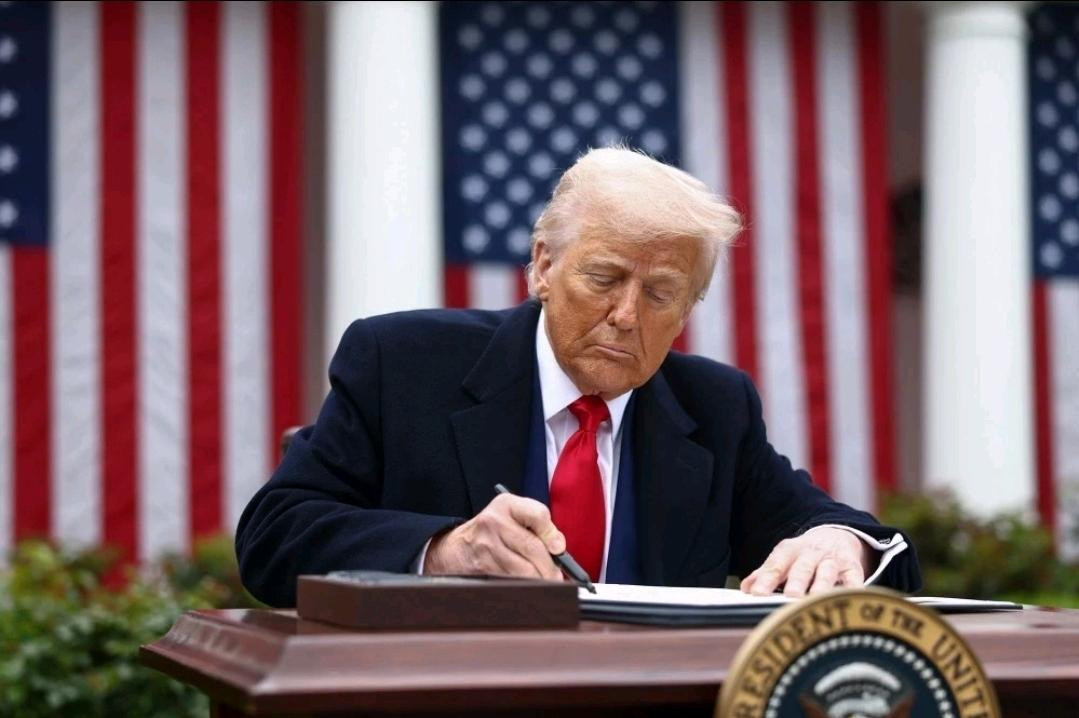
The Tariff Blueprint: What’s Inside?
1. Baseline Tariffs: Effective April 5, a 10% tariff applies to all imports, marking a dramatic shift from the U.S.’s historically open trade stance.
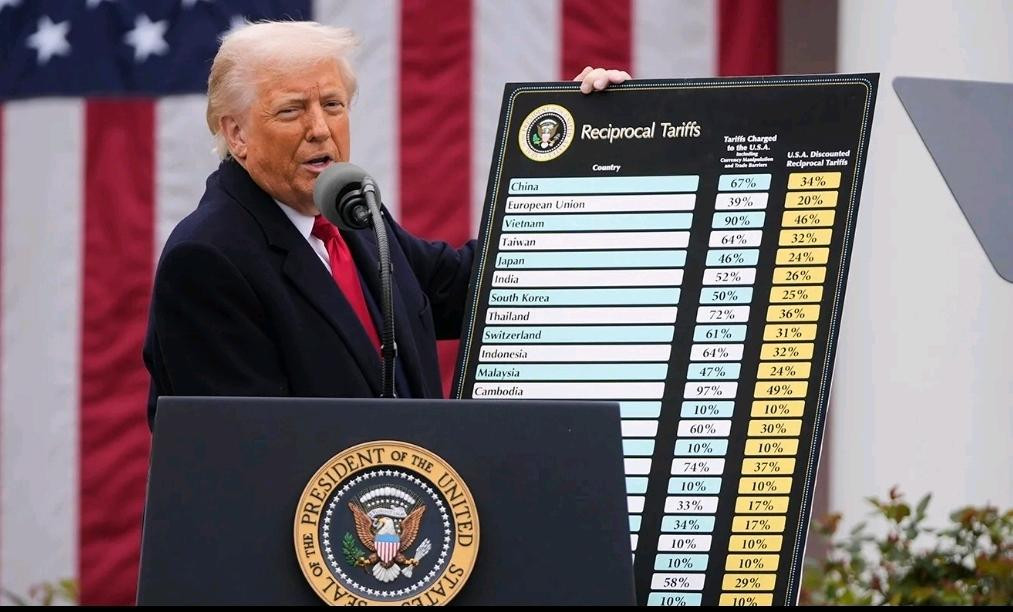
2. Targeted “Reciprocal” Levies: Starting April 9, higher tariffs hit countries with large trade surpluses with the U.S., calibrated to roughly half their perceived trade barriers. Key rates include:
o China: 34% (on top of existing 20% tariffs, totaling 54%).
o EU: 20%, Japan: 24%, South Korea: 25%, Vietnam: 46%.
3. Exemptions: Steel, aluminum, automobiles (already under 25% Section 232 tariffs), semiconductors, pharmaceuticals, gold, and copper are excluded. Canada and Mexico retain exemptions for goods compliant with the USMCA.
4. Auto Tariffs: A separate 25% tariff on imported vehicles takes effect April 3, intensifying pressure on European and Asian automakers.
Market Carnage and Contradictions
The announcement triggered a risk-off stampede:
• U.S. Futures: Nasdaq 100 futures plunged 4%, S&P 500 futures sank 3%.
• VIX Surge: The “fear gauge” spiked 6.4% to 23.41, while leveraged volatility ETFs like UVXY rocketed 19%.
• Safe Havens: Gold briefly dipped before rallying to 3,140/oz, and Bitcoin whipsawed between $88,000 and $82,000.
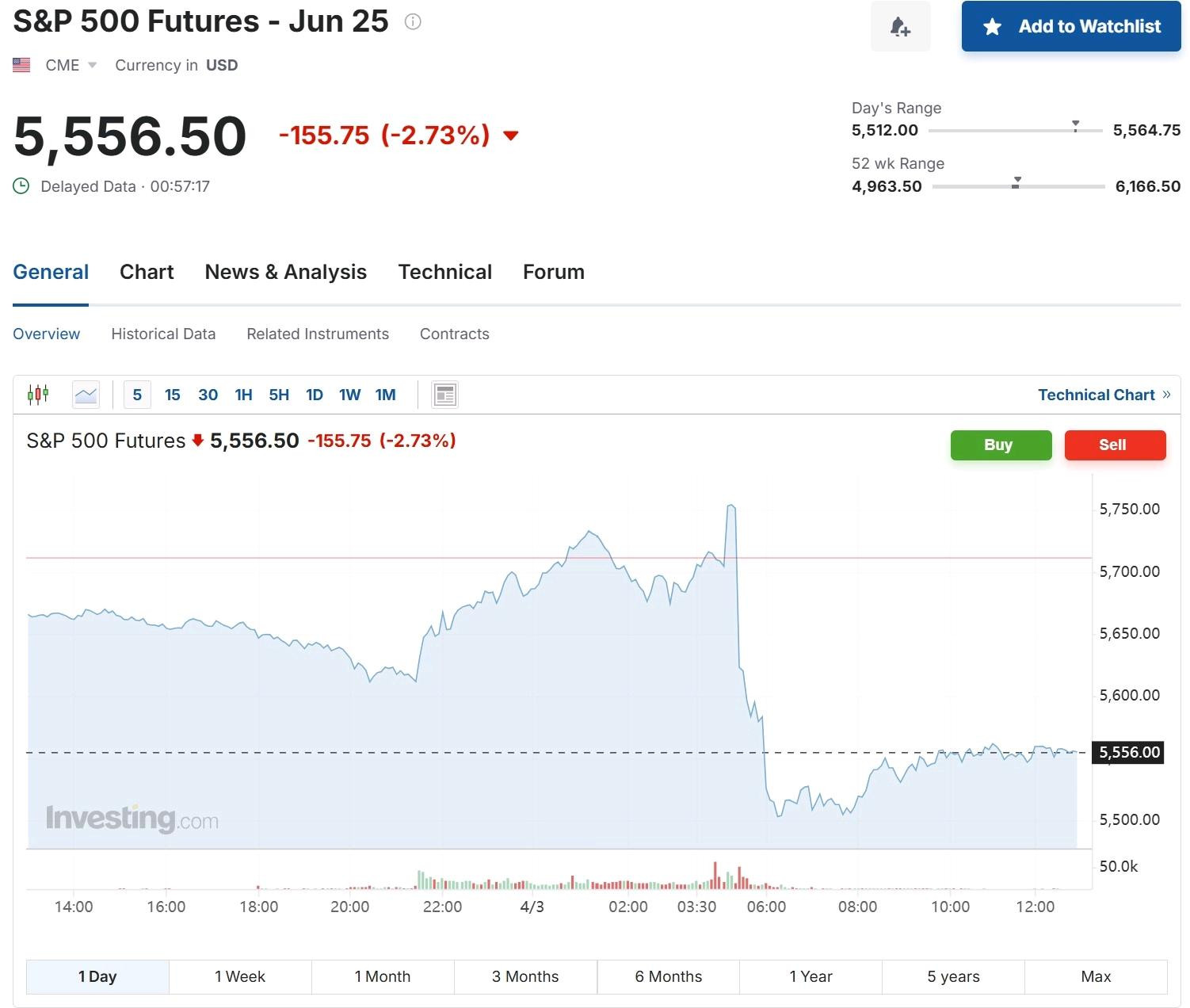
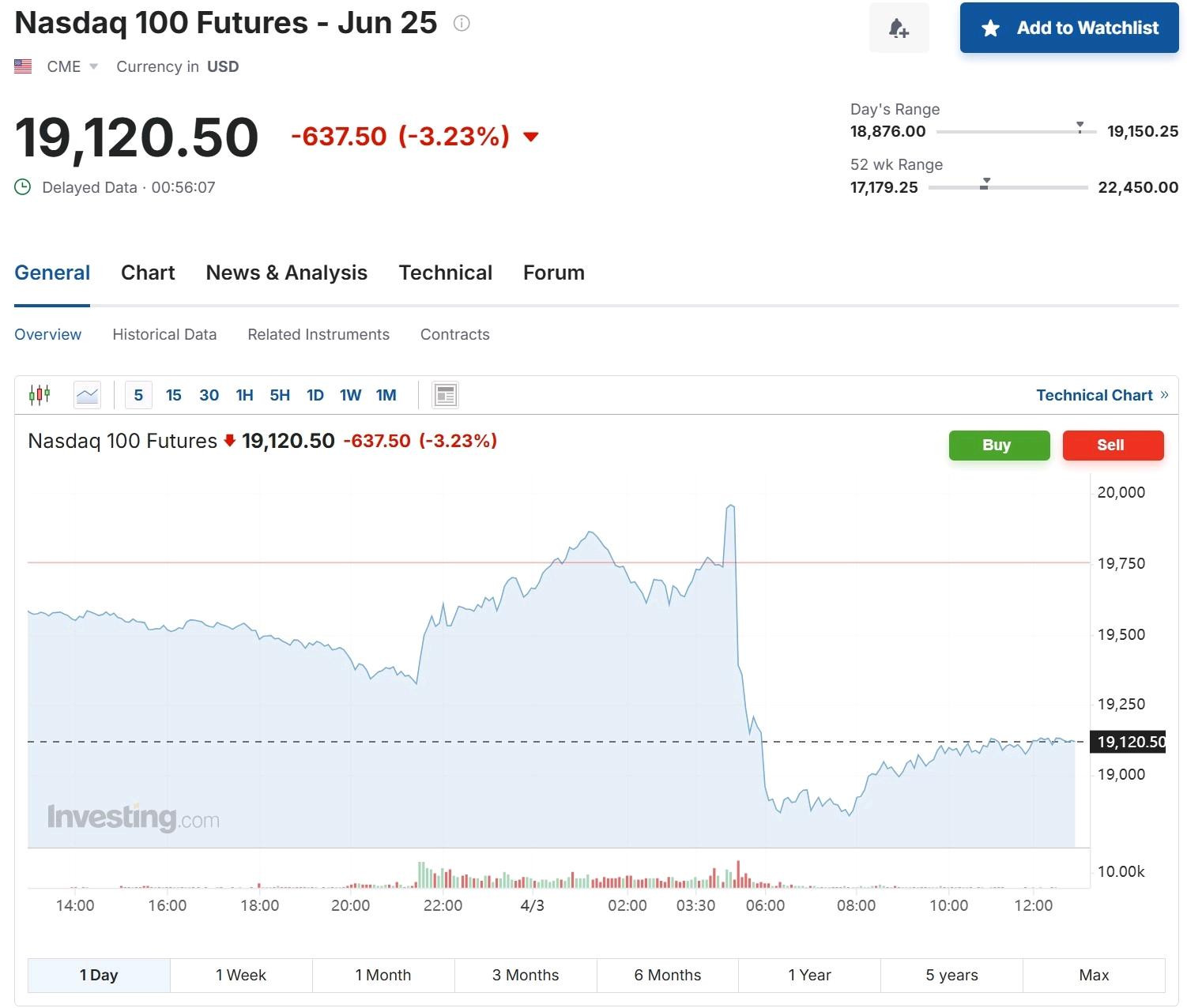
Critics blasted the policy’s internal contradictions. While Trump claims tariffs will revive U.S. manufacturing and reduce deficits, economists warn they’ll inflate consumer prices, strain supply chains, and risk recession. “This is a worst-case scenario,” said Diane Swonk of KPMG, noting the Fed now faces a “policy straitjacket” — torn between fighting inflation and staving off economic cooling.
Strategic Ambiguity or Blunt Force?
The tariffs leave room for negotiation. China’s 54% rate, while steep, is below earlier trial balloons of 60%. Analysts at CITIC Securities argue this signals a “ceiling,” with final rates likely softened through bilateral deals. Similarly, exemptions for critical minerals and pharmaceuticals suggest attempts to cushion domestic industries.
Yet the scale shocked markets. Wedbush’s Dan Ives called the plan “worse than the worst-case fears,” particularly for tech firms reliant on global supply chains. Apple, Nvidia, and semiconductor stocks face margin pressure as costs rise.
The Fed’s Impossible Equation
Jerome Powell’s Fed now confronts a policy nightmare. Tariffs could add 2 percentage points to inflation by 2025 (PIIE estimates), pushing CPI toward 4-5% — yet growth is already slowing. Markets now price in 3-4 rate cuts in 2024, but the Fed may hesitate to ease if inflation reignites. “The Fed is a policy vegetable,” quipped one analyst, paralyzed between growth and price stability.
What Next?
• Retaliation: The EU, China, and Southeast Asian nations are drafting countermeasures. A full-blown trade war could shave 1-2% off global GDP.
• Supply Chain Relocations: Vietnam, Thailand, and Malaysia — hit with tariffs up to 46% — may see export-driven growth models unravel. Firms that shifted production from China to ASEAN are now “caught in the crossfire,” notes Bespoke.
• Domestic Fallout: U.S. consumers will bear higher costs, with Trump’s 2024 campaign now tied to a high-stakes economic gamble.
This content is provided for informational or educational purposes only and does not constitute investment advice.