
America’s Economic Tightrope: Jobs Hold Firm as Trade Winds Shift and Services Sector Stumbles

The U.S. economy is sending mixed signals: While jobs data hints at resilience, cracks in the services sector and a precarious trade rebalance reveal mounting pressures from Trump’s tariff offensive. As markets brace for Friday’s pivotal jobs report, a complex narrative emerges—one where short-term stability masks gathering storms.
Jobs Market: Calm Before the Storm?
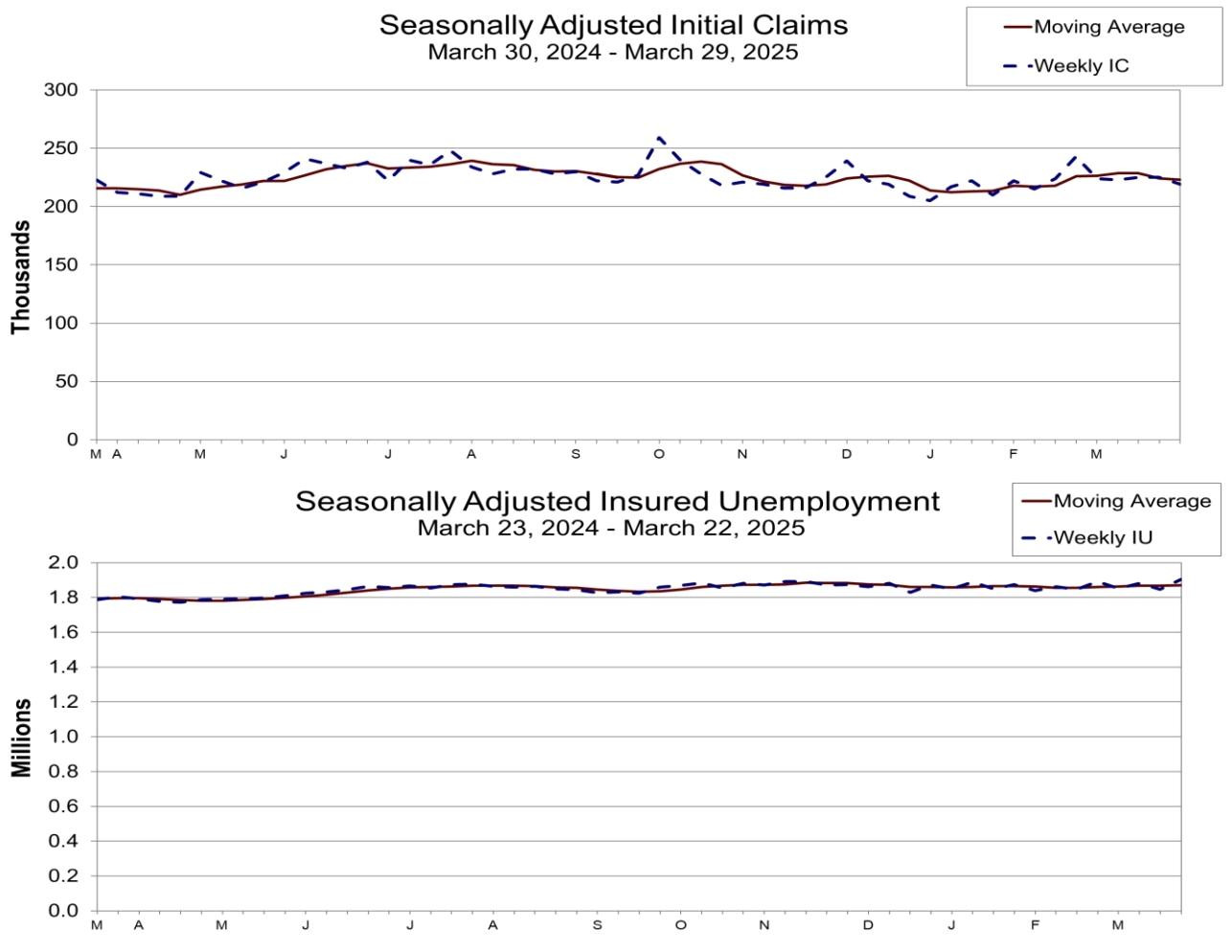
New unemployment claims dipped to 219,000 last week, defying expectations of 225,000 and offering temporary reassurance about labor market health. The four-week average edged down to 223,000, while continuing jobless claims rose to 1.9 million—a subtle warning of underlying strain.
Other data points paint a contradictory picture. February’s JOLTS report showed job openings slipping to 7.57 million, suggesting gradual cooling, yet March’s ADP payrolls surged to 155,000—crushing forecasts and rebounding from weather-disrupted February lows. Federal Reserve Chair Jerome Powell’s “low-layoff, low-hiring” characterization still holds, but economists warn this equilibrium is fragile.
All eyes now turn to Friday’s nonfarm payrolls, expected to show 140,000 new jobs and a steady 4.1% unemployment rate. Yet looming over these figures is Trump’s tariff blitz. Already, employment firm Challenger, Gray & Christmas reports over 280,000 federal and contractor layoffs in two months—a harbinger of broader risks as protectionism rattles business confidence.
“The real test comes when tariffs bite into corporate profits and consumer demand,” said a Wall Street analyst tracking labor trends. “We’re seeing early tremors, not the earthquake.”
Services Sector Slump: The Canary in the Coal Mine
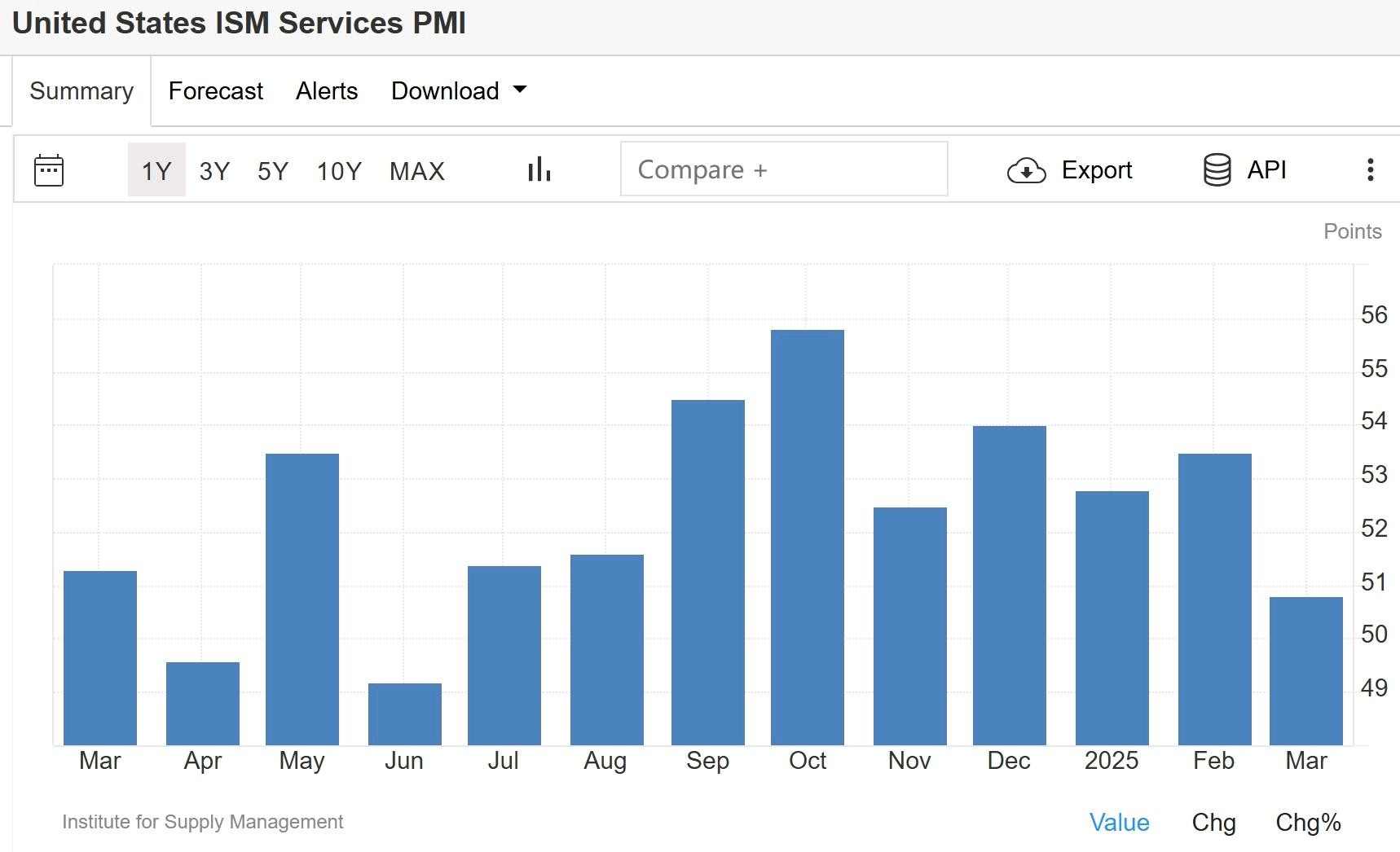
March delivered a jolt as the ISM Non-Manufacturing PMI plunged to 50.8—a nine-month low and far below the 53 consensus. The employment sub-index collapsed by 7.7 points to 46.2, its weakest since 2023 and the sharpest monthly drop in over a year.
This services sector slowdown, accounting for 80% of U.S. GDP, signals trouble. Restaurants, hotels, and healthcare—industries driving post-pandemic hiring—are now cutting back. “When services employment tanks, it’s often a leading indicator,” warned a Morgan Stanley economist. “Businesses are preemptively tightening belts amid tariff uncertainty.”
The downturn coincides with weakening consumer sentiment. Retailers and logistics firms report delayed expansion plans, while small businesses scramble to reassess supply chains. “Everyone’s playing defense,” said a Texas-based hospitality CEO. “Hiring freezes hit first; layoffs follow if demand falters.”
Trade Tightrope: Deficits Narrow, but at What Cost?
February’s trade deficit shrank 6.1% to $122.7 billion as exports jumped 2.9%, offsetting near-record imports. On paper, this aligns with Trump’s protectionist goals—yet the details reveal a distorted economy bracing for upheaval.
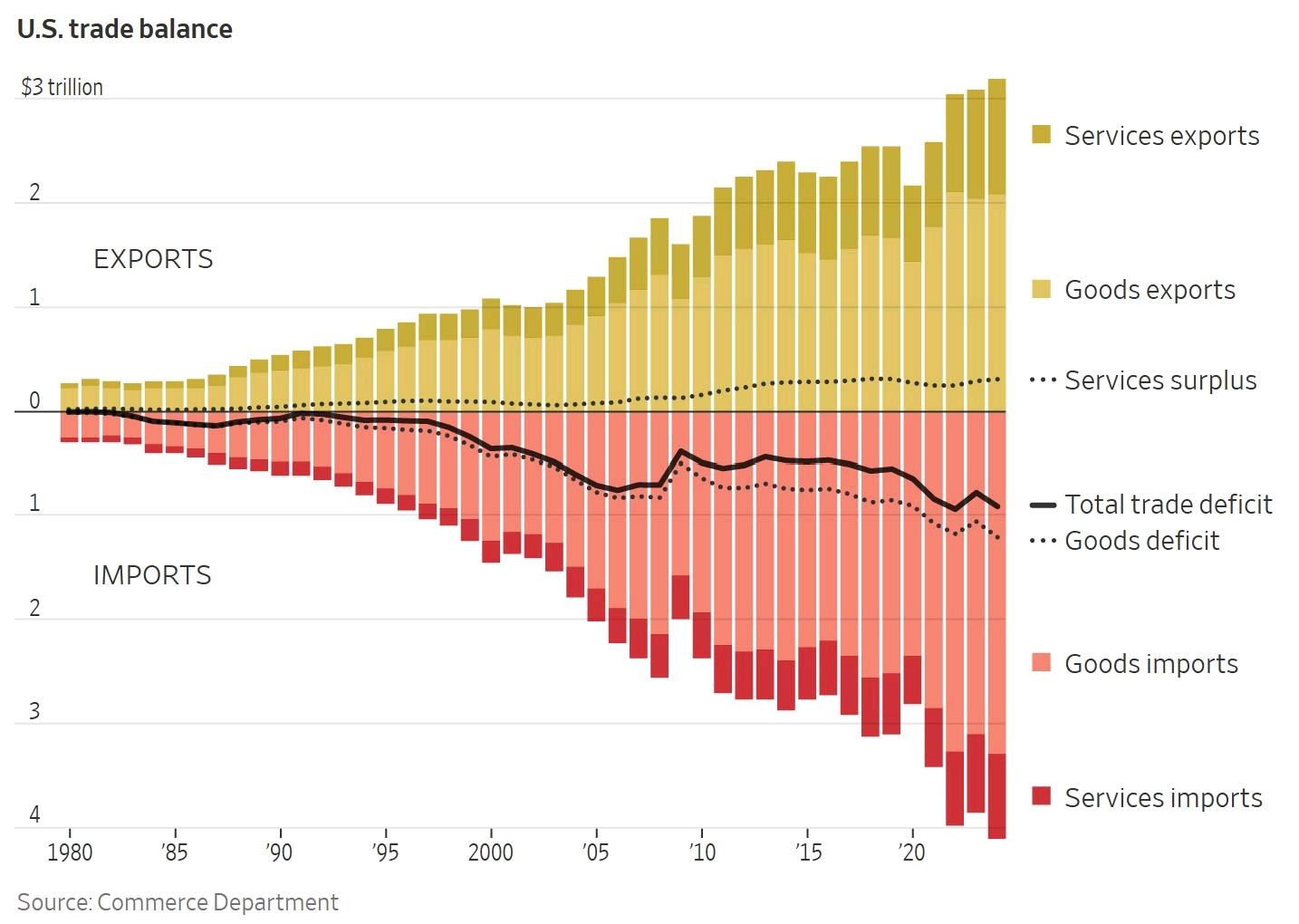
Industrial materials imports dropped $4.2 billion, reflecting corporate caution ahead of tariffs. Meanwhile, gold imports—exempt from new levies—skewed data, with bullion stockpiling inflating recent trade gaps. Strip out speculative metal hoarding, and the picture darkens: The Atlanta Fed’s GDPNow model already projects Q1 economic contraction at 1.4%, with net exports dragging growth down 2.5%.
“This isn’t sustainable rebalancing—it’s panic buying,” argued a Commerce Department analyst. “Once tariffs hit, imports will crater, but so will export competitiveness as global partners retaliate.” Indeed, auto imports rose despite looming 25% tariffs, suggesting firms are front-loading orders before costs skyrocket.
Regional shifts underscore the chaos. The deficit with Canada narrowed post-metal tariffs, while Mexico’s gap hit record highs—a direct consequence of disrupted North American supply chains. China’s deficit shrinkage, driven by falling U.S.-bound exports, hints at decoupling pressures.
Trade Wars Unleash Multi-Front Crisis
Trump’s protectionist playbook—10% baseline tariffs plus “reciprocal” levies—aims to boost domestic manufacturing and curb deficits. But early evidence suggests collateral damage:
1. Supply Chain Whiplash: Auto and electronics manufacturers report emergency meetings to relocate production from tariff-hit nations. “Reshoring takes years, not months,” said a Detroit auto exec. “We’re stuck eating costs or raising prices.”
2. Inflationary Pressures: While gold escapes tariffs, everyday goods won’t. Walmart and Home Depot already warn of summer price hikes on electronics, tools, and appliances.
3. Global Retaliation: The EU finalized plans this week to impose $3.5 billion in counter-tariffs on U.S. whiskey, motorcycles, and farm goods—a direct hit to heartland industries.
Fed officials face a policy bind. “Do we fight inflation from tariffs or cushion growth?” pondered a regional Fed president anonymously. “It’s 1970s stagflation playbook, but with more variables.”
The Fragile Balance
As Friday’s jobs report looms, America’s economic narrative splits into parallel tracks: resilient employment data versus weakening services, temporary trade improvements versus structural risks. For now, markets cling to the Fed’s “soft landing” hopes, but the ground is shifting.
“We’re in the eye of the hurricane,” cautioned a Goldman Sachs strategist. “Tariffs haven’t fully landed, consumers haven’t snapped wallets shut, and layoffs are still isolated. When the storm’s back half hits, that’s when we’ll see what this economy is really made of.”
One truth emerges: Trump’s tariffs are rewriting economic rules in real time—and not even the Fed knows how this story ends.
This content is provided for informational or educational purposes only and does not constitute investment advice.