
Germany's Gold Dilemma: A Big Shift Amid Trade Tensions

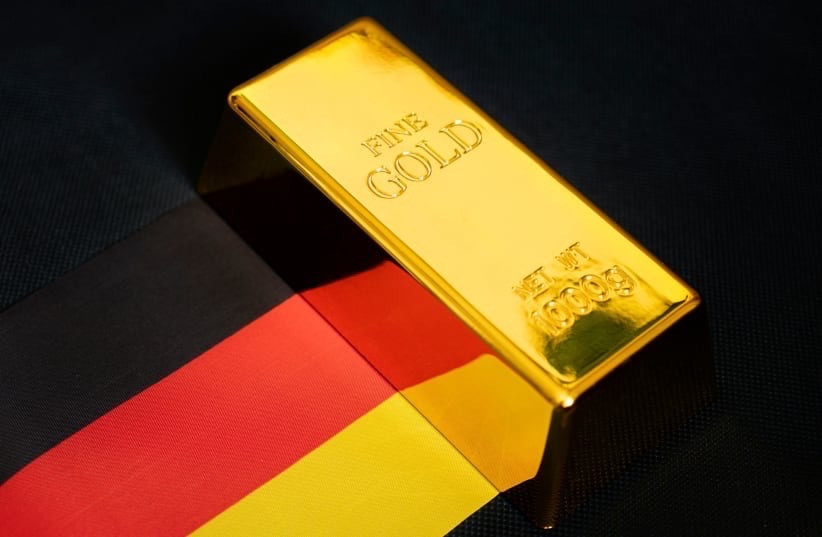
Germany is thinking about changing a decades-old habit of keeping 1,236 tons of gold, which is worth over €100 billion, at the New York Fed.
Now, why is this a big deal? Well, there are several reasons.
First off, let's look at the historical context. After World War II, because of the Bretton Woods system, Germany became the world's second-biggest gold holder, with a total of 3,352 tons. Back then, the Fed's vaults were like a safe place during the Cold War. But things are changing geopolitically, and I believe this is a sign of how the global political landscape is evolving.
Then there's the trust issue. German coalition leaders are now openly doubting the U.S. And it's not without reason. The U.S. has made some moves recently. There were those retroactive steel and aluminum tariffs. Then there's the "Buy American" clauses in the Inflation Reduction Act. And don't forget about the sanctions that blocked the Nord Stream 2 pipeline. These actions have really made the Germans question the reliability of the U.S., and I think it's a valid concern.
Now, let's get into the market implications. In my opinion, if Germany physically repatriates its gold, it could lead to a big increase in the demand for bullion storage solutions. You might want to keep an eye on companies like Brink's and Loomis; their shares could be affected.
Another thing is currency wars. If Germany withdraws 10% of its gold, that's equivalent to selling off €10 billion worth of U.S. dollars. This could potentially make the dollar's liquidity weaker. And there's a chain reaction risk too. Belgium, which has 40% of its reserves at the Fed, and the Netherlands, with over 60%, might follow Germany's lead.
When it comes to investment angles, here's what I think. I'd consider going long on gold miners like $NEM and $GOLD, and also Swiss vault operators like VATN.SW. On the other hand, I'd avoid USD-denominated debt ETFs like $TLT . They're facing double pressure because of the erosion of the Fed's credibility. And keep an eye on Euro bund yields, as the ECB might have to deal with the excess gold liquidity.
This isn't just about gold sitting in a vault. It's a huge sign of how U.S. allies are starting to view America's management of the global financial system. Even NATO partners are now questioning the dollar's security. This means that for every investor out there, geopolitical hedging should be an important part of your portfolio strategy.