
The Great Wealth Reset of 2025, Why Buffett Rises as Others Fall

President Trump’s return to the White House—and his immediate move to revive tariff policies—is already reshaping the global wealth landscape. In just two trading days, the world’s 500 richest people lost over $500 billion. But amid the carnage, 94-year-old Warren Buffett stood out as one of the very few who actually gained wealth.
The wealth reshuffle speaks volumes:
As of April 7, Buffett’s net worth hit $153.5 billion, up $11.5 billion since the start of the year. That makes him the fourth-richest person in the world, and the only person in the top 20 whose wealth increased by more than $10 billion in 2025 so far. The only other gainer among the top 20 was Francoise Bettencourt Meyers, the L’Oréal heiress, who added a modest $1.8 billion, ranking 19th.
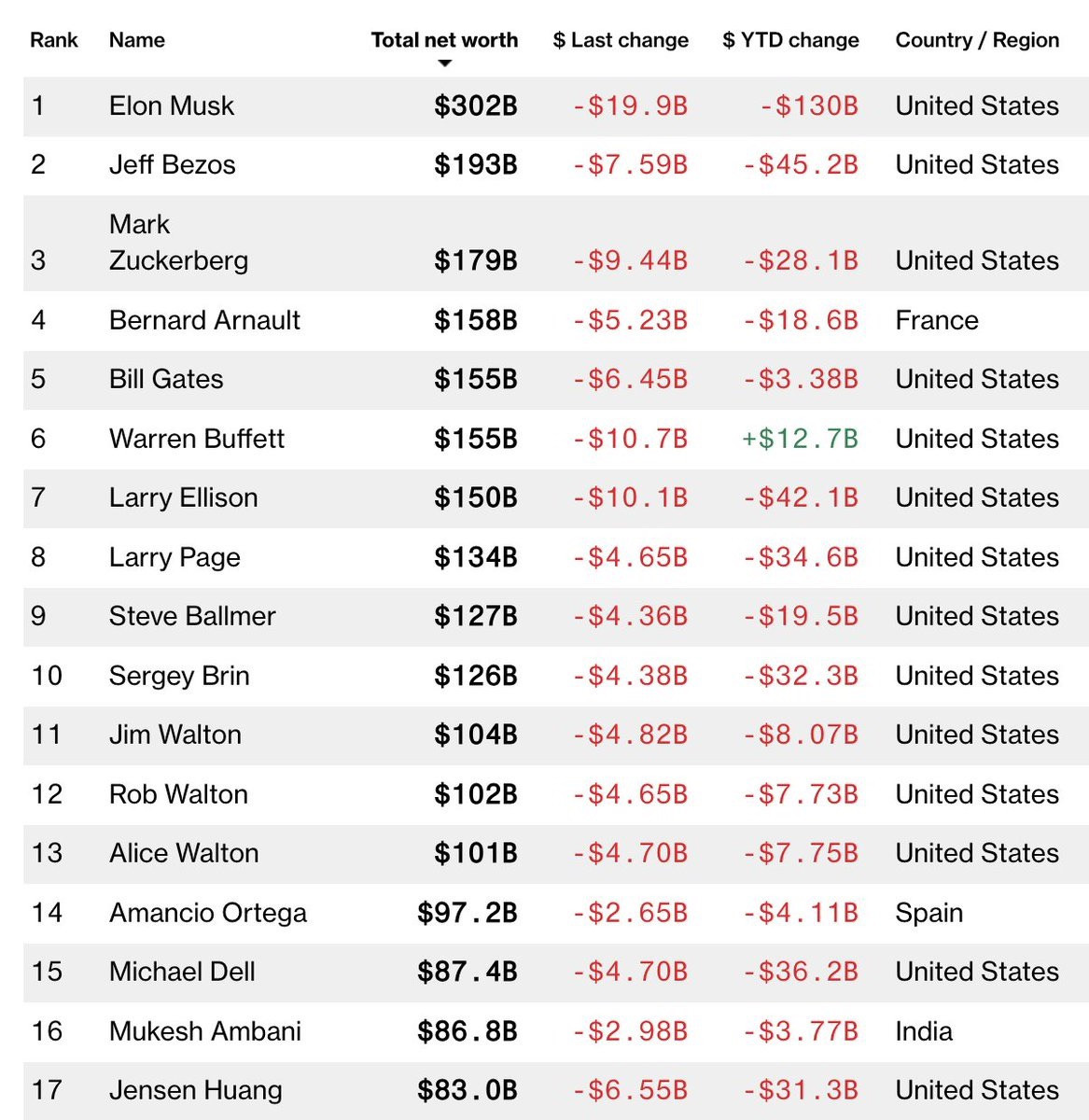
In stark contrast, Elon Musk—still at the top of the list—has seen his fortune plunge $134.7 billion this year, bringing his net worth down to $297.8 billion. It’s the first time his fortune has dipped below $300 billion since last November. On April 7 alone, $TSLA’s continued sell-off wiped $4.4 billion from his wealth.
Who’s rising and who’s falling? The movement in the rankings tells a deeper story about how markets are repricing risk.
In my view, this isn’t just random volatility—it’s a reflection of a deeper shift in market structure. Trump’s tariffs, introduced under the banner of “protecting American interests,” have sparked global risk-off sentiment, triggering broad market corrections. The tech-heavy names were hit the hardest, while capital started rotating back to companies with solid fundamentals and reasonable valuations.
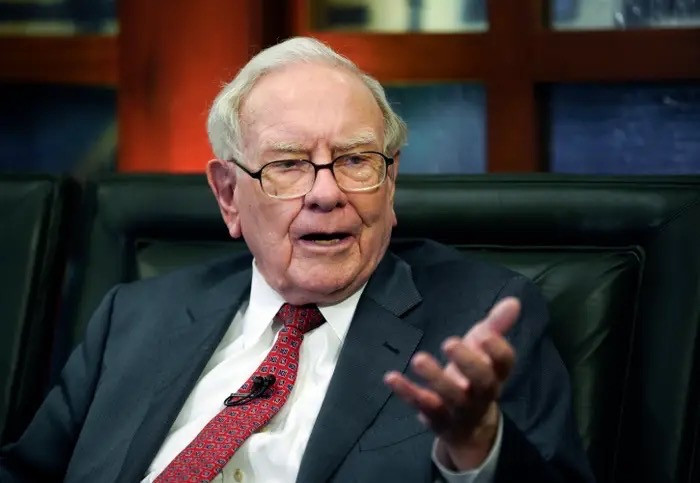
Buffett’s gains weren’t driven by speculative bets. His wealth stems from Berkshire Hathaway ($BRK.A /$BRK.B)’s diversified portfolio—spanning insurance, energy, railroads, industrials, and cash-generating businesses. Despite an 8.8% decline in Berkshire’s stock price since its April 2 peak, it’s still held up better than the 10.7% drop in the $SPX .
Musk’s Rise and Fall: A Case Study in Leverage and Market Fragility
Musk’s wealth surge in recent years was largely driven by Tesla’s meteoric rise. At one point, his close ties with Trump were viewed as a strategic advantage. But now, as trade frictions return to the forefront, that political proximity is becoming a liability. Tesla has faced protests, vandalism, and mounting public scrutiny—not just in the U.S., but globally.
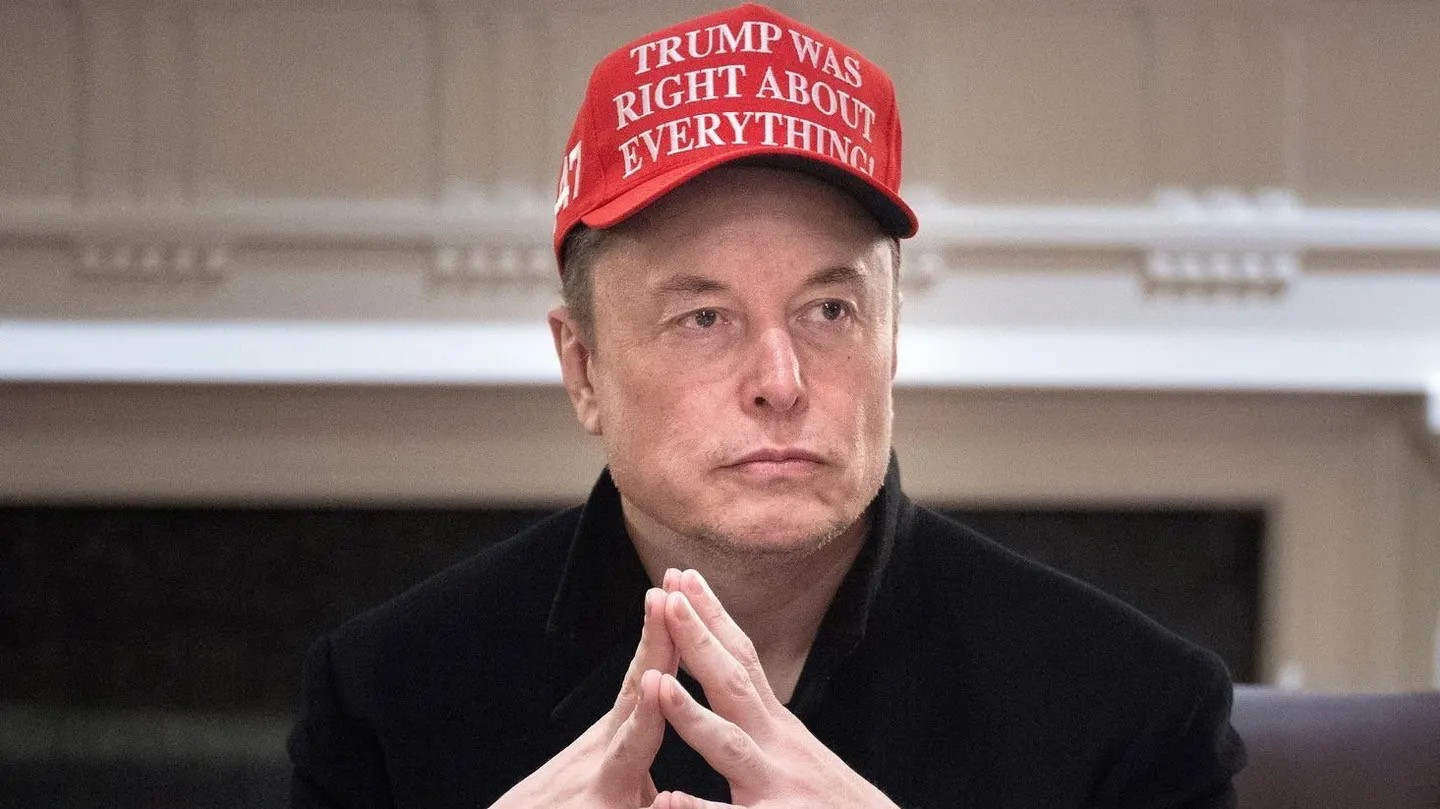
This is a reminder that in an era of high policy uncertainty, the sustainability of wealth increasingly depends on a company’s ability to withstand political and regulatory shocks. The valuation logic behind Big Tech is undergoing a reset. Capital markets are shifting from “vision-driven” to “cash flow-driven” pricing models.
My Take: 2025’s Wealth Reshuffle Is Just the Beginning
This year’s shake-up in the billionaire rankings isn’t the end of the story—it’s just the start of a broader rebalancing.
As the tide of sentiment recedes, we’re seeing who’s truly “wearing swim trunks.” Musk’s rollercoaster fortune highlights the fragility of high-multiple, hype-driven assets, while Buffett’s steady gains underline the value of slow but stable, risk-resilient investing.
If the market remains turbulent, I believe low-debt, high-dividend, and broadly diversified companies like Berkshire will increasingly attract capital. Meanwhile, the bloated assets built on inflated expectations? Their reckoning has only just begun.
Does this shift in the billionaire rankings make you rethink what ‘long-term value’ really means?
Would love to hear your take in the comments.