
Wall Street Braces for Earnings Season Amid Tariff Turbulence

As major U.S. banks gear up to report their first-quarter earnings, the financial sector finds itself at a crossroads. While trading divisions are poised to benefit from market volatility spurred by recent tariff implementations, investment banking activities, particularly mergers and acquisitions (M&A) and initial public offerings (IPOs), face significant headwinds. This dichotomy underscores the complex impact of President Donald Trump's aggressive trade policies on Wall Street.
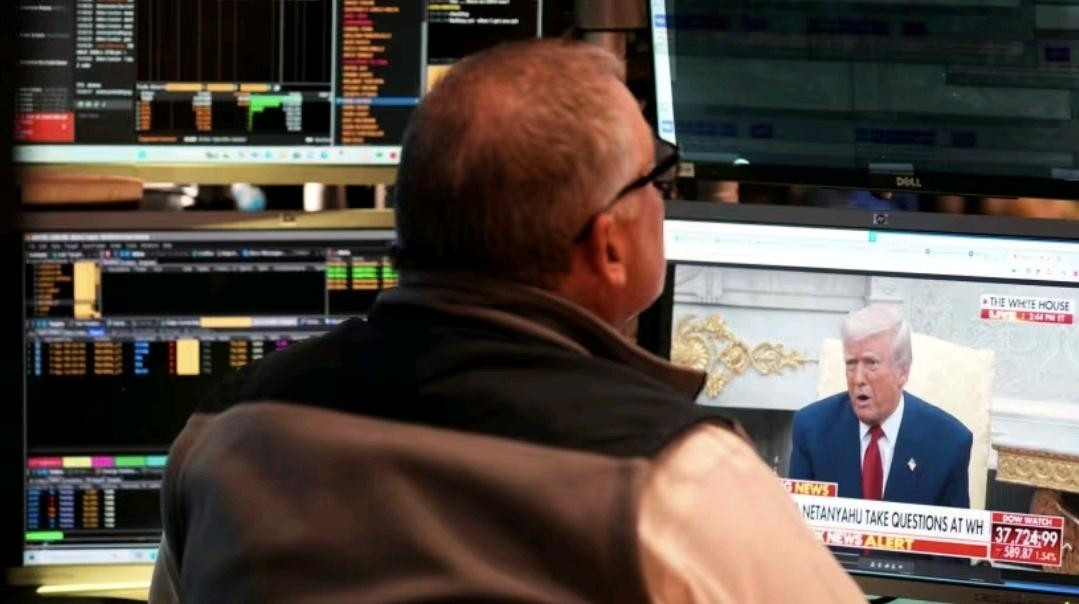
Trading Revenues Surge Amid Market Volatility
The recent imposition of substantial tariffs—25% on imports from Mexico and Canada, and 10% on Chinese goods—has injected considerable volatility into the financial markets. This turbulence has translated into increased trading activity, bolstering revenues for banks' trading divisions. Analysts anticipate that leading institutions such as JPMorgan Chase, Goldman Sachs, and Morgan Stanley will report robust performance in their trading segments, driven by heightened client engagement seeking to navigate the choppy market waters.
Investment Banking Faces M&A and IPO Slowdown
Conversely, the same market uncertainty that fuels trading desks is dampening the appetite for corporate deal-making. The unpredictability introduced by the tariff disputes has led to a cautious stance among companies, resulting in a slowdown in M&A activity and IPOs. This decline is expected to impact the investment banking revenues of major financial institutions, as clients postpone or cancel planned transactions amid the uncertain economic landscape.
Tariffs Cast a Shadow Over Broader Corporate Earnings
The ramifications of the tariff escalations extend beyond the banking sector, posing a broader threat to corporate earnings across $SPX . Goldman Sachs estimates that every 5-percentage-point increase in the U.S. tariff rate could reduce $SPX earnings per share by approximately 1% to 2%. With the current tariff measures in place, this could translate into a 2% to 3% hit to overall earnings forecasts. Industries heavily reliant on global supply chains, such as materials, consumer discretionary, industrials, technology, and healthcare, are particularly vulnerable.
Market Sentiment and Economic Outlook
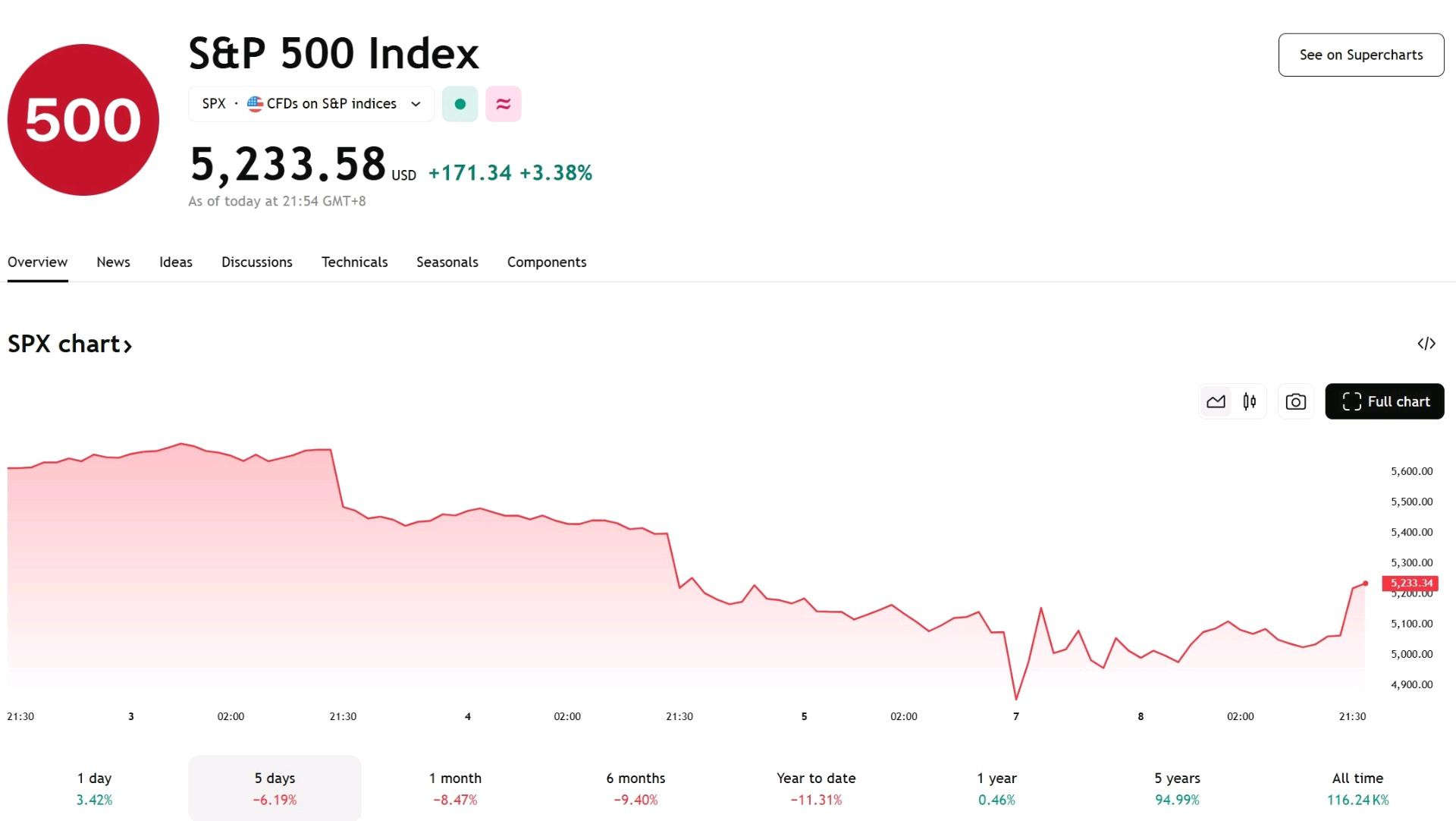
Investor sentiment has been notably shaken by the recent trade developments. $SPX has experienced significant declines, approaching bear market territory with a near 20% drop since early April. Market volatility indices have spiked, reflecting heightened uncertainty. Analysts are revising earnings forecasts downward, and concerns about a potential recession are mounting. UBS, for instance, predicts two consecutive quarters of negative GDP growth, signaling a recession.
Navigating the Uncertain Terrain Ahead
As earnings season unfolds, all eyes will be on how major banks and corporations articulate their strategies to manage the challenges posed by the current trade environment. While trading divisions may offer a silver lining with increased revenues from market volatility, the broader impact on investment banking and corporate earnings could temper overall financial performance. Investors and analysts alike will be scrutinizing these reports for insights into how companies plan to navigate the ongoing tariff turbulence and its implications for future growth.