
The Real Secret Behind Buffett's Investment Success: A Powerful Twist on the Kelly Formula

Daniel Value Investing
April 9, 2025
GoGPT Summarizes Articles
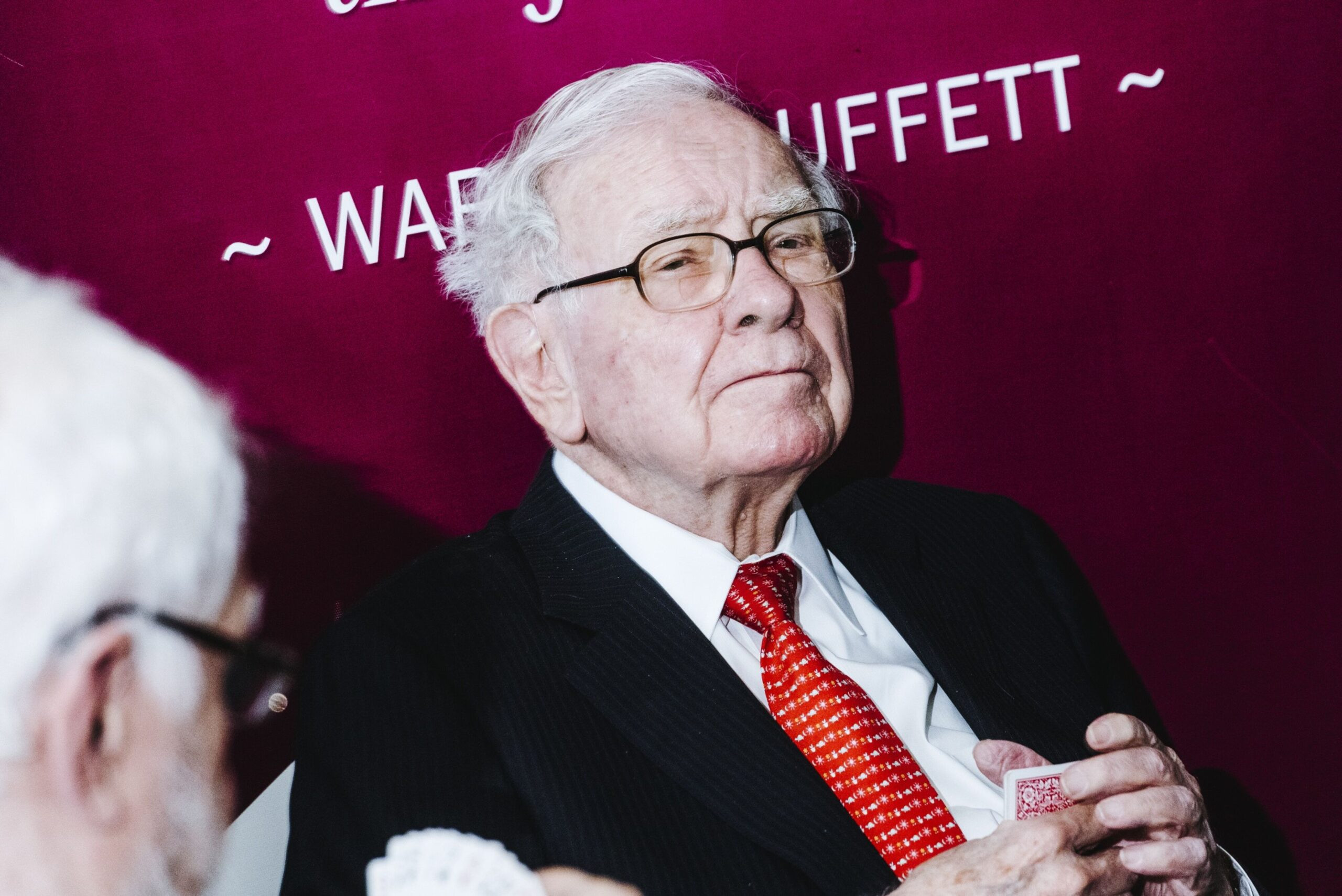
When markets begin to tumble, people often can't help but admire the seasoned wisdom of Warren Buffett. There's a saying that over the past few decades, Buffett's performance has often been relatively average—sometimes even trailing the broader market. (Of course, given the sheer size of his investments, consistently outperforming the market is no easy feat.) But one thing remains clear: every time the market crashes, Buffett finds a way to come out ahead, often surpassing his previous performance. This time, it's no different. He had already reduced his positions, sold most of his Apple stock, and is sitting on a cash pile worth hundreds of billions of dollars.
On the other hand, many superstars in the investing world might shine during bull markets but struggle when faced with a real market storm. A memorable example is Bill Miller, a fund manager who, from 1990 to 2005, posted an annualized return of 16.5%, significantly outperforming the S&P 500’s 11.5%. Yet, in the three years that followed, his performance tanked, with losses of -23.7%. Even though his time-weighted return still slightly beat the market, his investors lost a whopping $3.6 billion because they bought in at market highs, only to suffer massive losses during the downturn.
Miller’s famous 15-year streak of beating the S&P 500 eventually came crashing down during the 2008 financial crisis, when his fund lost about 55-60% of its value, far worse than the 37% drop in the S&P 500. While Miller later showed great foresight with his investments in Amazon and Bitcoin, he couldn’t quite recreate his former glory.
Buffett, on the other hand, presents a stark contrast. His approach is not about chasing short-term gains but about being steady and disciplined. It’s this characteristic—performing modestly during calm market periods but excelling during times of crisis—that highlights an essential truth in investing: long-term success is more about avoiding significant losses than maximizing short-term returns.
This contrast between Miller and Buffett encapsulates a crucial investment principle: Success in investing relies more on avoiding major mistakes than on chasing massive returns.
The Secret Formula: The Kelly Criterion
This brings us to an interesting concept that underpins Buffett’s investment strategy: the Kelly Formula. While Buffett may not explicitly reference the Kelly Criterion, his approach mirrors its principles closely.
The Kelly Formula, created by John Kelly, a scientist at Bell Labs, was originally designed to optimize communication in noisy channels. Over time, it was recognized as a powerful tool for determining the optimal amount to bet on a particular event:
f* = (bp - q) / b
Where:
-
f* is the optimal proportion of your wealth to bet.
-
b is the odds offered (i.e., how much you stand to win).
-
p is the probability of a win.
-
q is the probability of a loss (1 - p).
In simple terms, the formula helps calculate the best bet size based on the odds and the probability of success. But, in an investment context, this concept isn’t just about gambling—it’s about optimizing portfolio allocation based on risk and expected returns.
Buffett’s Strategy: An "Enhanced" Kelly Formula
Buffett’s approach is a “better version” of the Kelly Formula, which we can refer to as the Enhanced Kelly Strategy. If we compare Buffett’s approach to Miller’s, we see that Miller is more in line with the against Kelly Formula, which emphasizes odds over probability. Miller, for instance, sought investments with high potential returns but lower probabilities of success.
In contrast to Miller’s “high odds, low probability” approach, Buffett’s strategy is about finding the probability advantage. When he invests in companies, he looks for those with strong economic moats, predictable cash flows, and a durable competitive advantage. e.g., undervalued stocks with solid fundamentals) that may offer more modest returns but can be held with a larger allocation, allowing for steady, long-term compound growth. By focusing on these characteristics, Buffett tilts the odds in his favor, allowing him to invest with a larger position size, in accordance with the Kelly Formula.
Why This Works: Risk Management and Compounding
-
Managing Drawdowns: One of the main benefits of Buffett’s strategy is that it helps minimize large drawdowns. By investing with a margin of safety and ensuring that the odds are heavily in his favor, Buffett avoids major losses during market declines, which allows him to continue holding larger positions in promising companies.
-
Compounding Power: The Kelly Formula, when applied correctly, optimizes long-term growth by allowing investors to maintain higher position sizes in high-probability investments. This results in higher geometric returns over time, as opposed to focusing solely on arithmetic averages that could be skewed by short-term volatility.
-
Capital Efficiency: Buffett’s method also highlights the importance of capital efficiency. Rather than diversifying excessively into low-conviction positions, he focuses on deploying capital where he has a high level of confidence. This approach ensures that his money is working harder for him, rather than sitting idly in investments with little upside.
What You Can Learn from Buffett’s Approach
So, how can individual investors apply these principles to their own portfolios? Here are five actionable takeaways:
-
Stick to Your Circle of Competence: Buffett only invests in industries and businesses that he understands deeply. For individual investors, it’s crucial to focus on sectors where you have an edge or special knowledge. Avoid FOMO and don’t invest in areas outside your expertise.
-
Use a “Half-Kelly” Strategy: Even if you identify the optimal bet size based on the Kelly Formula, consider halving that amount to account for uncertainty and avoid the risk of catastrophic loss. This conservative approach still allows you to maximize long-term growth without overexposing yourself to risk.
-
Embrace High-Probability Investments: Look for companies with strong fundamentals, a solid competitive advantage, and a reliable business model. The higher your confidence in an investment’s success, the more capital you can allocate to it.
-
Be Patient: Buffett's strategy isn't about short-term wins. It’s about holding onto high-quality investments for the long haul, letting them compound in value over time. Patience is key to unlocking the full potential of your investments.
-
Accept Drawdowns: There will be times when your investments drop in value. Instead of panicking, remember that markets are cyclical. Buffett’s ability to endure drawdowns and stay invested when others panic is a key reason why he’s so successful.
Conclusion: The Power of the Enhanced Kelly Formula
Warren Buffett’s investment success is no accident. His ability to avoid significant losses, deploy capital in high-probability opportunities, and compound wealth over time is the foundation of his extraordinary track record. By thinking of his strategy as an “Enhanced Kelly Formula,” we can better understand how to optimize our own portfolios for long-term success.
By following Buffett’s approach—focusing on high-probability investments, managing risk, and compounding wealth—you’ll be better equipped to weather any market storm and achieve sustainable, long-term returns.
#Private Market: Unlocking Potential#privatemarket#valueinvesting