
U.S. Treasury Meltdown Ignites Fears of Financial Crisis and Recession

The U.S. Treasury market is spiraling out of control, with bond yields surging to historic highs and panic gripping Wall Street. The 10-year Treasury yield rocketed past 4.5% this week, while the 30-year yield briefly breached 5%—a level unseen since late 2023—as a brutal selloff erased trillions in market value. Analysts warn the turmoil signals a collapse in confidence in U.S. fiscal stability, with escalating trade wars, reckless policy shifts, and a potential liquidity crisis threatening to unleash an economic disaster far worse than 2008.
Market in Freefall: A "Career-Defining" Collapse
The bond market’s meltdown accelerated Wednesday as the 30-year yield spiked 25 basis points to 5.022%, capping a 56-basis-point surge over three days—the sharpest jump since 1982. The 10-year yield, a benchmark for global borrowing costs, hit 4.5%, up 40 basis points in 48 hours. Traders compared the velocity of the selloff to the 2020 pandemic crash and 1987’s “Black Monday,” with forced liquidations of leveraged bets exacerbating the chaos.
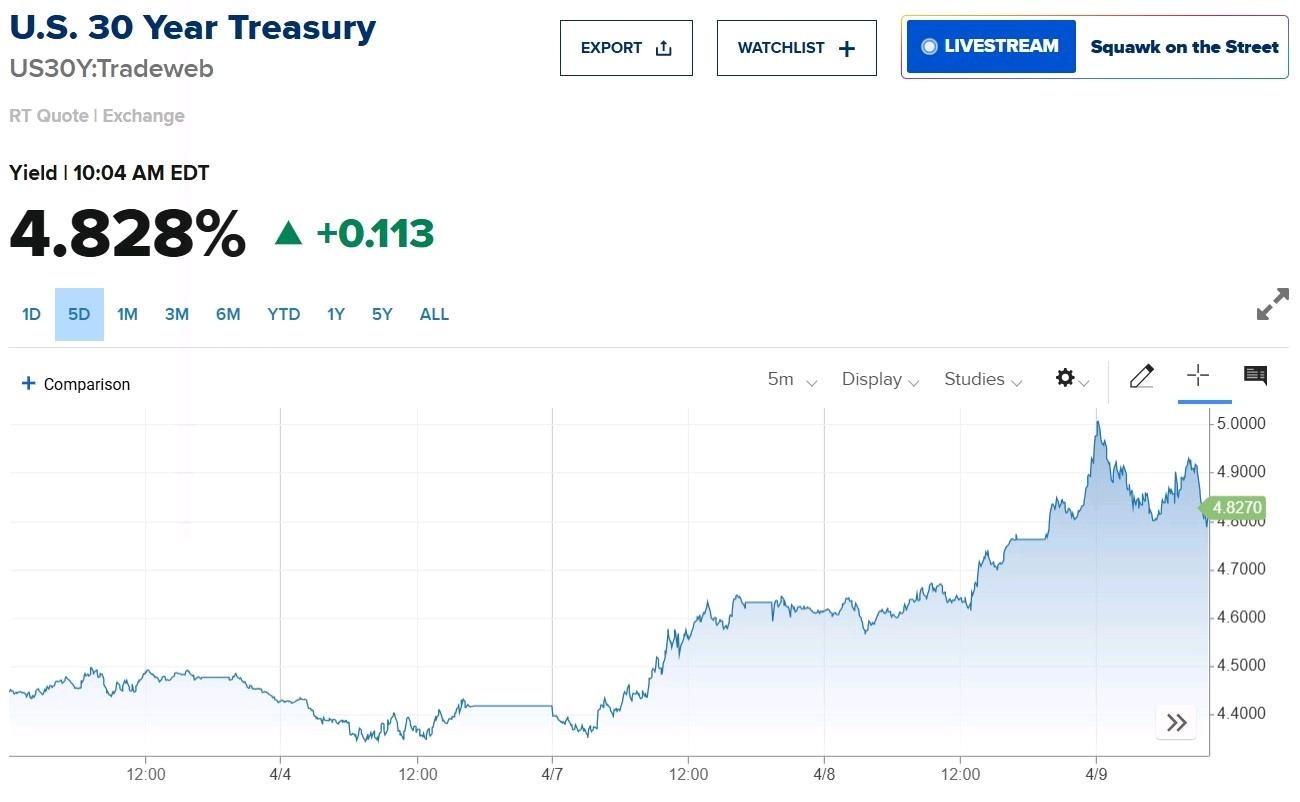
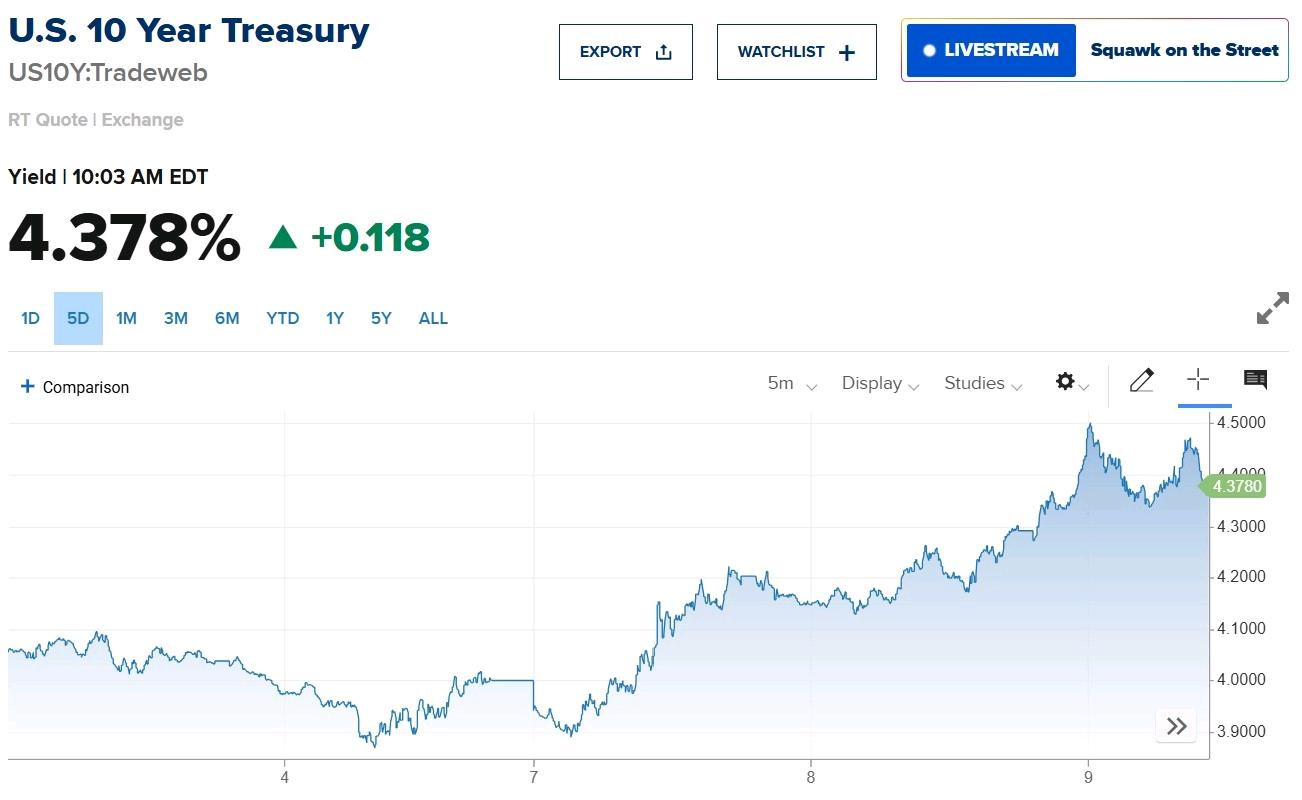
Jim Bianco of Bianco Research called the moves “historic,” noting that such volatility in an era of relatively low absolute yields is unprecedented. “This isn’t normal price discovery—it’s a fire sale,” said Ryan Plantz, a rates trader at Nomura, who warned of a “liquidity vacuum” as hedge funds scramble to unwind trillion-dollar basis trades.
The Perfect Storm: Tariffs, Leverage, and "Capital Strike"
Multiple catalysts are converging to destabilize the world’s largest debt market. The Trump administration’s abrupt tariff hikes—including an 84% levy on Chinese goods and threats against allies like Japan—have backfired spectacularly. Rather than boosting the dollar or calming inflation fears, the measures ignited concerns about retaliatory moves by foreign creditors holding $7.6 trillion in U.S. debt.
Rumors swirled that China or Japan might weaponize Treasury holdings in response to trade hostilities. While Japan’s Finance Minister swiftly denied plans to dump bonds, the damage was done. “We’ve tarnished the ‘American brand,’” said Bleakley Financial Group’s Peter Boockvar. “If foreign investors exit en masse, the dollar and Treasuries will crater.”
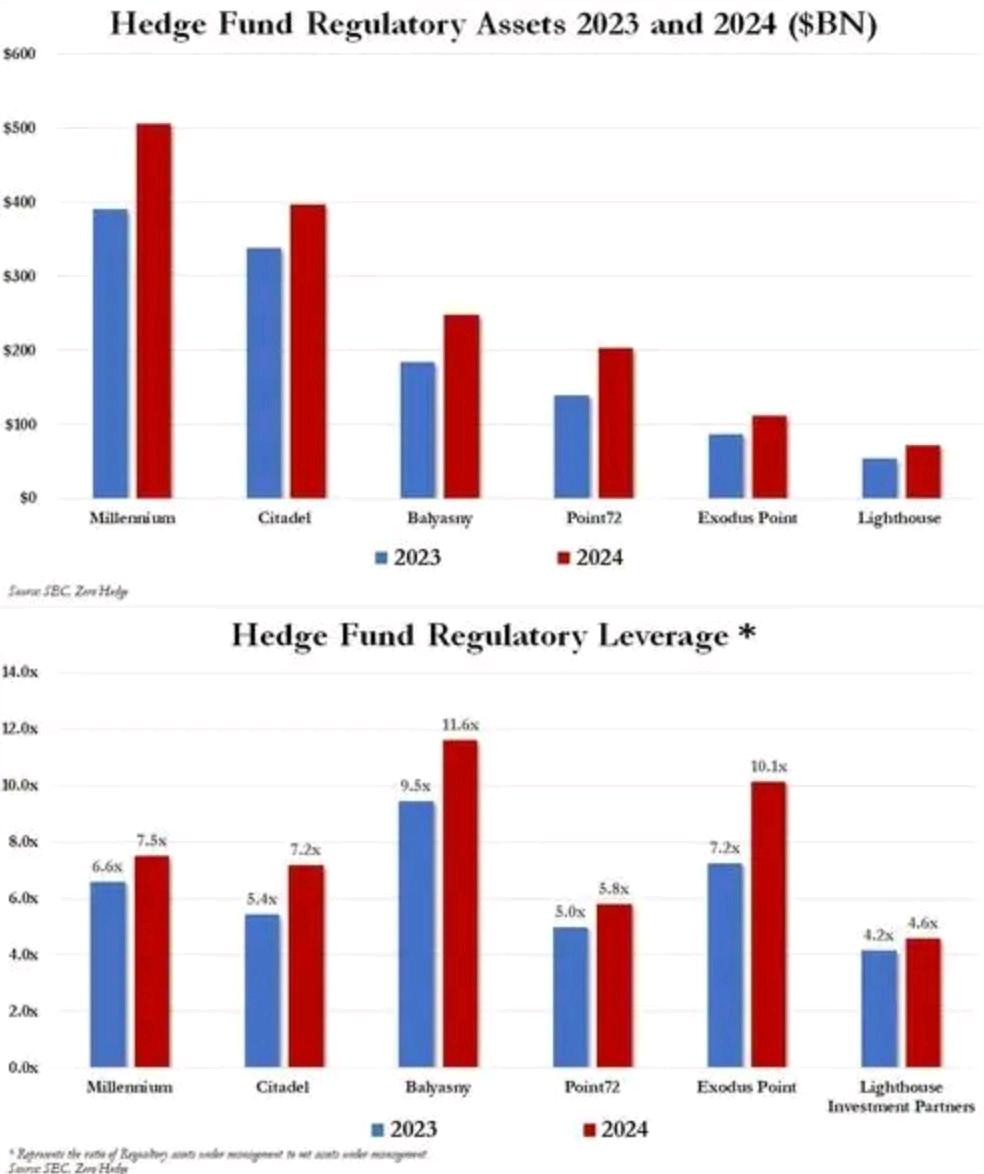
Simultaneously, hedge funds face margin calls on highly leveraged basis trades—arbitrage strategies betting on price gaps between Treasury futures and cash bonds. With yields soaring, losses are forcing funds to sell into a collapsing market. Millenium, Citadel, and other giants reportedly hold $1 trillion in these positions, magnifying systemic risk.
Policy Blunders and a Fed Dilemma
The Treasury rout exposes deepening cracks in U.S. economic leadership. Treasury Secretary Janet Besenst attempted to downplay the selloff as “normal deleveraging,” but her reassurances fell flat. Critics argue the Trump administration’s erratic tariff policies and failure to address America’s $36 trillion debt bomb have shattered investor trust.
“This isn’t strategy—it’s chaos,” PGIM’s Greg Peters said of the tariff rollout. “When you antagonize trading partners while running record deficits, you’re begging for a crisis.” The U.S. now faces a lose-lose scenario: Persistently high rates could trigger mass defaults and bank failures, while emergency Fed rate cuts or quantitative easing might fuel inflation without restoring confidence.
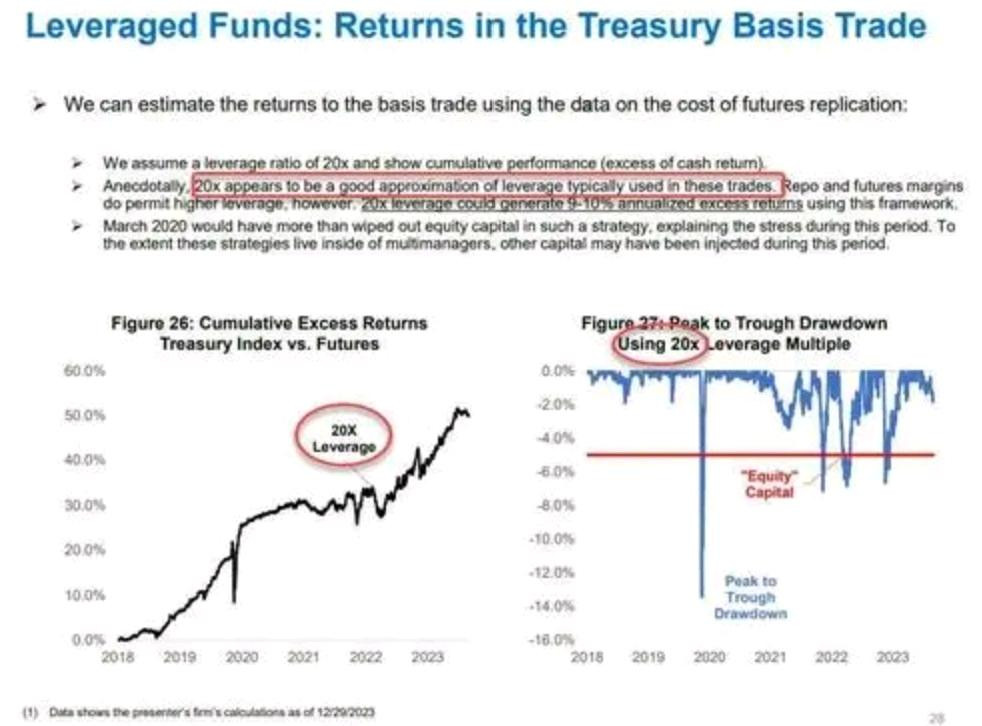
All eyes are now on the Federal Reserve. While markets currently price in a 60% chance of a June rate cut, some analysts warn that waiting could be catastrophic. "If the Fed doesn’t intervene by Thursday, we could see a 1987-style crash," warned Euro Pacific Capital’s Peter Schiff. Potential emergency measures include relaunching quantitative easing (QE), activating the Standing Repo Facility, or even reviving "Operation Twist"—a maneuver to suppress long-term yields by adjusting the Fed’s balance sheet.
The 48-Hour Countdown
Two critical events could determine whether the meltdown metastasizes: Wednesday’s 39 billion 10−year auction and Thursday’s 22 billion 30-year sale. Weak demand at Tuesday’s 3-year auction—a bellwether for foreign appetite—has traders bracing for disaster. “If primary dealers end up swallowing 40% of these auctions, it’s effectively a failed sale,” warned ZeroHedge. A botched offering could trigger a self-reinforcing cycle of higher yields, margin calls, and panic.
A Global Reckoning
Beyond Wall Street, the implications are dire. Soaring mortgage rates threaten to freeze housing markets, while corporate borrowers face refinancing walls at punitive costs. The dollar’s 2.9% drop since January reflects fading “American exceptionalism,” as investors shift funds to European and Asian assets. Evercore’s Julian Emanuel noted, “The era of blindly overweighting U.S. stocks and bonds is over.”
Historically, Treasury selloffs corrected with Fed intervention. But in a world where America’s biggest creditors are also its geopolitical rivals, the playbook may no longer work. As Larry McDonald, author of The Bear Traps Report, starkly put it: “This isn’t just a market crash—it’s a test of whether the U.S. can still govern its way out of a crisis it created.”
For now, traders are left clinging to one grim certainty: In the battle between the Fed’s tools and Trump’s tariffs, the bond market has already cast its vote—and it’s a scream of terror.
This content is provided for informational or educational purposes only and does not constitute investment advice.