
90-Day Tariffs Paused for the World, 125% for China — What’s Really Behind Trump’s move

A Plot Twist in the Global Market, The Tariff Drama Has Just Begun.
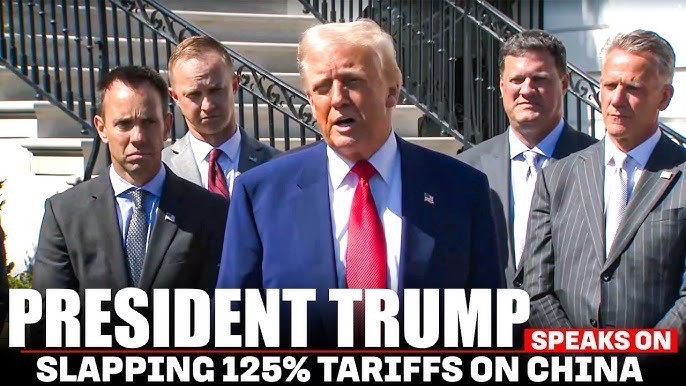
Over the past few days, global markets have been caught in a geopolitical thriller—full of abrupt twists and strategic reversals.
On April 2, Trump shocked the world with a sweeping tariff hike, sending markets into turmoil. But less than a week later, he made a sharp U-turn: tariffs on 75 countries would be paused for 90 days, with a 10% reciprocal limit. The only exception is China. Tariffs on Chinese goods shot straight to 125%—effective immediately.
At first glance, it looked like a softening stance. In reality, it was a clear signal: the U.S. is redrawing the global economic map—this time without China in the picture.
The 90-Day Pause: Not De-escalation, But Delineation
Trump’s April 2 announcement created a sense of shared anxiety across global markets. Days later, the pause seemed like an olive branch—but only for countries seen as U.S. allies.
The underlying message was unmistakable:“Cooperate, and you get favorable terms.”
But for China, there was no grace period—only a sledgehammer. It’s a strategic line in the sand: build alliances on one side, shut China out on the other.
This is essentially a new Cold War tactic—using trade conflict to forge alliances. What the U.S. wants isn’t a shared global marketplace, but a layered system centered around itself. A more exclusive table, not a bigger one.
What’s more revealing is Trump’s own admission. When asked about the reversal, he said: “The markets overreacted… I saw people getting nervous last night.” Translation: the backlash spooked him.
This wasn’t strategic restraint—it looked more like a panicked walk-back after overplaying the hand.
Too Perfectly Timed: Has Policy Become a Trading Tool?
Now look at the timing—it raises more questions.
At 6:37 AM (ET) on April 9, Trump posted on X: “Buy the Dow.”
Just a few hours later, at 10:18 AM, the tariff pause was announced—and markets rallied.
The sequence felt less like policymaking and more like market manipulation. Fundamentals hadn’t changed, but policy itself became the trigger for price action.
Some called it a textbook case of “whipsawing both longs and shorts.” Others wondered: was insider trading involved?
Lawmakers are already asking: who knew ahead of time? Who profited from the volatility? And more importantly:
When national policy becomes a trading instrument, what’s left of institutional credibility?
Beyond Tariffs: The “Delisting Threat” to Chinese Companies
On top of the trade drama, the U.S. Treasury floated another bombshell: delisting Chinese firms from U.S. stock exchanges.
This isn’t just regulation—it’s a form of financial containment.
For Chinese companies, losing access to U.S. capital markets means more than just reduced funding. It risks:
• Gradual exclusion from global valuation systems
• A diminished role for RMB assets in global capital pricing
• A tighter environment for cross-border capital flows
This is not just a trade war. It’s an assault on financial sovereignty.
China Responds: Tough on Trade, Calm in Finance
China responded quickly. As of April 10, noon, tariffs on U.S. imports were raised to 84%. At the same time, a new policy was introduced: immediate tax refunds for overseas travelers, aimed at boosting consumer spending.
These moves send two messages:
• A firm response in trade, signaling reciprocity;
• A soft approach in finance, signaling openness and restraint.
There was no aggressive move on currency or financial regulations. Instead, China opted for a more flexible, composed strategy—not rushing into escalation, but keeping room for maneuver.
A Market Rally? Maybe Just an Emotional Rebound
After the policy shift, U.S. markets soared. The Nasdaq jumped over 9%, gold and Bitcoin also rallied briefly.
But is the danger really over?
I wouldn’t be so sure.
• The 90-day pause is temporary—it could be reversed at any moment.
• China was explicitly excluded, meaning tensions are far from resolved.
• For companies and investors, uncertainty is increasing, not decreasing.
This feels more like an emotional rebound than a true trend reversal.
My Takeaways
1. This isn’t just a policy shift—it’s a stress test for the global economic order. The U.S. is trying to build a new system.
2. The pause is bait. The real agenda is to cut China out of capital markets and strip its pricing power.
3. China’s response shows discipline: a hardline in trade, but calm and strategic in financial policy.
4. The current crisis may trigger a global revaluation of Chinese assets—a structural reset, not just a short-term dip.
5. For investors, volatility in Chinese ADRs and Hong Kong stocks will likely rise—but with that may come short-term opportunities in certain sectors returning to Hong Kong.
This tariff drama is far from over. If you’re tracking the deeper shifts in U.S.-China dynamics—from trade to capital markets to monetary influence—I’ll keep breaking down the signals as they emerge.