
Trump’s 90-Day Tariff Pause: Markets Soar, Goldman Sachs Drops Recession Warning

Shearing sheep
April 10, 2025
GoGPT Summarizes Articles
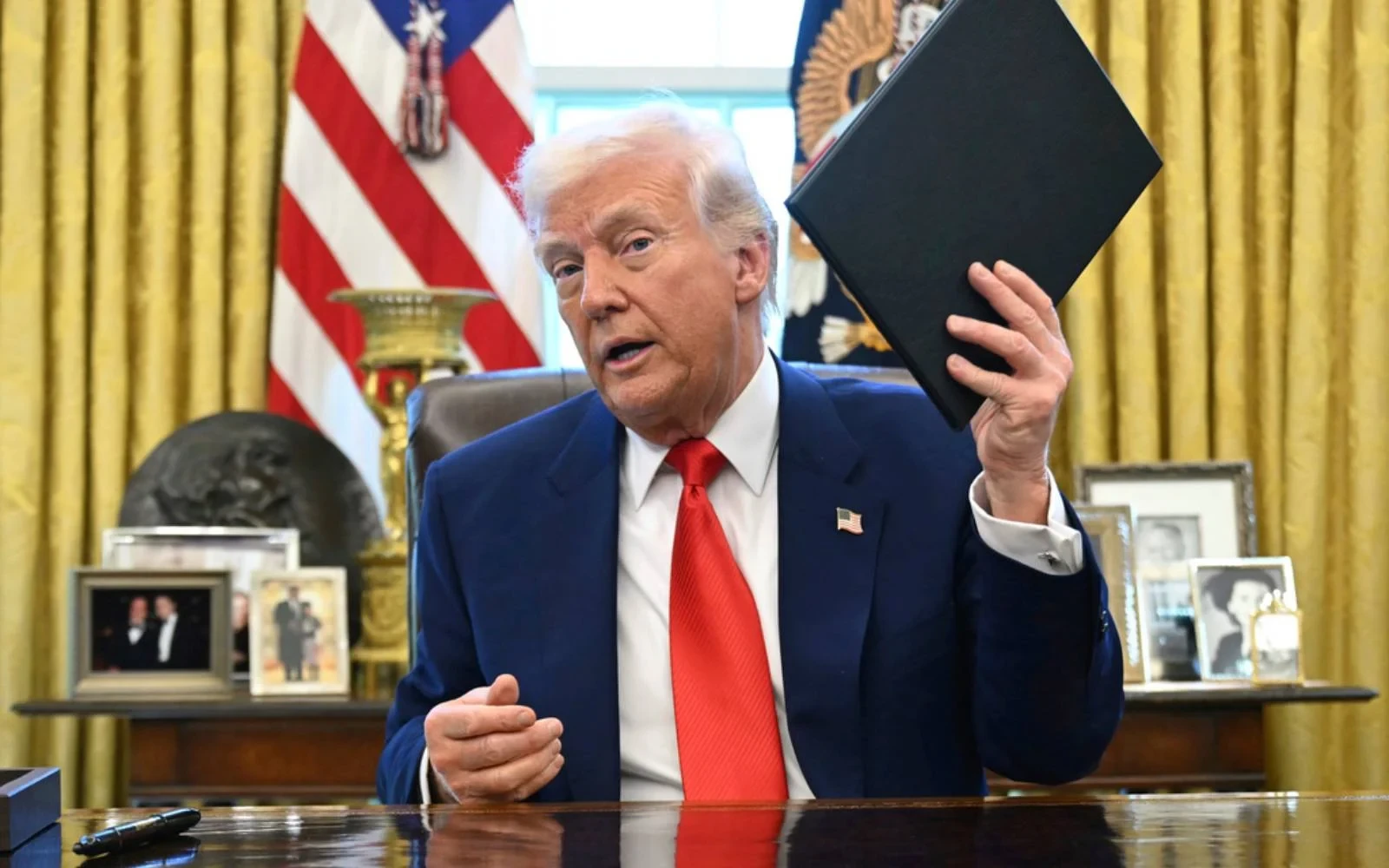
Just days after President Trump doubled down on historic tariffs, sending markets into a tailspin, he unexpectedly decided to hit the pause button—granting a 90-day reprieve to over 75 countries that pledged not to retaliate. This dramatic shift stands in stark contrast to his previous stance of maintaining high tariffs as leverage in trade negotiations.
What’s Behind the Pause?
One of the main reasons cited for the tariff suspension is the willingness of over 75 countries to engage in trade talks. These countries have reportedly reached out to U.S. representatives to address issues like trade barriers, tariffs, currency manipulation, and non-tariff barriers. Trump emphasized that these nations refrained from retaliatory measures, which played a pivotal role in his decision to grant the 90-day delay. During this period, tariffs could drop to 10%, significantly reducing the pressure on these countries to escalate the trade war.
But there’s more to the story. Trump openly acknowledged that he’s been closely monitoring the bond market. With U.S. bond markets showing signs of stress—10-year yields rising above 4.5% and a notable drop in demand for bonds—this policy shift seems more about stabilizing the financial markets than negotiating trade deals. The bond market, long considered a safe haven during periods of financial instability, had started to spook investors. After the tariff pause announcement, we saw a sharp recovery in the bond market, with yields dropping and U.S. stocks soaring in response.
The Broader Economic Outlook
Despite the temporary tariff relief, economists remain cautious. Renaissance Macro’s Neil Dutta points out that while the risk of a recession has decreased, it is still a significant concern. Similarly, Citigroup economists caution that the suspension does not eliminate the risks of an economic slowdown or inflationary pressures. JPMorgan’s Michael Feroli suggests that the Federal Reserve might delay rate cuts until September, indicating that the economic outlook remains uncertain.
High tariffs and trade uncertainty have already started to weigh on growth forecasts. Goldman Sachs, for example, initially predicted a 65% chance of recession over the next year, but after Trump’s pause, they revised the probability down to 45%. However, Goldman’s team emphasized that trade policy uncertainty could still lead to slower growth in 2025, even if a recession is not immediately on the horizon.
A Market Shaped by Uncertainty
This rapid shift in policy underscores the unpredictable nature of U.S. trade policy and its effects on global markets. The initial tariff announcement triggered fears of a major economic downturn, but the subsequent tariff suspension highlights how quickly things can change. Investors and analysts are continually adjusting their outlooks, which makes forecasting the next market move challenging.
Inflationary pressures and the risk of economic slowdown haven’t disappeared just because Trump pressed the pause button. While markets may have breathed a sigh of relief, the underlying risks remain—whether it’s the potential for further tariffs or the broader effects of a slowing global economy. As the 90-day tariff freeze progresses, the focus will likely shift to how trade negotiations unfold. Will the involved countries reach a lasting agreement, or will tensions flare up once again?
My Take
The 90-day tariff pause is certainly a win for markets in the short term, providing much-needed stability and reducing the chances of an immediate trade war escalation. The market’s reaction—stocks soaring and bond yields retreating—clearly reflects this relief. However, let’s not get too comfortable. This move buys time but doesn’t resolve the core issues. The underlying tensions between the U.S. and its trade partners are still very much alive. Given the recent volatility in global markets, I wouldn’t bet on this being the last U-turn we see from the administration.
It’s also important to keep an eye on the bond market, which appears to be a hidden driver behind many of these policy decisions. As long as bond yields remain elevated, we may see more short-term shifts like this to stabilize the market. That said, don’t expect this to be a permanent fix.
In conclusion, while the tariff pause offers welcome relief to investors, the economic outlook remains uncertain. If anything, it shows just how quickly things can change in the world of trade, tariffs, and market reactions. For now, it’s a time to stay flexible and monitor how things evolve over the next three months. Markets thrive on stability and predictability—something that’s still very much lacking in today’s economic landscape.
What do you think? Is this a sign of more flexibility from the Trump administration, or just another temporary fix? #trump #usmarket
#Breaking Macro Events: Market Impact & Analysis#trump#usmarket