
The Dollar's Trust Crisis: Trump's Actions Threaten U.S. Financial Hegemony

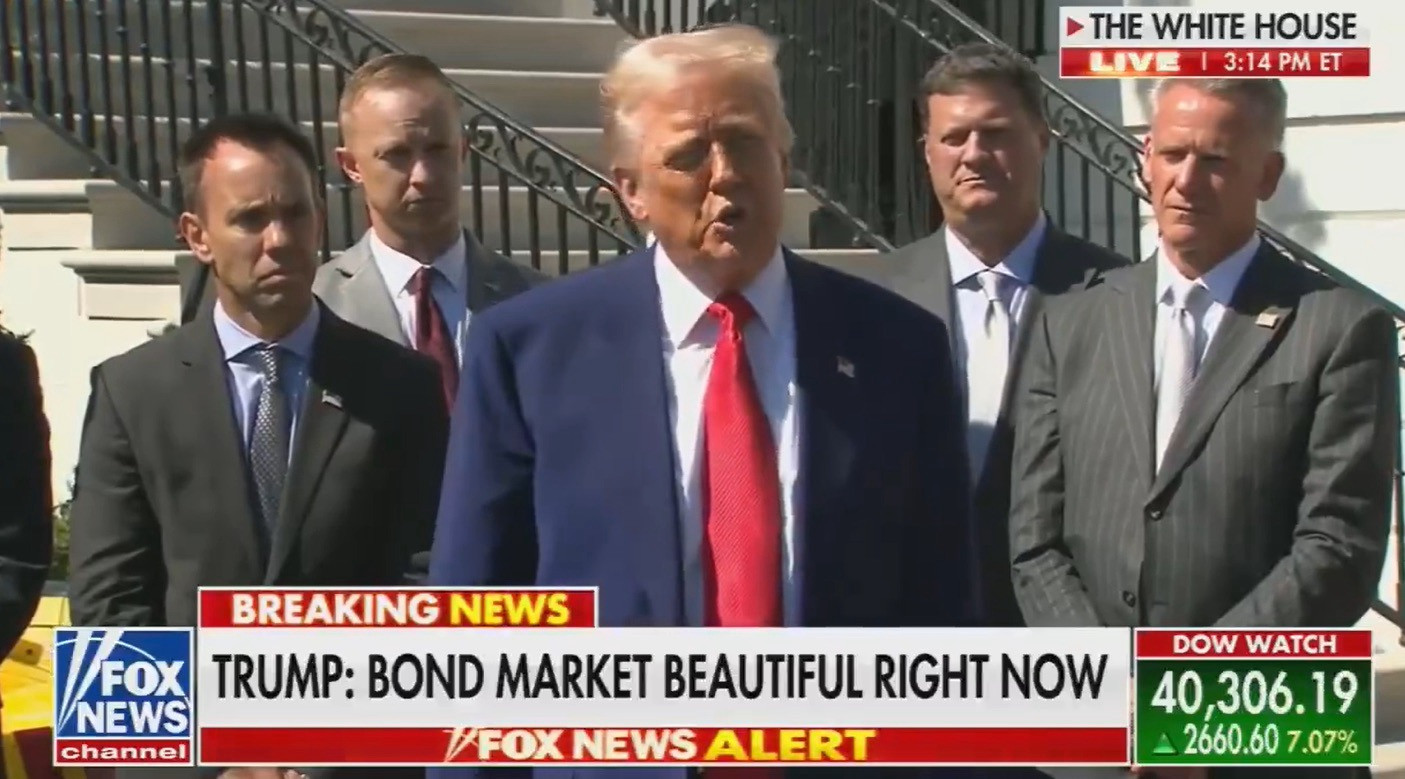
Why did Trump have to admit, "I've been watching the bond market. It's tricky. It looks beautiful now. The bond market is good now. But I saw people were a bit uneasy last night"?
Because the issue isn't the availability of funds, but the terms and conditions of financing when U.S. debt underpins the entire global financial system. The U.S. is unlike other sovereign nations. It doesn't just borrow to finance itself; it issues assets to anchor collateral chains, settle forex swaps, support derivatives, and serve as margin for global risk-taking.
Other countries borrow in the market. The U.S. is the market.
Here lies the paradox: When U.S. debt is the systemic core debt, it must be seen as stable, liquid, and low-volatility, or the entire global leverage system based on U.S. markets begins to unravel. That's why U.S. Treasury market dysfunction looks less like a failed auction and more like repo seizures, collateral dumps, massive cross-asset volatility, and central banks scrambling to restore functionality - not because the U.S. is bankrupt, but because the plumbing isn't working.
Other sovereigns might lose market access and be absorbed by the market. When the U.S. loses confidence in its collateral quality, the entire global margin system - from swap books and dealer inventories to pension fund hedges and corporate bond spreads - collapses. It's a non-linear fragility: it develops rapidly, destroys everything instantly, and can't be solved by Fed rate cuts.
The turn to gold is about collateral credibility, not inflation hedging. As U.S. Treasuries lose their pristine status due to volatility, political risk, and fiscal dominance, gold emerges as neutral, unencumbered collateral in a world lacking trust. Central banks aren't piling into gold for yield, but for sovereign optionality in a multipolar settlement system of the post-dollar era. It's not gold versus the dollar; it's gold replacing the dollar's role in the trust foundation layer.
In this context, the real U.S. crisis isn't about whether the U.S. can print money, but whether anyone believes the collateral behind U.S. money printing can be a reliable basis for global leveraged finance. When Trump chisels cracks in this foundation, it's not a U.S. fiscal problem; it's how the dollar issuer faces a "funding" crisis in history.
Liquidity ≠ Solvency ≠ Sustainability, the U.S. can't borrow anymore.
It's not because there are no buyers for U.S. Treasuries; it's because buyers won't accept these terms from the U.S. anymore.
This is the fundamental crisis of the Trump administration, and what happened in the past 24 hours shows: Faced with a fundamental crisis, Trump chose to engage in some insider trading and procrastination time.