
Japanese Banks' Treasury Sell-Off: May Saved Global Economic

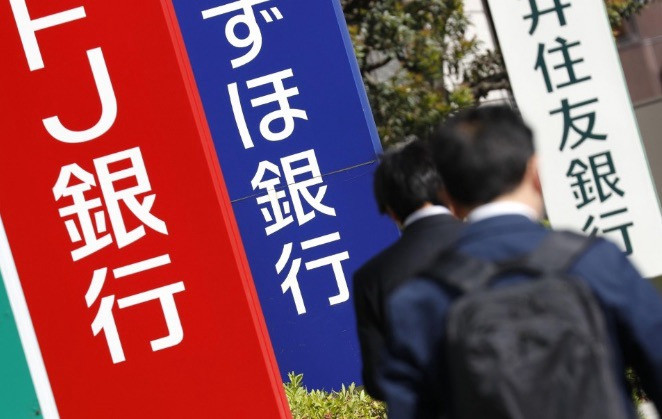
Japanese banks' selling of US Treasury bonds may have saved the world.
On the afternoon of the 9th, US President Trump announced that he would allow some countries and regions to suspend the additional mutual tariffs that had just been implemented on the same day for 90 days. The 10% flat tariff imposed on the 5th will remain. This will include Japan and will be implemented immediately. On the other hand, tariffs against China, which has announced retaliatory measures, will be raised to 125%.
At the White House, US Treasury Secretary David Bessent gave a press briefing together with the White House Press Secretary at almost the same time as Trump's post. This will be the first time that the Treasury Secretary has taken the lead in explaining tariff policy.
It has been believed that previous tariff hikes have been led by Trump's close associates, such as hard-line senior advisor to the president Navarro, but it is important to note that Bessent, who is considered a moderate, has now come forward.
Based on these results, it is thought that Bessent has overpowered Navarro and others and urged Trump to suspend the additional mutual tariffs for 90 days.
In fact, regarding the "90-day suspension," it was reported that National Economic Council Chairman Hassett expressed the view on the 7th that US President Trump was considering suspending tariffs on all countries and regions except China for 90 days. In other words, there was a possibility of this happening.
However, the White House indicated that this statement was fake news. It is believed that Navarro, a senior advisor to the president, and others forced him to make a denial comment.
So why was Treasury Secretary Bessent able to push through this time? One factor may have been related to the strange incident in the Tokyo market on the 9th.
Around 12 noon Tokyo time on the 9th, US Treasury bonds suddenly began to be sold in after-hours trading.
In the US bond market on the 8th, the yield on the 10-year US Treasury bond rose to 4.29%. In response, the yield rose sharply to 4.51% (price fell) during Tokyo time on the 9th.
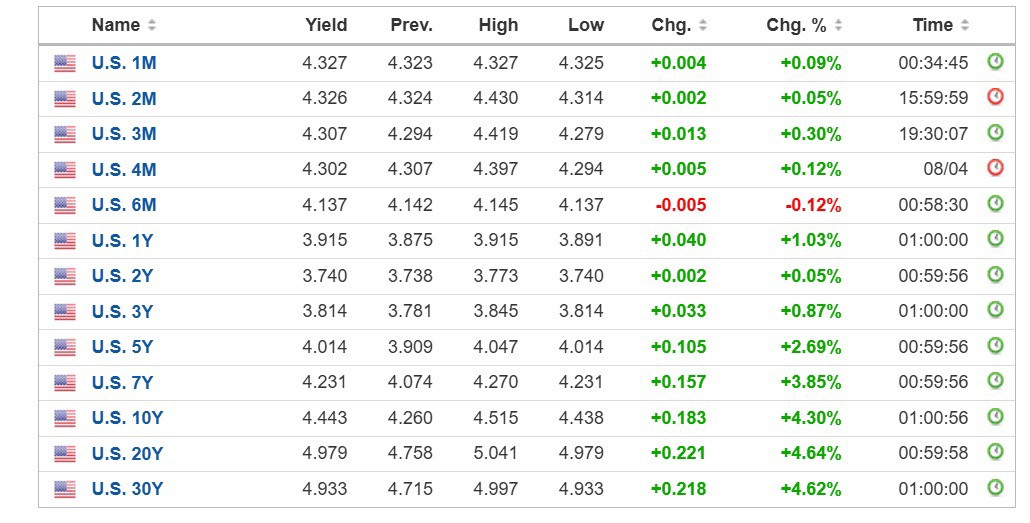
I have never seen US Treasury bonds move so much after hours. It was a somewhat abnormal movement. There were several points made as to the reasons for the selling of US Treasuries at this time.
The yield on the 10-year US Treasury note had risen to 4.29% on the 8th, and it was speculated that some hedge funds were rushing to sell their bonds to cover margin calls from financial institutions following the recent sharp drop in US stock prices. This was one of the views that the selling was for cash.
Furthermore, there were speculations that China had sold its US Treasuries in response to the mutual tariffs imposed by the Trump administration. In fact, there were speculations that China did not participate in the US 10-year Treasury auction on the 9th.
And, there were speculations that President Trump's Secretary of State for Economic Affairs had revealed a plan to tax foreigners holding US financial assets. It was possible that hedge funds and others had sold their bonds in response to this.
However, considering that the selling took place during Tokyo time, and that there was similar selling of Japanese government bonds, mainly of super-long-term bonds, with the yields of super-long-term bonds rising sharply to over 0.2%, just like those of U.S. Treasuries, it is highly likely that the selling was by Japanese institutional investors.
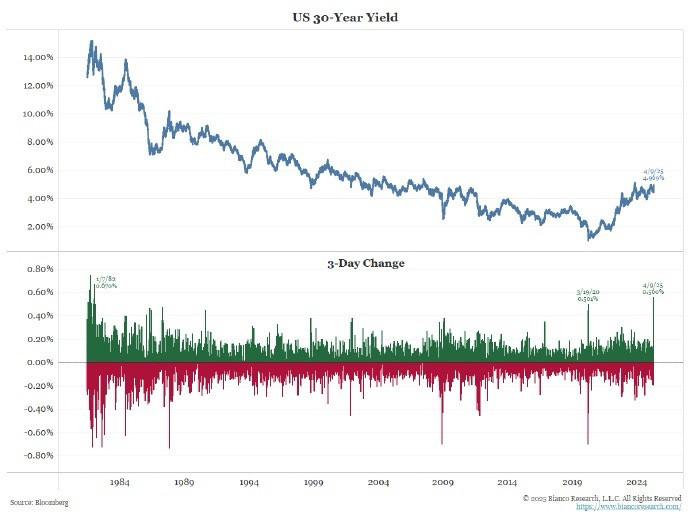
In fact, there were speculations that some Japanese banks may have sold U.S. Treasuries during the midday selling of U.S. Treasuries in Tokyo time on the 9th.
The time of day also makes this highly likely. At the same time, Japanese government bonds were also being sold in large quantities, mainly of super-long-term bonds, so it is highly likely that the same place (Japanese banks?) was selling both U.S. and Japanese government bonds at the same time.
So why were Japanese and U.S. government bonds sold at this time? It is unclear whether it was a stop loss or a sell at the beginning of the period.
Moreover, U.S. Treasuries were traded after hours, and the order book itself was extremely thin. It would have been easier to sell during hours when the U.S. bond market was open, and even with a certain amount of lot size, a sudden rise in yields may have been avoided.
The same can be said for Japanese government bonds. Although the Japanese bond market has gradually become accustomed to rising interest rates, it is still undergoing rehabilitation toward normalization. In particular, the treasury boards for super-long-term bonds are not yet very thick. Despite this, they were sold forcefully, causing the yield to rise by well over 0.2%.
Why were they sold forcefully? It would not be surprising if some people were to take a cynical view and wonder if they were trying to forcefully raise the yield.
However, some people believe that Treasury Secretary Bessent, who saw the fall in U.S. Treasury bonds, tried to persuade President Trump.
NBC News reported that a senior administration official said that Treasury Secretary Bessent and Commerce Secretary Lutnick had called on the president to suspend the tariffs in light of the bond market movements.
It seems that they were more afraid of a collapse in U.S. Treasury bonds than a fall in stocks, but in any case, this may have been the trigger for the sudden 90-day suspension of the tariff surcharge.
It is unclear who actually sold U.S. Treasury bonds at noon on the 9th in Tokyo time, and for what purpose. But perhaps the Japanese banks that allegedly sold the shares ended up saving the world.
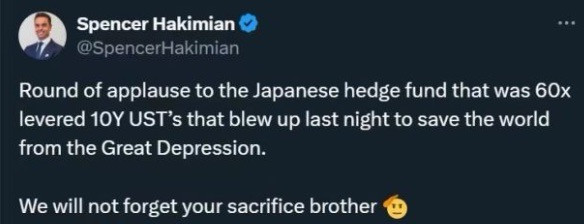
Come to think of it, Bessent was one of the people who led the 1992 pound crisis, causing the British pound to crash and defeating the Bank of England. In a sense, he is someone who knows the financial markets inside and out. I don't think this is the case, though.