
What Does It Mean When Investors Are Fleeing to Their Home Currency Markets?

There are three indicators: the US Dollar Index (DXY), gold prices, and US Treasury bonds.
1. The US Dollar Index (DXY) has fallen to its lowest level since October 1.
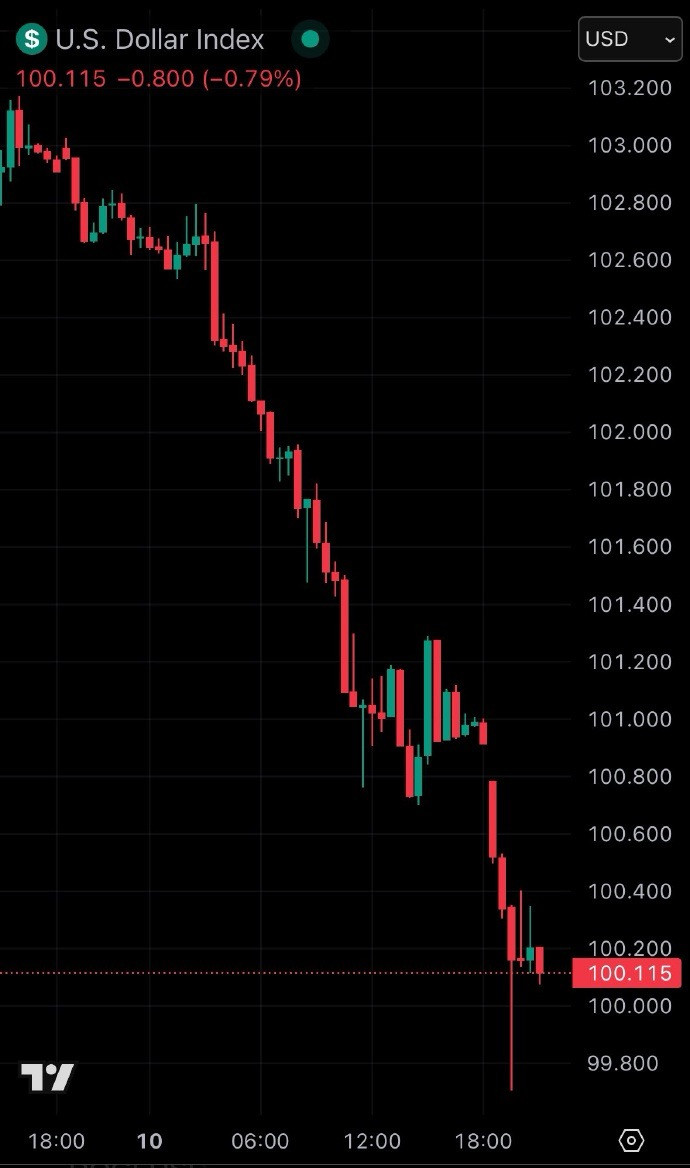
At the beginning of this US market turmoil, the dollar and short-term US bonds were still in demand (reflected in exchange rate changes, causing concern among some social media users about "loans"). This wasn't due to confidence in US fiscal stability, but because of global dollar funding pressures and collateral panic. In other words, when situations change, the world still scrambles to buy dollars to pay margins, repurchase debt, and unwind cross-border arbitrage trades. Driven by forced deleveraging, the dollar's rebound might mirror the DXY surge in March 2020.
However, the issue is: due to growing concerns about US debt sustainability, poor internal auction factors, and foreign capital withdrawal, the US ADR rebound might be shorter-lived. Once the initial dollar surge effect dissipates, gold, the euro, and even hard physical assets will take a larger share of safe-haven allocations.
So: The dollar first surges, then undergoes structural divergence and rotation, and begins to decline.
We can also see the euro experiencing a single-day +2.6% fluctuation.
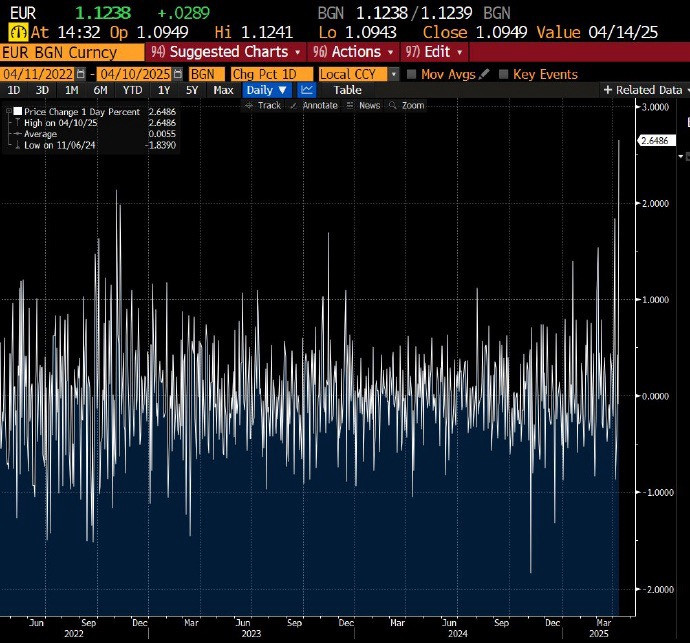
This is not only an anomaly in the forex market but also a trigger for macro-institutional changes. The volatility of the world's second-largest liquid asset class signals a repricing of global capital flows rather than a knee-jerk reaction. The Eurozone capital market is perceived as relatively more stable or less distorted than the US capital market, especially given the US swap spread implosion and Treasury volatility explosion.
This indicates that the US market is preemptively cutting rates, with capital reallocating to risk assets and hard assets, selling dollars, in response to the Fed's silent stance. When global participants need dollars (for yield or safety), the DXY rises. But now, participants seem forced to unwind arbitrage trades, de-risk from US assets, which is typical of late-cycle unwinding behavior. Liquidity pressures are changing the structure of dollar demand.
2. Gold prices, where all safe-haven funds have directly turned to.
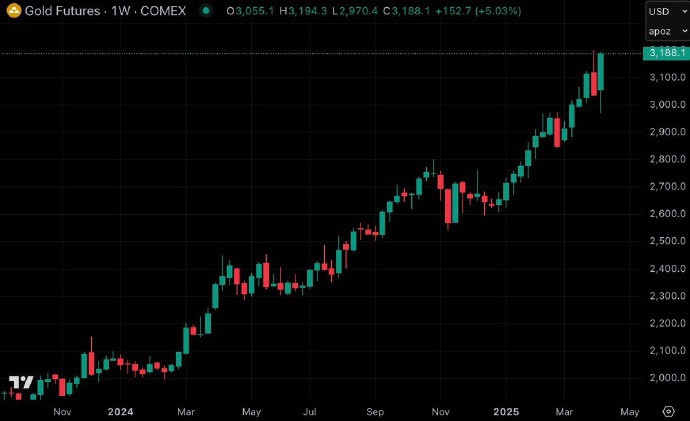
This is not a random allocation but a systemic signal of capital seeking ultimate safety amid rising global pressures. The gold rush emerges after extreme chaos: SOFR 3-year swap spread collapsed to -40.62bps, CDX HY plummeted to 460.78, WTI oil fell below global breakeven ($58), the 2s10s curve steepened violently – all textbook signs of US money market panic.
Such negative swap spreads indicate inter-bank distrust when the US market's core regulatory function fails. This makes gold the preferred collateral hedging tool, not just a bet against developed country currency depreciation. Someone is preparing for a broader credit/liquidity event.
When global FX hedging becomes uncertain, especially under pressure from the euro trying to break out and Japanese yields surging, gold becomes the cross-currency neutralizer. This isn't just about inflation. It's also about geopolitical risk, monetary regime transition, and shifting reserve preferences. As Trump injects more uncertainty and volatility into the US market, gold becomes the safe haven.
3. The US bond market.
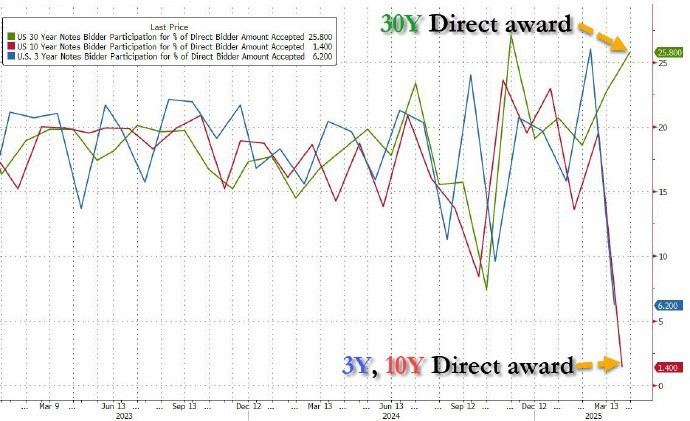
Reports suggest strong demand for 10-year and 30-year US Treasury auctions this week (e.g., Reuters), but such reports only show surface phenomena. They don't change the deeper structural flaws in the US. Indeed, the bid-to-cover ratios look robust, but the auction context is crucial. This demand might come from risk parity unwinding flows, forced allocation tasks (like pension funds, banks meeting term needs in advance), or US primary dealers absorbing excess supply under pressure.
This isn't "real money" buying; it's mechanical absorption amid chaos. The broader US market is signaling distress: 30-year US Treasury real yields are at post-GFC highs, VIX above 40, curve steepening, gold in vertical escape mode. If US Treasury auctions were truly a stable signal, long-end yields wouldn't immediately surge (5.0%) post-auction. This looks more like a last forced allocation before liquidity breaks, not a sign of healthy demand.
Summary: Bessent might have to ask countries to buy US bonds as part of trade negotiations to stop the decline. The largest US Treasury holders remain silent, with no one claiming "selling" except Japanese media, but the US keeps feeling pain. Unless the Fed intervenes, we're confident we'll soon see structural issues in the US market; US liquidity is crying for help.
Bessent previously hinted: "The next liquidity cycle won't benefit JPMorgan and BlackRock, but will fund small businesses, local banks, and productive labor." Strategically, he's trying to preemptively block criticism of impending capital controls, tariffs, or selective liquidity programs under the guise of pro-US populism. This framing views potential de-globalization policies, radical tariff escalation, and de-dollarization defense as tools of economic justice rather than financial warfare. His slogan is essentially: "The US will enter a post-neoliberal economic era combining domestic QE with populist fiscal policy."
Quite a rosy picture.
The Fed's intervention goal remains passive involvement in public opinion and functional liquidity. It needs a systemic funding/liquidity shock to reignite global dollar demand, maintain dollar liquidity, and trust in the core of US sovereign debt.
What's the fear now? It's that Trump's crazy operations become too numerous, and even Powell's QE won't be able to save the US.