
US Stocks Earnings Season Begins, but Earnings "Are Not Important"

As the US earnings season arrives against a backdrop of volatile global trade conditions, investors are closely watching company management's outlook for the future and warnings of potential downturns.
The US earnings season kicked off on the 11th local time, with BlackRock, JPMorgan Chase, Morgan Stanley, and Wells Fargo successively releasing their Q1 2025 financial reports. JPMorgan Chase and Morgan Stanley both surpassed analysts' expectations in revenue and profit; BlackRock and Wells Fargo's earnings per share also exceeded analyst forecasts, with BlackRock's revenue meeting expectations while Wells Fargo's revenue showed some weakness.
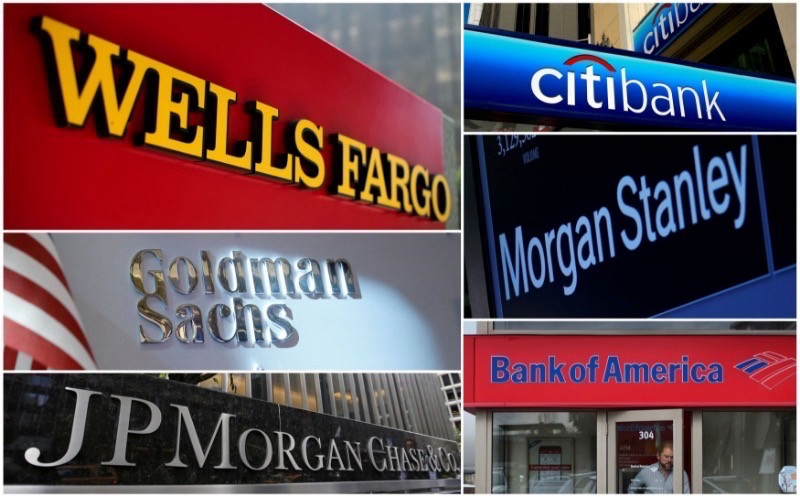
These financial data reflect the impact of the market crash caused by tariff shocks after US stocks hit new highs in mid-February, but do not fully capture the frenzied selling that followed the official announcement of tariff policies on April 2nd.
In a period where unprecedented tariff shadows loom over the market, investors are far more focused on forward-looking guidance than past quarter financial data. Some believe that the 90-day tariff suspension might give businesses breathing room, temporarily delaying earnings revisions and hoping for future agreements.
However, it appears that corporate management's statements point more towards ongoing concerns - the policy volatility is damaging growth and business prospects.
BlackRock CEO Larry Fink reiterated in a Friday media interview that most CEOs believe the US is in a recession, and corporate capital expenditure is declining.
JPMorgan Chase CEO Jamie Dimon stated that reaching a trade agreement as soon as possible is paramount. JPMorgan Chase pointed out a surprising phenomenon: consumer spending remains strong, even among lower-income groups - but this data might be deceptive, as Americans may be increasing spending in anticipation of tariff-induced inflation. Their corporate clients, especially small businesses, are taking a wait-and-see approach, as few feel able to make long-term decisions at present.
Wells Fargo management indicated in a conference call that while overall consumer spending remains stable, lower-income consumers are feeling increased pressure. Wells Fargo CEO Charles Scharf said, "We expect the economic environment in 2025 to continue to be turbulent, uncertain, and potentially slow down, but actual outcomes will depend on the results and timing of policy changes."
Morgan Stanley stated that trade tensions and weak IPO performance further suppressed M&A activity, affecting the company's IPO and advisory businesses. If subsequent tariffs drive up yields, it will increase borrowing costs and reduce corporate confidence.
In fact, the consensus expectation for S&P 500 earnings per share this year is $267, achieving double-digit year-over-year growth. This figure seems overly optimistic, as even moderate tariffs would impact economic growth.
Some analysts point out that most companies may not lower their full-year financial forecasts this quarter, but if no tariff agreement is reached and a clear solution isn't found within the next 90 days, it may only be a matter of time.