
Apple's Tariff Exemption: A Wrong Attack or a Reprieve?

A big news item last weekend was the exemption of electronic products, led by Apple, from the 145% tariff (as well as the previously increased 20% reciprocal tariff). However, this was quickly followed by threats of new tariffs on semiconductors and pharmaceuticals, which left many feeling disgruntled. In fact, global companies have become frustrated with various policy reversals, and most are now taking a "wait and see" approach.
The only company expressing interest in investing in the U.S. is NVIDIA, though this is mostly just talk for now. After all, NVIDIA was already investing in some computing centers, so presenting existing projects as future large-scale investments is plausible. NVIDIA's potential H20 ban wasn't implemented, which seems like a trade-off.
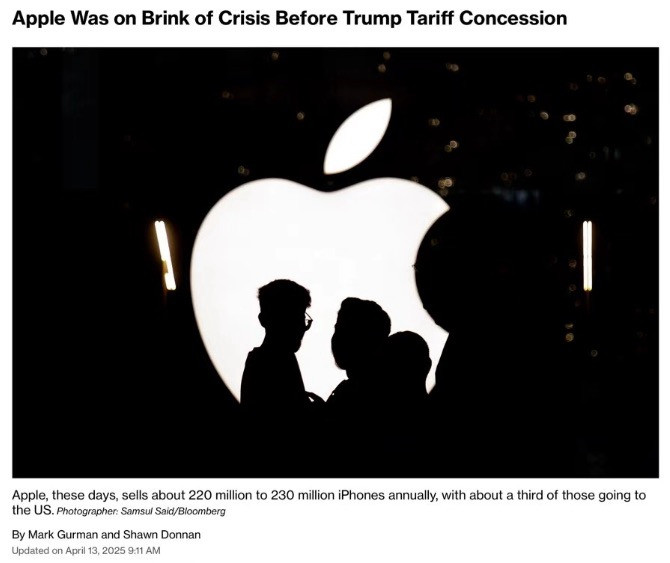
For Apple, the situation is more complicated. Apple's main profit comes from the iPhone, and this year's flagship product, the iPhone 17, is primarily made in China. Apple's global shipments are about 220-230 million units, with the U.S. market accounting for 1/3. To solve this problem in the short term, Apple would likely need to increase iPhone production in India to about 70 million units.
However, iPhones made in India and exported to the U.S. aren't entirely tariff-free. Compared to before, asking American consumers to pay higher prices to be guinea pigs for Indian-made products seems a bit much. U.S. consumers have enjoyed high-quality Chinese manufacturing, and now, whether Indian manufacturing actually has issues or it's just consumer bias, asking them to be guinea pigs might be more acceptable if prices were lowered.
It doesn't make sense to raise prices and ask consumers to be guinea pigs. If you're promoting American manufacturing, higher prices might be grudgingly accepted through patriotic sentiment. But for MAGA supporters, this only benefits third-party countries, not the U.S.
For Apple, truly developing and producing in the U.S. might take 10 to 20 years to implement. In the 3-5 year timeframe, made in India and Vietnam might be more realistic choices.
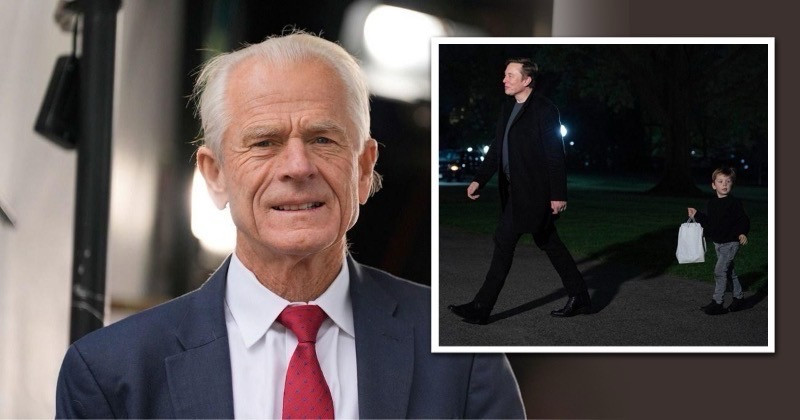
Of course, the White House might change hands in 4 years; Congress might change in 2 years; or perhaps in a few weeks, Trump's economic team might be replaced. Musk might sincerely apologize to "a sack of bricks," as "a sack of bricks" Navarro and the sycophantic Commerce Secretary Lutnick might be out. So for Apple, securing tariff exemptions to ensure smooth shipment and profit for iPhone 17 is the right choice.
Otherwise, Samsung phones, mainly manufactured in Vietnam, might have a more obvious price advantage in the U.S. market. If Apple ever finds it impossible to survive in the U.S. market, it might as well move its headquarters to Singapore and abandon the U.S. market, focusing on global business instead.
For China, last year's exports to the U.S. were about $500+ billion. If you remove the product categories represented by Apple in this exemption, it's about 40%, or $200-250 billion, leaving $300 billion in exports to be absorbed by domestic demand and other world markets. For the part that can't be absorbed, the government could buy it and distribute it as welfare to low-income citizens, or use it as aid for disaster-stricken areas in the Global South, like the recent major earthquake in Myanmar.
Speaking of this, if U.S. big finance and tech companies that profited so much from globalization could spare some to help the unemployed in America retrain as skilled blue-collar workers, perhaps people wouldn't have been so angry as to push Trump to the forefront. Now that Trump is in power, making life difficult for financial capital and tech companies, it's a kind of karma.
Now we'll see if Trump's 145% trade embargo policy can be extended beyond two weeks. After all, for countries other than the U.S., as long as it doesn't significantly impact their economy, these issues can usually be resolved with one or two procurement contracts.