
Is Bank of America Back on Top? Blockbuster Earnings Say Yes

What Drove the Big Jump in Profit This Quarter?
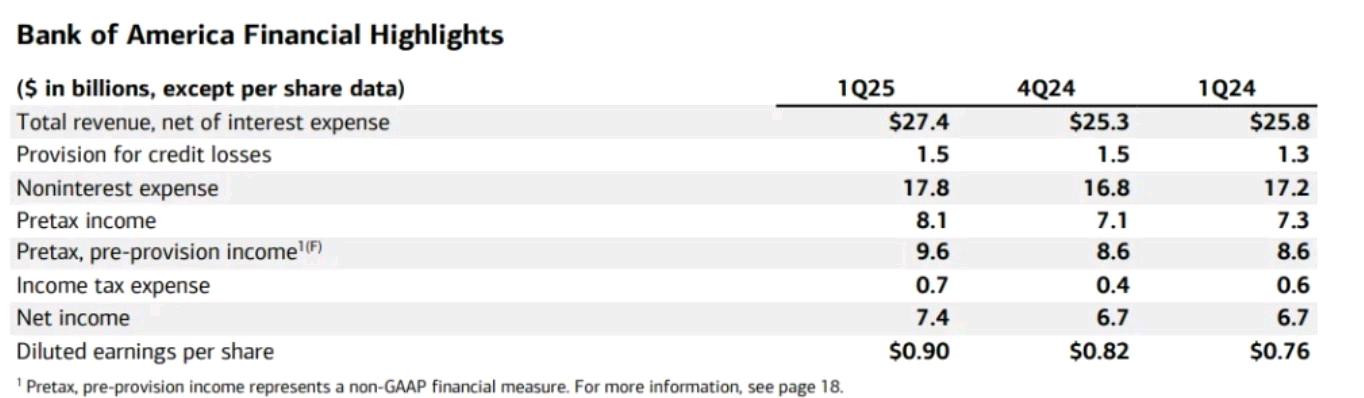
$BAC just delivered a first-quarter earnings report that took Wall Street by surprise—in a good way. With net income jumping 11% to $7.4 billion and earnings per share hitting $0.90 (versus the expected $0.82), the bank proved it can still outperform in a shaky economic environment. Revenue also rose a solid 5.9% to $27.51 billion, fueled by better-than-expected interest income and strong trading performance.
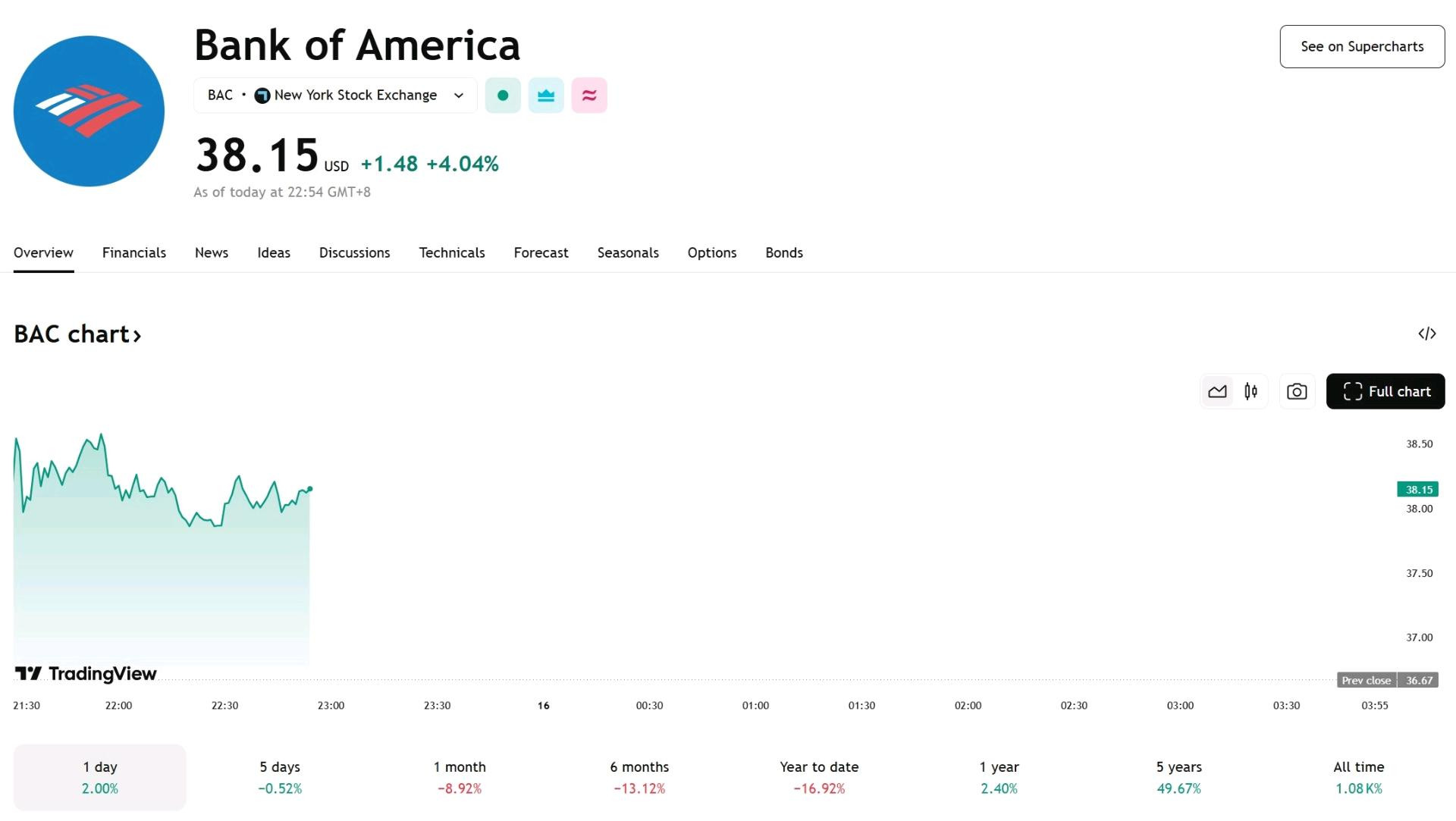
Investors responded immediately, pushing BofA shares up more than 4% in early trading. The results offered a sharp contrast to recent caution surrounding the banking sector, especially amid fears about tariffs and a potential economic slowdown.
How Did Net Interest Income Become a Game Changer?
One of the biggest highlights? Net interest income (NII) hit $14.6 billion—beating both analyst expectations and last year’s results. This 3% increase came largely thanks to lower deposit costs and strategic allocation into higher-yielding investments.
As the core driver of banking profitability, NII represents the gap between what banks earn on loans and investments versus what they pay on deposits. For BofA, that gap widened just enough to make a big difference.
The bank maintained its full-year guidance on NII, expecting it to reach between $15.5 billion and $15.7 billion in Q4—suggesting management sees ongoing momentum despite economic clouds on the horizon.
Did the Trading Team Just Save the Day?
It sure looks that way. Amid market volatility and investor nerves over trade policy, BofA’s trading division had a standout quarter. Equities trading revenue surged 17% to a record $2.2 billion, just edging past forecasts. Fixed income, currencies, and commodities also saw gains, up 5% to $3.5 billion—again, slightly above expectations.
This trading strength echoed what we saw from other major banks like JPMorgan and Goldman Sachs, whose traders also capitalized on short-term volatility.
Investment Banking Slips Amid Deal Slowdown
Not every division had a great quarter. Investment banking fees dropped 3% year-over-year to $1.5 billion, missing the $1.6 billion target. BofA, like its peers, faced a significant slowdown in mergers and acquisitions activity as companies became more hesitant to do deals amid political and economic uncertainty.
Industry-wide, U.S. M&A activity was down 13% in the first quarter. Analysts worry that if trade tensions persist, the rebound in this sector might be delayed well into 2025.
Credit Risks Remain Contained Despite Headwinds
Loan loss provisions—a closely watched indicator of potential credit issues—came in at $1.5 billion, under the $1.58 billion forecast. That was good news, especially given recent concerns about commercial real estate exposure. BofA reported that defaults in that segment actually declined.
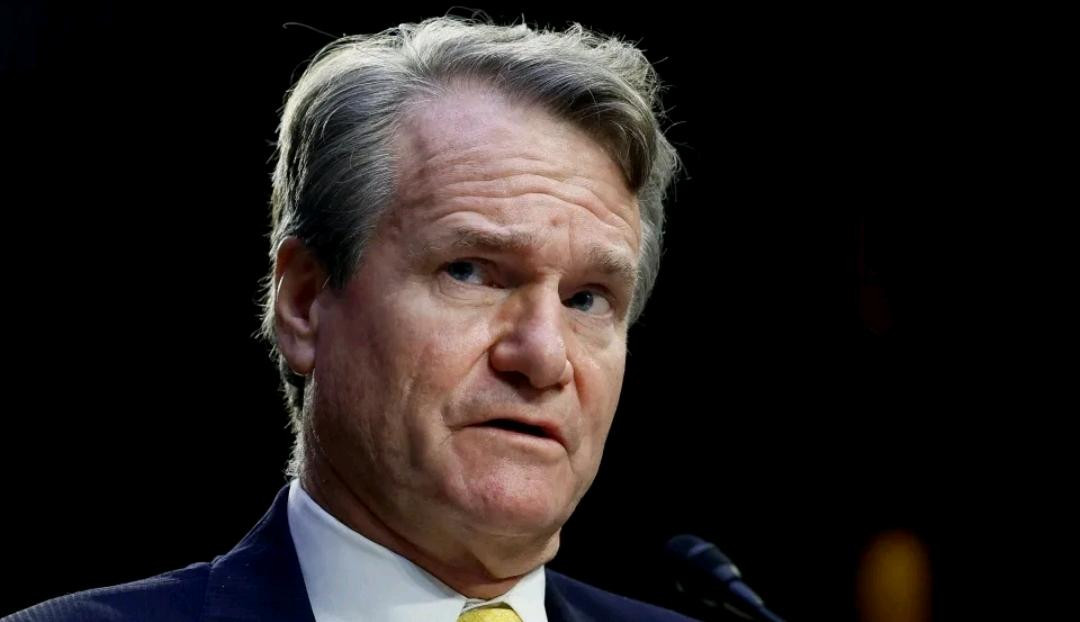
However, there was a slight uptick in credit card delinquencies, which rose to 4.05%. Still, the overall message was reassuring. CEO Brian Moynihan emphasized the bank’s strong credit quality and stable consumer behavior: “Our business clients have been performing well, and consumers have shown resilience,” he said.
Is the Consumer Still Going Strong?
Very much so. BofA added 250,000 new checking accounts in Q1—its 25th straight quarter of growth in that segment. Its global wealth and investment management arm also posted solid gains, with total client balances up 5% to $4.2 trillion and net asset inflows of $24 billion. Fee income from wealth management jumped 15%.
These results reinforce the view that U.S. consumers, despite headline worries, are still spending, saving, and investing.
What’s the Bigger Picture Here?
Despite anxiety over Donald Trump’s new tariffs and recession warnings from some corners, Bank of America appears to be standing tall. With a Common Equity Tier 1 (CET1) capital ratio of 11.8% and $6.5 billion returned to shareholders in dividends and buybacks this quarter, BofA has shown it’s not just stable—it’s thriving.
As Moynihan put it, “Though we potentially face a changing economy in the future, we believe our diverse set of businesses and responsible growth strategy will remain a source of strength.”
So What’s Next for BofA?
There’s still plenty of uncertainty. Tariff policy, interest rate changes, and consumer credit trends could all impact future performance. But for now, Bank of America’s strong Q1 showing has given the market something it hasn’t had much of lately: confidence.
With disciplined execution and a balanced business model, BofA is reminding investors why it’s still one of the most formidable players in U.S. banking—even when the economic winds get rough.
This content is provided for informational or educational purposes only and does not constitute investment advice.