
All Eyes on Powell: Is the Fed Chair Losing His Grip?

Shearing sheep
April 16, 2025
GoGPT Summarizes Articles
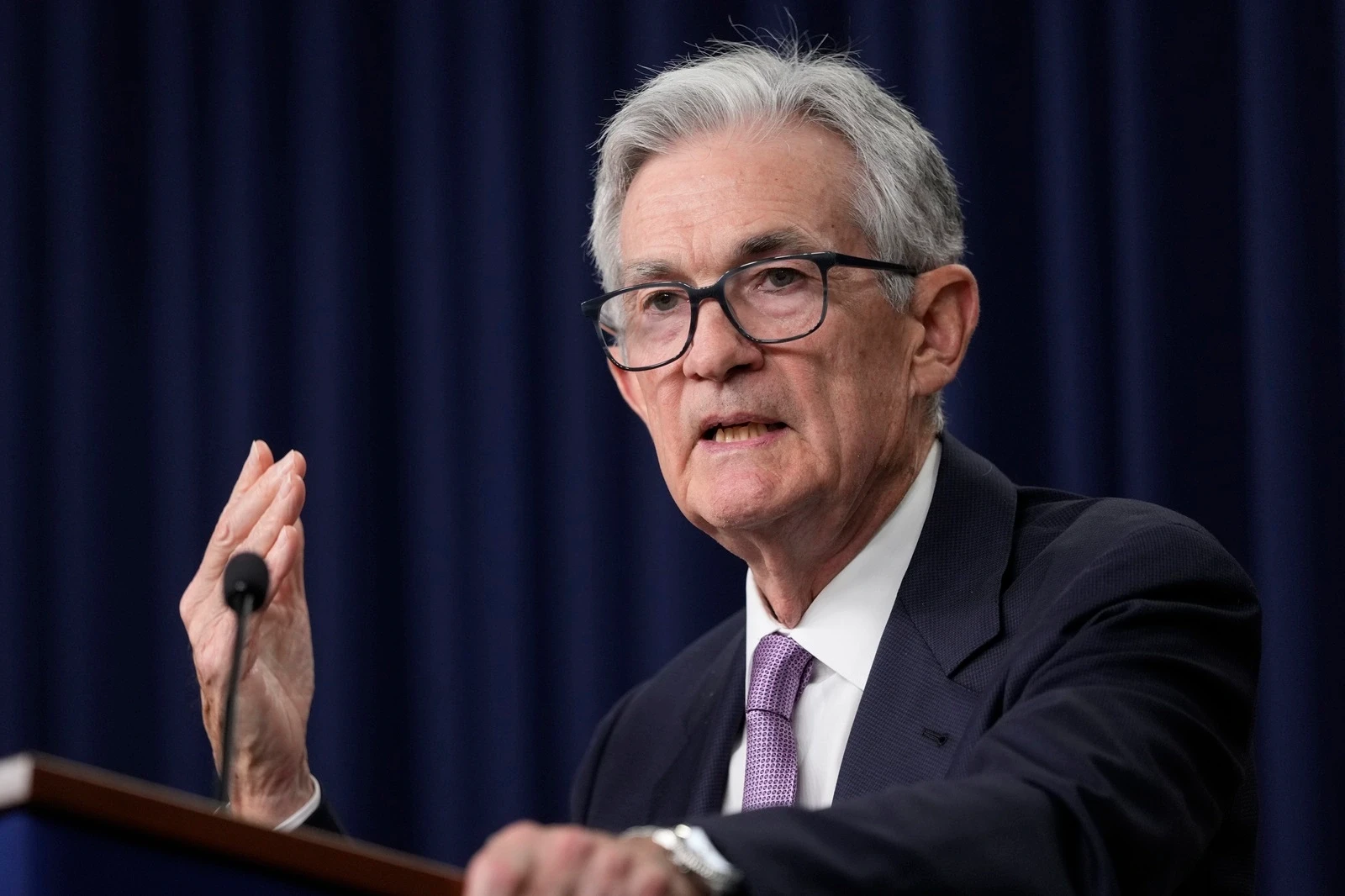
The relationship between the White House and the Federal Reserve is fraying fast, and Fed Chair Jerome Powell now finds himself in the hot seat. With his speech at the Economic Club of Chicago scheduled for 01:30 AM SG time on Thursday, markets are on edge. Investors will be tuning in for any signal—however subtle—on the Fed’s stance toward rate cuts and its plans (or lack thereof) for regulatory reforms that could encourage banks to hold more U.S. Treasuries.
The Fed’s Cautious Tone vs. Political Pressure
So far, the Fed has stuck with a "wait-and-see" strategy. Powell has resisted market pressure to cut rates aggressively, maintaining a fairly conservative stance. At the SABEW annual meeting on April 4, he reaffirmed the Fed’s dual mandate—maximum employment and price stability—but warned that rising tariffs could fuel inflation in the months ahead. That puts him at odds with a White House eager to cut rates and jumpstart growth.
President Trump’s surprise 90-day suspension of most reciprocal tariffs last week gave markets a short-term boost, helping ease cost pressures and spark a rally. But it also muddied the waters. Before the truce, traders were betting on as many as four rate cuts this year. That expectation has since dialed back—but not disappeared. Markets still think the Fed will need to do more, eventually.
The Stalemate Over Treasury Reform
One of the biggest headaches right now is the Fed’s slow response on regulatory reforms that could ease the strain in Treasury markets. Recent volatility in U.S. bonds has rattled investors, yet the Fed shows no sign of fast-tracking reforms that would help banks absorb more Treasuries. According to Semafor, insiders say the central bank is deliberately resisting pressure from both the White House and Wall Street.
Jamie Dimon called this out in his latest annual letter, criticizing existing rules that prevent banks from acting as market stabilizers—especially in times of turmoil. While the Fed has been working on a proposal since February, there’s no rush to finalize it. Why? Fed officials reportedly fear that moving too fast would look like a bailout—either for the government or for hedge funds caught offside in the recent bond sell-off.
For now, the plan is to go through the full rulemaking process, likely pushing any meaningful changes into late spring or even summer.
Is Powell Being Sidelined?
Beyond policy debates, Powell himself may be running out of political runway. Treasury Secretary Bentsen openly stated this week that he and Trump are actively considering candidates to replace Powell, with interviews likely starting this fall. That’s nearly a year ahead of Powell’s term ending in May 2026—a clear signal that the administration is preparing to move on.
According to analyst Jim Bianco, Powell faces two grim options: either he’s fired outright, or he gets politically neutered. While Trump may not be able to fire Powell outright, Bentsen has floated a provocative alternative: appointing a “shadow Fed chair”—someone who would publicly critique Powell’s every decision, undercutting his credibility and influence in real time.
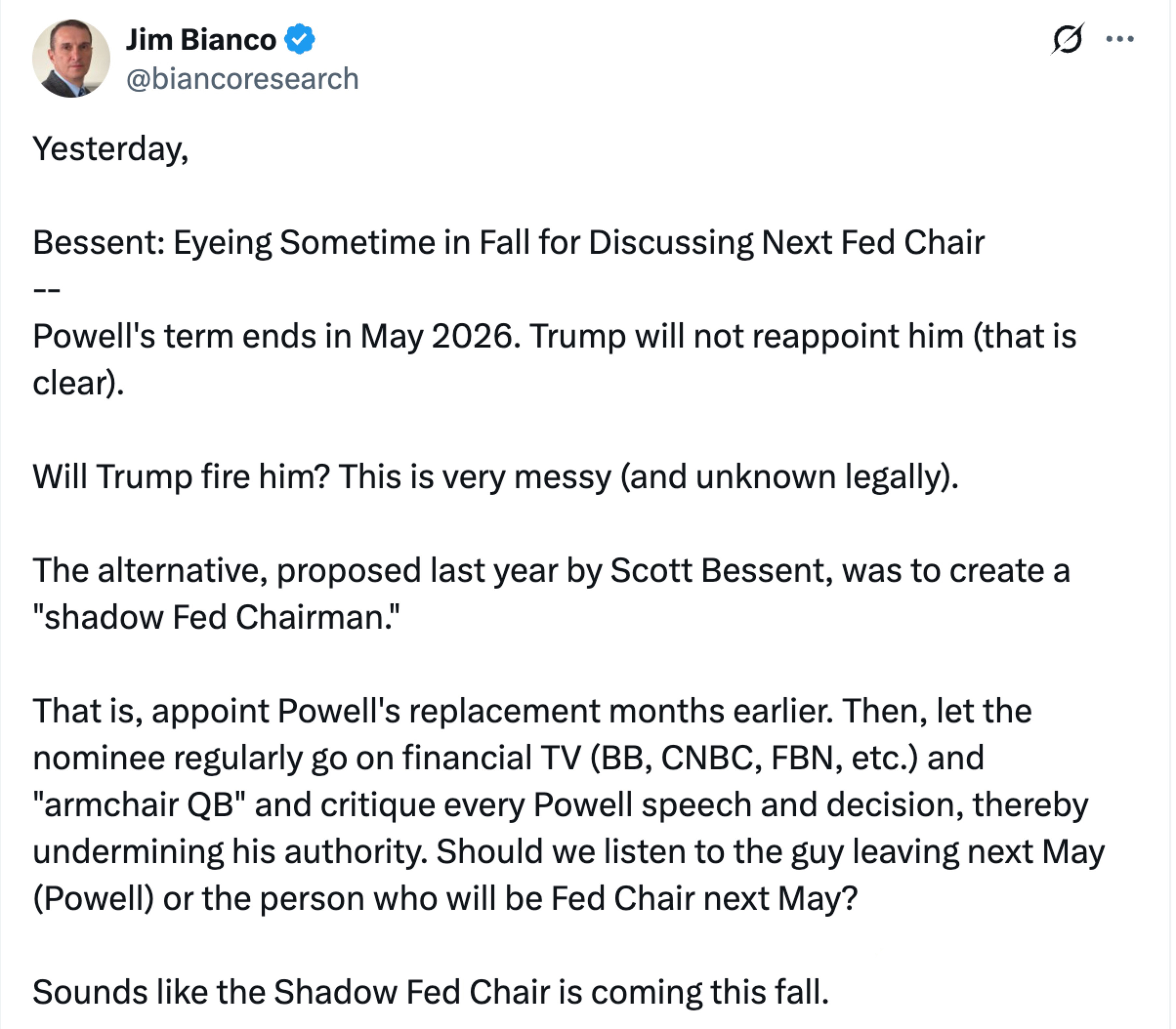
If that happens, markets could be stuck in a bizarre tug-of-war: Who do you listen to—the sitting Fed Chair or the incoming one, already talking like he's in charge?
My Take
Powell’s cautious posture may irritate those clamoring for faster stimulus, but it’s rooted in a desire to keep inflation from flaring up again and to preserve stability in financial markets. That’s not political—it’s just prudent central banking.
The regulatory delay, while frustrating, also reflects a deeper reality: quick fixes often come with hidden risks. Moving too fast might help short-term sentiment, but it could backfire badly if seen as capitulation or panic.
But the biggest issue isn’t rates or rules—it’s the Fed’s independence. If Powell is sidelined or replaced early, it could shake confidence in U.S. monetary policy altogether.
#Trump’s Tariff Play vs. Powell’s Patience#powell#fed