
Powell Dismisses Trump’s Call for Rate Cuts, Stresses Fed’s Deliberate Approach Amid Economic Uncertainty

Shearing sheep
April 17, 2025
GoGPT Summarizes Articles
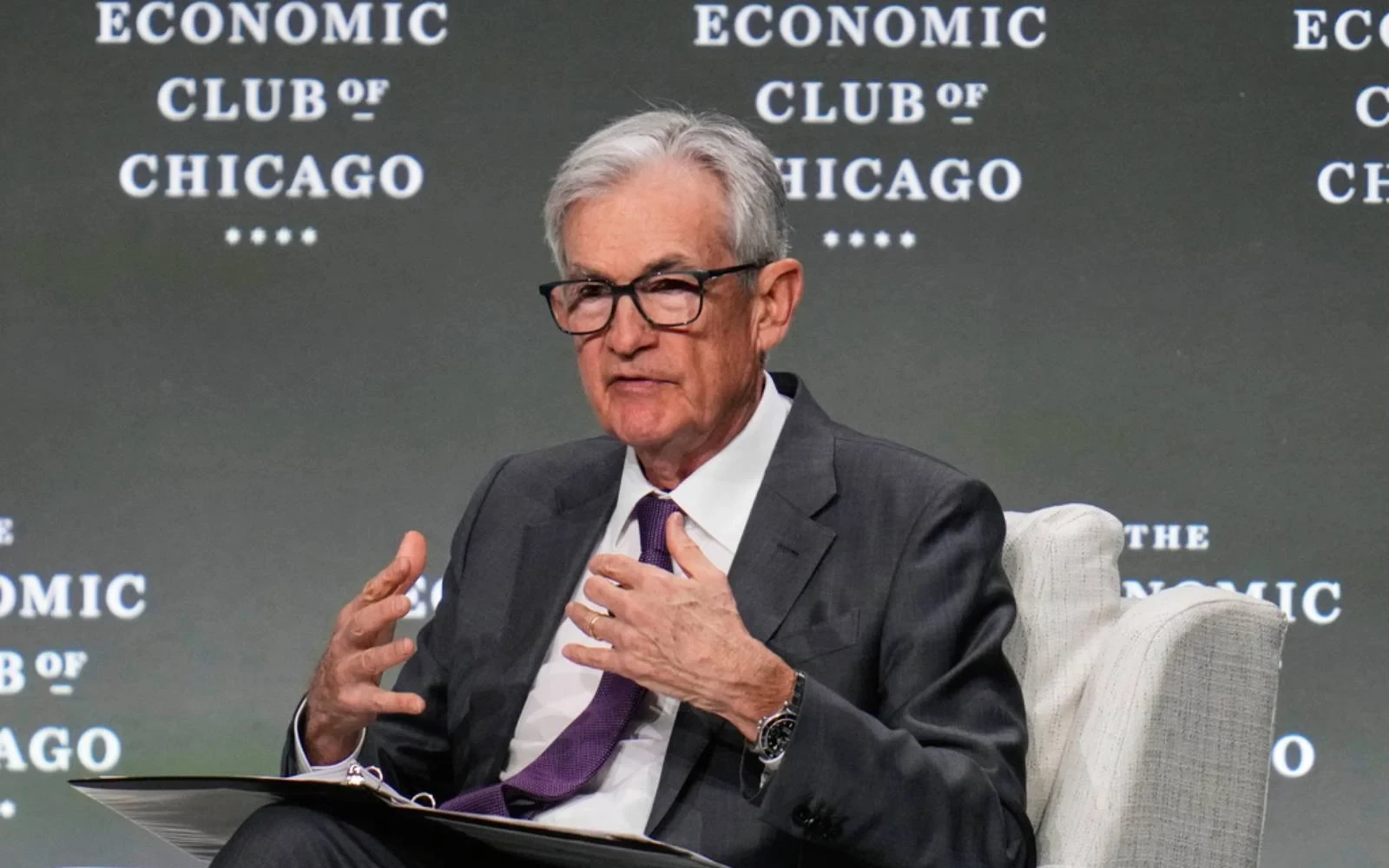
Fed Chair Jerome Powell isn’t falling for the drama of President Trump’s calls for aggressive rate cuts. Powell made it crystal clear this week that the Federal Reserve is sticking to its strategy of waiting for more clarity before acting—especially when it comes to the uncertainty surrounding Trump’s trade policies and their potential impact on inflation.
In his speech to the Chicago Economic Club on April 16, Powell didn’t just shrug off Trump’s suggestions; he called out the uncertainty created by the administration’s tariffs and trade war strategies, warning that these could fuel inflation and destabilize the economy if not carefully managed. Essentially, the Fed isn’t in a rush to act. They’re not going to rush into rate cuts just to “save the market” or cater to political pressure. In fact, Powell explicitly denied any belief in the so-called "Fed Put"—the idea that the Fed would step in to bail out the markets in case of a crash.
Powell’s stance is pragmatic, even if not what the markets were hoping to hear. He pointed out that trade policies—like tariffs—have a significant, long-lasting impact on inflation, which is way beyond what the Fed had originally forecasted. In fact, some of the recent tariff hikes exceeded even the Fed’s "high-end" projections. This raises a critical point: when the economy is caught between high inflation and slowing growth, the Fed’s mission to balance these two targets—price stability and full employment—becomes a very delicate juggling act.
The Tug-of-War: Inflation vs. Growth
As Powell explained, the Fed's goal is to prevent one-time price spikes from turning into sustained inflation. But if tariffs keep pushing inflation higher and slow down economic growth at the same time, the Fed may find itself stuck in a dilemma. How does it keep inflation in check while still supporting growth? It's a tricky balancing act, and Powell suggested that this could indeed lead to "stagflation" concerns if both inflation and unemployment don’t behave as expected.
Powell also shared that, given the current uncertainty—especially from Trump’s unpredictable trade moves—he expects market volatility to continue. However, don’t expect the Fed to rush in and make drastic moves unless the situation becomes undeniably severe. Powell’s main takeaway here was that financial markets are still functioning within the norms of a typical economic environment, despite the roller-coaster ride.
Market Reactions and Analyst Opinions
Powell’s comments have stirred mixed reactions on Wall Street. While the U.S. stock market continued its decline, with Treasury yields dropping slightly, analysts noted Powell's strong emphasis on controlling inflation rather than yielding to market pressures for rate cuts.
Michael Feroli of Morgan Stanley highlighted that Powell’s focus on price stability signals the Fed is unwilling to rush into policy changes, even if economic growth slows. Derek Tang of LH Meyer called Powell's use of "ensure" a high bar, signaling a long-term commitment to managing inflation.
On the other hand, some analysts were disappointed by Powell’s refusal to signal any rate cuts. Paul Christopher from Wells Fargo expressed frustration, noting that Powell’s caution added to market uncertainty, especially amidst ongoing volatility in tech stocks.
With the VIX spiking and the S&P 500 nearing bear market territory, analysts like Gareth Ryan warn that if there’s no major progress in trade negotiations in the coming months, the market could face a tough summer.
The Debt Dilemma
On another front, Powell once again raised concerns about the U.S. government’s rising debt levels. While the situation hasn’t reached a “tipping point” yet, the Fed Chair warned that the nation’s fiscal path is heading toward unsustainability. Powell emphasized that this is a major issue that needs addressing sooner rather than later. Of course, it’s a nod to the ongoing fiscal discussions, including debates around government spending cuts and the need for structural reforms.
As for the debt crisis, Powell’s remarks are a subtle challenge to those who favor cutting government spending, including the likes of Elon Musk's government efficiency push. While he didn’t name names, Powell clearly pointed out that while discretionary spending is decreasing, the real problem lies in the long-term structural deficit.
Fed’s Approach to Financial Regulation
Powell also touched on the issue of financial stability, confirming that the banking system remains well-capitalized. However, there’s still a spotlight on commercial real estate (CRE) loans and the potential vulnerabilities in smaller regional banks. He also hinted at a looser regulatory environment for cryptocurrencies, signaling that the Fed is preparing to ease up on banks’ involvement with digital assets.
A Look Ahead: AI and Economic Impact
And then, there’s AI. Powell got philosophical about it, admitting that his initial take on artificial intelligence was a bit too simplistic. He compared it to a "Google upgrade," but after further reflection, he realized it’s more like "humanity's upgrade." When asked if AI would create more jobs than it would destroy, Powell gave the honest answer: “We don’t know.” It's a classic economist's response, but one that carries weight as we look toward an increasingly AI-driven future.
My Take
Powell’s cautious approach to monetary policy is probably the right call, given the huge amount of uncertainty we’re dealing with. The last thing the Fed needs is to overreact to short-term volatility and trade tensions that could very well resolve themselves or shift direction. However, while caution is key, there’s a risk that waiting too long could lead to economic stagnation if tariffs continue to bite, and inflation creeps higher.
The challenge will be striking that perfect timing—waiting for the dust to settle but not waiting so long that the economy is already in a worse spot. The Fed's independence is crucial in this, and Powell’s remarks about political pressure being irrelevant are reassuring, especially with talk swirling about his position being threatened. For now, I think the Fed has to continue doing its homework, weighing the risks, and making decisions based on facts rather than political noise. #powell #fed #fedrate
#Global Macro Policy: Central Banks & Governments in Action#powell#fed#fedrate