
Musk May Have Lost Interest in Electric Vehicles?
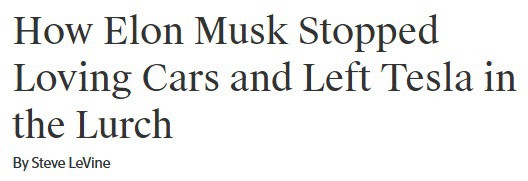
The Information conducted in-depth interviews with Tesla's internal employees and reached a rather shocking conclusion - Musk may have lost interest in electric vehicles.
The headline reads: "How Elon Musk Stopped Loving Cars and Left Tesla in the Lurch".
Let me summarize the key points of the article for you:
In February 2024, Musk met with Tesla executives to discuss whether to launch the long-delayed Model 2, Tesla's planned downmarket vehicle with a price as low as $25,000. The company had high hopes for it, believing it could greatly boost overall sales. However, Musk opposed the Model 2, preferring to push for a self-driving electric Robotaxi fleet, believing Robotaxis could reach the million-unit annual sales target sooner than Model 2.
Executives provided Musk with an analysis report suggesting that if Robotaxis were successfully deployed and ride-sharing became widespread, the U.S. auto market would shrink by 1/5. This is because self-driving taxis would be used five times more than private cars that spend most of their time in parking lots. After accounting for "stubborn" car owners who wouldn't switch to Robotaxis, the conclusion was that annual sales would struggle to reach 1 million, as "there aren't that many customers willing to give up personal cars."
They also had to consider that Robotaxis would impact Tesla's own car business. The new revenue would fall far short of replacing the 600,000+ cars Tesla sells annually in the U.S. Moreover, 2/3 of Tesla's revenue comes from overseas markets, but products like Robotaxis, which are highly tied to service markets, might only be sellable in the U.S. for a long time, as other countries may not easily approve them due to concerns about disruption.
Vice President Rohan Patel told Musk that all prediction models showed FSD and Robotaxis would have a very long payback period, especially outside the U.S. market. But Musk rejected these theoretical bases, stating "models don't understand how glorious the future represented by Robotaxis will be."
Executives almost pleaded with Musk to at least compromise by allowing Robotaxi and Model 2 to progress simultaneously. The two models could even share production lines, and Model 2 could help spread the risk for the more uncertain Robotaxi business. But Musk was unwilling to accept this. He proposed reducing features of Model Y to achieve price reduction, but the team told him there weren't many features left to cut.
As the debate intensified, Musk's assistant half-jokingly asked, "Are you guys planning a mutiny?" Finally, Musk decided to stop the Model 2 project, declaring that Tesla would become a leading artificial intelligence company. Employees who witnessed the entire event believe Musk has no interest in manufacturing an economy car similar to the Volkswagen Golf. His attitude is, "Let others do it."
Within two months after the meeting, two vice presidents and one director who supported the Model 2 project resigned. The remaining staff began to understand Musk's shift—the Model 2 project was initially led by Musk himself. Musk felt he had already accomplished his main goal of reducing the auto industry's dependence on fossil fuels. The remaining work became mundane and dull, such as updating car models generation after generation and meeting with Wall Street. Musk's mindset changed to "What's the next big thing I can do?"
Tesla's car deliveries declined year-over-year for the first time last year.
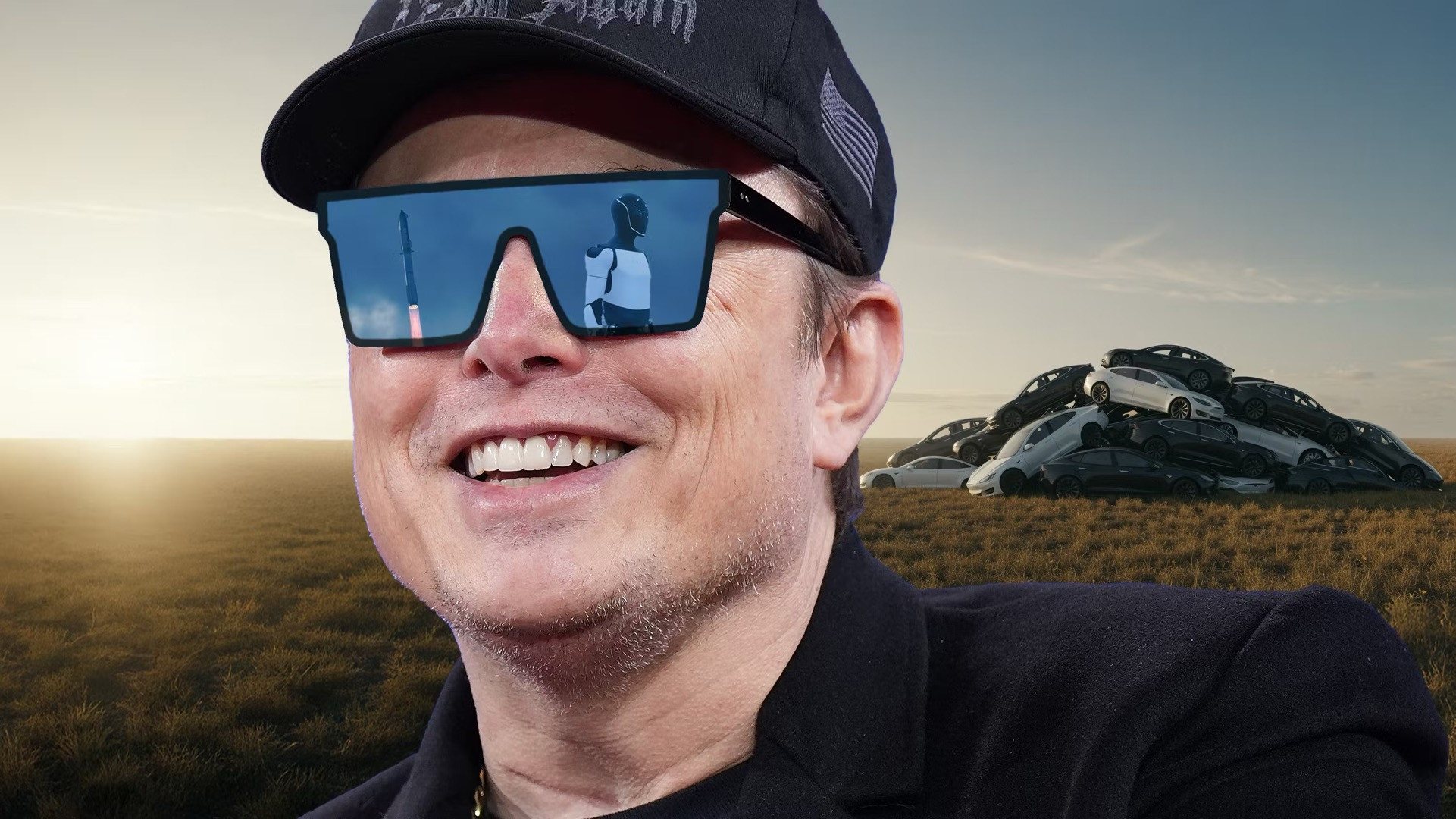
Musk's waning interest in electric vehicles began in 2023—coincidentally aligning with his Twitter acquisition. Musk drastically reduced the time he allocated to Tesla but simultaneously refused to introduce a co-CEO or similar role to share power. Coupled with his later enthusiasm for political matters, Tesla more frequently fell into a state of neglect.
Musk originally didn't have high hopes for Model Y, believing it wouldn't sell well. He wanted Model Y to be developed directly as a product born for autonomous driving scenarios. Only after his subordinates unanimously stated that FSD wasn't ready did he reluctantly agree to release Model Y to the market. However, Model Y achieved enormous sales, becoming the best-selling car model globally for two consecutive years. This made Tesla's team realize that Musk's judgment isn't always correct.
People familiar with Musk's thinking revealed that after experiencing Model 3's capacity shortage years, Musk developed a kind of post-traumatic stress disorder psychology. He began losing enthusiasm for small cars, finding such products uninteresting. This extended to all "non-unique" new car iterations, unless it was an outlier like the dystopian-style Cybertruck. Otherwise, it was difficult to attract his attention in reports.
At Tesla's peak in 2020, Musk fervently discussed building Gigafactories, car insurance, and range anxiety on conference calls, passionately saying, "Making cars affordable is very important. This will determine whether our mission can succeed." But four years later, the situation seems completely different. Again on a conference call, he said, "There's a path that will make Tesla's market value exceed all companies, but this path is not on the electric vehicle track. It's autonomous driving and humanoid robots. We will spare no effort in working towards that direction."