
Can the U.S. Economy Achieve a "Soft Landing" in the First Quarter?

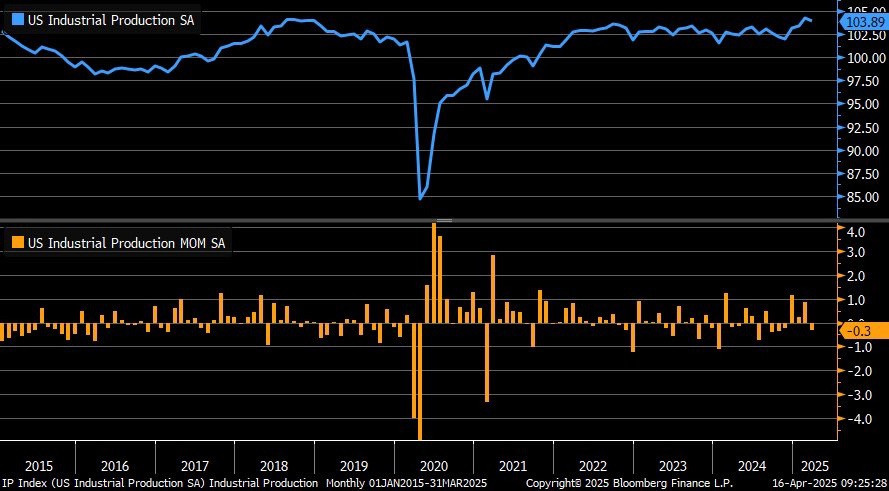
According to Bloomberg: U.S. industrial production in March was -0.3% month-on-month, below the expected -0.2% and the previous 0.8% (revised up from 0.7%), missing expectations.
The Atlanta Federal Reserve also released its estimate of U.S. GDP growth for the first quarter yesterday: only -2.2%, based on quarter-on-quarter (QoQ) calculation, annualized.
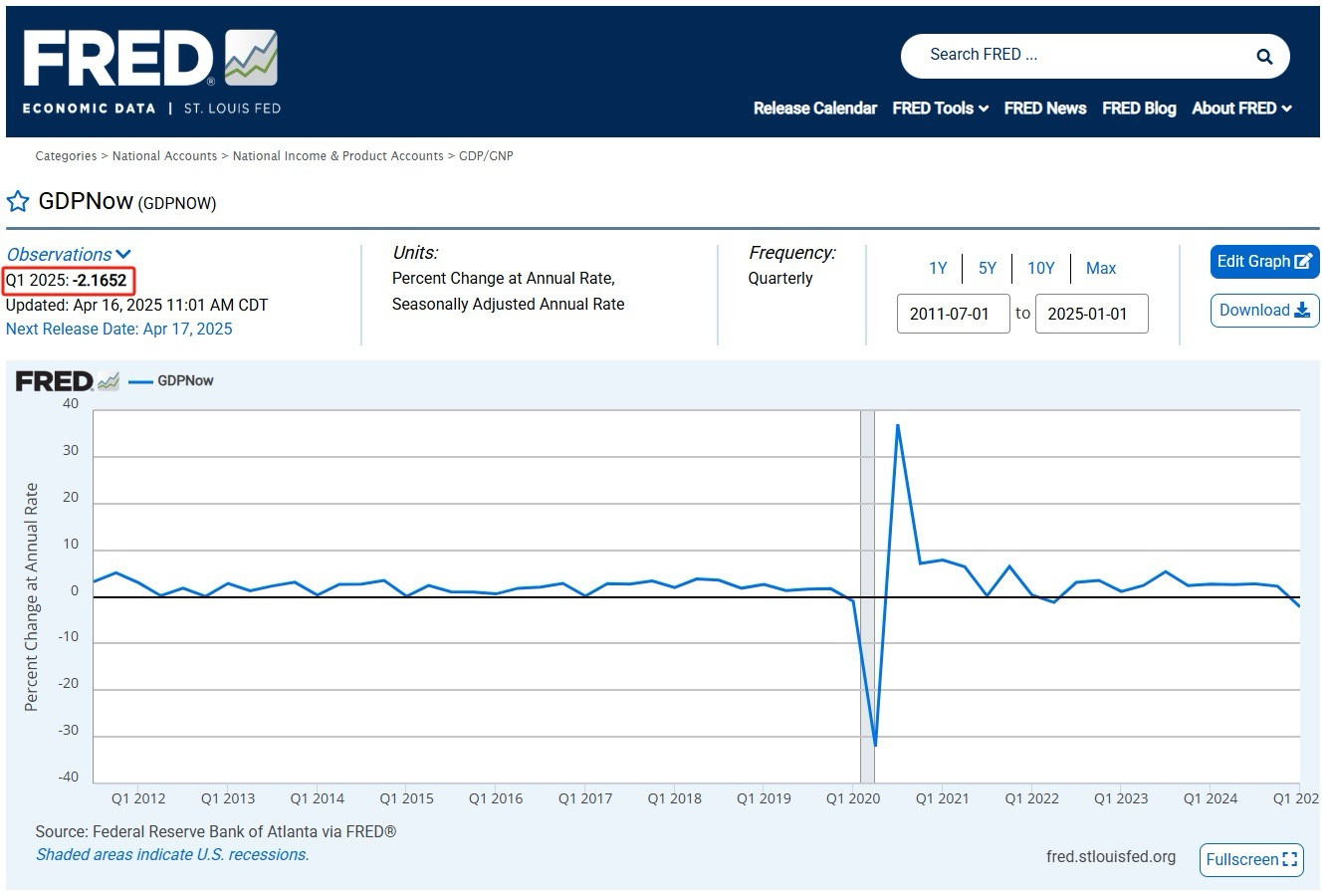
The Atlanta Fed's GDPNow model, an authoritative economic model in the U.S., now predicts a 2.2% decline in the U.S. economy for the first quarter, which is completely at odds with the "soft landing" expectations implied in U.S. stock market valuations.
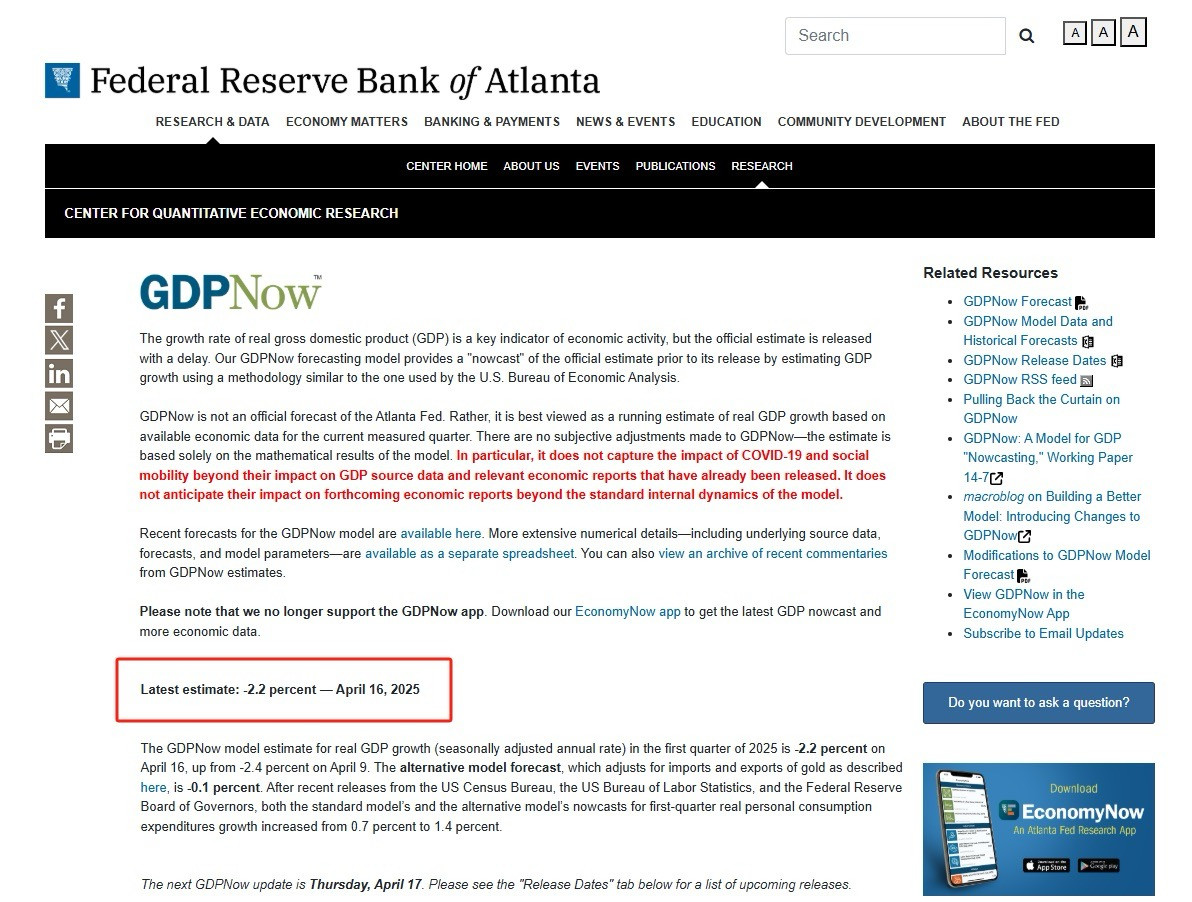
This model, based on high-frequency real economy data, has shown deep negative values for two consecutive periods, indicating that the U.S. economic contraction trend is not a short-term fluctuation. Four danger signals are particularly evident:
1. U.S. factory production is shrinking (-0.3%), freight volume is stalling (rail transport stagnant), and the service sector is cooling (ISM Services Index weakening);
2. Although wage and consumption data look fine, it's actually U.S. government fiscal stimulus and nominal data illusions maintaining the appearance of income and consumption on a contracting real economy base. In fact, weak U.S. final sales and private inventory adjustments reveal dangerous structural contradictions: This fits the characteristics of a stagflation environment - nominal indicators (wage taxes, CPI) remain strong, while real growth stagnates or turns negative. If the GDPNow signal persists, the current situation is closer to a "price stickiness + economic hard landing" combination, rather than the smooth transition expected by the U.S. market;
3. Moreover, it's important to note the model's sensitivity to data revisions at the beginning of the quarter and the risk of seasonal distortions, and U.S. nominal consumption may maintain resilience in the second quarter. However, weak global demand (European economic pressure, increased Japanese vulnerability) cannot provide effective support for the U.S.;
4. Based on the significant divergence between current U.S. market pricing and U.S. economic fundamentals, U.S. stock valuations can be considered to still be in the illusion of "economic improvement after Trump takes office." If Trump continues to go against the tide, and the U.S. market starts to reprice the real U.S. growth environment, the mismatch between U.S. stock risk premiums and economic momentum could trigger a violent adjustment.
This situation is very similar to the stagflation in the U.S. in the 1970s - things are expensive but the economy isn't growing. Despite apparent wage increases in the U.S., real purchasing power may be declining. The U.S. stock market could suddenly plummet (because current stock prices are seriously disconnected from economic reality). Don't be fooled by Trump's boasts about short-term data and false data; pay more attention to U.S. real economic activities (such as freight volume, factory orders).
In fact, when the U.S. data for next quarter comes out, we should have the results.