
AI Compute Soars Amid Trade War Turbulence

AI Demand Defies Tariffs
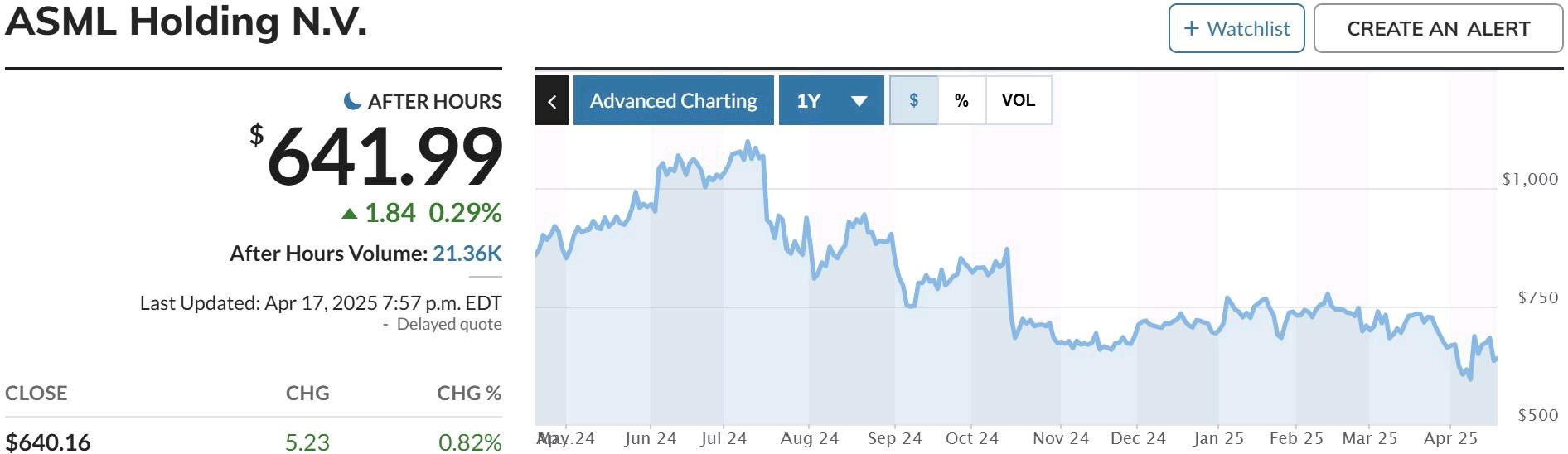
Despite looming U.S. tariffs, semiconductor equipment leader $ASML signaled in its latest earnings call that AI compute needs remain insatiable. Management forecasted consecutive growth years for 2025 and 2026, driven by a shift toward high end process AI chips and data center storage devices. Major customers confirmed that, even under heavy tariff pressure, they are accelerating investments in advanced lithography tools to support booming AI inference workloads. This “unlimited demand” narrative underscores how, in today’s markets, AI compute has assumed a leadership role—delivering the strongest alpha performance while broader equities falter.
Can High Tariffs Slow Down AI Compute?
Tariffs aimed at curbing Chinese chip production have unsettled many suppliers, yet $ASML ’s executives insisted that they’ve seen no meaningful chilling effect on customer orders. In fact, as AI inference moves from niche R&D clusters into mainstream enterprise and cloud deployments, the thirst for high precision tools has only intensified. From “edge to core,” chipmakers are doubling down on the most advanced nodes, and no amount of import duty seems capable of stifling that momentum.
TSMC’s Unwavering Growth Outlook
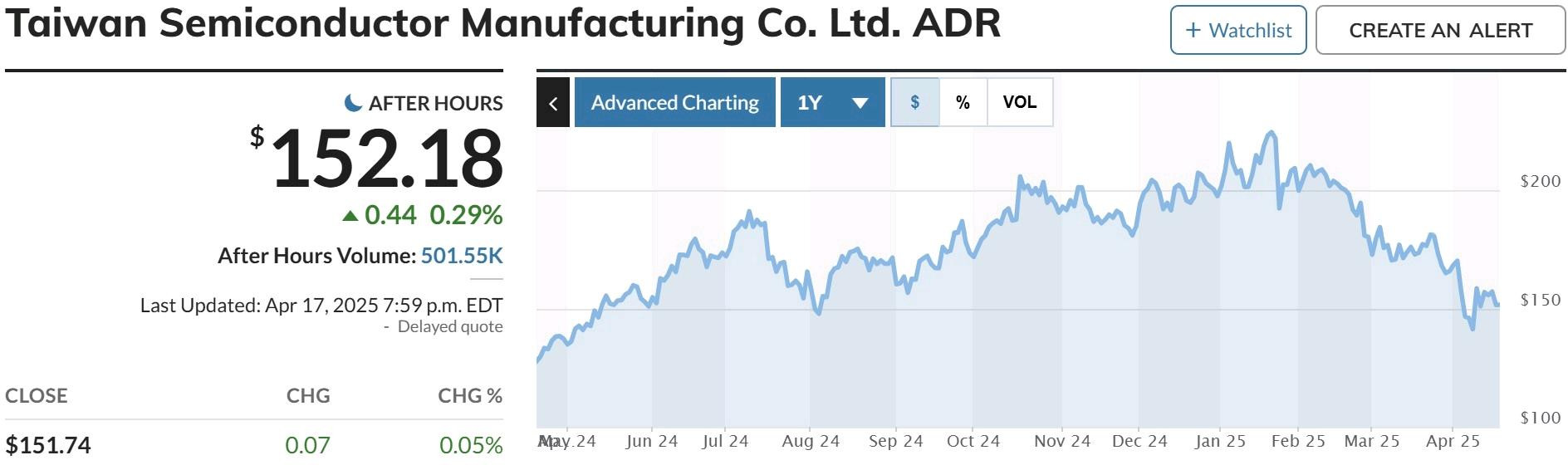
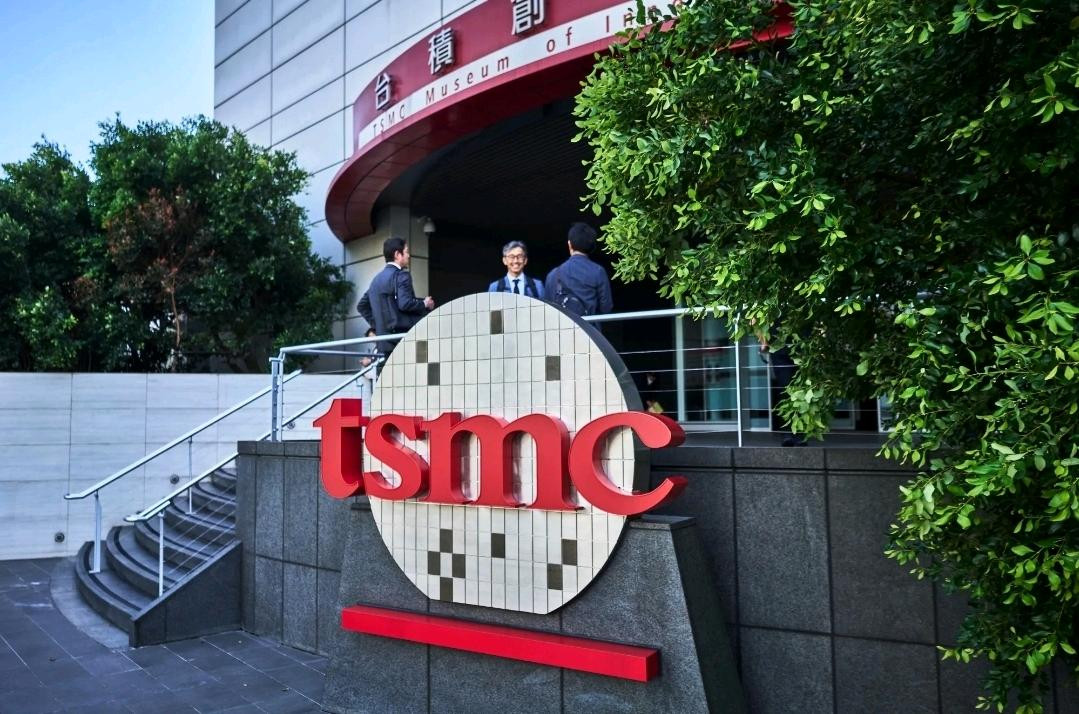
Taiwan Semiconductor Manufacturing Company ($TSM ) echoed $ASML ’s optimism when it reported a 60% jump in net profit in its latest quarter. Management reaffirmed a roughly 25% revenue increase for 2025—fully aligned with January’s forecast—anchored by robust AI related sales that are expected to double year over year. Even against a backdrop of global economic uncertainty, $TSM sees no sign of customers pulling back: U.S. tariffs have not altered demand patterns, and planned CoWoS advanced packaging capacity will double, much of it earmarked for Nvidia’s high performance GPUs.
Is Micron Riding the AI Infrastructure Wave?
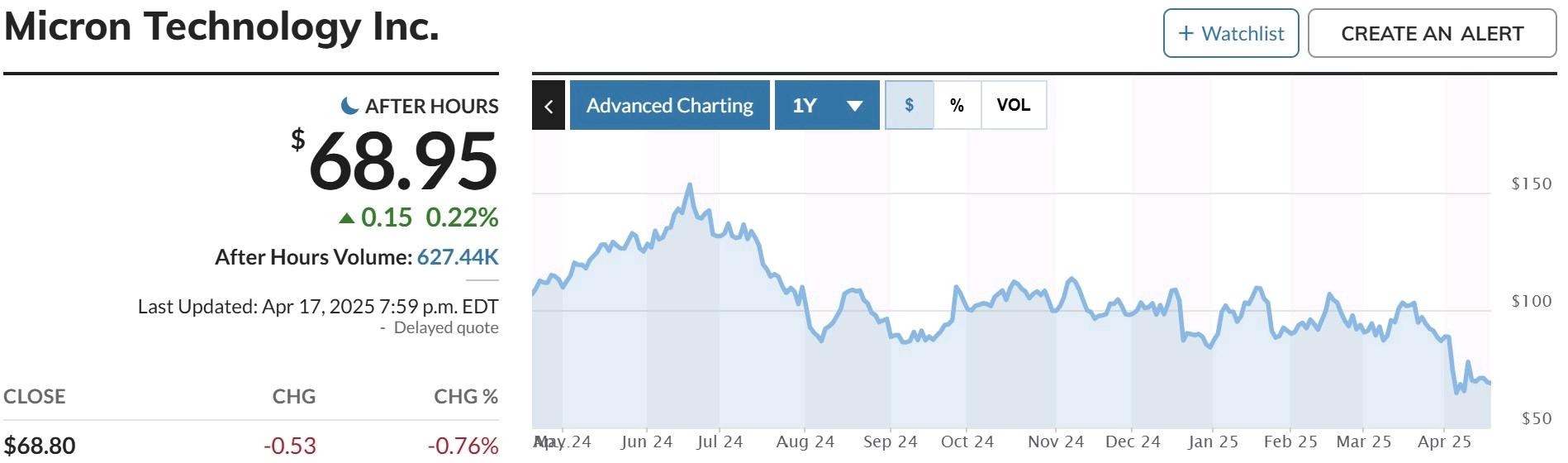
Micron Technology$MU , the largest U.S. maker of storage chips, also reported blistering growth in its data center segment, fueled by enterprise and government AI initiatives. Management highlighted extraordinary demand for HBM memory systems and high end SSDs that support both AI training and inference workloads. With global hyperscalers and public agencies investing heavily in AI infrastructure, Micron’s storage business is enjoying a sustained upswing—another testament to the sector’s tariff proof resilience.
Morgan Stanley Spots ‘Alpha’ in AI Compute Chain
Amid recent market volatility, Morgan Stanley’s latest research spotlighted AI/ML spending as the top IT budget priority for U.S. tech firms, with cybersecurity software a distant second. Their survey revealed that, although short term spending expectations have softened, confidence in AI’s long term growth drivers remains rock solid. MS analysts argue that “AI compute infrastructure” stocks—from $NVDA GPUs to Broadcom ASICs, HBM memory, and Ethernet switch chips—are poised for alpha outperformance, far exceeding the beta returns of broad indices.
Will Nvidia’s Momentum Continue?
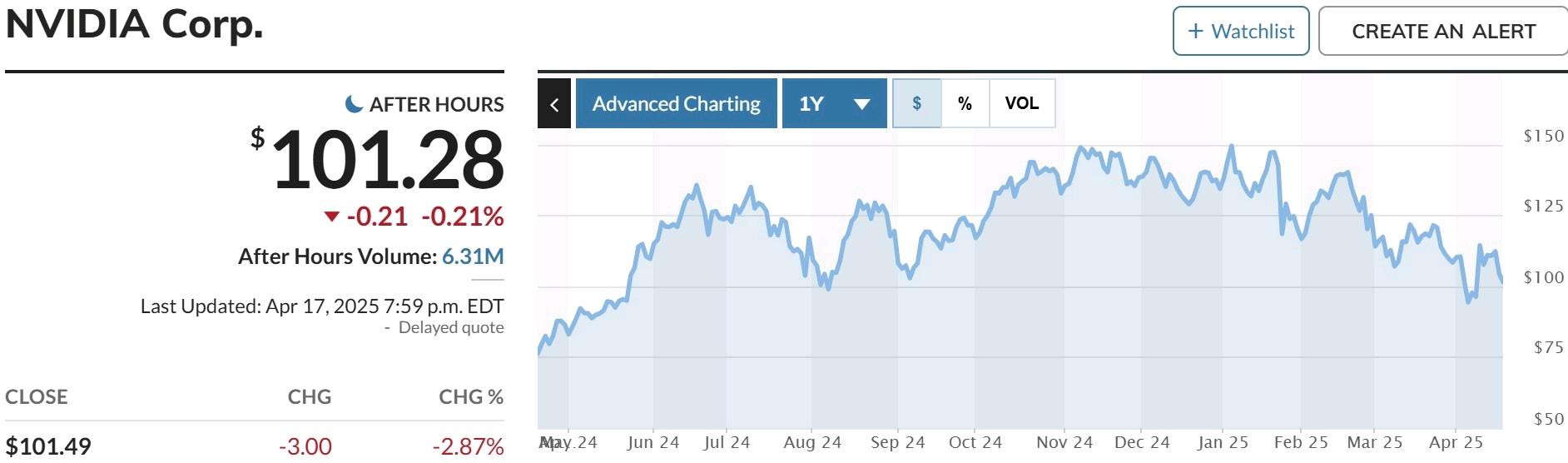
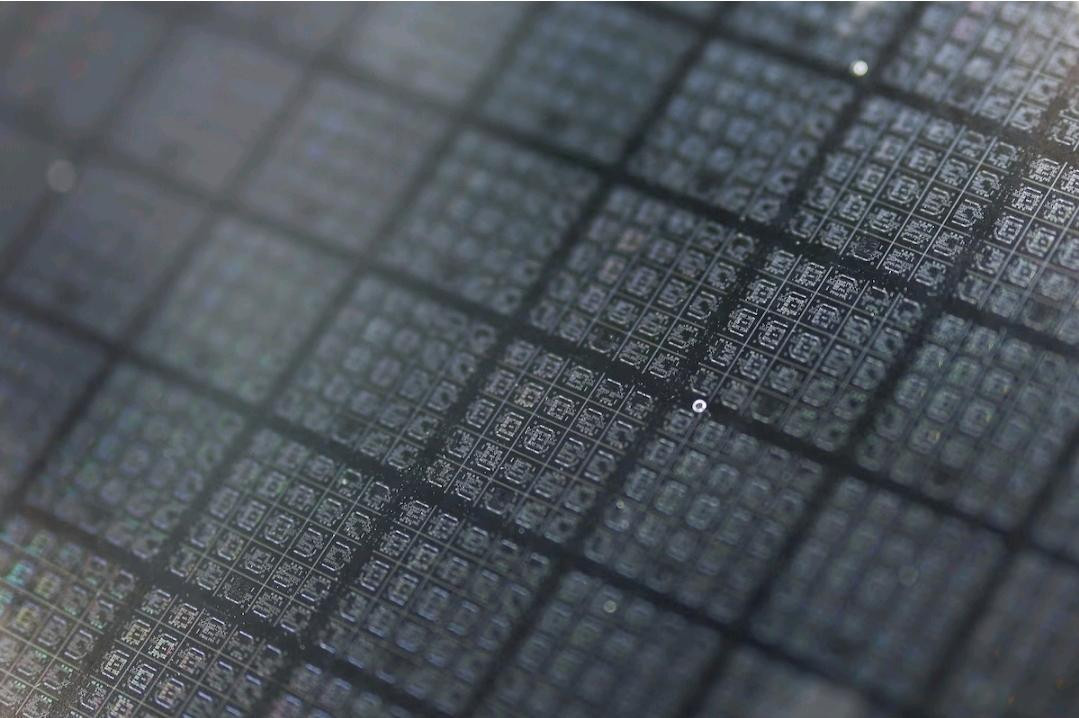
$NVDA ’s CEO Jensen Huang has repeatedly underscored the explosion in AI chip demand. He noted that leading inference models like DeepSeek R1 consume over 100× the compute power of traditional tasks, and that open source breakthroughs are spurring a global rush to deploy AI agents at scale. Wall Street remains bullish: despite minor tariff headwinds, analysts’ consensus target price for $NVDA sits near $170—implying over 60% upside—while even the most conservative forecasts outstrip current trading levels.

Global Chip Market Set to Expand
Data from the World Semiconductor Trade Statistics (WSTS) project an 11.2% increase in the global chip market for 2025, on top of a robust 2024 rebound. Growth will be driven primarily by AI training and inference logic chips (CPUs, GPUs, ASICs), expected to rise 17%, and enterprise storage chips (HBM, SSDs), forecast to climb over 13% following an 81% surge in 2023. Other segments—discrete devices, optoelectronics, sensors, MCUs, and analog—should see single digit gains. In short, the AI compute powerhouse is not only weathering geopolitical storms but powering the entire semiconductor upcycle.
In a time when broader tech valuations have wobbled under tariff threats, the AI compute ecosystem stands out as the market’s strongest alpha generator. From $ASML ’s lithography platforms to $TSM ’s packaging lines, $MU ’s memory arrays, and $NVDA ’s GPU leadership, every link in the chain is riding a wave of demand that tariffs simply cannot extinguish. As investors hunt for durable growth paths, “AI compute” emerges not just as a compelling theme, but as the dominant driver reshaping the semiconductor landscape for years to come.
This content is provided for informational or educational purposes only and does not constitute investment advice.