
Introduction to Private Credit: Expansion, Innovation, and Market Shifts

Go Private Market Guide
April 21, 2025
GoGPT Summarizes Articles
Private credit has evolved from a niche financing solution into a $1.6 trillion global market, reshaping how businesses and individuals access capital. Unlike traditional bank loans, private credit offers tailored solutions, often filling gaps left by regulated lenders. This article explores the sector’s rapid expansion into new markets, its symbiotic yet contentious relationship with banks, and the innovative—and sometimes controversial—strategies driving its growth.
Private Credit's Market Invasion: Beyond Middle-Market Lending
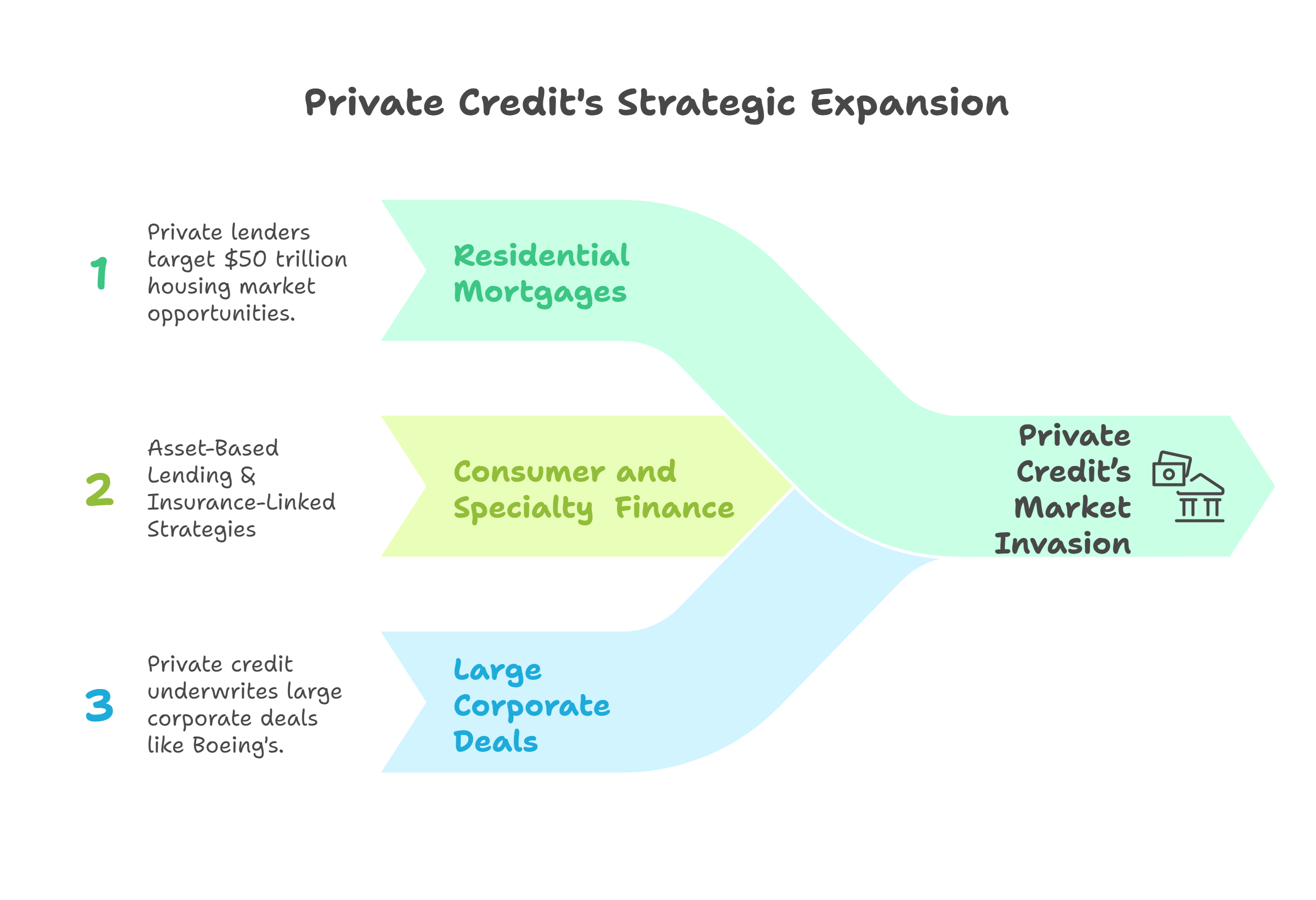
Originally focused on middle-market corporate loans, private credit firms now target sectors once dominated by banks:
Residential Mortgages
With banks retreating post-2023 regional banking crises, private lenders are seizing opportunities in the $50 trillion housing market. Products like home equity lines of credit (HELOCs) surged to $400 billion in Q4 2024, as firms like TPG Angelo Gordon eye a $2 trillion opportunity.
Consumer and Specialty Finance
- Asset-Based Lending: Private credit now funds everything from aircraft leases to supply chains. Brookfield’s stake in Angel Oak ($18 billion AUM) targets non-traditional mortgages.
- Insurance-Linked Strategies: High-net-worth investors use private placement life insurance (PPLI) to invest in private credit tax-efficiently, avoiding 40.8% income taxes.
Large Corporate Deals
Private credit funds now underwrite jumbo transactions, such as Apollo and Citigroup’s $3.5 billion loan for Boeing’s divestiture.
New Developments (2025 and Beyond)
Looking ahead, Moody’s projects that private credit assets under management (AUM) could grow to $3 trillion by 2028, reflecting continued expansion across direct lending, special situations, and specialty finance strategies. This expected growth underscores the asset class's transition from niche to mainstream and is driven by both investor demand and structural market shifts.
The Bank-Private Credit Tango: Frenemies with Benefits
Banks and private credit firms engage in a complex dance:
Competition
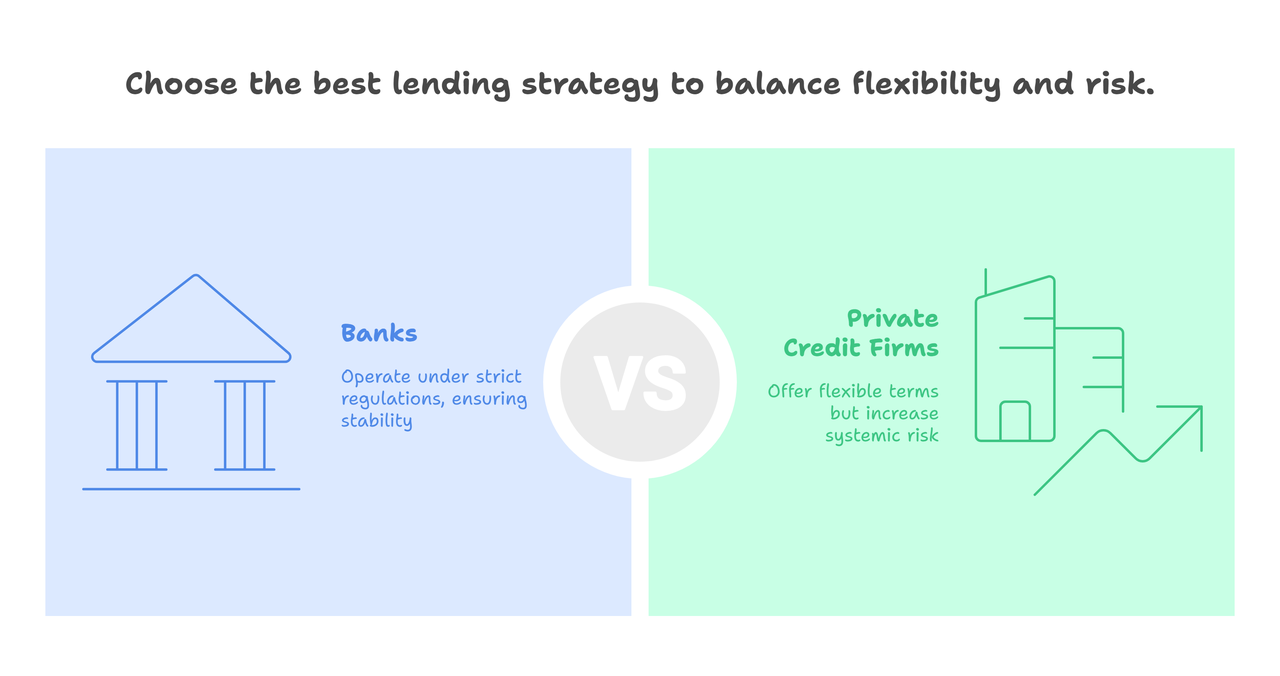
- Private lenders like Apollo and Blackstone have siphoned market share from banks, offering faster, more flexible terms.
- Banks face stricter regulations, while private credit operates with lighter oversight—though Moody’s warns this increases systemic risks.
Collaboration
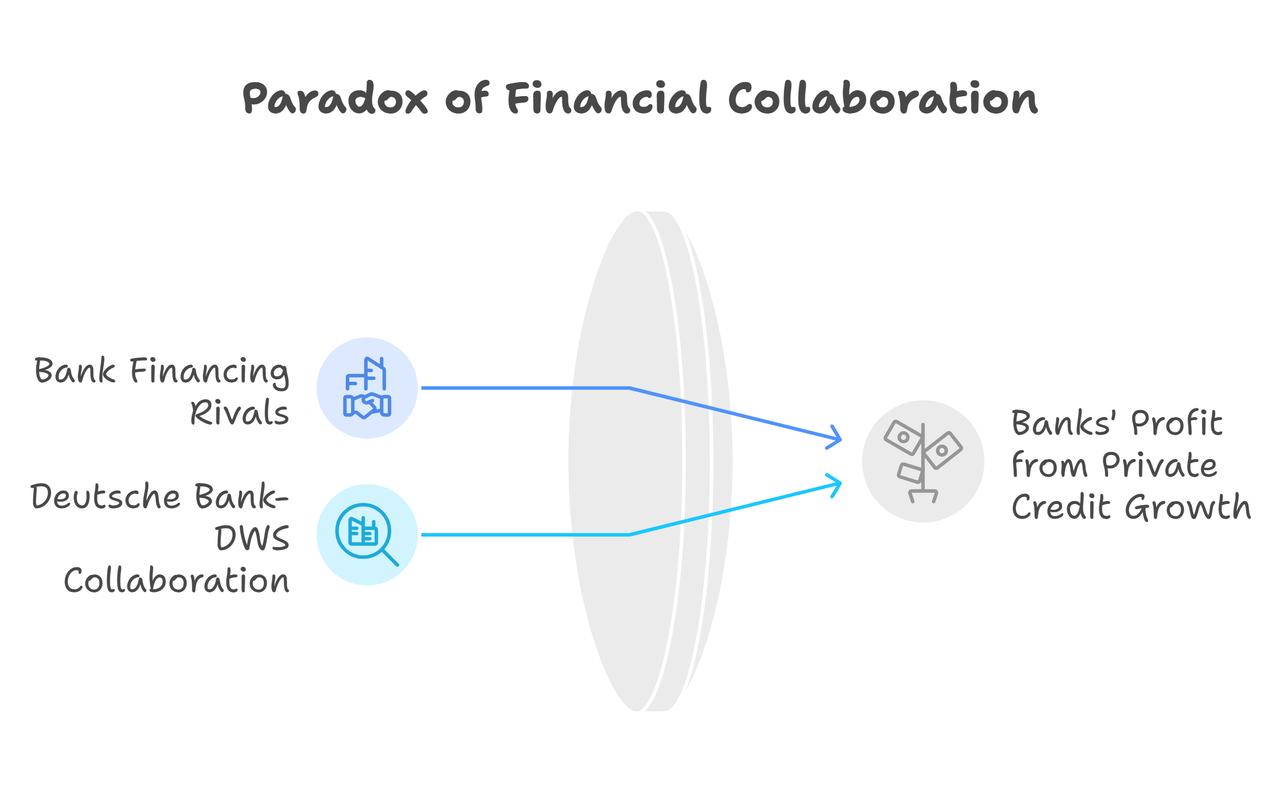
- Banks now finance their rivals: Loans to non-bank lenders (e.g., hedge funds, PE firms) exceed $1 trillion.
- Deutsche Bank grants its asset manager DWS "first look" at private credit deals, blending origination with distribution.
Irony Alert: Banks profit from private credit’s growth even as it erodes their core business.
2025 Outlook
As of early 2025, geopolitical shifts, including newly introduced U.S. tariffs, are already impacting the lending landscape—particularly in trade-sensitive sectors such as autos and retail. This macro uncertainty is prompting private equity sponsors to slow capital deployment, leading to a -24% quarter-over-quarter drop in sponsor-backed direct loan issuance in Q1 2025. However, bank retrenchment amid this environment presents an opening for alternative lenders to further encroach on traditional banking territory.
The Funding Engine: How Private Credit Powers Its Growth
Private credit’s scalability relies on innovative funding structures:
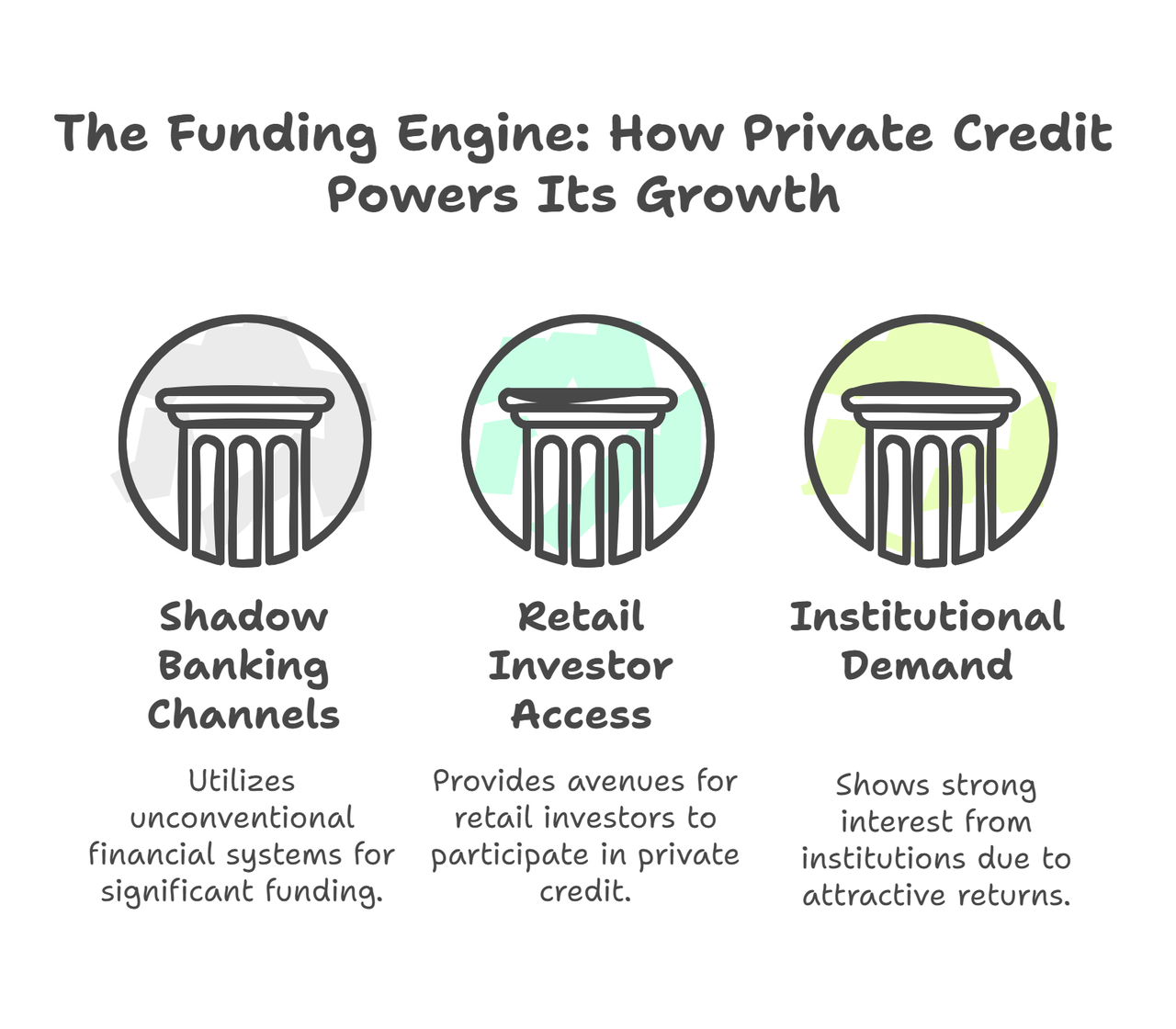
Shadow Banking Channels
- Federal Home Loan Banks (FHLBs): Apollo borrowed $15 billion from FHLB Des Moines, exploiting Depression-era housing subsidies. Critics argue this distorts the mission of FHLBs, which now lend more to insurers ($160 billion) than banks.
- Money Market Funds (MMFs): 11% of MMF assets are parked in FHLB debt, creating a liquidity loop.
Retail Investor Access
- BDCs: Publicly traded BDCs (e.g., Ares Capital’s $14B fund) offer 10% yields but charge high fees .
- Insurance Wrappers: PPLI and annuities let wealthy investors bypass taxes, though Congress scrutinizes these as "tax shelters".
Institutional Demand
- Private credit’s annualized returns outpace high yield bonds with lower volatility.
- Allocators like insurers and pensions now dedicate 20%+ of portfolios to alternatives .
Update (2025)
While funding innovation continues, investors and allocators in 2025 are increasingly shifting their preference toward upper-middle-market and large-cap sponsor-backed deals. These segments are perceived as more resilient in the face of economic headwinds such as interest rate volatility and political uncertainty. Additionally, floating-rate structures may remain attractive if rates stay elevated, although potential rate cuts by the Federal Reserve could temper return expectations going forward.
Risks and Regulatory Shadows
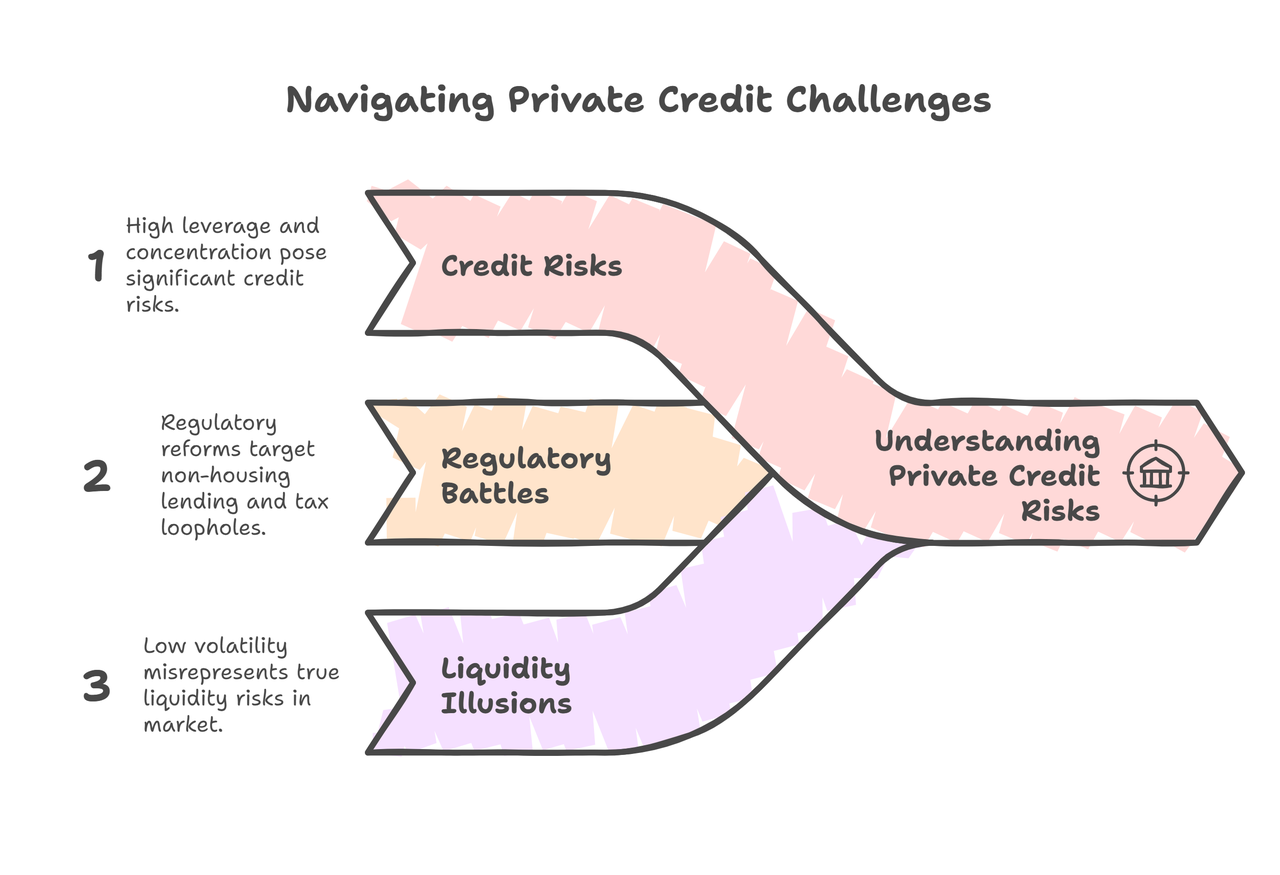
Credit Risks
- Leverage Creep: Private credit firms "crank up leverage" to win deals, per Moody’s .
- Concentration: Ellington Management warns non-bank mortgage originators lack capital buffers.
Regulatory Battles
- FHLB Reform: Proposals aim to curb lending to non-housing entities (e.g., Apollo).
- Tax Loopholes: Senate Democrats target PPLI strategies, calling them a "$40 billion tax shelter".
Liquidity Illusions
While private credit touts "low volatility," this stems from infrequent mark-to-market pricing—not lower intrinsic risk.
2025 Risk Landscape
The operating environment in 2025 is marked by heightened dispersion in borrower performance, exacerbated by macro headwinds. Companies in tariff-sensitive sectors are experiencing pressure on profit margins and debt servicing, while domestic and non-cyclical businesses appear more insulated. Investors are also contending with compressed spreads—500bps in early 2025 compared to 525bps at the end of 2024—and are advised to exercise greater selectivity. Financial stress is expected to increase particularly among lower-middle-market borrowers with weaker balance sheets.
The Future: More Scale, More Scrutiny
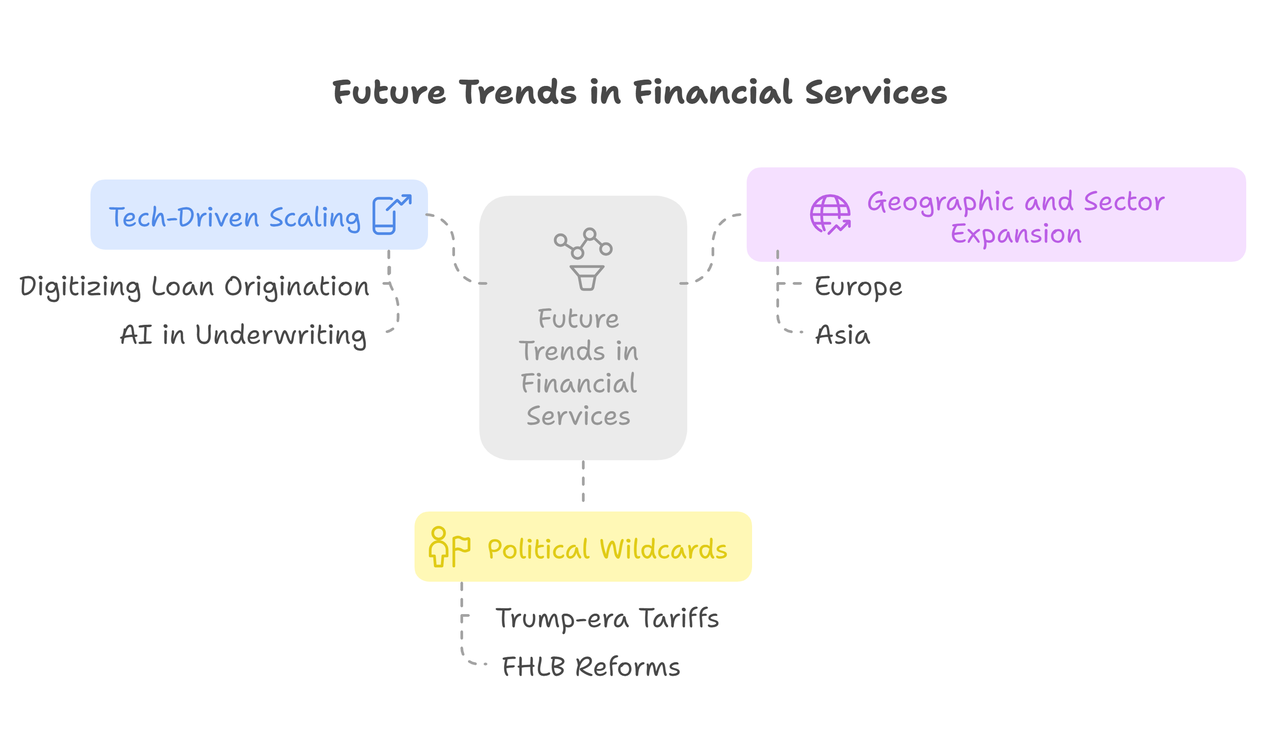
Tech-Driven Scaling
- Platforms like Figure Technologies partner with lenders (e.g.,Sixth Street) to digitize loan origination.
- AI tools analyze alternative data for underwriting, though adoption remains early-stage.
Geographic and Sector Expansion
- Europe: Creditor-on-creditor fights (e.g., Hunkemöller) mirror aggressive U.S. tactics.
- Asia: BlackRock’s APAC private credit head joined Apollo to grow hybrid strategies.
Political Wildcards
- Trump-era tariffs hammered PE stocks (KKR fell 15% in a day), while potential FHLB reforms could disrupt funding.
Forward View (2025 and Beyond)
As the private credit universe becomes more sophisticated, new structures—such as evergreen vehicles and credit ETFs—are introducing greater liquidity and access. However, this could compress the illiquidity premium that has historically boosted returns in this asset class. The next phase of growth will likely depend not just on capital flows but on how managers navigate a more stressed and politicized macro environment. Many allocators now emphasize manager quality, sectoral selectivity, and robust underwriting practices to manage the growing heterogeneity and potential credit stress as the market matures.
Conclusion: A New Financial Ecosystem
Private credit is no longer alternative—it’s central to global finance. From mortgages to megadeals, its growth reflects structural shifts: banks’ retreat, investor hunger for yield, and regulatory arbitrage. Yet risks loom, from leverage to political backlash. For borrowers and investors alike, understanding this ecosystem—its players, conflicts, and innovations—is key to navigating the future of finance.