
Boeing's US Earnings Preview: Will Tariffs Be the Last Straw That Breaks Boeing?

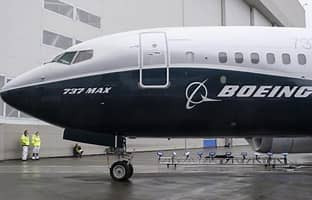
Boeing will release its first-quarter financial results for the fiscal year 2025 on April 23rd (Eastern Time in the United States).
According to previous financial data, Boeing's total revenue for the whole year of 2024 was $66.518 billion, a year-on-year decrease of 14.5%. The net profit attributable to the parent company was -$11.817 billion, with a drop as high as 431.82%.
This data shows that after being hit by the pandemic and related supply chain issues, Boeing still hasn't fully recovered to the level before the pandemic.
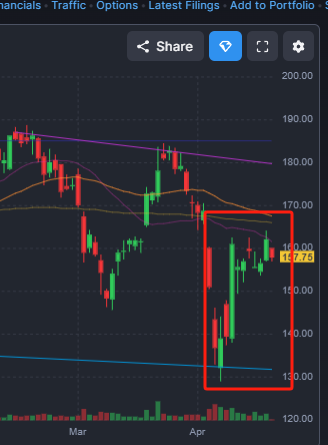
Despite this, the market's anticipation for this quarter's earnings report hasn't diminished. Instead, it has driven the stock price up. This is mainly because investors are optimistic about Boeing's potential for recovery in the future.
However, the recent tariff policies of Trump have also caused Boeing's stock price to experience wild fluctuations. Some analysts even believe that tariffs may be the last straw that brings down Boeing.
What should we focus on in this earnings report?
Looking back at the whole year of 2024, Boeing's performance figures are not optimistic.
The annual revenue was $66.518 billion, a year-on-year decrease of 14.49% compared with $77.794 billion in 2023. The net profit suffered a significant loss, reaching -$11.817 billion. Compared with the -$2.222 billion in 2023, the loss margin expanded by 431.82%, marking the largest loss since 2020.
Market analysts expect that Boeing's earnings per share for the first quarter will be -$1.25 and the revenue will be $19.49 billion.
Due to the continued impact of issues such as the labor strike in 2024, safety reviews, and cost overruns in defense contracts on the company's performance, and the fact that it will take some time for production to recover, the profit expectation remains negative.
And the seven-week strike at the two main assembly plants in the Seattle area in 2024 had a huge impact on Boeing's production operations.
The strike led to the aircraft delivery volume in the fourth quarter being only one-third of that in the same period in 2023, severely affecting the company's production and delivery schedule. Although the strike has ended, it will take some time for production to resume, and issues like supply chain coordination may also have a lagging impact on the first-quarter performance.
In addition to the actual growth of its revenue this time, we also need to focus on its aircraft delivery data. If the delivery volume can exceed expectations, it means that the company's production recovery is going well, which will have a positive impact on future performance growth.
In addition, we also need to pay attention to whether the management will discuss the impact of these tariffs on future performance, which is very important, as well as the free cash flow. Don't forget that Boeing is still facing a large amount of debt repayment.
China Returns a Boeing Aircraft
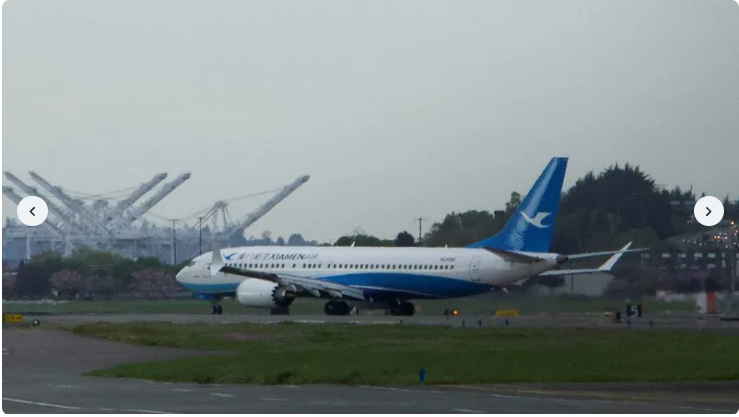
According to the latest news, on the 19th of Eastern Standard Time in the United States, a Boeing 737 Max aircraft that was originally about to be delivered to a Chinese airline was "returned".
Eyewitnesses at the scene told reporter that a Boeing 737 Max aircraft painted in Xiamen Airlines' livery landed at Boeing's production center in Seattle at around 6 p.m. on the 19th of Eastern Standard Time.
It is reported that at least several new 737 MAX aircraft were previously parked at the Zhoushan factory in Zhejiang. Boeing installed the interior, painted the aircraft there, and then delivered them to Chinese customers. The 737 Max aircraft returned to Seattle this time was one of these aircraft.
It is still unclear which party made the decision to cancel the delivery. Previously, on the 10th local time, US President Trump announced that the tariffs on Chinese imported products would be increased to 145%.
China announced an adjustment to the additional tariff rate on imported goods originating from the United States, increasing it from 84% to 125%.
The aviation consulting firm IBA said that currently, the market price of a brand-new Boeing 737 Max aircraft is approximately $55 million. According to China's 125% tariff rate on US products, the price of the aircraft has far exceeded the range that airlines can accept.
China has always been an important export market for Boeing. At its peak in 2018, the delivery volume in the Chinese market accounted for nearly a quarter of Boeing's total delivery volume.
However, due to safety issues and tariffs, the market share has decreased, but it can still reach about 20%. If China stops accepting Boeing aircraft, Boeing will suffer a loss of $1.2 billion in the short term.
In addition, media reports indicate that as part of the countermeasures against US tariffs, China has required domestic airlines to stop accepting aircraft from Boeing and suspend the purchase of related equipment and components.
Boeing relies heavily on the international supply chain. An aircraft integrates 3 to 5 million parts and components and involves thousands of suppliers around the world. Now Boeing not only faces the pressure of rising raw material costs but also may encounter retaliatory tariffs from other countries.
In 2023, the global aviation industry recovered, and both Boeing and Airbus received a large number of orders. As of February 2, 2025, Boeing still had 6,197 undelivered orders. Even if calculated based on the delivery volume in 2018 (806 aircraft), it would still take more than 7 years to complete all the deliveries.
AerCap, the world's largest aircraft leasing company, said that if the US tariff measures continue, the price of a Boeing 787 will increase by $40 million. Under the new tariff pattern, Boeing's European competitor Airbus may gain more advantages, leading to a shrinkage of Boeing's market share.
This will be another major setback for Boeing in one of its largest global markets. Boeing has just slowly recovered from a series of safety accidents and strike crises.
The aircraft door detachment incident that began in early 2024 exposed Boeing's flaws, triggering a strike that lasted for several months and strict reviews by regulatory authorities.
Trump's tariff policy may drag Boeing back into the quagmire and become the last straw that breaks the camel's back.
Is Boeing Still a Buy?
Although there is an expectation of recovery in the global aviation industry now, as I said before, there are simply too many uncertainties in the Trump administration.These tariffs have already had an impact on Boeing at present, and no one can say for sure what will happen next.
Will they be cancelled? Will China and the United States completely decouple? I don't think anyone can guess Trump's thoughts.
We may need to look at Boeing's own assessment of the future. But generally speaking, I don't really like this kind of traditional heavy-asset company that is heavily in debt.
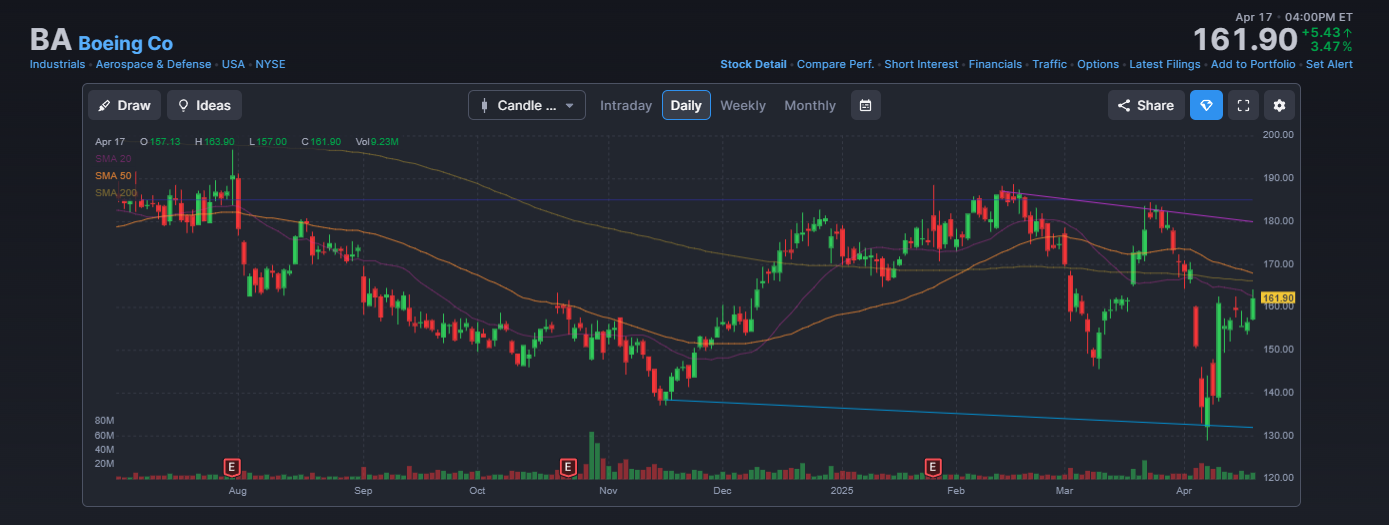
In my opinion, the current stock price is not very attractive either. So, given the continuous changes in external policies, investors still need to place their bets cautiously.$BA