
Public Opinion Widely Believes Trump Has Lost the Tariff War

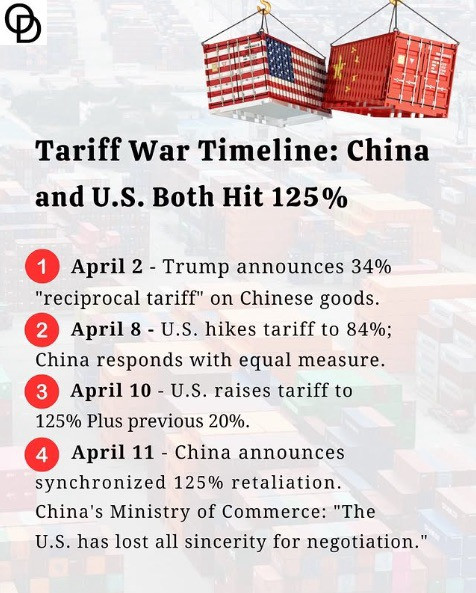
Current global public opinion, including within the United States itself, generally believes that Trump has essentially lost the tariff war. The concept of winning or losing might be a rather zero-sum game perspective, as trade is not actually a zero-sum game. When done well, it can be a win-win situation; when mishandled, both sides lose. In this context, "losing" mainly refers to the tariff war failing to achieve its intended effects, with the initiator potentially being the biggest loser among all parties involved.
Trump's understanding of tariffs is primarily influenced by the era of President McKinley in U.S. history. This period followed the end of the American Civil War, marked by significant domestic manufacturing development and the integration of the South into the unified federal market.
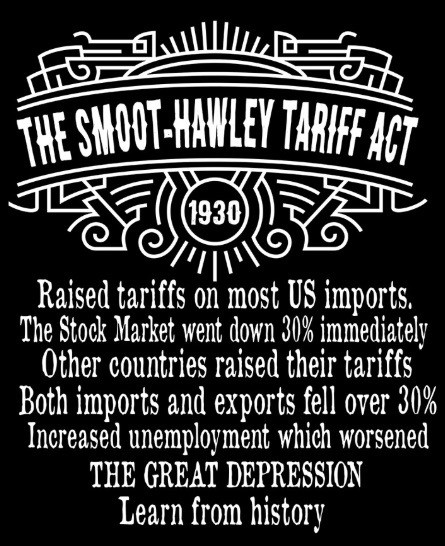
The key difference lies in the international trade system of that time, which relied mainly on gold settlements. This was similar to the era of the Smoot-Hawley Tariff Act (those interested in this area can explore the financial history of gold and silver). However, it differs from the Bretton Woods system where national currencies were pegged to the dollar, which in turn was pegged to gold, and even more so from the post-Bretton Woods system (or Bretton Woods 2.0) based on U.S. government credit.
The McKinley era also saw the U.S. strengthening its military-industrial complex and military power through domestic manufacturing, leading to external expansion. This included control over Cuba through the Spanish-American War and the annexation of Hawaii, Puerto Rico, Guam, and the Philippines. Although McKinley was assassinated, his successor, Theodore Roosevelt, largely continued and expanded his imperialist policies.
Under the gold standard monetary system, without large-scale gold discoveries and development (like the old and new gold rushes in San Francisco), the purchasing power backed by limited gold couldn't expand significantly. This led to industrial nations competing for manufacturing survival rights, ultimately evolving into world wars aimed at destroying each other's manufacturing capabilities.
Today's situation is different. It's based on the expansion of U.S. Treasury issuance, with the U.S. exporting dollar purchasing power to global manufacturing countries through American consumer purchasing power and large trade deficits, supporting global manufacturing output. However, the speed and total amount of U.S. debt expansion are becoming strained due to the shrinking proportion of the U.S. economy in the global economy and its declining growth rate.
Therefore, this system itself may need major reforms, reducing the role of the dollar and the U.S. as the engine of the global economy. Other developed economies, like the Eurozone, might need to partially replace the current functions of the dollar and U.S. debt.
When Trump's tariff war began, it was clear that the supply of dollar credit, at least in the context of stalled U.S.-China trade, was significantly contracted. Globally, this manifested as a forceful temporary removal of some U.S. demand. Generally, there are two reactions to this: either the corresponding manufacturing capacity reduces production to match the shrinking U.S. demand, or other non-dollar credits expand accordingly, such as the European Central Bank's recent interest rate cut to increase purchasing power within the Eurozone and globally.
Germany's breach of constitutional constraints on government deficits to increase Euro-denominated German sovereign debt credit is also a way to partially replace dollar credit. How this increased German Euro credit will support German, EU, or U.S. manufacturing, and how this pie will be divided, is another major game to play. Similarly, the Bank of Japan's decision not to raise interest rates this year follows the same logic.
At the individual level, for instance, a Chinese factory primarily manufacturing for the U.S. market faces the choice of either reducing capacity or shifting to accept non-dollar credit payments. This could mean turning to the European market and accepting Euros, or to other Southern countries' markets and accepting RMB, or accepting RMB through Chinese government subsidies for domestic consumer purchases.
For those rigidly insisting on receiving dollars, there are still solutions. For example, the low-interest, long-term dollar-denominated bonds issued by the Chinese government in Saudi Arabia and the UAE serve as an alternative. Surely, dollars provided by the government aren't less attractive than those from overseas businesses, right?
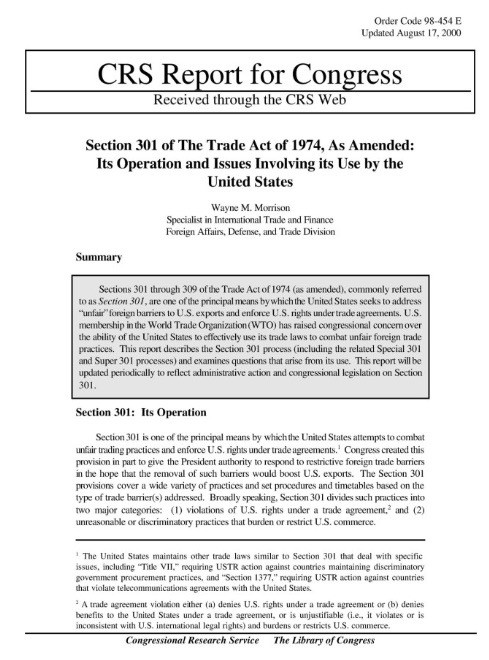
For many East Asian countries, they have all been disciplined by the U.S. Super 301 provision in foreign trade before, such as quotas on clothing. Invariably, the excess products already manufactured were converted from export to domestic sales.
Recently, we've seen that even countries like Vietnam, which primarily focus on the U.S. export market, need three economic drivers: China, Japan, and Europe. None of these can be absent. Rather than allowing investments from these countries to flow to the United States, it might be better to redirect them towards these markets. At the very least, this approach promotes mutual benefit and solidarity, potentially reducing the shock therapy-like impact of Trump's tariff war.
Currently, the central battlefield of Trump's tariff war is with China, while Japan and Europe are two key battlegrounds. It appears that Trump is becoming increasingly anxious, personally intervening in U.S.-Japan negotiations, though no results have been achieved so far. Similarly, negotiations between the U.S. and Europe have reached an impasse, with Italian Prime Minister Meloni stepping in to mediate, though this is unlikely to yield short-term results.
The longer this tariff war drags on, the greater the pressure on Trump becomes - even surpassing that of Putin, who has been engaged in a hot war for several years.