Who Needs Dollars?

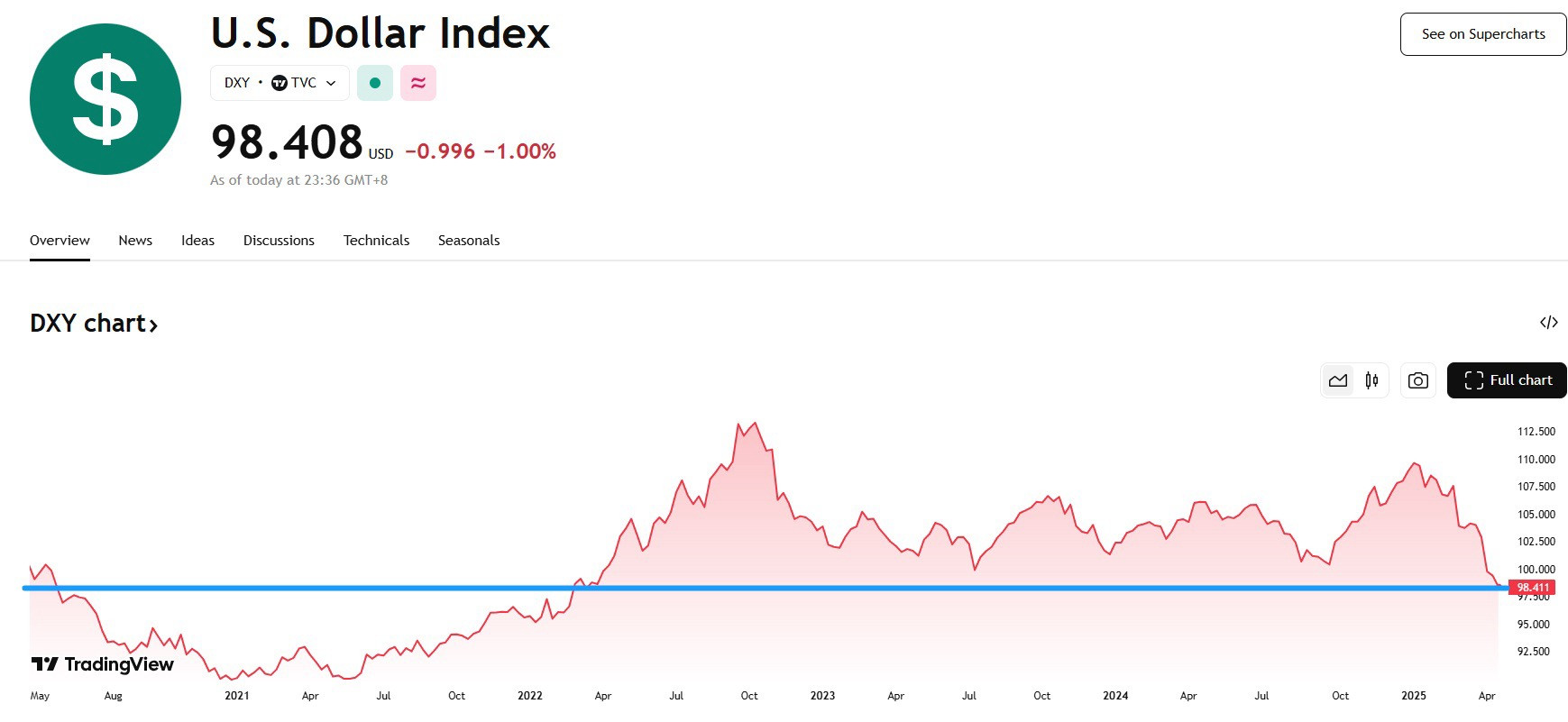
Some asked me to talk about the US dollar. After all, the US dollar index has been plummeting during this period. Today, the US dollar index DXY fell below the 98 mark for the first time since March 2022.
I'll briefly talk about some personal views.
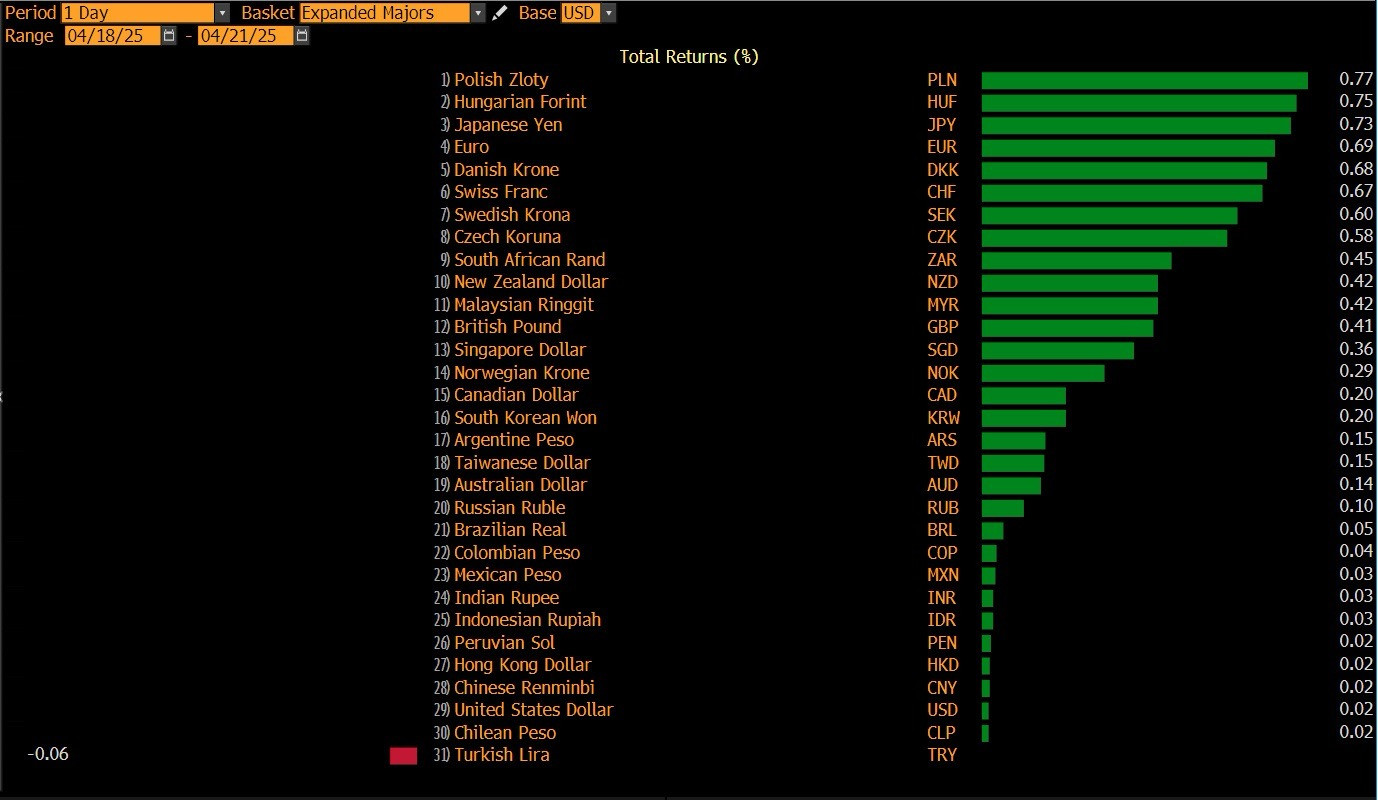
Bloomberg data shows: At the beginning of this week, the US dollar fell against all major currencies globally, except for the Turkish lira.
A little earlier, DHL announced: It will temporarily suspend shipping global express packages worth over $800 to US consumers. In a sense, this can be seen as "preventing dollars from flowing out through personal imports, increasing capital friction during times of tight dollar liquidity."
The Trump administration believes:
On one hand, if exchange rates fully offset tariffs, the dollar price of imported goods won't rise, avoiding inflation. However, trade volumes won't change much either, as imported goods won't lose competitiveness against domestic goods. The US government can collect tariff revenue. US consumers won't be affected, but exporting countries' real wealth and purchasing power will decline. Exporting countries "bear" the tariff burden, and US exporters may face some competitiveness challenges, but these can be offset through domestic deregulation policies.
On the other hand, if exchange rates don't offset tariffs, imported goods prices will rise, potentially causing inflation. But trade flows will adjust as imported goods become more expensive, leading consumers to shift towards domestic goods or products from other countries, achieving trade rebalancing. US consumers will face higher prices, bearing the tariff burden. This will promote supply chain restructuring, giving US domestic producers a competitive advantage.
In essence: Although absurd, the US will ultimately win.
In reality, China dominates global supply chains not only in labor but also in industrial robots, automation, upstream and downstream supply chain integration, and critical resources like rare earth minerals.
Global demand for the dollar, driven by debt, trade, and safe-haven capital flows, continues to support the dollar during US deindustrialization. The strong dollar resulting from this global capital attraction reduces the competitiveness of US exports. In this equation, the strong dollar is actually anchored to the purchasing power of Chinese products. When the dollar can no longer be settled in the world's largest industrial nation, a dollar that can't buy Chinese goods is no longer a safe asset, but rather a risky one full of volatility and uncertainty.
So the question arises: If the US doesn't need Chinese goods, who in the world market still needs the dollar?