
Gold Hits $3400: Is the Dollar Losing Its Grip?

Gold has surged past $3400 per ounce, while the U.S. dollar has plunged to its lowest level since 2023. Investors are growing increasingly uneasy about the long-term stability of the dollar, especially in the face of Trump’s aggressive tariff policies and mounting fiscal risks. As global uncertainty deepens, gold has become one of the best-performing assets this year, with a year-to-date gain of over 28%—surpassing its entire 2024 performance.
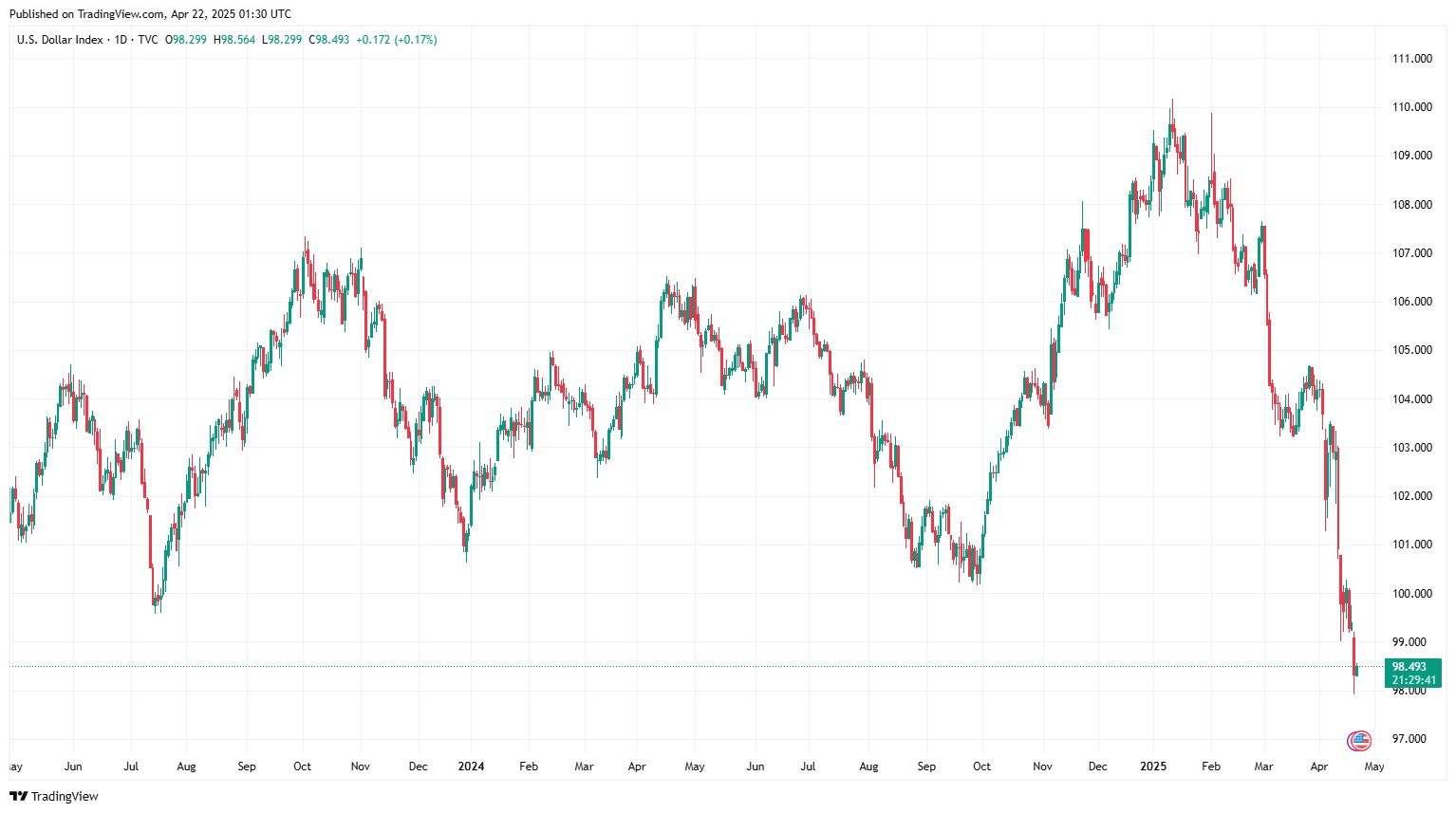
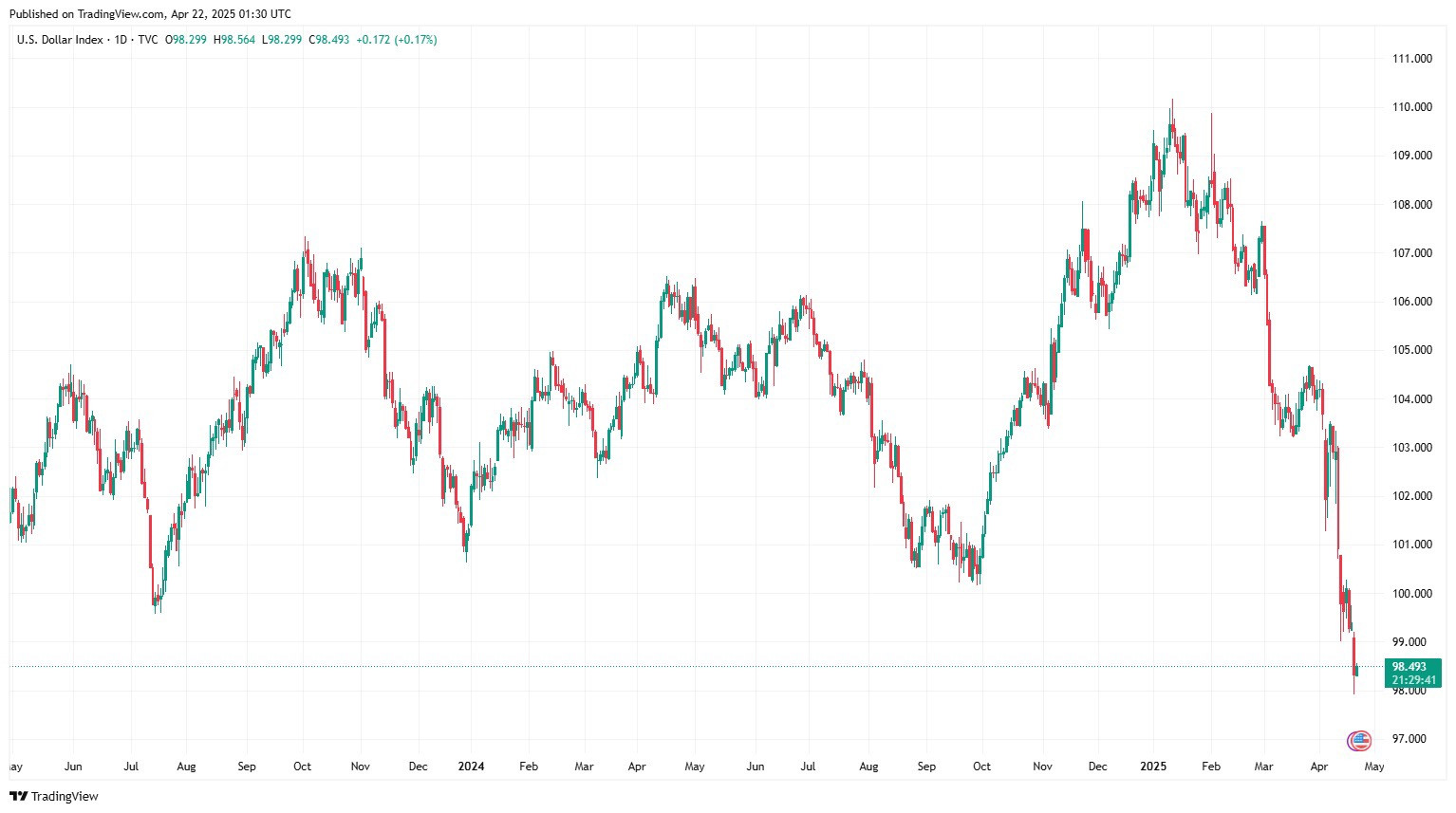
Looking at gold’s 50-year price history, one theme stands out: gold thrives as a hedge against monetary instability. Regardless of short-term drivers, the decline in fiat money credibility has consistently supported long-term gold appreciation. In today’s dollar-centric system, both U.S. political parties continue to pursue unchecked fiscal expansion. That makes fiat currencies increasingly vulnerable—and gold increasingly valuable.
The so-called Triffin Dilemma, where the U.S. must supply global liquidity while preserving domestic stability, is becoming harder to resolve. Geopolitical shifts, central bank gold buying, and a slow but real move away from the dollar are all feeding into gold’s rise.
Two Core Forces Behind Gold’s Price
Gold’s price is shaped by two key drivers.
First is long-term compounding from dollar devaluation. As long as fiat currencies exist, this force will likely persist.
Second is market sentiment about future growth. When optimism is high and the economy is expected to grow, investors tolerate higher interest rates. In that case, gold’s appeal as a hedge weakens. But when confidence drops, and economic growth looks uncertain, gold shines as a safe haven.

That’s why gold rarely rises in a straight line. Short-term pullbacks are common. For example, in November 2024, gold tumbled after Trump’s election win. Many believed gold had peaked. But they were wrong. Equities remained high at the time, but the divergence that followed—soaring gold and falling stocks—told a different story.
Technicals vs. Macros: Why Charts Can Mislead
Many who called the top in gold were relying on technical analysis. But charts, while useful, are backward-looking. They assume past patterns will repeat. That’s not always true.
To accurately assess whether gold has peaked, one needs a combination of macro insight and technical signals.
Why did gold rise while U.S. stocks tumbled? Several reasons:
1. Debt and Deficits: Biden’s administration ran up $8 trillion in spending, pushing U.S. debt past $36 trillion. Interest payments alone are now over $1 trillion annually.
2. No Real Fiscal Discipline: Whether under Biden or Trump, the U.S. keeps borrowing to fund growth. Trump is unlikely to cut spending meaningfully.
3. Geopolitical Tensions: Ongoing conflicts involving China-Russia, Iran, and North Korea remain unresolved. With Trump back in power, trade wars may return—possibly even escalating into military tensions.
Despite short-term fluctuations, gold’s fundamental story hasn’t changed over the past two years. Rising geopolitical risk, global dedollarization, and strong central bank demand continue to fuel its strength.
From Analysis to Action: The Gap in Trading
Of course, understanding the logic behind gold’s rise is one thing—making money from it is another. Price is the final truth in trading. What really matters is following the trend and maximizing risk-adjusted returns.
Markets are noisy. Most information is just background static. Real signals lie in price action, not headlines—even if they feature names like Trump.
Legendary trader George Soros approached markets with a clear method:
• Start with a macro thesis.
• Test it by taking small positions.
• If proven right, scale up aggressively.
• If wrong, cut losses quickly.
Soros’s gold trades in 2008–2011 and again in 2016 followed this exact playbook. He started small, increased exposure as the thesis held, and exited decisively when conditions changed—even if it meant missing the final leg of the rally.
Price Is King: Lessons from Jesse Livermore
Another timeless lesson comes from Jesse Livermore, the iconic trader who made his fortune by studying nothing but price movements. He believed price never lies. It reflects everything—hope, fear, risk, opportunity. Livermore ignored news, ignored tips, and stuck to one principle: only price matters.
His eventual downfall came not from flawed methods, but from abandoning his rules when switching from stocks to commodities.
Too often, traders cling to their “fundamentals,” hoping the market will eventually agree. But the market doesn’t reward stubbornness—it rewards adaptability.
Final Thought
Gold’s rally isn’t just about inflation or war. It’s about a shifting world order, eroding trust in fiat money, and the rising importance of real assets.
In times like these, following the right trend isn’t just smart—it’s necessary for survival.