
How Coca‑Cola Is Allocating Capital to Thrive in Trade Turbulence

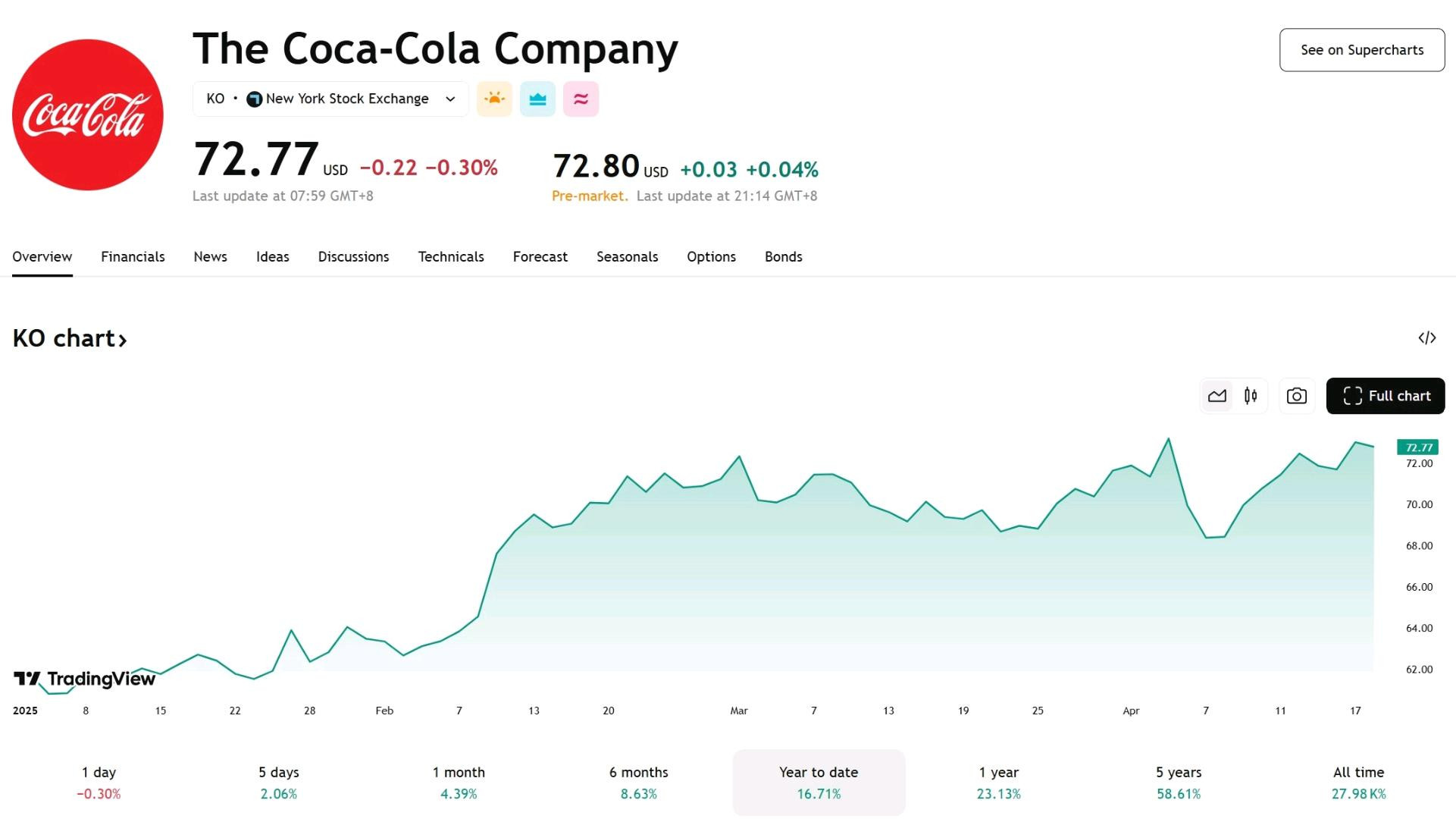
In a market clouded by trade wars, macroeconomic headwinds, and unpredictable consumer trends, $KO is emerging as a clear winner. With shares up nearly 17% in 2025 and outperforming both $SPX and key rivals like $PEP , analysts and investors are taking notice. Why is this 135-year-old beverage titan thriving when so many others are struggling? Let’s break down the key reasons $KO is proving to be the market’s safe haven—and why now might be a smart time to get in.

Is Coca-Cola the Ultimate Port in a Trade War Storm?
According to a recent report from J.P. Morgan, $KO stands out as a defensive juggernaut in today’s turbulent global economy. The firm upgraded its price target to $78—offering a 6% upside from current levels—while maintaining an “Overweight” rating. What’s driving this bullish sentiment?
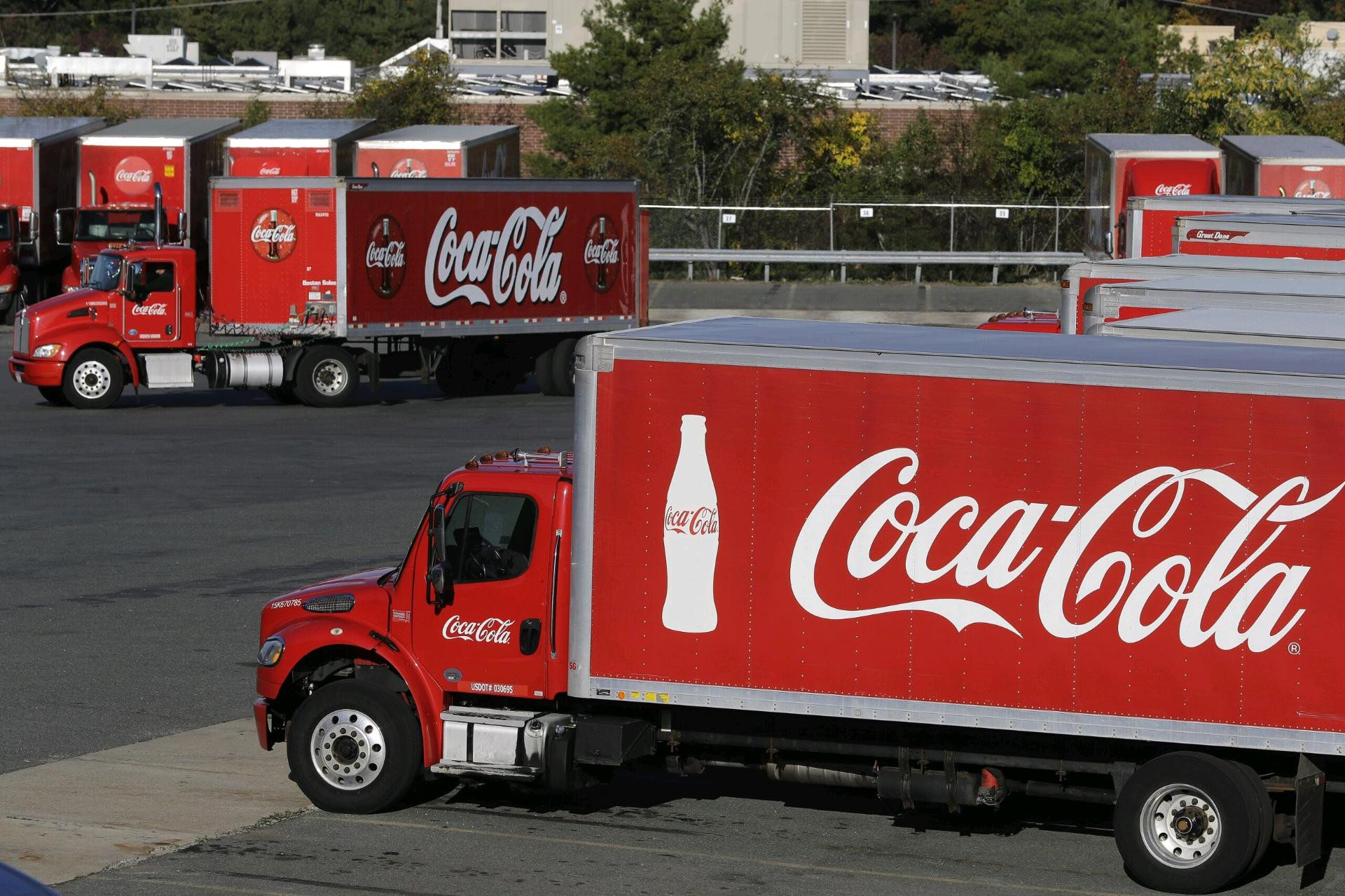
For one, $KO ’s business model is uniquely resilient to global trade tensions. The company operates in over 200 countries, with the U.S. accounting for just 17% of its total volume. That global reach means weakness in one market is often offset by strength in another. Meanwhile, its asset-light model, focused on licensing and concentrate sales rather than full-scale bottling, shields it from the direct impact of tariffs and inflationary input costs.
While tariffs on aluminum and steel could affect packaging costs, $KO ’s cross-enterprise procurement teams help bottlers mitigate those challenges. Even in product categories like juice and coffee, where trade duties might pose some risks, the exposure is limited—juices make up just 4.5% of tracked sales, and coffee accounts for less than 1%.
What’s Driving the Strong Performance in a Weak Market?
$KO ’s success isn’t just about avoiding damage—it’s about delivering growth in a challenging environment. The company is on track for 5.8% organic sales growth in 2025, well above the industry average. Its earnings per share are expected to hit $2.96 this year, despite a modest Q1 EPS revision from $0.72 to $0.70.
Much of this strength stems from a well-executed strategy under CEO James Quincey, who took the helm in 2018. Under his leadership, $KO has focused on consumer-centric innovation, packaging flexibility, and a powerful marketing engine. The result? A 7.7% compound annual growth rate (CAGR) in organic sales and 12% earnings growth (excluding currency effects) over the past five years.
And the numbers back it up: $KO has consistently beat Wall Street expectations in every quarter of 2024, with EPS surprises ranging from 3% to 6%. In a market where consistent performance is hard to come by, that kind of reliability stands out.
Is Coca-Cola Still a Good Value After the Rally?
It might be tempting to think $KO ’s recent surge leaves little room for upside—but analysts argue otherwise. The stock trades at 24 to 25 times projected earnings, a slight premium to peers like Procter & Gamble or Colgate. Yet that premium seems justified when you factor in its low volatility, strong margins, and global footprint.
J.P. Morgan points out that $KO ’s shares now trade at a 20% premium to $SPX —a notable reversal from the 4% discount seen earlier in the year. Historically, that gap has gone even wider, with $KO enjoying a 50% premium during periods of tech-driven market volatility like mid-2022.
Compared to rivals, $KO is better positioned. $PEP , for example, has struggled with slower snack growth in the U.S. and faces higher exposure to international supply chain friction. Despite trading at a much lower price-to-earnings ratio (17.2 vs. 24.2 for Coca-Cola), PepsiCo lacks the short-term catalysts that could drive significant upside.
Can Coca-Cola Keep Delivering Dividends Like Clockwork?
One of $KO ’s biggest investor draws is its track record of consistent dividend growth. The company has increased its payout for 63 consecutive years and currently yields around 2.8%. That’s not just attractive in the current rate environment—it’s sustainable, with a payout ratio below 70% of expected 2025 earnings.
And there’s room for more. If interest rates drop further or if economic softness persists, $KO ’s defensive profile and reliable dividends could become even more appealing to investors hungry for stability and income.
What’s the Catch? Are There Any Red Flags?
Of course, no investment is without risk. $KO isn’t growing as fast as it once did, and consumer preferences continue to shift away from sugary beverages. But the company’s diversified portfolio—now including coffee, tea, dairy, hydration, and even alcoholic beverages through partnerships—means it’s not overly reliant on traditional soda sales.
Moreover, while $KO isn’t a “hypergrowth” story, it offers something equally valuable in uncertain times: steady returns, low volatility, and a proven ability to adapt. That’s why, even though some analysts are chasing the next $NFLX or $NVDA , others are quietly loading up on $KO —and enjoying the ride.
Final Sip
$KO isn’t flashy, and it probably won’t deliver 10x returns overnight. But if you're looking for a stock with global reach, rock-solid fundamentals, consistent dividends, and a knack for outperforming in tough times, this beverage giant is looking more refreshing than ever.
This content is provided for informational or educational purposes only and does not constitute investment advice.