
Navigating the Global Economic Landscape Amid Trade Uncertainty – Reports Decoded

Kevin Insights
April 23, 2025
GoGPT Summarizes Articles
As geopolitical and economic crosswinds continue to intensify, Goldman Sachs’ latest Equity Radar provides a sweeping look at how global markets are evolving under the weight of trade frictions, growth downgrades, and sector shifts. This edition zooms in on trade policies, recession risks, and the tactical adjustments investors may need to make heading into mid-2025.
A Pause in Tariffs, but Uncertainty Lingers
The recent 90-day suspension of US “reciprocal” tariffs has offered a brief reprieve—but the uncertainty beneath the surface still casts a long shadow.
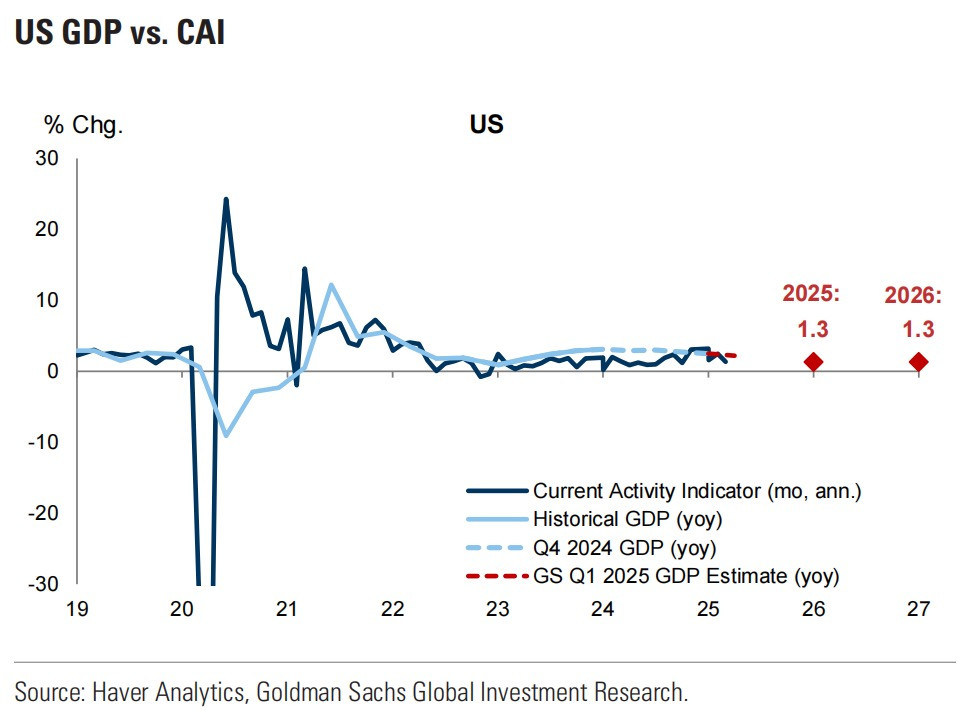
Goldman Sachs now forecasts US GDP growth to slow from 2.5% in 2024 to just 0.5% in 2025 (Q4/Q4 basis) as tariff-driven volatility resurfaces. While a full recession isn't the base case (recession risk is pegged at 45%), the Fed is expected to deliver three 25bp "insurance cuts" in June, July, and September, taking rates down to the 3.5–3.75% range.
Global Growth Downgrades Reflect Trade Drag
The economic impact of tariffs isn’t confined to the US—it’s a global story.
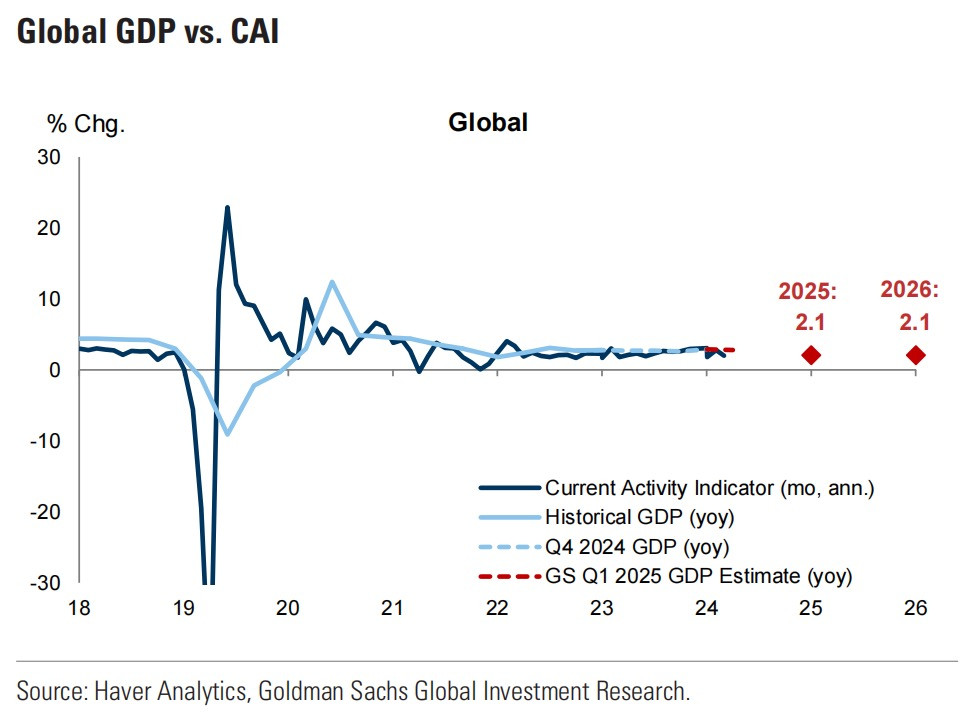
Goldman expects global real GDP growth to decelerate to 2.1% in 2025, weighed down by trade headwinds. Core inflation, meanwhile, is forecast to remain relatively sticky at around 2.7%, as declines in housing and wage inflation are offset by tariff-driven pricing pressures.
China
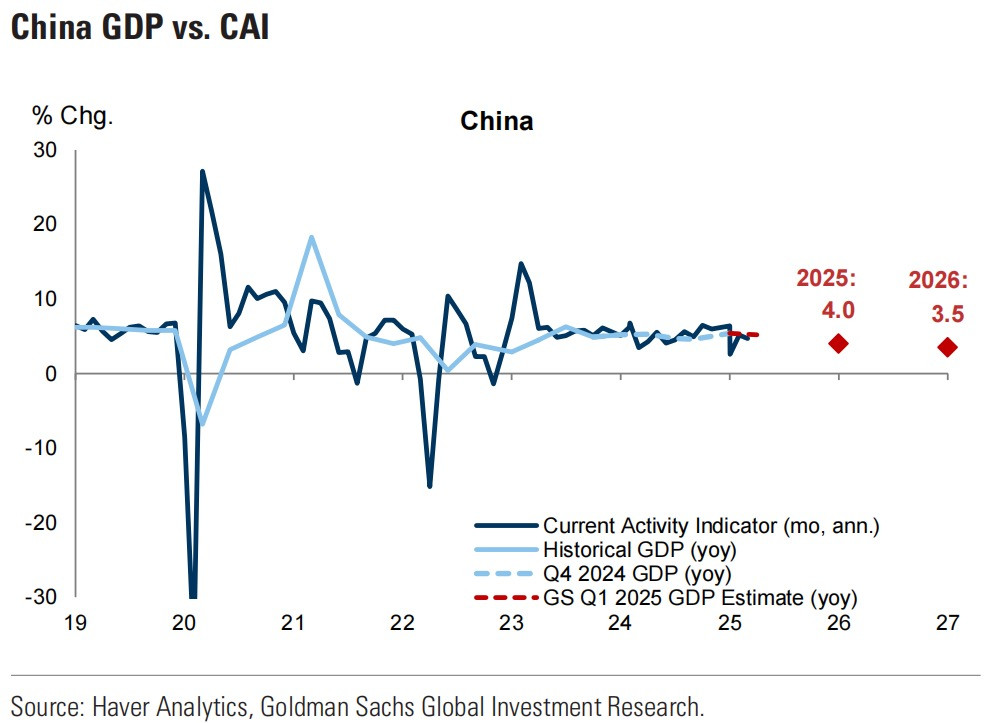
Goldman has revised down China’s GDP outlook to 4.0% in 2025 and 3.5% in 2026 (from 4.5% and 4.0%), citing weakened external demand.
On equities, ADR delisting risks are back in focus. Strategist Kinger Lau estimates a forced delisting could cut valuations by 9%, while a full removal of that risk could unlock 15% upside.
Europe
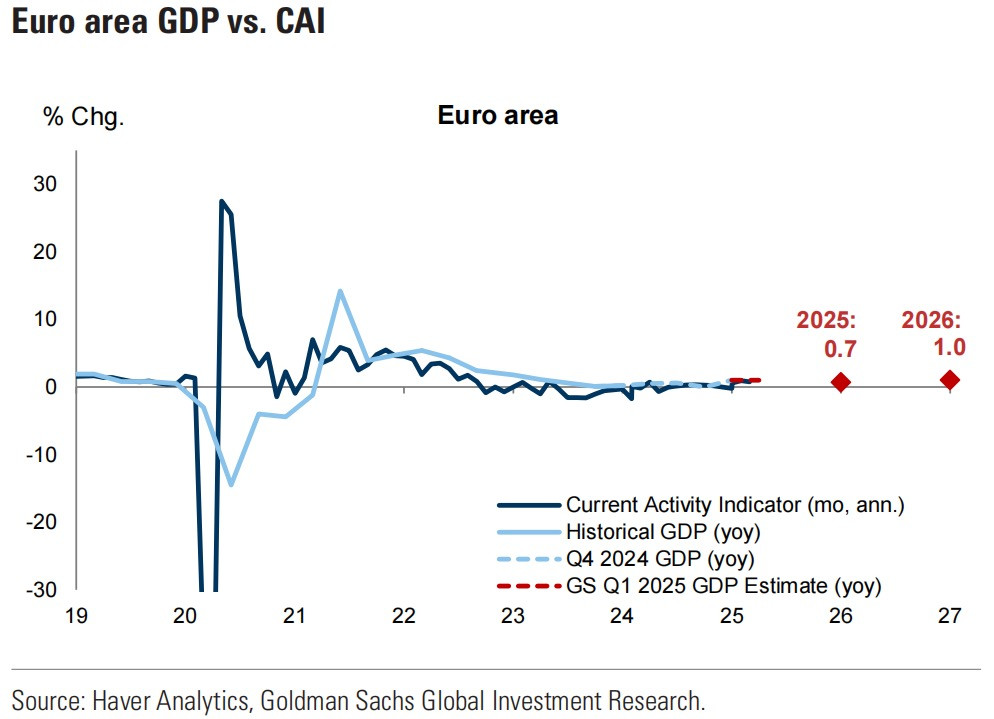
Growth expectations in the Eurozone have also been trimmed: 2025 GDP growth is now projected at just 0.7%, and the ECB is likely to cut rates by another 25bp in September.
Meanwhile, STOXX 600 earnings are forecast to fall 5% YoY this quarter, with Energy and Financials dragging while Tech and Industrials offer relative strength.
In Chemicals, Goldman sees a “recession-like” environment emerging, especially in 2Q25. While still constructive on names like BASF, the broader sector outlook remains cautious.
Repricing Risks: A Defensive Allocation Strategy
Goldman emphasizes the need for a more defensive asset allocation in the face of underpriced recession risks. In the near term, more risk premiums need to be embedded across asset classes. Over the next 12 months, the strategy is neutral, but with a tilt toward cash holdings as a buffer against stagflation scenarios.
Trade Recession in Sight: Transpacific Volumes to Dive
Goldman’s trade roadmap signals serious pressure ahead. It expects double-digit volume declines in US–China shipping lanes, with inventory cycles amplifying the drop before any rebound materializes.
Shipping and logistics earnings have already been adjusted sharply lower: Goldman cut forecasts by double digits for 2025–26E, citing structural demand erosion.
Sector Views: Who’s at Risk, Who’s Resilient?
US Banks: With Q1 earnings mostly in, Goldman notes a reassuring tone across large-cap banks. All major players reaffirmed guidance.
Buy-rated: Bank of America, Citi, JPMorgan, Wells Fargo
Neutral-rated: Morgan Stanley, PNC
US Lodging: Forecasts have been revised down due to softening demand and geopolitical risks. Goldman prefers asset-light names with global exposure and lower US resort concentration.
Apparel: Companies with high China sourcing are under pressure. Goldman favors market share leaders with strong balance sheets like TJX and Burlington over more vulnerable names.
China Consumer Staples: Infant milk formula (IMF) outlook improved slightly, supported by pricing power and birth policy optimism. Names like Yili, Feihe, and Mengniu could benefit.
Commodity Corner: Oil Eases, Gold Shines
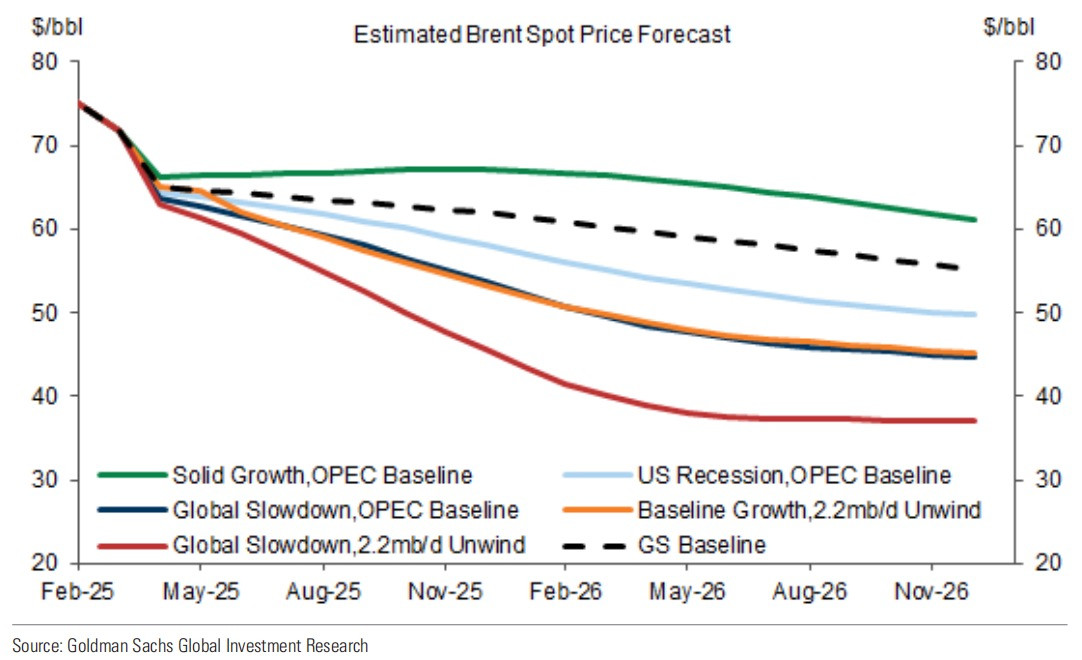
Goldman now sees Brent/WTI averaging $63/$59 in 2025 and dipping to $58/$55 in 2026, with a potential fall into the $40s if demand slows further or OPEC+ unwinds cuts.
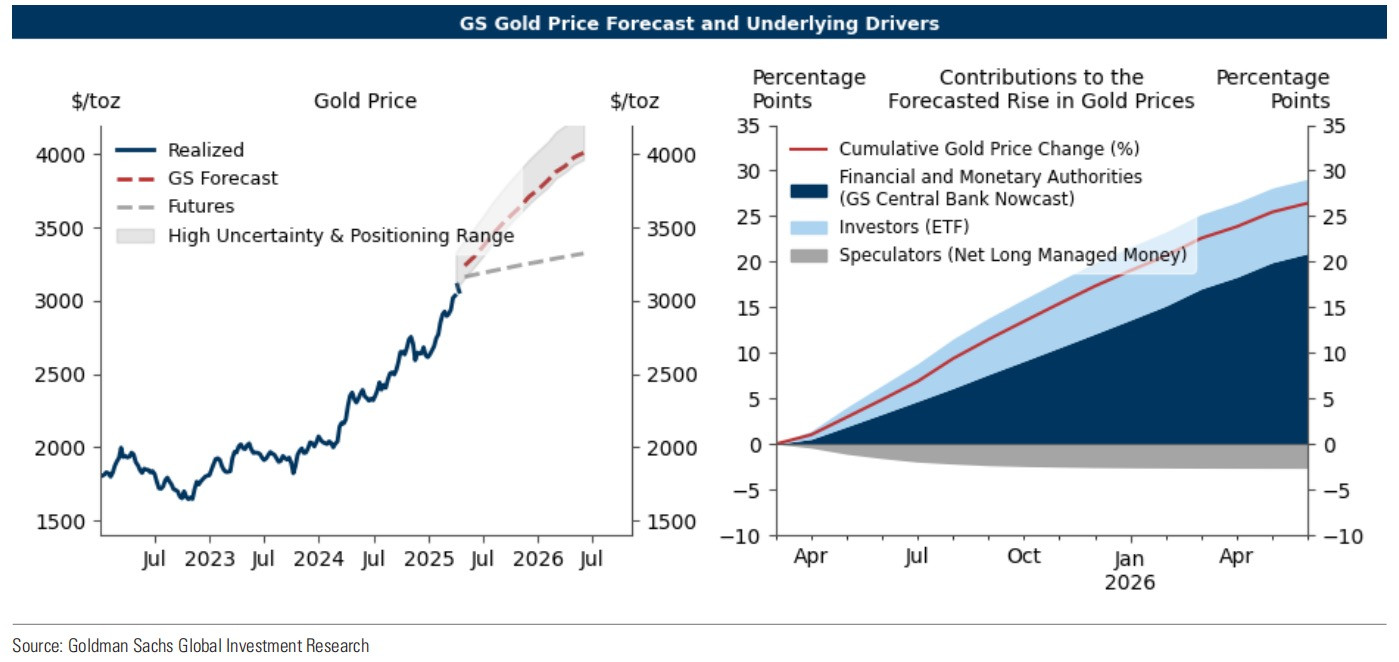
In contrast, gold is gaining momentum. The year-end forecast is raised to $3,700/toz, with tail-risk scenarios suggesting $4,500 by end-2025. Central bank demand and ETF inflows remain key drivers. Gold is fast becoming the go-to hedge in this uncertain macro landscape.
Final Thoughts: Stay Defensive, Stay Adaptive
Goldman Sachs' Equity Radar highlights a world grappling with uncertainty—from trade tensions to slowing growth and uneven sector performance. While short-term reprieves (like the tariff pause) may offer breathing room, the underlying signals point to a choppy and cautious road ahead.
For allocators and private investors, the message is clear: defensiveness matters, liquidity matters, and adaptability is non-negotiable.
#Private Market: Unlocking Potential#privatemarket#GlobalEconomy