
Alibaba.com Tops U.S. AppStore Shopping Rankings: China's Breakthrough Amid Global Trade Fractures

Today, Alibaba.com suddenly topped the U.S. App Store's shopping category. Against the backdrop of escalating U.S.-China tariff wars and accelerating global supply chain fragmentation, this seemingly contradictory phenomenon reflects digital trade's "soft pattern breakthrough" in traditional geopolitical games.

Although overall trade volume may decline, inflation-induced pressures and economic downturn will significantly increase living pressures for middle and lower-income earners. In this adverse economic environment, consumption downgrading will suppress elastic goods sales, while Chinese products with crushing price-performance ratios may see sales growth. Consumers who previously rarely considered Chinese goods will rely more on them, while those who already buy large quantities of Chinese products will bypass intermediaries due to trade barriers, sourcing directly from the origin through grey channels.
This explains why Chinese apps like DHgate, Alibaba.com, Shein, and Temu are becoming top choices for American consumers.

1. "Ant-Moving Revolution": The Unintended Consequence of the Tariff War
After Trump's tariff assault on China, the 145% tariffs on Chinese goods have become unbearable for U.S. small and medium enterprises (SMEs). On Alibaba.com, American buyers are circumventing tariff barriers with a "divide and conquer" strategy: directly sourcing from Chinese factories frequently by keeping single orders within the $800 tax-free limit. On TikTok, a California-based mechanical parts dealer candidly states: "After tariff hikes, local distributors charge $120 per unit. Now, direct sourcing on Alibaba.com costs only $30. Even with shipping, it's still half the price of local procurement." This "fragmented trade" has driven a 53% surge in U.S. SME buyers on the platform in the past month, becoming the core driver of counter-trend growth.
2. Digital Infrastructure Reshapes Trade Resilience
As traditional cross-border trade stalls due to geopolitics, digital trade platforms like Alibaba.com have inadvertently opened a "de-politicized" channel through technology. Their intelligent matching system automatically filters suppliers meeting U.S. UL and FDA certifications; 3D factory inspection allows remote production line verification; blockchain technology has reduced cross-border payment cycles from 5 days to 2 hours; and digital bonded warehouses have improved logistics efficiency to within 5 days by predicting demand. This "invisible infrastructure" creates a "short-chain direct connection" between China's supply chain and overseas SME buyers, cracking open a fissure in the high tariff wall.
3. Power Shift in Global Trade
This rise to the top implies a deeper transformation: SMEs with digital channels are bypassing traditional giants, restructuring global trade power dynamics. 55% of U.S. buyers on the platform are micro-enterprises with fewer than 10 employees, skipping layers of distributors to directly engage Chinese factories and gain bargaining power. Meanwhile, 30% of Chinese suppliers achieve "instant origin switching" by setting up Southeast Asian branch factories, converting geopolitical risks into entrepôt trade. Recently, China signed a series of new reciprocal agreements with Vietnam, Malaysia, and other countries, this "de-Americanized globalization" is dissolving the old order dominated by multinational corporations and political alliances.
4. The Risk Behind the Prosperity
However, American Data Privacy and Protection Act could sever cross-border data flows. More critically, as digital trade increasingly becomes a "risk-aversion channel," it may itself become a new battleground for political games. After all, even today, TikTok's survival in the U.S. remains uncertain. Chinese digital traders should prepare for this eventuality.
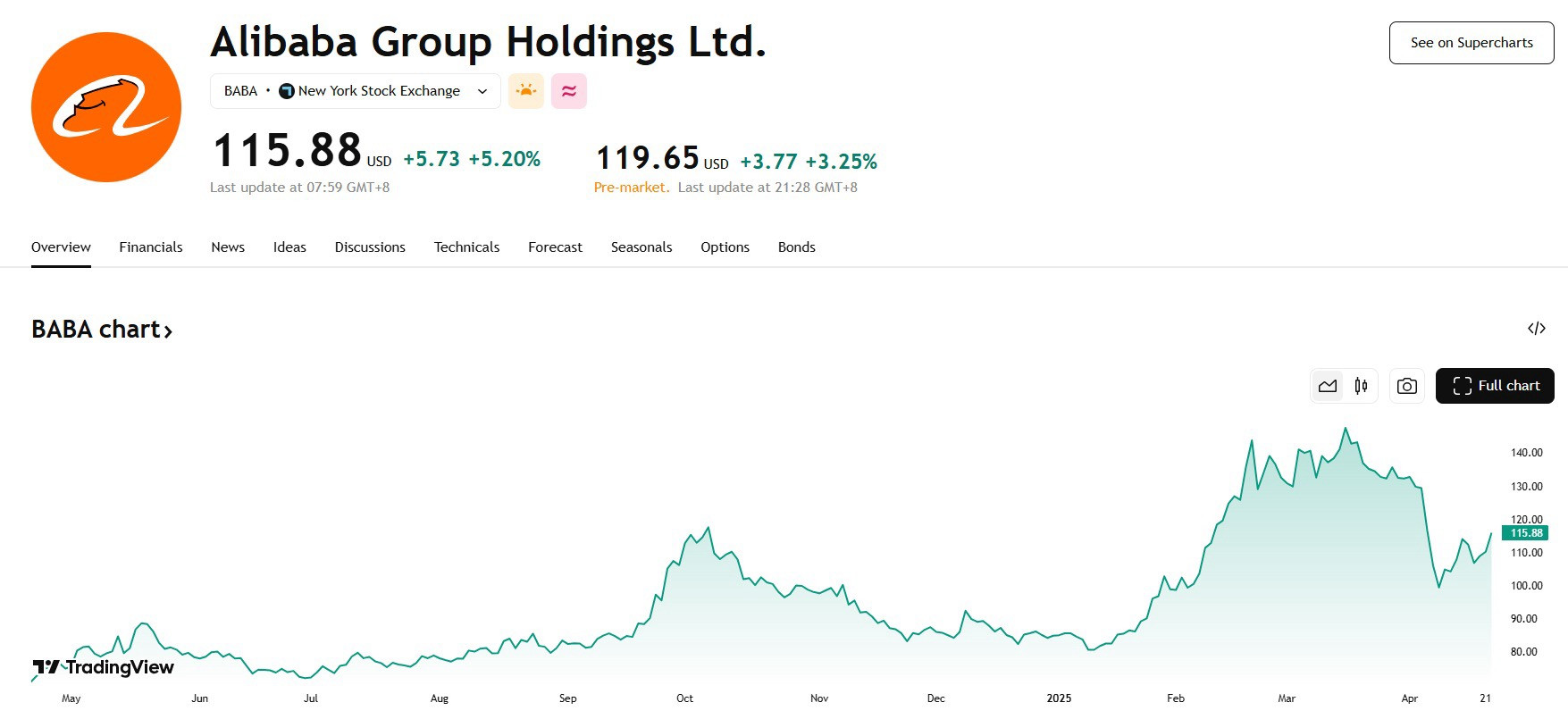
Alibaba.com's rise to the top is essentially a "technological repair" in an era of globalization fractures. It proves that when political means exacerbate trade frictions, the market always spawns digital pathways to circumvent barriers. But can this survival strategy of "bypassing" rather than "resolving" contradictions sustain a viable global trade ecosystem?
The answer may not lie in code, but in humanity's eternal quest to balance efficiency with fairness, and growth with security.